Nifty 50
- Adani Ports₹1,752.5049.80 (2.92%)
- Shriram Finance₹825-40.00 (-4.62%)
- Eternal₹325.558.15 (2.57%)
- Tata Consumer ₹936.50-27.40 (-2.84%)
- Max Healthcare₹83520.00 (2.45%)
- HDFC Life Insurance ₹519-4.75 (-0.91%)
- Grasim Industries₹2,95056.00 (1.94%)
- Sun Pharmaceutical₹1,740-8.00 (-0.46%)
- Coal India₹4057.55 (1.90%)
- HCL Technologies₹1,417-5.20 (-0.37%)
- Hindalco Industries₹885.6515.80 (1.82%)
- Tata Motors PV₹263.70-0.90 (-0.34%)
- Apollo Hospitals₹7,844114.00 (1.47%)
- Mahindra & Mahindra₹2,853.10-8.10 (-0.28%)
- Tata Steel₹169.942.27 (1.35%)
- Power Grid Corp₹247-0.40 (-0.16%)
- Bharti Airtel₹1,917.5025.40 (1.34%)
- Nestle₹1,173.50-1.50 (-0.13%)
- InterGlobe Aviation₹4,60859.00 (1.30%)
- Maruti Suzuki₹11,220-10.00 (-0.09%)

- Offerings
- Tools & Platforms
Tools & Calculators
- Open API
- Calculators
- SIP Calculator
- CAGR Calculator
- Compound Interest Calculator
- FD Calculator
- RD Calculator
- EPF Calculator
- Retirement Calculator
- HDFC SIP Calculator
- Mutual Fund Return Calculator
- Lumpsum Calculator
- Step Up SIP Calculator
- ETF SIP Calculator
- Brokerage Calculator
- Equity Margin Calculator
- SWP Calculator
- EMI Calculator
- MTF Calculator
- Margin Pledge Calculator
- Algo Strategy
- Markets
Stocks
F&O
Mutual Funds
- More
Chasing Last Year’s Top-Performing Mutual Fund: The Most Reliable Way to Underperform
By Aseem Shrivastava | Published at: Jun 13, 2026 08:10 PM IST
Open Free Demat Account
Open Free Demat Account
You see a mutual fund delivering 35% returns in the last year. Financial influencers and your friends talk about it. The fund suddenly looks like the obvious choice.
So, you invest.
The returns over the past year disappoint you. Meanwhile, another fund becomes the new top performer and grabs attention.
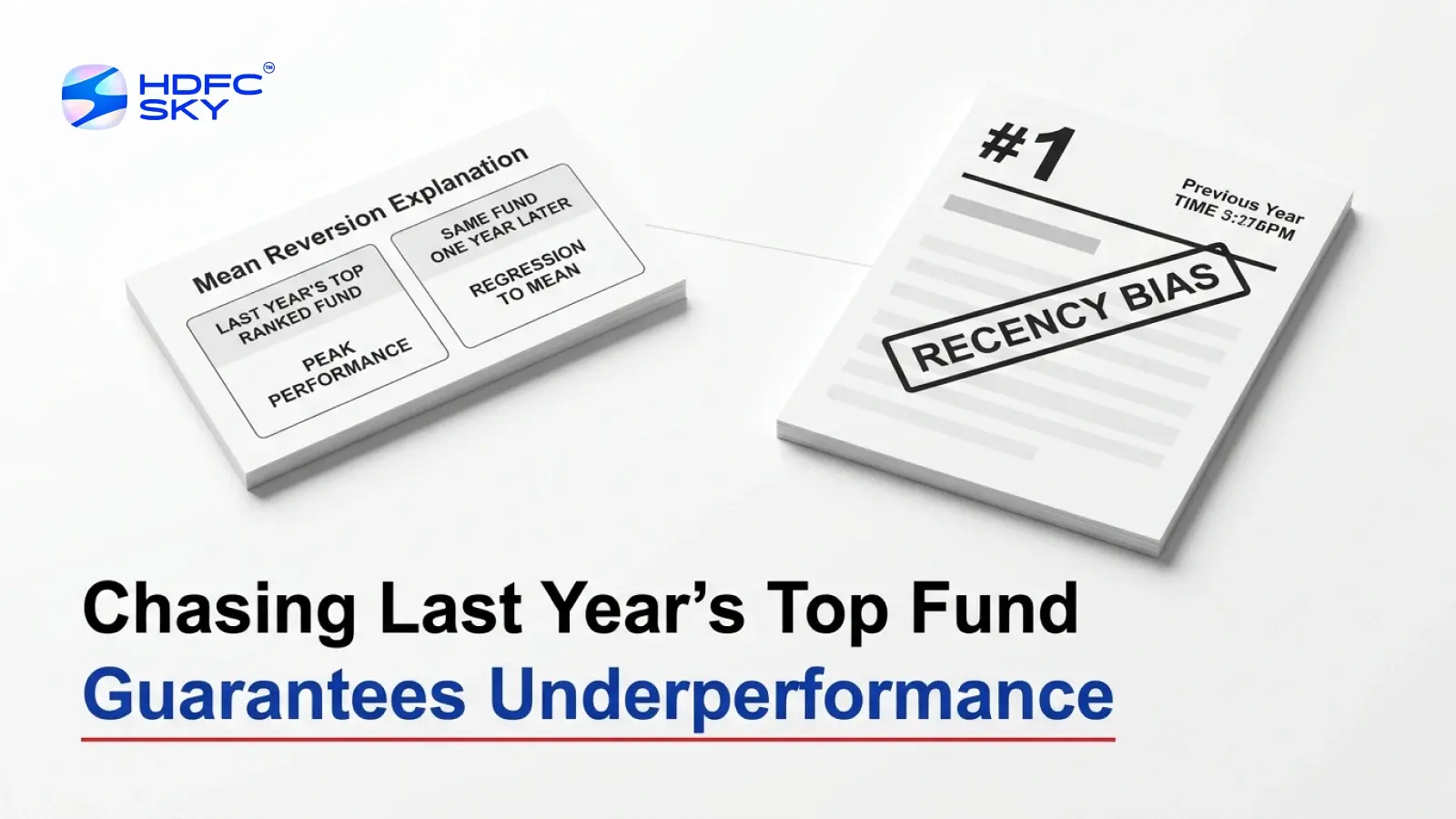
This cycle repeats endlessly for many investors. Ironically, chasing last year’s winning mutual fund is one of the most reliable ways to earn returns below average.
Why Top Funds Often Slow Down
Mutual fund performance is cyclical. A fund that performs exceptionally well in one year benefits from temporary market trends or favorable market conditions.
For example:
- A technology fund may outperform during a tech rally.
- A fund with a small market cap may surge during bullish market phases.
- A thematic fund may rise sharply when a particular sector becomes popular.
But market leadership changes constantly. Sectors that outperform one year may struggle the next year. You are usually entering after the biggest gains have already happened when you invest after seeing past returns.
Also Read: Why investors buy the highest NAV mutual fund thinking it’s the best performer
Past Returns Do Not Predict Future Performance
Many investors assume that a fund with strong recent returns must have a superior strategy. That assumption is dangerous.
Return figures from the past year tell you what already happened. It does not tell you what will happen next. Even professional fund managers struggle to remain consistently at the top year after year.
Today’s star performer can easily become tomorrow’s average fund.
The Cost of Performance Chasing
Suppose you keep shifting your money every year into whichever fund topped the charts recently.
You may face:
- Buying after valuations become expensive
- Frequent portfolio churn
- Higher tax liability
- Missed compounding chances
- Emotional investing decisions
This behavior can reduce your chances of wealth creation.
What You Should Focus on Instead
Evaluate mutual funds based on the following:
- Consistency across market cycles
- Fund manager discipline
- Expense ratio
- Portfolio diversification
- Alignment with your financial goals
A fund delivering steady returns of 12% to 14% over many years is often far more valuable than a fund that delivers one spectacular year followed by weak performance.
The Real Secret to Better Mutual Fund Returns
Successful investing is usually boring. Investors who build wealth in the long run are rarely the ones chasing the hottest fund every year. They are the ones who stay disciplined and remain invested for years.
Mutual fund investing is about building a process you can stick with consistently. Because discipline usually beats excitement in investing.



Open Free Demat Account
Open Free Demat Account
Popular Posts
- 10 Interesting Facts About NSE You Probably Didn’t KnowLast Updated: Sep 30, 2026
- 8-4-3 Rule of SIP - How Does That Work?Last Updated: Jul 30, 2025
- Let's view more exciting Post!
Popular Post from Dumb Money Mistakes
- Skipping Nominee Updates and Joint Holding: The Estate Planning Mistake That Freezes Family WealthLast Updated: Jun 13, 2026
- Investing Based on Neighbor's Tip: The Psychology and Math of Social Proof LossesLast Updated: Jun 13, 2026
- Selling Winning Stocks Too Early and Holding Losers Too Long: The Disposition Effect ExplainedLast Updated: Jun 13, 2026
- Ignoring Expense Ratios in Mutual Funds: How 1.5% Extra Cost Destroys ₹40 Lakh Over 20 YearsLast Updated: Jun 13, 2026
- Taking Loans to Invest in the Stock Market: The Math on Why It Almost Never WorksLast Updated: Jun 13, 2026
- Let's view more exciting Post!
Popular Post from Blogs
- “Bounce Back” Theme Gains Traction in 2026Last Updated: Apr 8, 2026
- 5 Takeaways for Tax Payers from the Budget 2025Last Updated: Jan 29, 2026
- Let’s view more exciting Posts


Invest Anytime, Anywhere


By signing up I certify terms, conditions & privacy policy