Nifty 50
- HCL Technologies₹1,253.7047.60 (3.95%)
- Bharat Electronics₹382.90-21.45 (-5.30%)
- Infosys₹1,07739.30 (3.79%)
- Shriram Finance₹979.80-48.80 (-4.74%)
- TCS₹2,25150.20 (2.28%)
- Adani Enterprises₹2,928.60-131.40 (-4.29%)
- Tech Mahindra₹1,575.9034.90 (2.26%)
- InterGlobe Aviation₹4,776-197.00 (-3.96%)
- Wipro₹1702.60 (1.55%)
- Grasim Industries₹3,171-110.90 (-3.38%)
- ONGC₹235.953.45 (1.48%)
- Titan Company₹4,856-153.50 (-3.06%)
- HDFC Bank₹716.558.30 (1.17%)
- Bajaj Finserv₹1,855.50-58.00 (-3.03%)
- Tata Motors PV₹303.602.50 (0.83%)
- Adani Ports₹1,713.80-50.80 (-2.88%)
- Hindustan Unilever₹1,938.1011.10 (0.58%)
- JSW Steel₹1,229.20-35.80 (-2.83%)
- Tata Steel₹183.650.65 (0.36%)
- Asian Paints₹2,402.80-69.70 (-2.82%)

- Offerings
- Tools & Platforms
Tools & Calculators
- Open API
- Calculators
- SIP Calculator
- CAGR Calculator
- Compound Interest Calculator
- FD Calculator
- RD Calculator
- EPF Calculator
- Retirement Calculator
- HDFC SIP Calculator
- Mutual Fund Return Calculator
- Lumpsum Calculator
- Step Up SIP Calculator
- ETF SIP Calculator
- Brokerage Calculator
- Equity Margin Calculator
- SWP Calculator
- EMI Calculator
- MTF Calculator
- Margin Pledge Calculator
- Algo Strategy
- Markets
Stocks
F&O
Mutual Funds
- More
Why Investors Buy the Highest NAV Mutual Fund, Thinking It's the Best Performer
By Aseem Shrivastava | Published at: Jun 13, 2026 04:39 PM IST
Open Free Demat Account
Open Free Demat Account
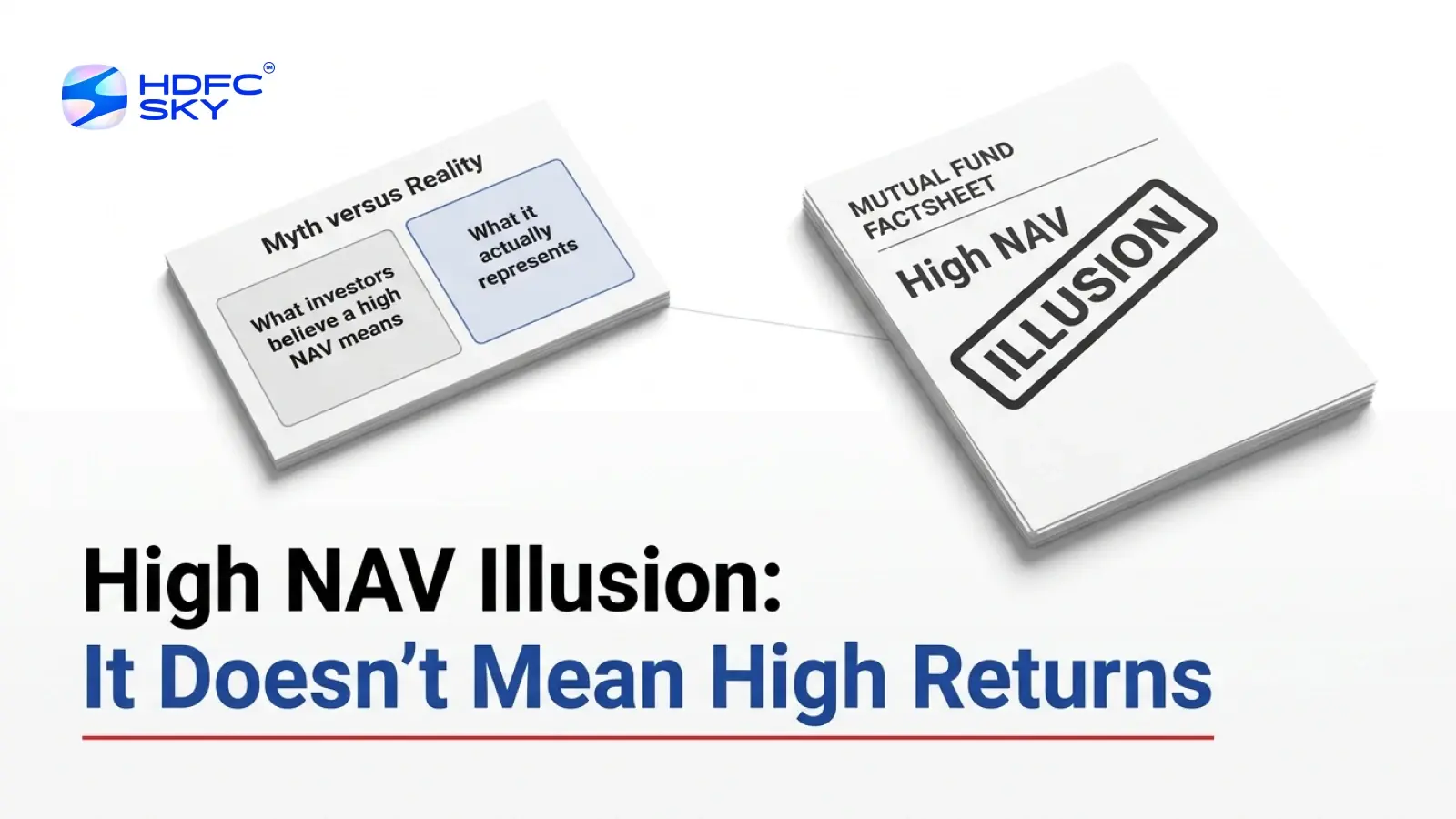
A common mistake many investors make while selecting a mutual fund is assuming that a fund with a higher NAV (net asset value) is automatically a better performer. It does sound logical. If one fund has an NAV of ₹500 and another is available at ₹50, the ₹500 fund may appear more valuable or more successful.
But NAV does not work like a stock price in mutual funds. Let’s understand the finer details behind it.
How to interpret NAV correctly
NAV is the unit value of the mutual fund on a given day. It is calculated by dividing the fund’s total holdings by the number of units outstanding. A higher NAV does not indicate superior returns or lower risk. Yet many investors continue to chase high-NAV funds, believing they are buying into a winning product.
Why This Confusion Happens
The misunderstanding usually comes from comparing mutual funds with stocks.
A rising stock price reflects growing business value or improving investor confidence. Investors bring the same mindset to mutual funds and assume that a high NAV means the fund has generated exceptional returns.
But two mutual funds can generate identical returns even if their NAVs differ.
For example, if Fund A starts at ₹10 and grows to ₹100 over many years, and Fund B launches later at ₹10 and grows to ₹20, investors may think Fund A is better simply because of the bigger NAV number. However, what matters is the percentage return generated during the investment period and not the NAV itself.
Also Read: Decoding RBI’s monetary policy statement: the 5 lines that actually move markets
The Real Metric Investors Should Check
Instead of focusing on NAV, you should evaluate mutual funds based on the following:
- Consistency of returns across market cycles
- Fund manager track record
- Portfolio quality
- Investment strategy
- Performance against benchmark indices
A fund that delivers steady returns with controlled volatility in the long run is usually more important than one with a high NAV.
For example, investing ₹10,000 in two funds that both deliver 12% annual returns will generate similar wealth over time, regardless of whether the NAV was ₹20 or ₹200 at the time of purchase.
Bottom line
Mutual fund investing becomes simpler when you stop treating NAV like a stock price. A high NAV does not make a mutual fund expensive. A low NAV does not make it cheap. The real question is whether the fund can meet your financial goals with acceptable risk levels. Focus on performance consistency and portfolio suitability in the long run. That is what ultimately creates wealth over time.



Open Free Demat Account
Open Free Demat Account
Popular Posts
- 3 Things New Investors Should Check Before Opening a Demat AccountLast Updated: Jul 15, 2026
- 5 Features Protecting Your Wealth on HDFC SKYLast Updated: Jul 1, 2026
- Let’s view more exciting Posts
Popular Post from Dumb Money Mistakes
- Skipping Nominee Updates and Joint Holding: The Estate Planning Mistake That Freezes Family WealthLast Updated: Jun 13, 2026
- Chasing Last Year’s Top-Performing Mutual Fund: The Most Reliable Way to UnderperformLast Updated: Jun 13, 2026
- Investing Based on Neighbor's Tip: The Psychology and Math of Social Proof LossesLast Updated: Jun 13, 2026
- Selling Winning Stocks Too Early and Holding Losers Too Long: The Disposition Effect ExplainedLast Updated: Jun 13, 2026
- Ignoring Expense Ratios in Mutual Funds: How 1.5% Extra Cost Destroys ₹40 Lakh Over 20 YearsLast Updated: Jun 13, 2026
- Let's view more exciting Post!
Popular Post from Blogs
- “Bounce Back” Theme Gains Traction in 2026Last Updated: Apr 8, 2026
- 5 Takeaways for Tax Payers from the Budget 2025Last Updated: Jan 29, 2026
- Let’s view more exciting Posts


Invest Anytime, Anywhere


By signing up I certify terms, conditions & privacy policy