
- Offerings
- Tools & Platforms
Tools & Calculators
- Open API
- Calculators
- SIP Calculator
- CAGR Calculator
- Compound Interest Calculator
- FD Calculator
- RD Calculator
- EPF Calculator
- Retirement Calculator
- HDFC SIP Calculator
- Mutual Fund Return Calculator
- Lumpsum Calculator
- Step Up SIP Calculator
- ETF SIP Calculator
- Brokerage Calculator
- Equity Margin Calculator
- SWP Calculator
- EMI Calculator
- MTF Calculator
- Margin Pledge Calculator
- Markets
Stocks
F&O
Mutual Funds
- More
Sahara India: How a Real Estate and Bond Empire Conned Small Investors for Two Decades
By Aseem Shrivastava | Updated at: Jun 16, 2026 05:33 PM IST
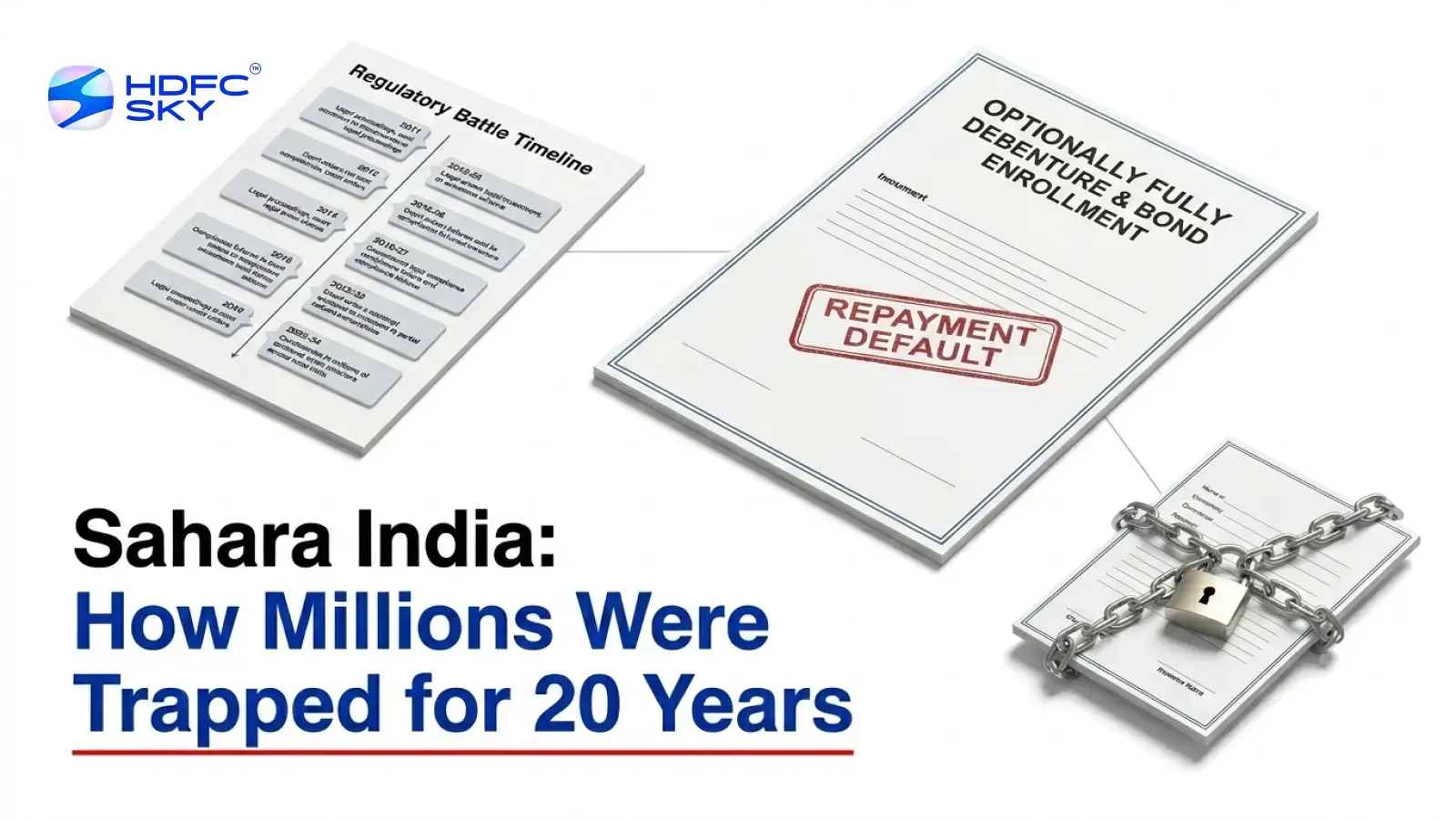
Sahara India was one of the most recognizable business groups in the country. Aggressive marketing and a strong presence in small towns and rural areas helped the group built trust among millions of people. Sahara’s business interests stretched across real estate and media among other industries.
People found it to be a stable organization but their fundraising structure became one of India’s largest investor protection controversies. Let’s look at how this case highlights the importance of understanding where your money is being invested.
How Sahara Raised Money
Sahara controversy revolved around fundraising through optionally fully convertible debentures. These instruments were issued by two Sahara group companies and marketed to investors across India.
The companies argued that these were private placements. But regulators questioned this claim as the fundraising involved many subscribers. The issue then attracted the attention of SEBI. They investigated whether the fundraising complied with market regulations.
Also Read–https://hdfcsky.com/blogs/dumb-money-mistakes/checking-your-portfolio-every-hour-the-behavioral-trap-that-triggers-panic-selling
The Regulatory Battle
SEBI concluded that the fundraising exercise violated rules governing public issues of securities and directed Sahara to refund investors. What followed was a lengthy legal battle that reached the Supreme Court of India.
The Supreme Court in 2012 directed Sahara to refund the money to investors along with interest. The judgment became one a significant investor protection ruling.
Why So Many People Were Affected
One reason the scheme attracted many investors was its reach. Sahara operated through a network of agents who connected with several households. Many people invested because they trusted the brand and the individuals promoting the products.
Few investors examined the regulatory status of the instruments. Many also did not understood the risks involved. This highlights the mistake of relying on reputation and familiarity when making investment decisions.
Lessons To Learn
The Sahara case highlights the importance of looking beyond company reputation before committing money. It is essential to confirm whether a financial product falls under the oversight of the appropriate regulator and understand how the product works before investing.
It is also essential to preserve receipts and account statements. These can become crucial if disputes arise later. Trust should also never replace verification. A familiar name or widespread presence may inspire confidence but informed decisions require a clear understanding of the product and the regulatory framework governing it.





By signing up I certify terms, conditions & privacy policy