Nifty 50
- HDFC Bank₹708.2514.45 (2.08%)
- Hindalco Industries₹981.50-32.50 (-3.21%)
- Dr. Reddy's Labs₹1,165.5022.50 (1.97%)
- JSW Steel₹1,265-39.00 (-2.99%)
- Tech Mahindra₹1,54115.20 (1.00%)
- Eicher Motors₹7,530-167.00 (-2.17%)
- HDFC Life Insurance ₹5303.85 (0.73%)
- Tata Steel₹183-3.78 (-2.02%)
- Wipro₹167.401.10 (0.66%)
- ONGC₹232.50-4.77 (-2.01%)
- Kotak Mahindra Bank₹4192.45 (0.59%)
- Maruti Suzuki₹12,400-190.00 (-1.51%)
- InterGlobe Aviation₹4,97328.00 (0.57%)
- Bajaj Finserv₹1,913.50-27.00 (-1.39%)
- Eternal₹323.501.40 (0.43%)
- SBI₹995.70-14.00 (-1.39%)
- ITC₹259.850.55 (0.21%)
- Coal India₹426.40-5.60 (-1.30%)
- Tata Motors PV₹301.100.60 (0.20%)
- Reliance Industries₹1,257.50-16.50 (-1.30%)

- Offerings
- Tools & Platforms
Tools & Calculators
- Open API
- Calculators
- SIP Calculator
- CAGR Calculator
- Compound Interest Calculator
- FD Calculator
- RD Calculator
- EPF Calculator
- Retirement Calculator
- HDFC SIP Calculator
- Mutual Fund Return Calculator
- Lumpsum Calculator
- Step Up SIP Calculator
- ETF SIP Calculator
- Brokerage Calculator
- Equity Margin Calculator
- SWP Calculator
- EMI Calculator
- MTF Calculator
- Margin Pledge Calculator
- Algo Strategy
- Markets
Stocks
F&O
Mutual Funds
- More
Harshad Mehta’s Bank Receipt Scam - the Blueprint That Modern Fraudsters Still
By Aseem Shrivastava | Published at: Jun 16, 2026 05:44 PM IST
Open Free Demat Account
Open Free Demat Account
More than three decades have passed since the Harshad Mehta scam made headlines but its core strategy remains relevant. Many financial frauds still rely on the same principle even though markets now operate with tighter oversight. They focus on exploiting trust within the system before anyone notices the gap.
Understanding how Mehta used bank receipts to move money around the financial system can help you recognize why transparency matters so much in investing.
The Importance of Bank Receipts in the Scam
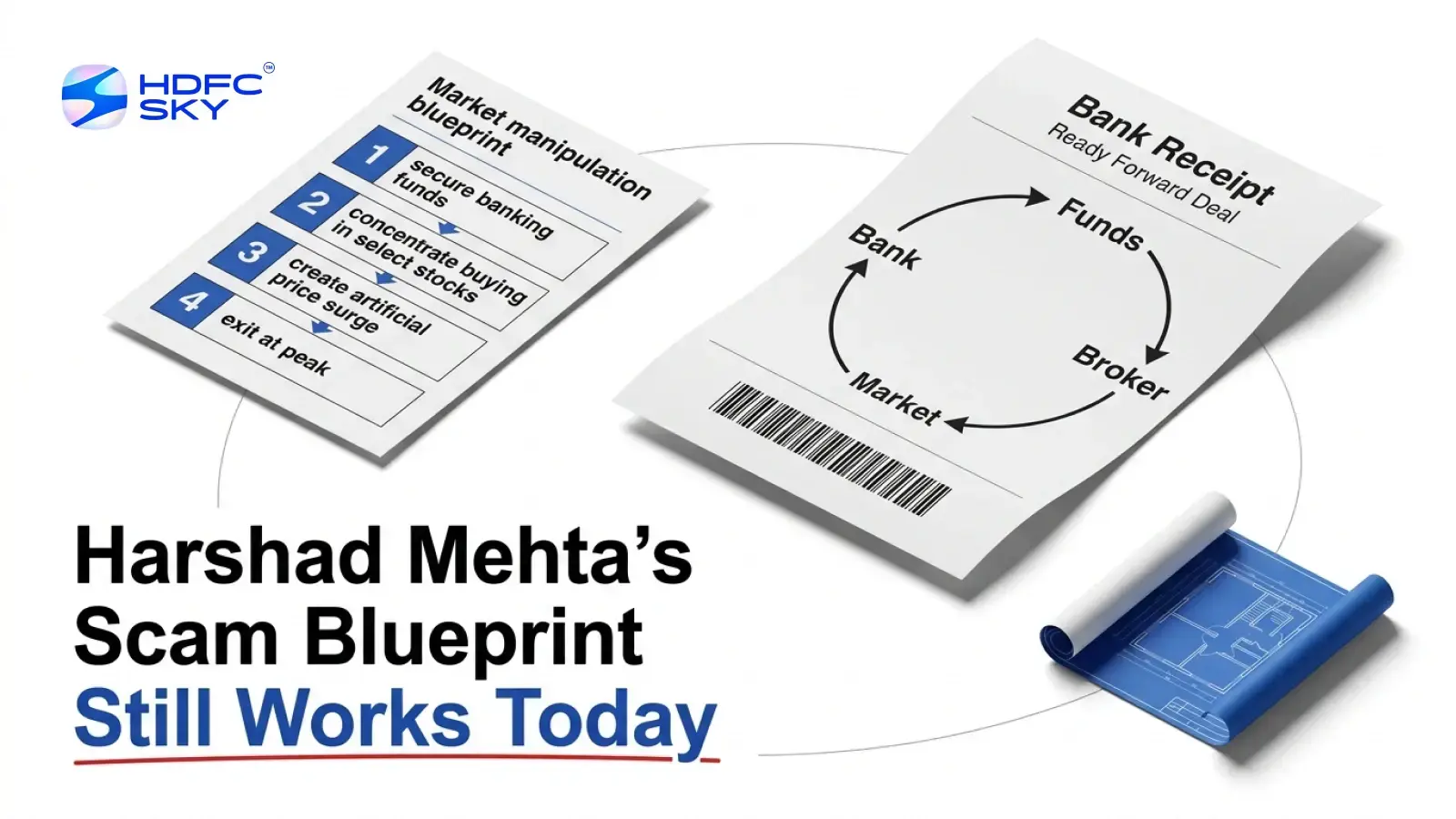
Banks regularly traded government securities with one another. Banks often used Bank Receipts or BRs as temporary evidence that the securities existed and would be delivered later when securities were not immediately transferred.
The arrangement worked because banks trusted each other. A BR issued by a bank was generally accepted without extensive scrutiny. Transactions moved ahead as long as the paperwork appeared valid. That trust eventually became the weakest link.
Also Read: How a single FII block deal of ₹3,000 crore moved the entire banking index in one session
How the System Was Manipulated
Mehta discovered that some banks were willing to issue BRs without holding the government securities they were supposed to represent. Institutions accepted these receipts without independently confirming whether the underlying assets actually existed. So large amounts of money flowed through the banking system against documents that had little or no backing.
Much of this money found its way into the stock market instead of being used for government securities transactions. Mehta concentrated buying activity in a handful of shares that pushed prices sharply higher. Rising prices attracted fresh participants that created further inflated valuations. The cycle appeared sustaining but the problem was that the foundation underneath it was fundamentally flawed.
Why the Scam Had Such a Large Impact
Banks faced losses because funds had been released against questionable receipts. Equity markets reacted sharply as confidence disappeared and investors who had entered during the rally saw stock prices fall.
The episode exposed weaknesses in the financial infrastructure of the time. Many processes relied on manual records with limited verification between institutions. The scandal highlighted how easily those weaknesses could be exploited. The fallout eventually led to greater regulatory oversight across financial markets.
What You Can Learn From It Today
The Harshad Mehta scam is remembered as a market manipulation story but at its core it was a failure of verification. A document or promise should never be accepted at face value simply because it appears official.
Before committing money, take time to understand how the investment works, check regulatory registrations, and verify key claims through reliable sources. Many frauds succeed because people assume someone else has already done the checking.



Open Free Demat Account
Open Free Demat Account
Popular Posts
- 3 Things New Investors Should Check Before Opening a Demat AccountLast Updated: Jul 15, 2026
- 5 Features Protecting Your Wealth on HDFC SKYLast Updated: Jul 1, 2026
- Let’s view more exciting Posts
Popular Post from Fraud Files by Sky
- The Roofit Industries Pump And Dump - What the SEBI Order Reveals About Stock ManipulationLast Updated: Jun 18, 2026
- The Vaswani Industries Penny Stock Scam: Step By Step Anatomy of a Retail Investor TrapLast Updated: Jun 18, 2026
- Bhansali Finance: How a Promoter Ran a INR 1200 Crore Scam Through Layered Shell CompaniesLast Updated: Jun 18, 2026
- The ABG Shipyard Bank Fraud: Red Flags That Auditors and Investors Overlooked for YearsLast Updated: Jun 18, 2026
- NSEL Crisis 2013: How a Commodity Exchange Ran an INR 5,600 Crore Fraud in Plain SightLast Updated: Jun 18, 2026
- Let's view more exciting Post!
Popular Post from Blogs
- “Bounce Back” Theme Gains Traction in 2026Last Updated: Apr 8, 2026
- 5 Takeaways for Tax Payers from the Budget 2025Last Updated: Jan 29, 2026
- Let’s view more exciting Posts


Invest Anytime, Anywhere


By signing up I certify terms, conditions & privacy policy