Nifty 50
- HDFC Bank₹708.2514.45 (2.08%)
- Hindalco Industries₹981.50-32.50 (-3.21%)
- Dr. Reddy's Labs₹1,165.5022.50 (1.97%)
- JSW Steel₹1,265-39.00 (-2.99%)
- Tech Mahindra₹1,54115.20 (1.00%)
- Eicher Motors₹7,530-167.00 (-2.17%)
- HDFC Life Insurance ₹5303.85 (0.73%)
- Tata Steel₹183-3.78 (-2.02%)
- Wipro₹167.401.10 (0.66%)
- ONGC₹232.50-4.77 (-2.01%)
- Kotak Mahindra Bank₹4192.45 (0.59%)
- Maruti Suzuki₹12,400-190.00 (-1.51%)
- InterGlobe Aviation₹4,97328.00 (0.57%)
- Bajaj Finserv₹1,913.50-27.00 (-1.39%)
- Eternal₹323.501.40 (0.43%)
- SBI₹995.70-14.00 (-1.39%)
- ITC₹259.850.55 (0.21%)
- Coal India₹426.40-5.60 (-1.30%)
- Tata Motors PV₹301.100.60 (0.20%)
- Reliance Industries₹1,257.50-16.50 (-1.30%)

- Offerings
- Tools & Platforms
Tools & Calculators
- Open API
- Calculators
- SIP Calculator
- CAGR Calculator
- Compound Interest Calculator
- FD Calculator
- RD Calculator
- EPF Calculator
- Retirement Calculator
- HDFC SIP Calculator
- Mutual Fund Return Calculator
- Lumpsum Calculator
- Step Up SIP Calculator
- ETF SIP Calculator
- Brokerage Calculator
- Equity Margin Calculator
- SWP Calculator
- EMI Calculator
- MTF Calculator
- Margin Pledge Calculator
- Algo Strategy
- Markets
Stocks
F&O
Mutual Funds
- More
NSEL Crisis 2013: How a Commodity Exchange Ran an INR 5,600 Crore Fraud in Plain Sight
By Aseem Shrivastava | Updated at: Jun 18, 2026 03:35 PM IST
Open Free Demat Account
Open Free Demat Account
Thousands of people in 2013 discovered that what looked like a safe commodity trading platform was actually built on transactions that should never have existed in the first place. The collapse of the National Spot Exchange Limited (NSEL) left investors stuck in an INR 5,600 crore payment crisis.
The most troubling part was that the warning signs were visible long before the system collapsed. Let’s understand what exactly happened.
What Was NSEL?
NSEL was launched in 2008 as a spot commodity exchange. Spot markets see buyers paying for commodities and receiving delivery almost immediately. The exchange was expected to facilitate trading in agricultural products and other commodities through transparent transactions.
But NSEL gradually became known for a different kind of product. It offered paired contracts that promised attractive returns over short periods. These products looked safer than traditional market investments to many participants. But they created a dangerous structure that depended on borrowers continuously meeting their obligations.
The Business Model That Raised Questions
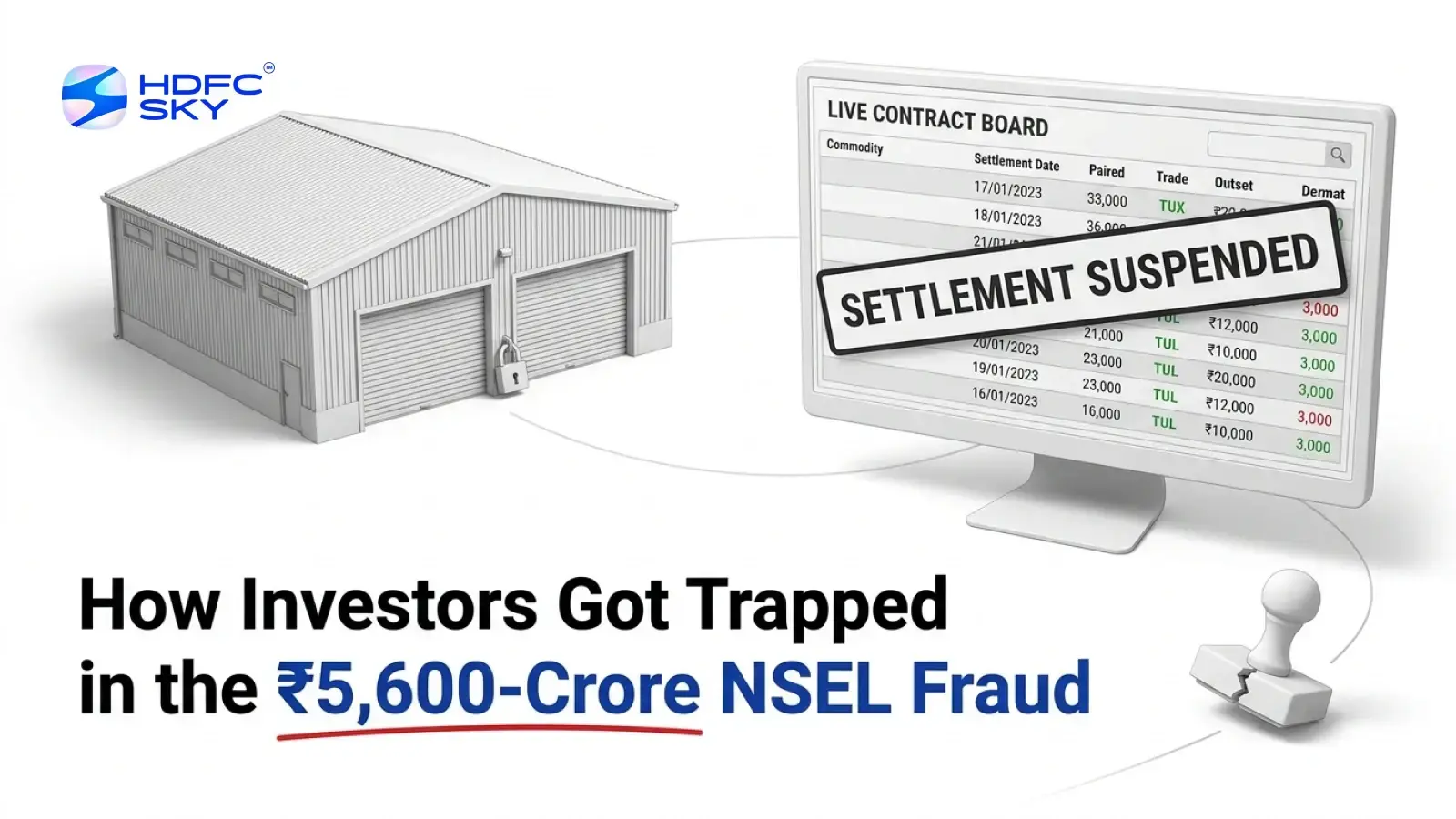
The controversial transactions involved buying a commodity contract and simultaneously selling another contract with a later settlement date. Commodities were supposed to exist in warehouses and be backed by actual inventory. But many of the commodities either did not exist in sufficient quantities or were never properly verified.
The returns generated by these contracts resembled financial products that beared interest rather than genuine commodity trades. This should have raised a critical question. Where were physical commodities if the trade was backed by those commodities? That question was not asked aggressively enough until it was too late
Also read: What the Buffett Indicator says about Indian market valuations right now — and its limitations
The Collapse
The crisis erupted in July 2013 when NSEL suddenly suspended trading in most contracts and announced a settlement plan. It became clear that several borrowers could not repay the money owed to investors. The supposed transactions were exposed as largely unsupported by adequate physical stock.
The payment default quickly grew into a INR 5,600 crore crisis. Thousands of participants found themselves unable to recover their money. Regulators and enforcement agencies began investigating the matter.
What Went Wrong?
There was inadequate verification of warehouse stocks and collateral.Products that functioned like financing arrangements were allowed to operate under the appearance of commodity transactions.
Oversight gaps also enabled questionable practices to continue for years without effective intervention.
Lessons You Should Take Away
- The NSEL crisis offers a timeless lesson. Never assume that a product is less risky simply because it is offered through a recognised platform.
- Always do the following –
- Understand exactly how returns are generated before committing money.
- Ask whether the underlying asset exists, who verifies it, and what happens if the counterparty fails to pay.
- Be cautious when an investment promises predictable returns with little apparent risk.



Open Free Demat Account
Open Free Demat Account
Popular Posts
- 3 Things New Investors Should Check Before Opening a Demat AccountLast Updated: Jul 15, 2026
- 5 Features Protecting Your Wealth on HDFC SKYLast Updated: Jul 1, 2026
- Let’s view more exciting Posts
Popular Post from Fraud Files by Sky
- The Roofit Industries Pump And Dump - What the SEBI Order Reveals About Stock ManipulationLast Updated: Jun 18, 2026
- Harshad Mehta’s Bank Receipt Scam - the Blueprint That Modern Fraudsters StillLast Updated: Jun 16, 2026
- The Vaswani Industries Penny Stock Scam: Step By Step Anatomy of a Retail Investor TrapLast Updated: Jun 18, 2026
- Bhansali Finance: How a Promoter Ran a INR 1200 Crore Scam Through Layered Shell CompaniesLast Updated: Jun 18, 2026
- The ABG Shipyard Bank Fraud: Red Flags That Auditors and Investors Overlooked for YearsLast Updated: Jun 18, 2026
- Let's view more exciting Post!
Popular Post from Blogs
- “Bounce Back” Theme Gains Traction in 2026Last Updated: Apr 8, 2026
- 5 Takeaways for Tax Payers from the Budget 2025Last Updated: Jan 29, 2026
- Let’s view more exciting Posts


Invest Anytime, Anywhere


By signing up I certify terms, conditions & privacy policy