Nifty 50
- HDFC Bank₹708.2514.45 (2.08%)
- Hindalco Industries₹981.50-32.50 (-3.21%)
- Dr. Reddy's Labs₹1,165.5022.50 (1.97%)
- JSW Steel₹1,265-39.00 (-2.99%)
- Tech Mahindra₹1,54115.20 (1.00%)
- Eicher Motors₹7,530-167.00 (-2.17%)
- HDFC Life Insurance ₹5303.85 (0.73%)
- Tata Steel₹183-3.78 (-2.02%)
- Wipro₹167.401.10 (0.66%)
- ONGC₹232.50-4.77 (-2.01%)
- Kotak Mahindra Bank₹4192.45 (0.59%)
- Maruti Suzuki₹12,400-190.00 (-1.51%)
- InterGlobe Aviation₹4,97328.00 (0.57%)
- Bajaj Finserv₹1,913.50-27.00 (-1.39%)
- Eternal₹323.501.40 (0.43%)
- SBI₹995.70-14.00 (-1.39%)
- ITC₹259.850.55 (0.21%)
- Coal India₹426.40-5.60 (-1.30%)
- Tata Motors PV₹301.100.60 (0.20%)
- Reliance Industries₹1,257.50-16.50 (-1.30%)

- Offerings
- Tools & Platforms
Tools & Calculators
- Open API
- Calculators
- SIP Calculator
- CAGR Calculator
- Compound Interest Calculator
- FD Calculator
- RD Calculator
- EPF Calculator
- Retirement Calculator
- HDFC SIP Calculator
- Mutual Fund Return Calculator
- Lumpsum Calculator
- Step Up SIP Calculator
- ETF SIP Calculator
- Brokerage Calculator
- Equity Margin Calculator
- SWP Calculator
- EMI Calculator
- MTF Calculator
- Margin Pledge Calculator
- Algo Strategy
- Markets
Stocks
F&O
Mutual Funds
- More
Bhansali Finance: How a Promoter Ran a INR 1200 Crore Scam Through Layered Shell Companies
By Aseem Shrivastava | Updated at: Jun 18, 2026 03:40 PM IST
Open Free Demat Account
Open Free Demat Account
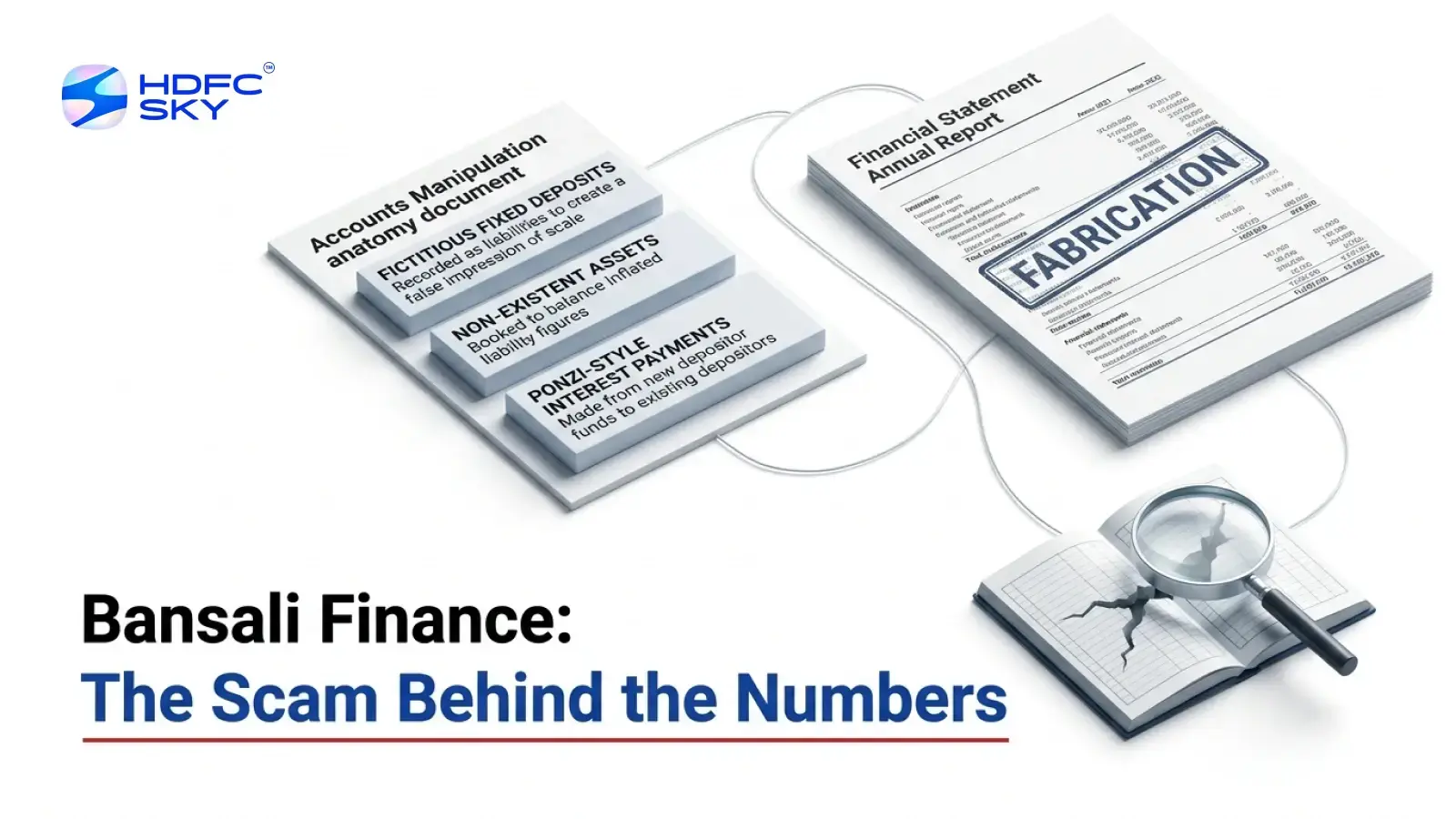
The biggest financial frauds are rarely built on a single fake transaction. They are usually hidden behind layers of companies and complex fund flows. The CRB (Chain Roop Bhansali) scam of the 1990s is a classic example. Let’s understand the finer details of the scam and ways you can protect yourself against it.
How the CRB Empire Expanded So Quickly
Bhansali began with financial consultancy services before expanding into merchant banking, mutual funds, fixed deposits, leasing, stockbroking, and asset management. The CRB Group projected itself as a growing financial powerhouse. Strong credit ratings and an expanding list of financial products helped attract public money.
Investors saw growth. What many did not see was the structure underneath. Behind the group stood a large network of subsidiaries and closely linked entities that would later become central to the fraud allegations.
Also Read: The repo rate transmission lag: why RBI rate cuts take 6–12 months to show up in your EMI
The Role of Shell Companies
One of the most important aspects of the scam was the use of numerous unlisted and allegedly dummy companies. Reports suggest that Bhansali floated more than 100 subsidiaries and related entities. Large amounts of money raised from the public were routed through these companies instead of being deployed into productive businesses.
These entities created multiple layers between the source of funds and their final destination. The structure appeared functional as long as money kept moving. But the complexity made it difficult for outsiders to understand where the capital was actually going.
How Financial Engineering Hid the Problem
The CRB Group allegedly used interconnected transactions among its companies. Group entities invested in one another, creating an appearance of value and financial strength. Such arrangements can make balance sheets look healthier than they really are.
Reports on the scam also describe how stock prices were allegedly supported through related entities, helping maintain market confidence and making future fundraising easier. The result was a financial structure that looked successful from the outside but depended heavily on continuous inflows of fresh money.
The Collapse
The cracks began appearing when liquidity pressures increased and repayment obligations became difficult to meet. Confidence quickly disappeared as payment problems surfaced. Depositors rushed to withdraw funds and regulators intensified scrutiny. The collapse exposed serious weaknesses in oversight and triggered a debate over the responsibilities of regulators and financial institutions.
What You Should Learn From It
The CRB scam highlights why you should never judge a company only by its growth story. Pay attention to complex corporate structures and financial statements that are difficult to understand.
You should ask tougher questions when a company relies on dozens of interconnected businesses with limited transparency. The warning signs are visible long before the collapse in many financial scandals. The CRB case shows that complexity itself can sometimes be the biggest red flag.



Open Free Demat Account
Open Free Demat Account
Popular Posts
- 3 Things New Investors Should Check Before Opening a Demat AccountLast Updated: Jul 15, 2026
- 5 Features Protecting Your Wealth on HDFC SKYLast Updated: Jul 1, 2026
- Let’s view more exciting Posts
Popular Post from Fraud Files by Sky
- The Roofit Industries Pump And Dump - What the SEBI Order Reveals About Stock ManipulationLast Updated: Jun 18, 2026
- Harshad Mehta’s Bank Receipt Scam - the Blueprint That Modern Fraudsters StillLast Updated: Jun 16, 2026
- The Vaswani Industries Penny Stock Scam: Step By Step Anatomy of a Retail Investor TrapLast Updated: Jun 18, 2026
- The ABG Shipyard Bank Fraud: Red Flags That Auditors and Investors Overlooked for YearsLast Updated: Jun 18, 2026
- NSEL Crisis 2013: How a Commodity Exchange Ran an INR 5,600 Crore Fraud in Plain SightLast Updated: Jun 18, 2026
- Let's view more exciting Post!
Popular Post from Blogs
- “Bounce Back” Theme Gains Traction in 2026Last Updated: Apr 8, 2026
- 5 Takeaways for Tax Payers from the Budget 2025Last Updated: Jan 29, 2026
- Let’s view more exciting Posts


Invest Anytime, Anywhere


By signing up I certify terms, conditions & privacy policy