Nifty 50
- Tech Mahindra₹1,790140.00 (8.48%)
- InterGlobe Aviation₹4,686.90-91.40 (-1.91%)
- TCS₹2,465115.00 (4.89%)
- BSE₹3,363-65.00 (-1.90%)
- Infosys₹1,161.2051.20 (4.61%)
- Max Healthcare₹846-12.00 (-1.40%)
- Bharti Airtel₹1,90551.00 (2.75%)
- Tata Consumer ₹978.90-12.55 (-1.27%)
- Mahindra & Mahindra₹2,920.9059.20 (2.07%)
- Jio Financial ₹216.25-2.76 (-1.26%)
- Bajaj Finance₹98115.75 (1.63%)
- ONGC₹222-2.64 (-1.18%)
- Hindalco Industries₹90814.15 (1.58%)
- Bharat Electronics₹376.85-3.55 (-0.93%)
- HCL Technologies₹1,38020.00 (1.47%)
- Nestle₹1,265.50-10.30 (-0.81%)
- JSW Steel₹1,216.4016.00 (1.33%)
- Adani Enterprises₹2,680.90-19.10 (-0.71%)
- Grasim Industries₹2,92034.10 (1.18%)
- Bajaj Finserv₹1,720-12.00 (-0.69%)

- Offerings
- Tools & Platforms
Tools & Calculators
- Open API
- Calculators
- SIP Calculator
- CAGR Calculator
- Compound Interest Calculator
- FD Calculator
- RD Calculator
- EPF Calculator
- Retirement Calculator
- HDFC SIP Calculator
- Mutual Fund Return Calculator
- Lumpsum Calculator
- Step Up SIP Calculator
- ETF SIP Calculator
- Brokerage Calculator
- Equity Margin Calculator
- SWP Calculator
- EMI Calculator
- MTF Calculator
- Margin Pledge Calculator
- Algo Strategy
- Markets
Stocks
F&O
Mutual Funds
- More
Why seasoned investors increase SIP amounts during corrections instead of pausing them
By Aseem Shrivastava | Published at: Jun 4, 2026 12:32 PM IST
Open Free Demat Account
Open Free Demat Account
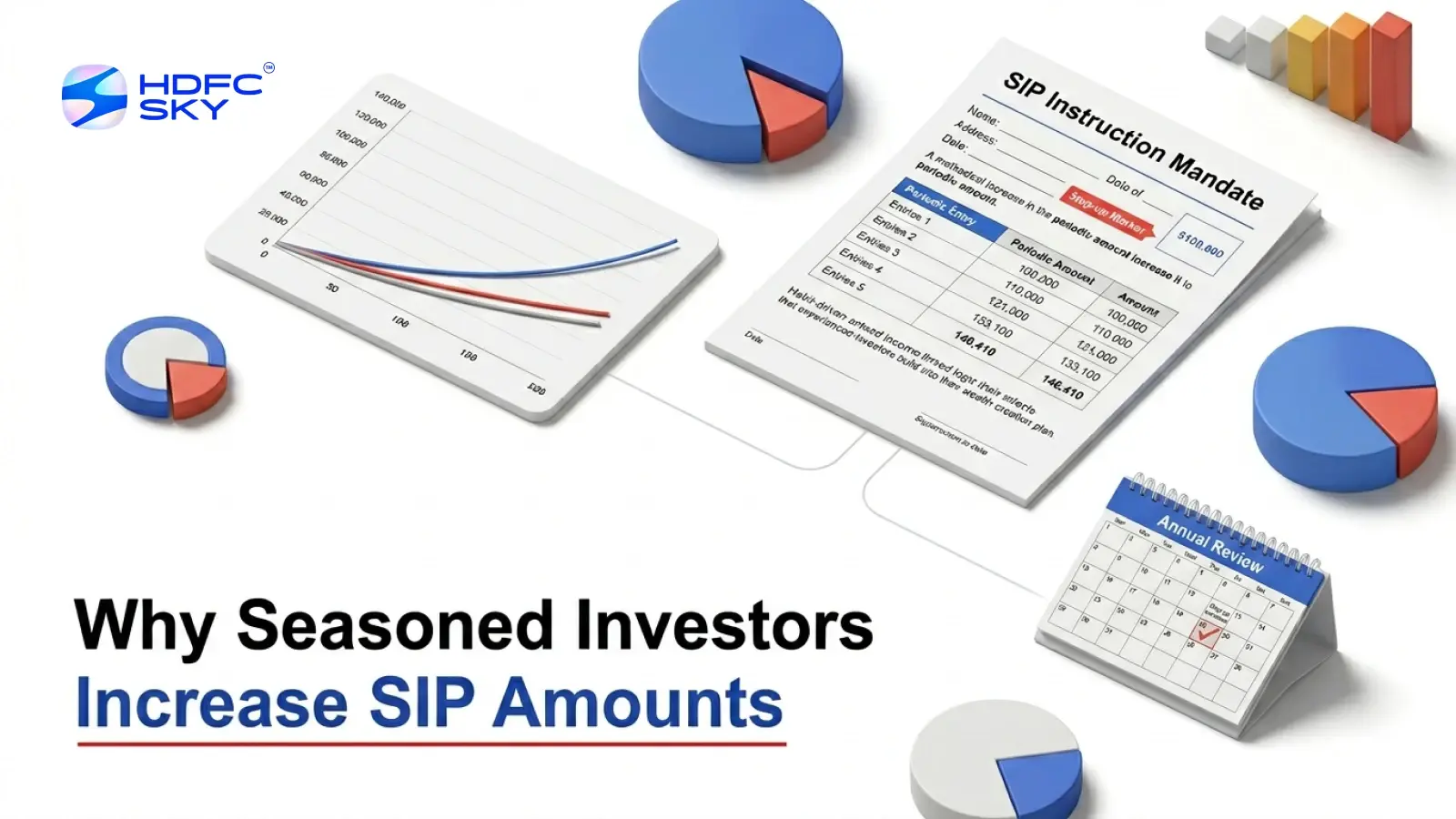
Market corrections typically trigger two types of reactions. Some investors reduce or pause their SIPs as prices fall and sentiment weakens. However, experienced investors tend to respond differently. They do not view corrections as a reason to step back; instead, they see them as periods when long-term investing becomes more efficient.
Corrections are about price, not quality
When markets fall, it often creates discomfort. However, experienced investors remain focused on value rather than short-term price movements. A correction does not necessarily indicate a problem with the underlying investments; it simply reflects adjusted pricing.
Because of this, SIPs are rarely paused. In many cases, investors continue them consistently, and some even increase their SIP amounts. Lower prices allow investors to accumulate more units for the same investment amount, improving long-term outcomes.
Also Read: Why smart investors are quietly building positions in beaten-down capital goods stocks
Liquidity is prepared in advance
This decision is rarely made during the correction itself. Experienced investors typically plan for such scenarios in advance. During strong or uncertain markets, they allocate a portion of capital to relatively stable instruments such as debt funds.
This preparation provides flexibility. When corrections occur, they already have capital available for deployment into SIPs or additional investments. As a result, increasing SIPs is not a reactive decision, but part of a disciplined investment strategy.
A steady mindset over reactive decisions
At the core of this approach is a simple difference in mindset. Short-term volatility is not treated as risk in itself. It is treated as movement in price. Risk is seen in a more Long-term sense, linked to whether investments are fundamentally sound, not whether prices are temporarily down.
This is why increasing SIPs during corrections is not seen as aggressive. It is seen as staying consistent when conditions improve for long-term investing.
A consolidated setup helps investors stay consistent when increasing SIPs or rebalancing exposure. HDFC Sky enables this by bringing key investment instruments into one place.



Open Free Demat Account
Open Free Demat Account
Popular Posts
- 10 Interesting Facts About NSE You Probably Didn’t KnowLast Updated: Sep 30, 2026
- 8-4-3 Rule of SIP - How Does That Work?Last Updated: Jul 30, 2025
- Let's view more exciting Post!
Popular Post from Smart Money Moves
- How Smart Investors Use Debt Funds While Waiting for Market DipsLast Updated: Jun 4, 2026
- The Contrarian Trade: FIIs Are Buying Indian IT While Retail Investors Are SellingLast Updated: Jun 4, 2026
- The Portfolio Rebalancing Strategy That Systematically Forces You to Buy Low and Sell HighLast Updated: Jun 4, 2026
- The 3-Bucket Portfolio Strategy That Wealthy Indian Families Use to Manage Generational WealthLast Updated: Jun 4, 2026
- Why Institutional Investors Quietly Added PSU Bank Exposure Before the Q4 Rally: What the 2026 Data ShowsLast Updated: Jun 4, 2026
- Let's view more exciting Post!
Popular Post from Blogs
- “Bounce Back” Theme Gains Traction in 2026Last Updated: Apr 8, 2026
- 5 Takeaways for Tax Payers from the Budget 2025Last Updated: Jan 29, 2026
- Let’s view more exciting Posts


Invest Anytime, Anywhere


By signing up I certify terms, conditions & privacy policy