Nifty 50
- Tech Mahindra₹1,7900.00 (0.00%)-
- BSE₹3,3630.00 (0.00%)-
- Bajaj Finance₹982.100.00 (0.00%)-
- Bharat Electronics₹376.850.00 (0.00%)-
- Cipla₹1,325.100.00 (0.00%)-
- SBI₹962.600.00 (0.00%)-
- Titan Company₹4,444.800.00 (0.00%)-
- Dr. Reddy's Labs₹1,2330.00 (0.00%)-
- HDFC Bank₹728.850.00 (0.00%)-
- Infosys₹1,161.200.00 (0.00%)-

- Offerings
- Tools & Platforms
Tools & Calculators
- Open API
- Calculators
- SIP Calculator
- CAGR Calculator
- Compound Interest Calculator
- FD Calculator
- RD Calculator
- EPF Calculator
- Retirement Calculator
- HDFC SIP Calculator
- Mutual Fund Return Calculator
- Lumpsum Calculator
- Step Up SIP Calculator
- ETF SIP Calculator
- Brokerage Calculator
- Equity Margin Calculator
- SWP Calculator
- EMI Calculator
- MTF Calculator
- Margin Pledge Calculator
- Algo Strategy
- Markets
Stocks
F&O
Mutual Funds
- More
The 3-Bucket Portfolio Strategy That Wealthy Indian Families Use to Manage Generational Wealth
By Aseem Shrivastava | Published at: Jun 4, 2026 01:13 PM IST
Open Free Demat Account
Open Free Demat Account
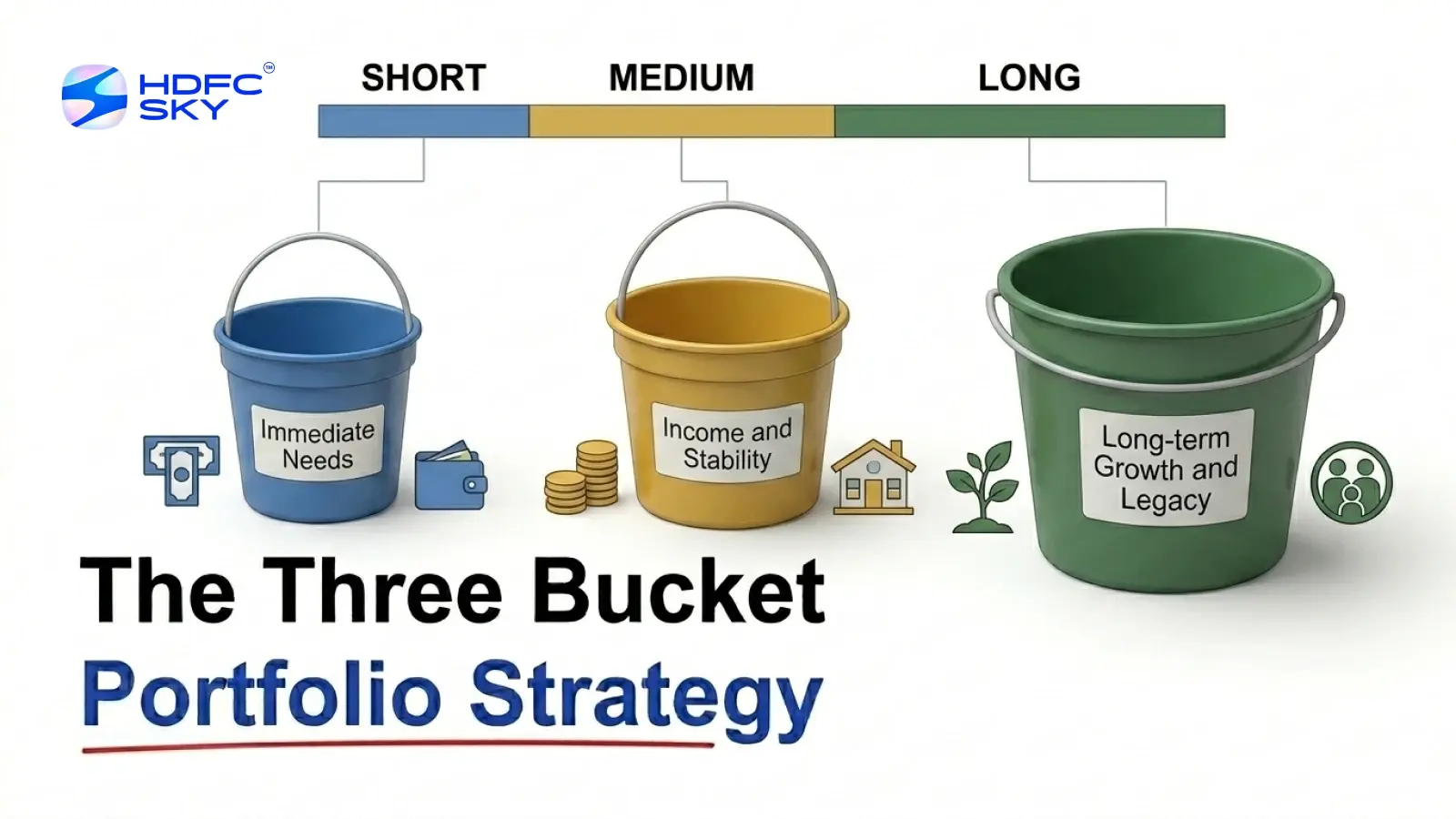
Wealthy Indian families don’t really approach investing as a collection of products. They tend to keep things more organized than that. Money is first given a clear purpose, and only then is it invested. That simple mindset is what sits behind the 3-bucket portfolio approach, even if they don’t always call it that.
It is one of the simplest ways they manage wealth across generations without losing balance between safety and growth.
A Simple Way to Organize Wealth
Instead of pooling all investments together, wealth is divided into three buckets based on time horizon and financial goals. Each bucket serves a distinct purpose.
Bucket 1: Immediate Needs
This bucket focuses on liquidity and accessibility. It includes emergency funds and short-term expenses. Investments typically consist of cash, savings accounts, or liquid funds, where safety is prioritized over returns.
Bucket 2: Income and Stability
This bucket balances risk and return. It supports planned expenses and provides consistent income. Common instruments include debt funds, conservative hybrid funds, and other low-volatility investments.
Bucket 3: Long-term Growth and Legacy
This bucket is designed for long-term wealth creation. Investments such as equities, index funds, and other growth-oriented assets are held for extended periods, often decades, to benefit from compounding.
Also Read: How HNIs are using sovereign gold bonds instead of physical gold and its tax reason
Why This Structure Works
The biggest advantage of this approach is clarity. Each portion of wealth has a defined role, which reduces emotional decision-making during market fluctuations.
How to Get Started
Start by dividing your money based on time horizons:
- Allocate funds for short-term needs separately
- Invest a portion in stable, income-generating instruments
- Keep long-term investments untouched to allow growth
The structure may not feel perfect initially, but clarity improves as you consistently follow the approach.



Open Free Demat Account
Open Free Demat Account
Popular Posts
- 10 Interesting Facts About NSE You Probably Didn’t KnowLast Updated: Sep 30, 2026
- 8-4-3 Rule of SIP - How Does That Work?Last Updated: Jul 30, 2025
- Let's view more exciting Post!
Popular Post from Smart Money Moves
- How Smart Investors Use Debt Funds While Waiting for Market DipsLast Updated: Jun 4, 2026
- The Contrarian Trade: FIIs Are Buying Indian IT While Retail Investors Are SellingLast Updated: Jun 4, 2026
- The Portfolio Rebalancing Strategy That Systematically Forces You to Buy Low and Sell HighLast Updated: Jun 4, 2026
- Why Institutional Investors Quietly Added PSU Bank Exposure Before the Q4 Rally: What the 2026 Data ShowsLast Updated: Jun 4, 2026
- Why seasoned investors increase SIP amounts during corrections instead of pausing themLast Updated: Jun 4, 2026
- Let's view more exciting Post!
Popular Post from Blogs
- “Bounce Back” Theme Gains Traction in 2026Last Updated: Apr 8, 2026
- 5 Takeaways for Tax Payers from the Budget 2025Last Updated: Jan 29, 2026
- Let’s view more exciting Posts


Invest Anytime, Anywhere


By signing up I certify terms, conditions & privacy policy