Nifty 50
- Kotak Mahindra Bank₹4408.10 (1.88%)
- Titan Company₹4,377-173.00 (-3.80%)
- BSE₹3,35651.00 (1.54%)
- Adani Enterprises₹2,743-106.90 (-3.75%)
- Bharti Airtel₹1,833.9023.40 (1.29%)
- Hindalco Industries₹910.85-29.65 (-3.15%)
- ICICI Bank₹1,357.5014.70 (1.09%)
- JSW Steel₹1,230-29.60 (-2.35%)
- Coal India₹414.502.85 (0.69%)
- Bharat Electronics₹378.30-9.10 (-2.35%)
- Max Healthcare₹9085.50 (0.61%)
- Infosys₹992-21.85 (-2.16%)
- HDFC Life Insurance ₹546.052.10 (0.39%)
- Asian Paints₹2,372.10-52.10 (-2.15%)
- Bajaj Finance₹963.850.75 (0.08%)
- Mahindra & Mahindra₹2,800-55.00 (-1.93%)
- Apollo Hospitals₹7,9172.50 (0.03%)
- Adani Ports₹1,750.10-33.30 (-1.87%)
- L&T₹3,701.50-68.50 (-1.82%)

- Offerings
- Tools & Platforms
Tools & Calculators
- Open API
- Calculators
- SIP Calculator
- CAGR Calculator
- Compound Interest Calculator
- FD Calculator
- RD Calculator
- EPF Calculator
- Retirement Calculator
- HDFC SIP Calculator
- Mutual Fund Return Calculator
- Lumpsum Calculator
- Step Up SIP Calculator
- ETF SIP Calculator
- Brokerage Calculator
- Equity Margin Calculator
- SWP Calculator
- EMI Calculator
- MTF Calculator
- Margin Pledge Calculator
- Algo Strategy
- Markets
Stocks
F&O
Mutual Funds
- More
Oil Price Today, August 14, 2026: Crude Edges Up To Around $87 Per Barrel As US Threatens Indefinite Iran Blockade; Brent Set For Weekly Gain
Authored By HDFC SKY | Last Modified: Aug 14, 2026 10:17 AM IST

Open Free Demat Account
Open Free Demat Account
New Delhi, August 14: Oil prices steadied on Friday after the United States threatened to maintain its naval blockade of Iran indefinitely, reviving concerns over global crude supplies and offsetting pressure from a weaker demand outlook and a sharp increase in U.S. oil inventories. Brent crude remained near $87 a barrel, with the market caught between rising geopolitical risks and signs of softer demand.
Brent crude futures rose 0.16% to $87.2 a barrel while U.S. West Texas Intermediate crude gained the same to $81.4 a barrel. Both benchmarks were on track for weekly gains of around 4%, despite falling more than 2% in the previous session. The decline followed a six-session rally in Brent and a five-session advance in WTI.

US-Iran Tensions Keep Oil Market On Edge
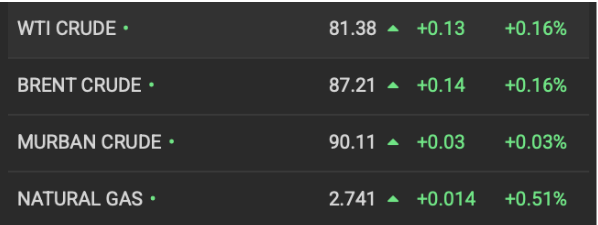
Both contracts inched up as Middle East continued to keep oil on edge. Source: Oilprice.com
The latest uptick in crude prices came after Washington warned that it could keep its naval blockade of Iran in place indefinitely and step up economic pressure on Tehran. The warning came as ceasefire talks remained stalled, adding to uncertainty over how long the conflict could disrupt oil flows from the region.
The Strait of Hormuz remains at the centre of the supply concerns. The strategic waterway carried around 20% of global oil flows before the conflict, and restrictions on traffic through the strait have raised concerns over the availability and cost of crude in international markets.
The situation escalated further on Thursday after two vessels operated by Abu Dhabi National Oil Company were attacked while transiting the Strait of Hormuz, according to the UAE’s state news agency WAM. The UAE government condemned the incident as an Iranian attack.
Also Read: How To Invest In Crude Oil
Supply Risks Offset By Weak Demand Outlook
While geopolitical tensions are lending support to crude, the market is also facing a series of bearish signals. Forecasts from the Organization of the Petroleum Exporting Countries (OPEC) and the International Energy Agency (IEA) have pointed to weaker oil demand growth in 2026.
The pressure was compounded by U.S. inventory data showing a large weekly increase in crude stocks. The build was the biggest in more than three-and-a-half years, raising concerns that supply is currently outpacing demand in the world’s largest oil-consuming economy.
These opposing forces have prevented crude prices from making a decisive move in either direction. Rystad Energy’s Susan Bell said the broader geopolitical backdrop was preventing a sharper decline despite bearish inventory data, while KCM chief market analyst Tim Waterer described the supply and demand forces as counterweights.
Brent, WTI Set For Weekly Gains
Despite Thursday’s decline, both major crude benchmarks remain on course to gain around 4% this week. Brent had previously advanced for six consecutive sessions, while WTI recorded five straight sessions of gains before the latest pullback.
The price action suggests that investors are assigning a significant risk premium to the possibility of prolonged disruption in the Middle East, even as weaker demand forecasts and higher U.S. inventories argue for lower prices.
The market could remain volatile in the near term as traders assess whether the U.S.-Iran conflict results in a prolonged disruption to crude shipments or whether diplomatic efforts eventually ease supply concerns.
India Impact: Crude Remains Key Risk
For India, the direction of crude oil prices remains particularly important because the country relies heavily on imports to meet its energy requirements. A prolonged rise in international oil prices could increase India’s import bill, put pressure on the rupee and complicate the inflation outlook.
Higher crude prices can also affect corporate profitability across fuel-intensive sectors. Aviation, paints, chemicals, tyres, logistics and other companies with significant fuel or petroleum-linked costs could face margin pressure if oil remains elevated. Conversely, upstream oil producers could benefit from stronger crude realisations.
For Indian equity markets, crude around $87 a barrel is therefore likely to remain a key risk factor. A further escalation in tensions around the Strait of Hormuz could push prices higher and weigh on investor sentiment, while signs of easing geopolitical tensions or weaker demand could bring some relief.
For now, the oil market remains caught between geopolitical supply risks and deteriorating demand signals. The United States’ threat of an indefinite blockade of Iran has prevented crude from extending its previous decline, but large U.S. stockpiles and weaker demand forecasts are limiting the upside. The balance between these competing forces is likely to determine whether Brent can sustain its move above $87 or retreat from recent highs.
Source
- oilprice.com
Disclaimer
If you have any concerns, questions, or wish to point out any discrepancies in our content, please feel free to write to us at content@hdfcsec.com.
Please Note: The information shared is intended solely for informational purposes and does not make any investment recommendations
Disclaimer
At HDFC SKY*, we take utmost care and due diligence in curating and presenting news and market-related content. However, inadvertent errors or omissions may occasionally occur.
If you have any concerns, questions, or wish to point out any discrepancies in our content, please feel free to write to us at content@hdfcsec.com.
Please Note: The information shared is intended solely for informational purposes and does not make any investment recommendations.
HDFC SKY from HDFC Securities, one of most trusted trading platforms in India, has been recognized with the *Next-Gen Digi Content Awards 2025-26.
 Join Us
 Add as preferred source on Google


More Business News










Open Free Demat Account
Open Free Demat Account












Invest Anytime, Anywhere


By signing up I certify terms, conditions & privacy policy