Nifty 50
- Kotak Mahindra Bank₹4408.10 (1.88%)
- Titan Company₹4,377-173.00 (-3.80%)
- BSE₹3,35651.00 (1.54%)
- Adani Enterprises₹2,743-106.90 (-3.75%)
- Bharti Airtel₹1,833.9023.40 (1.29%)
- Hindalco Industries₹910.85-29.65 (-3.15%)
- ICICI Bank₹1,357.5014.70 (1.09%)
- JSW Steel₹1,230-29.60 (-2.35%)
- Coal India₹414.502.85 (0.69%)
- Bharat Electronics₹378.30-9.10 (-2.35%)
- Max Healthcare₹9085.50 (0.61%)
- Infosys₹992-21.85 (-2.16%)
- HDFC Life Insurance ₹546.052.10 (0.39%)
- Asian Paints₹2,372.10-52.10 (-2.15%)
- Bajaj Finance₹963.850.75 (0.08%)
- Mahindra & Mahindra₹2,800-55.00 (-1.93%)
- Apollo Hospitals₹7,9172.50 (0.03%)
- Adani Ports₹1,750.10-33.30 (-1.87%)
- L&T₹3,701.50-68.50 (-1.82%)

- Offerings
- Tools & Platforms
Tools & Calculators
- Open API
- Calculators
- SIP Calculator
- CAGR Calculator
- Compound Interest Calculator
- FD Calculator
- RD Calculator
- EPF Calculator
- Retirement Calculator
- HDFC SIP Calculator
- Mutual Fund Return Calculator
- Lumpsum Calculator
- Step Up SIP Calculator
- ETF SIP Calculator
- Brokerage Calculator
- Equity Margin Calculator
- SWP Calculator
- EMI Calculator
- MTF Calculator
- Margin Pledge Calculator
- Algo Strategy
- Markets
Stocks
F&O
Mutual Funds
- More
Oil Prices Today, August 21, 2026: Brent Dips to $93.40, WTI at $86.30 as US-Iran War Keeps Supply Risks Elevated
Authored By HDFC SKY | Last Modified: Aug 21, 2026 10:37 AM IST
Open Free Demat Account
Open Free Demat Account
Mumbai, August 21: Oil prices edged lower on Friday but remained on track for a second consecutive weekly gain as the prolonged US-Iran conflict continued to disrupt crude supplies and raise concerns over further supply constraints. Brent crude futures dipped 0.3% to $93.40 a barrel, while US West Texas Intermediate (WTI) crude slipped 0.55% to $86.30 a barrel.
Despite Friday’s decline, both benchmarks remain sharply higher for the week as investors assess the impact of the conflict on crude production and shipments from the Middle East. The market remains particularly sensitive to developments around the Strait of Hormuz, a critical transit route for global oil supplies.

Crude Set for Second Weekly Gain
Brent is headed for its second straight weekly advance, while WTI is also poised to post a weekly gain. The rally has pushed oil prices to their highest levels since late July as traders increasingly factor in the possibility of prolonged disruptions to Middle Eastern supplies.
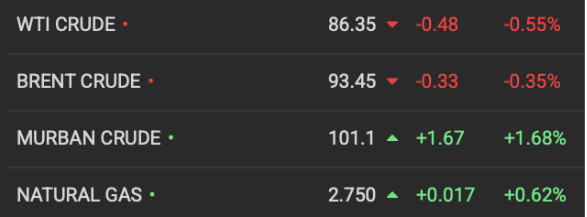
Both contracts edged down on profit taking. Source: Oilprice.com
The latest price moves come after Brent climbed to a one-month high of $94.71 a barrel in the previous session before paring gains. The benchmark has remained close to the $94 level despite some profit-taking, highlighting the strength of the underlying supply concerns.
The sustained rise in crude prices has also revived worries about the inflationary impact of higher energy costs. A prolonged period of elevated oil prices could make it more difficult for major central banks to ease monetary policy, while also increasing costs for consumers and businesses.
Also Read: How To Invest In Crude Oil
US-Iran Conflict Keeps Markets on Edge
The oil market remains focused on the unresolved conflict between the United States and Iran. An earlier truce expired this week without a longer-term agreement, raising concerns that hostilities could continue to disrupt energy infrastructure and exports from the region.
The US has also threatened tougher economic measures against Iran, increasing uncertainty over the country’s ability to maintain oil exports. Any further escalation could tighten global crude supplies at a time when traders are already concerned about disruptions affecting several major oil-producing countries.
Market participants are therefore closely watching diplomatic developments for signs of either de-escalation or further deterioration. A breakthrough in negotiations could ease some of the risk premium currently embedded in crude prices, while a worsening conflict could send prices higher.
Strait of Hormuz in Focus
The Strait of Hormuz remains one of the biggest risks for the global oil market. The narrow waterway is a vital route for shipments from major producers in the Gulf, and any prolonged disruption could have significant consequences for global energy supplies.
Shipping activity through the strait has fallen sharply since the conflict began. Before the war, the waterway handled oil shipments equivalent to roughly one-fifth of global consumption, making it particularly important for Asian economies that rely heavily on Middle Eastern crude.
Any further restrictions on tanker traffic or attacks on energy infrastructure could therefore trigger another sharp increase in crude prices. Conversely, a sustained recovery in shipping flows would likely reduce some of the supply premium currently supporting oil.
Impact on India
For India, the rise in crude prices is a significant macroeconomic concern. The country imports a large share of its crude oil requirements, leaving the economy vulnerable to sustained increases in international oil prices.
Brent crude near $94 a barrel could increase India’s import bill and put pressure on the rupee. Higher crude prices can also raise transportation and input costs across sectors, potentially adding to inflationary pressures and squeezing corporate margins.
The impact on Indian equities could be particularly important if oil remains above $90 for an extended period. Oil marketing companies, airlines, paints, chemicals and other fuel-intensive businesses could face margin pressure, while a weaker rupee could add to imported inflation.
What Lies Ahead for Oil Prices
The near-term direction of crude will depend heavily on the trajectory of the US-Iran conflict and the extent to which supply disruptions persist. Traders are likely to monitor developments around the Strait of Hormuz, US sanctions on Iran and the possibility of renewed diplomatic engagement.
While Friday’s decline suggests some profit-taking after the recent rally, the broader trend remains supported by supply concerns. With Brent still hovering close to $94, any fresh escalation in the Middle East could push crude prices higher and further increase the risk premium.
For now, the oil market remains caught between hopes of a diplomatic resolution and fears of a prolonged supply shock. Until there is greater clarity on the conflict, volatility is likely to remain elevated.
Source
- oilprice.com
Disclaimer
If you have any concerns, questions, or wish to point out any discrepancies in our content, please feel free to write to us at content@hdfcsec.com.
Please Note: The information shared is intended solely for informational purposes and does not make any investment recommendations
HDFC SKY, one of India’s most trusted trading platforms, has been recognized with the Next-Gen Digi Content Awards 2025–26.
Disclaimer
At HDFC SKY*, we take utmost care and due diligence in curating and presenting news and market-related content. However, inadvertent errors or omissions may occasionally occur.
If you have any concerns, questions, or wish to point out any discrepancies in our content, please feel free to write to us at content@hdfcsec.com.
Please Note: The information shared is intended solely for informational purposes and does not make any investment recommendations.
HDFC SKY from HDFC Securities, one of most trusted trading platforms in India, has been recognized with the *Next-Gen Digi Content Awards 2025-26.
 Join Us
 Add as preferred source on Google


More Business News










Open Free Demat Account
Open Free Demat Account












Invest Anytime, Anywhere


By signing up I certify terms, conditions & privacy policy