Nifty 50
- Eternal₹317.4012.95 (4.25%)
- Shriram Finance₹865-35.90 (-3.98%)
- Apollo Hospitals₹7,730125.50 (1.65%)
- Adani Enterprises₹2,477-73.00 (-2.86%)
- ONGC₹227.502.50 (1.11%)
- JSW Steel₹1,185.50-34.50 (-2.83%)
- Asian Paints₹2,30722.20 (0.97%)
- Jio Financial ₹205.03-5.77 (-2.74%)
- TCS₹2,53023.10 (0.92%)
- Tata Steel₹167.67-4.66 (-2.70%)
- UltraTech Cement₹11,05092.00 (0.84%)
- Adani Ports₹1,702.70-47.30 (-2.70%)
- Maruti Suzuki₹11,23060.00 (0.54%)
- Tech Mahindra₹1,790-39.10 (-2.14%)
- Cipla₹1,3387.10 (0.53%)
- Tata Motors PV₹264.60-5.40 (-2.00%)
- Reliance Industries₹1,1905.50 (0.46%)
- Hindalco Industries₹869.85-15.75 (-1.78%)
- Axis Bank₹1,217.505.50 (0.45%)
- Trent₹2,727.50-48.30 (-1.74%)

- Offerings
- Tools & Platforms
Tools & Calculators
- Open API
- Calculators
- SIP Calculator
- CAGR Calculator
- Compound Interest Calculator
- FD Calculator
- RD Calculator
- EPF Calculator
- Retirement Calculator
- HDFC SIP Calculator
- Mutual Fund Return Calculator
- Lumpsum Calculator
- Step Up SIP Calculator
- ETF SIP Calculator
- Brokerage Calculator
- Equity Margin Calculator
- SWP Calculator
- EMI Calculator
- MTF Calculator
- Margin Pledge Calculator
- Algo Strategy
- Markets
Stocks
F&O
Mutual Funds
- More
Oil Prices Today: Brent Crude Nears $86 as US-Iran Conflict Escalates; Supply Fears Keep Crude Elevated
Authored By HDFC SKY | Last Modified: Jul 15, 2026 11:16 AM IST

Open Free Demat Account
Open Free Demat Account
Mumbai, July 15: Crude oil prices climbed on Wednesday, extending recent gains as renewed hostilities between the United States and Iran heightened concerns over potential disruptions to global energy supplies. Brent crude traded above $85 a barrel, while US benchmark West Texas Intermediate (WTI) also advanced, as investors closely monitored developments in the Middle East that could threaten one of the world’s most critical oil transit routes.
The latest rally comes after a series of military actions by both countries reignited fears of supply disruptions, overshadowing broader macroeconomic factors and reinforcing the geopolitical risk premium in oil markets.

Brent, WTI extend gains
Brent crude futures rose 1.2% to $85.8 a barrel, while US WTI crude gained 0.9% to $80 a barrel.
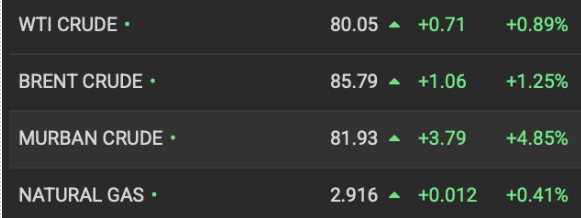
Both benchmarks continue to boil as Middle East refuses to simmer down. Source: oilprice.com
Both benchmarks have rallied sharply over the past week as investors priced in the possibility of prolonged instability in the Gulf region. The gains have pushed Brent to its highest level in a month after crude had briefly retreated on hopes of easing geopolitical tensions.
Analysts said oil markets remain highly sensitive to developments in the Middle East, with even minor disruptions capable of triggering sharp price swings due to the region’s importance in global energy supplies.
Fresh US-Iran strikes fuel supply concerns
The latest spike in oil prices followed a fresh escalation in the conflict between Washington and Tehran.
According to reports, US President Donald Trump reinstated a naval blockade on Iranian ports and ordered additional military strikes targeting Iran’s capabilities linked to attacks on commercial shipping. Iran retaliated by launching attacks on US-linked facilities in the region and announced another closure of the Strait of Hormuz, significantly raising concerns over global oil flows.
The Strait of Hormuz remains one of the world’s most strategically important maritime chokepoints. Around one-fifth of global oil and liquefied natural gas shipments normally pass through the narrow waterway, making any disruption a major concern for energy markets.
Although physical supplies have not yet been significantly affected, traders continue to build a geopolitical premium into crude prices amid fears that the conflict could intensify further.
Analysts warn of further upside
Market participants believe geopolitical developments have become the dominant driver of oil prices, overtaking concerns about economic growth and demand.
Analysts noted that global inventories remain relatively comfortable for now, but warned that any direct damage to energy infrastructure or prolonged disruption to shipping lanes could tighten supplies rapidly.
Several market observers said Brent crude could approach $100 a barrel if the conflict widens or if major oil production or export facilities become targets. Conversely, renewed diplomatic engagement between the US and Iran could help ease supply concerns and trigger a pullback in prices.
Higher crude poses challenge for India
The latest rise in oil prices is being closely watched in India, one of the world’s largest crude importers.
Higher crude prices increase the country’s import bill, widen the current account deficit and can exert pressure on the rupee. They also raise the risk of imported inflation, particularly through higher fuel and transportation costs.
Sustained strength in crude prices could weigh on fuel-intensive sectors such as aviation, logistics, paints and chemicals, while also affecting the margins of oil marketing companies if retail fuel prices remain unchanged.
At the macro level, elevated energy costs could complicate the inflation outlook and influence expectations around monetary policy if geopolitical tensions persist.
Markets remain focused on geopolitical developments
Despite supportive signals from softer US inflation data, oil traders remain primarily focused on geopolitical risks emanating from the Middle East.
The direction of crude prices in the coming sessions is expected to hinge on whether tensions between the US and Iran escalate further or diplomatic efforts gain traction.
For now, the renewed conflict has reinforced uncertainty across commodity markets, with investors bracing for continued volatility in oil prices until there is greater clarity on the security situation around the Strait of Hormuz and the broader Middle East.
Source
- oilprice.com
Disclaimer
If you have any concerns, questions, or wish to point out any discrepancies in our content, please feel free to write to us at content@hdfcsec.com.
Please Note: The information shared is intended solely for informational purposes and does not make any investment recommendations
Disclaimer
At HDFC SKY*, we take utmost care and due diligence in curating and presenting news and market-related content. However, inadvertent errors or omissions may occasionally occur.
If you have any concerns, questions, or wish to point out any discrepancies in our content, please feel free to write to us at content@hdfcsec.com.
Please Note: The information shared is intended solely for informational purposes and does not make any investment recommendations.
HDFC SKY from HDFC Securities, one of most trusted trading platforms in India, has been recognized with the *Next-Gen Digi Content Awards 2025-26.
 Join Us
 Add as preferred source on Google


Open Free Demat Account
Open Free Demat Account
₹160.98










Invest Anytime, Anywhere


By signing up I certify terms, conditions & privacy policy