Nifty 50
- Trent₹2,878.40298.40 (11.57%)
- Tech Mahindra₹1,508.60-27.30 (-1.78%)
- Kotak Mahindra Bank₹430.9514.95 (3.59%)
- Max Healthcare₹905-12.00 (-1.31%)
- HDFC Life Insurance ₹54615.00 (2.82%)
- Apollo Hospitals₹7,890-95.00 (-1.19%)
- Jio Financial ₹217.905.90 (2.78%)
- ITC₹265.80-3.10 (-1.15%)
- BSE₹3,250.6071.00 (2.23%)
- Infosys₹1,008.80-11.70 (-1.15%)
- Reliance Industries₹1,207.2020.80 (1.75%)
- TCS₹2,093.20-21.20 (-1.00%)
- JSW Steel₹1,255.6020.30 (1.64%)
- HCL Technologies₹1,190-11.90 (-0.99%)
- Hindustan Unilever₹1,863.2024.80 (1.35%)
- ONGC₹222.97-1.93 (-0.86%)
- Axis Bank₹1,238.5016.30 (1.33%)
- Coal India₹421.55-3.55 (-0.84%)
- Eternal₹325.054.25 (1.32%)
- Tata Consumer ₹950.10-3.65 (-0.38%)

- Offerings
- Tools & Platforms
Tools & Calculators
- Open API
- Calculators
- SIP Calculator
- CAGR Calculator
- Compound Interest Calculator
- FD Calculator
- RD Calculator
- EPF Calculator
- Retirement Calculator
- HDFC SIP Calculator
- Mutual Fund Return Calculator
- Lumpsum Calculator
- Step Up SIP Calculator
- ETF SIP Calculator
- Brokerage Calculator
- Equity Margin Calculator
- SWP Calculator
- EMI Calculator
- MTF Calculator
- Margin Pledge Calculator
- Algo Strategy
- Markets
Stocks
F&O
Mutual Funds
- More
Oil Prices Today, October 6, 2026: Brent Rises 0.4% To $100.7 Per Barrel As Risk Premium Remains Attached To Middle East Supplies
Authored By HDFC SKY | Last Modified: Oct 6, 2026 10:16 AM IST
Open Free Demat Account
Open Free Demat Account
Mumbai, October 6: Oil prices gained in Asian trade on Tuesday, with Brent crude rising 0.4% to $100.7 per barrel and West Texas Intermediate (WTI) climbing 0.3% to $89.7, as renewed geopolitical risks in the Middle East supported prices despite signs of improving regional oil supplies.
The gains came after crude prices declined in the previous session, as traders weighed stronger-than-expected Middle Eastern exports and the Group of Seven’s decision to release oil and diesel from emergency reserves against the continuing threat of disruptions around key shipping routes.

Middle East tensions keep oil prices elevated
The latest rise in crude prices reflects the persistent risk premium attached to Middle Eastern supplies. Tensions involving Saudi Arabia, Iran and Yemen’s Houthi forces have kept traders cautious, particularly as attacks on shipping and energy infrastructure continue to threaten the reliability of supply routes.
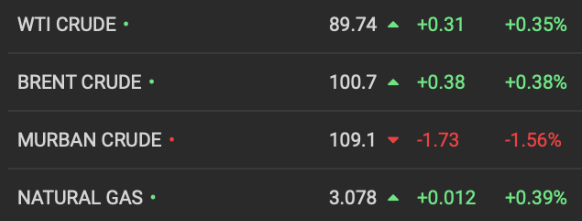
Both contracts rose after falling yesterday. Source: oilprice.com
The Houthis said on Monday that they had attacked several targets in Saudi Arabia, including King Khalid International Airport in Riyadh, an Aramco refinery in Rabigh and Abha airport. The claims could not immediately be independently verified, Reuters reported.
At the same time, Saudi-backed Yemeni government forces advanced towards the coast around the Bab el-Mandeb Strait, another strategically important route for global energy shipments.
The developments have kept the possibility of further disruption to Gulf oil flows in focus, even as crude exports from the region have shown considerable resilience.
Gulf oil flows recover despite disruption
Shipping data showed that Middle Eastern crude exports exceeded pre-war levels on several days during the final week of September. Gulf oil flows excluding Iran averaged more than 81% of pre-war levels during September, helped largely by a recovery in Saudi shipments.
Saudi Arabia’s crude exports rose sharply during the month, helping offset lower flows from other producers. Iran’s exports, meanwhile, have fallen sharply amid a US blockade.
The recovery in exports has provided some relief to the global oil market, but analysts have cautioned against interpreting the increase as a full return to normality.
Oil shipments through the region continue to face higher insurance, freight and security costs. Tanker rates for Middle East-to-Asia routes have surged, reflecting the additional logistical challenges created by the conflict and the need for vessels to use alternative routes or adopt more complicated shipping arrangements.
G7 reserve release limits price gains
Another factor restraining the upside in crude prices is the G7 agreement to release 100 million barrels of diesel and crude oil from emergency reserves.
The release, which is expected to continue for four months, is aimed at easing pressure on fuel markets following the sharp disruption to global energy flows. The G7 has also pledged to avoid energy export restrictions, reducing concerns about additional government intervention in oil and fuel markets.
The additional supply has helped prevent crude prices from rising more sharply, particularly as Middle Eastern exports have recovered. However, the impact may be limited if logistical constraints and refining bottlenecks persist.
Oil remains above $100 as supply risks persist
Brent has remained above the psychologically important $100-a-barrel mark despite the improvement in regional exports. Reuters reported that crude prices are being supported not only by concerns over physical supply, but also by the elevated cost and complexity of transporting oil.
The disruption has also affected refined products, particularly diesel, with refinery outages and reduced processing capacity adding to the pressure on global fuel markets. Industry executives have warned that rebuilding inventories and restoring disrupted refining capacity could take considerable time.
For India, sustained crude prices above $100 remain a key concern because the country relies heavily on imported oil to meet its energy requirements. Higher crude prices can put pressure on the trade deficit, the rupee and inflation, while also raising the risk of higher input costs for companies and consumers.
With US-Iran talks still stalled and tensions around the Gulf continuing, traders are likely to closely track developments around the Strait of Hormuz, Saudi oil infrastructure and regional shipping routes.
For now, stronger oil flows and the G7 reserve release are providing a counterweight to geopolitical risks. But with Brent still around $100 a barrel, the market remains sensitive to any fresh disruption to Middle Eastern supplies.
Source
- Oilprice.com
Disclaimer
At HDFC SKY*, we take utmost care and due diligence in curating and presenting news and market-related content. However, inadvertent errors or omissions may occasionally occur.
If you have any concerns, questions, or wish to point out any discrepancies in our content, please feel free to write to us at content@hdfcsec.com.
Please Note: The information shared is intended solely for informational purposes and does not make any investment recommendations.
HDFC SKY from HDFC Securities, one of most trusted trading platforms in India, has been recognized with the *Next-Gen Digi Content Awards 2025-26.
 Join Us
 Add as preferred source on Google


More Business News







2 min read



Open Free Demat Account
Open Free Demat Account












Invest Anytime, Anywhere


By signing up I certify terms, conditions & privacy policy