Nifty 50
- Dr. Reddy's Labs₹1,310.9081.40 (6.62%)
- Shriram Finance₹825-40.00 (-4.62%)
- JSW Steel₹1,26074.50 (6.28%)
- Tata Consumer ₹936.50-27.40 (-2.84%)
- BSE₹3,359128.20 (3.97%)
- Bajaj Finance₹918.70-10.25 (-1.10%)
- Adani Ports₹1,752.5049.80 (2.92%)
- HDFC Life Insurance ₹519-4.75 (-0.91%)
- Eternal₹325.558.15 (2.57%)
- HDFC Bank₹688.05-4.75 (-0.69%)
- Max Healthcare₹83520.00 (2.45%)
- Sun Pharmaceutical₹1,740-8.00 (-0.46%)
- Kotak Mahindra Bank₹440.7510.25 (2.38%)
- HCL Technologies₹1,417-5.20 (-0.37%)
- Grasim Industries₹2,95056.00 (1.94%)
- Tata Motors PV₹263.70-0.90 (-0.34%)
- Coal India₹4057.55 (1.90%)
- Mahindra & Mahindra₹2,853.10-8.10 (-0.28%)
- Hindalco Industries₹885.6515.80 (1.82%)
- Power Grid Corp₹247-0.40 (-0.16%)

- Offerings
- Tools & Platforms
Tools & Calculators
- Open API
- Calculators
- SIP Calculator
- CAGR Calculator
- Compound Interest Calculator
- FD Calculator
- RD Calculator
- EPF Calculator
- Retirement Calculator
- HDFC SIP Calculator
- Mutual Fund Return Calculator
- Lumpsum Calculator
- Step Up SIP Calculator
- ETF SIP Calculator
- Brokerage Calculator
- Equity Margin Calculator
- SWP Calculator
- EMI Calculator
- MTF Calculator
- Margin Pledge Calculator
- Algo Strategy
- Markets
Stocks
F&O
Mutual Funds
- More
CEAT, Other Tyre Stocks Deflate As Indigo And Spicejet Fly Into Turbulence Over Oil Boil
Authored By HDFC SKY | Last Modified: Apr 30, 2026 05:53 PM IST

Open Free Demat Account
Open Free Demat Account
Mumbai, April 30: Shares of crude-sensitive companies came under pressure in Thursday’s trade, with stocks such as CEAT, InterGlobe Aviation and SpiceJet falling up to 5%, as a sharp spike in global oil prices weighed on sentiment.
The weakness follows a surge in Brent crude, which briefly crossed $126 per barrel, marking its highest level since March 2022, amid escalating geopolitical tensions and fears of prolonged supply disruptions.
The rise in oil prices has triggered broad-based selling across sectors that are directly or indirectly linked to crude, with tyres, aviation and oil marketing companies (OMCs) bearing the brunt of the pressure.
Tyre Puncture
Among the key losers, CEAT dropped nearly 4.8% at Rs 3,451, while other tyre makers such as Apollo Tyres and JK Tyre also declined. Tyre companies are particularly vulnerable to crude movements as key raw materials like synthetic rubber and carbon black are derived from petroleum, making input costs highly sensitive to oil price fluctuations.
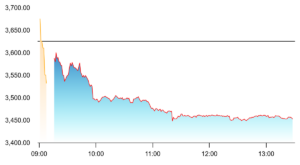
Tyre maker CEAT was singed by oil today. Source: NSE
Aviation stocks also saw sharp declines, with IndiGo and SpiceJet slipping as rising crude prices pushed up aviation turbine fuel (ATF) costs, the single largest expense component for airlines. Higher fuel costs directly squeeze margins and raise concerns about profitability, especially in a competitive pricing environment. Recently, the airlines had sent out an SOS seeking immediate government help, including a revision in fuel pricing mechanisms, cuts in taxes such as excise duty, and financial support to stabilise operations, failing which the carriers had warned of route rationalisation, reduced capacity, or even broader disruptions to services.
At the time of writing, IndiGo was down 1.87 per cent at Rs 4,264.
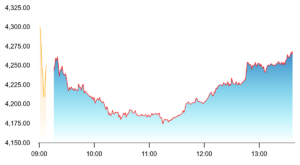
IndiGo has been trading in the red due to elevated oil prices. Source: NSE
OMCs Decline
Oil marketing companies, too, traded under pressure as elevated crude prices tend to compress marketing margins, particularly when retail fuel prices cannot be fully adjusted in line with global rates.
The trigger for the latest spike in oil prices is the deepening geopolitical standoff involving the U.S. and Iran, which has heightened fears of supply disruptions in the Middle East—a region that accounts for a significant share of global oil production.
The broader market reaction underscores a familiar pattern: when crude rises, oil-sensitive stocks fall. Higher oil prices not only inflate input costs but also stoke inflation, tighten financial conditions and dampen overall demand, creating a double hit for sectors dependent on fuel or petrochemical derivatives.
The impact is particularly pronounced for India, one of the world’s largest crude importers. Elevated oil prices widen the trade deficit, pressure the rupee and increase cost burdens for companies, amplifying the negative sentiment across equities.
Market participants note that the current sell-off is largely driven by margin concerns rather than demand destruction, with investors recalibrating earnings expectations for crude-linked sectors.
What next?
The trajectory of these stocks will remain closely tied to crude price movements. If oil prices stay elevated, pressure on margins could persist, keeping these sectors under stress. Conversely, any easing in geopolitical tensions—and by extension crude prices—could quickly revive sentiment, as seen in previous phases of the market.
For now, crude remains the puppet master—and these stocks are moving to its tune.
Source: https://www.nseindia.com/get-quote/equity/INDIGO/InterGlobe-Aviation-Limited, https://www.nseindia.com/get-quote/equity/CEATLTD/CEAT-Limited, NSE
Disclaimer
If you have any concerns, questions, or wish to point out any discrepancies in our content, please feel free to write to us at content@hdfcsec.com.
Please Note: The information shared is intended solely for informational purposes and does not make any investment recommendations
Disclaimer
The information shared here is intended solely for informational and educational purposes and does not constitute investment recommendations. While we practice strict due diligence in curating daily market data, readers must perform independent research before trading. To flag any real-time data discrepancies or content concerns, please write to us at content@hdfcsec.com.
 Join Us
 Add as preferred source on Google


More Business News










Open Free Demat Account
Open Free Demat Account












Invest Anytime, Anywhere


By signing up I certify terms, conditions & privacy policy