Nifty 50
- Bajaj Auto₹10,071293.00 (3.00%)
- Tech Mahindra₹1,468.90-45.20 (-2.99%)
- Dr. Reddy's Labs₹1,225.8028.80 (2.41%)
- ITC₹258.95-7.05 (-2.65%)
- BSE₹3,344.8057.60 (1.75%)
- Coal India₹403.20-8.35 (-2.03%)
- Bharat Electronics₹373.255.10 (1.39%)
- Bharti Airtel₹1,772.80-32.30 (-1.79%)
- Eicher Motors₹7,114.5064.50 (0.91%)
- SBI₹942.70-16.40 (-1.71%)
- Mahindra & Mahindra₹2,81720.80 (0.74%)
- L&T₹3,641-62.30 (-1.68%)
- HDFC Life Insurance ₹559.653.00 (0.54%)
- NTPC₹307.10-4.90 (-1.57%)
- Trent₹2,93112.80 (0.44%)
- Hindustan Unilever₹1,828.50-28.20 (-1.52%)
- Tata Consumer ₹9583.00 (0.31%)
- ICICI Bank₹1,339.10-15.90 (-1.17%)
- Adani Enterprises₹2,641.907.50 (0.28%)
- Reliance Industries₹1,157.90-12.40 (-1.06%)

- Offerings
- Tools & Platforms
Tools & Calculators
- Open API
- Calculators
- SIP Calculator
- CAGR Calculator
- Compound Interest Calculator
- FD Calculator
- RD Calculator
- EPF Calculator
- Retirement Calculator
- HDFC SIP Calculator
- Mutual Fund Return Calculator
- Lumpsum Calculator
- Step Up SIP Calculator
- ETF SIP Calculator
- Brokerage Calculator
- Equity Margin Calculator
- SWP Calculator
- EMI Calculator
- MTF Calculator
- Margin Pledge Calculator
- Algo Strategy
- Markets
Stocks
F&O
Mutual Funds
- More
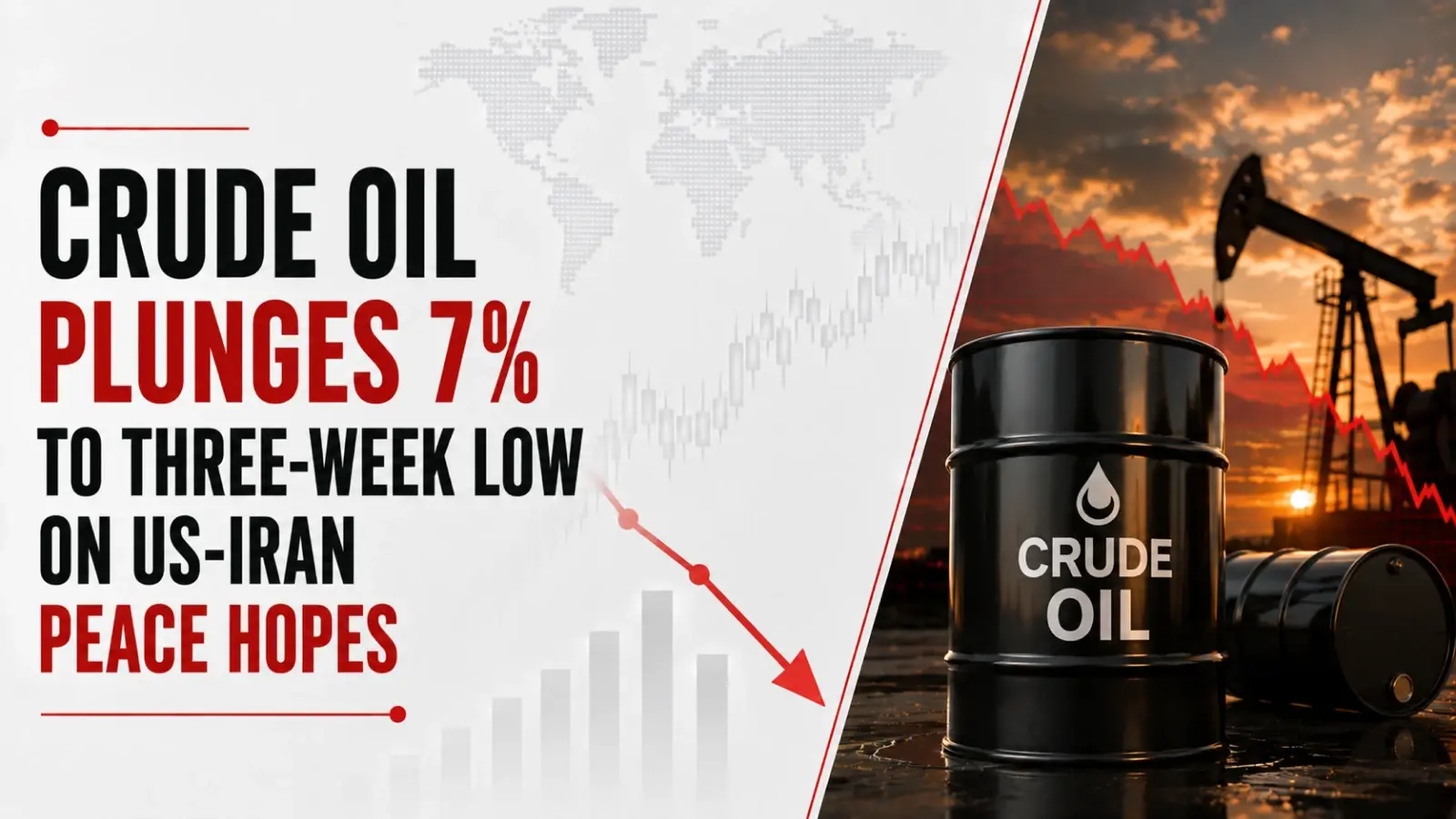
Crude Oil Plunges 7% to Three-Week Low on US-Iran Peace Hopes, Then Rebounds as Hormuz Tensions Flare
Authored By HDFC SKY | Last Modified: Aug 10, 2026 11:43 AM IST
Open Free Demat Account
Open Free Demat Account
Mumbai, Aug 9: Crude oil markets experienced one of the most volatile weeks in recent months, with prices swinging sharply between optimism over US-Iran diplomacy and renewed fears over the strategic Strait of Hormuz. Brent crude fell over 7% to a three-week low on Monday as US President Donald Trump called off a planned strike on Iran, only to rebound by the end of the week as Tehran moved to restrict shipping through the critical waterway. Domestic fuel prices, however, remained largely insulated from the global turbulence, with petrol and diesel rates holding steady across Indian cities.

Brent Crude Plunges 7% to $83.77 as Trump Cancels Iran Strike, Signals Fresh Talks
Oil prices tumbled on Monday, August 3, after US President Donald Trump announced he had called off a planned large-scale military strike on Iran and would instead pursue fresh negotiations with Tehran. Brent crude futures for October delivery fell $6.35, or 7%, to settle at $83.77 a barrel, marking the lowest closing price since July 13. West Texas Intermediate (WTI) crude declined $4.33, or 5.1%, to $80.34 a barrel. During intra-day trading, Brent sank as much as 7.3% to $81.55 before recovering some ground.
Trump said he made the decision after West Asian allies, including Saudi Arabia, urged him to pursue a negotiated deal instead of military action. He added that he agreed to the pullback on condition that officials reach a deal quickly to reopen the Strait of Hormuz. A modest OPEC+ production increase added further downward pressure on prices, as key members approved the latest small hike to output quotas.
However, Iranian Foreign Ministry spokesman Esmail Baghaei rejected Trump’s claim, saying no negotiations with the United States were taking place and no meetings were scheduled. Analysts at energy advisory firm Ritterbusch and Associates described the sharp sell-off as “another overreaction” to Trump’s comments, noting that “Trump is continuing a pattern of occasionally talking the oil market lower in precluding a sustained advance in petrol prices”.
MCX Crude Futures Plunge 7.2% to ₹7,530, Hit Lower Circuit
Domestic crude oil futures on the Multi Commodity Exchange (MCX) mirrored the global sell-off, plunging sharply to a nearly three-week low. Crude oil futures for August delivery plunged ₹583, or 7.2%, to ₹7,530 per barrel, hitting the lower circuit limit during intra-day trade and slipping to its weakest level since July 14. The September contract also came under heavy pressure, falling ₹461, or nearly 6%, to ₹7,378 per barrel.
“The August crude oil futures on the MCX resumed on a weaker note around the ₹7,500-per-barrel level and, during intra-day trade, declined to hit the lower circuit limit,” said Aamir Makda, Commodity & Currency Analyst at Choice Broking. The retreat tracked a broad-based sell-off in global markets, with Brent plunging 7.3% to $81.55 and WTI slipping below the $80 mark.
Brent Rebounds Above $83 as Iran Proposes Ban on US, Israeli Ships from Hormuz
The optimism that drove prices lower early in the week proved short-lived. By Thursday, August 6, crude prices had reversed course sharply. Brent crude settled 3.8% higher at $82.49 a barrel, while WTI closed 2.8% higher at $77.29. The rally was driven by reports that Iran was reviewing legislation to ban US and Israeli vessels from transiting the Strait of Hormuz.
On Friday, August 7, oil prices extended their gains for a second session. Brent crude futures climbed 99 cents, or 1.2%, to $83.48 a barrel, while WTI crude rose 85 cents, or 1.1%, to $78.84. Brent later touched $83.91, up over 1.7% during the session. The rally followed reports that Iran had struck “hostile targets” in the Strait of Hormuz, deepening concerns over the security of one of the world’s most critical energy corridors.
Under a proposed Iran-Oman agreement, Tehran intended to bar American and Israeli ships from using the strait altogether, while also demanding compensation from other “hostile” countries wishing to pass through it. Iran’s parliamentary committee was examining a preliminary bill that would prohibit US, Israeli and other vessels classified as hostile from using the Strait of Hormuz, with fines of up to 20% of the cargo value for violating vessels.
ING Think analysts noted that “developments over the last 24 hours or so demonstrate once again that negotiations between the US and Iran are unlikely to proceed smoothly”. They added that “there doesn’t seem to be much of a compromise, which ultimately makes it more difficult to reach a sustainable deal”.
Brent Swings from $81.55 to $83.91 as Hormuz Uncertainty Drives Volatility
The week’s price action underscored the extreme volatility that has characterised oil markets since the US-Iran conflict began. Brent crude had surged nearly 25% in July, its biggest monthly jump since March, as the conflict entered its sixth month. The waterway has carried roughly one-fifth of global oil and liquefied natural gas shipments since before the war began.
Despite the pullback early in the week, risks to shipping through the Strait of Hormuz remained elevated. The UK Maritime Trade Operations agency reported that a tanker off Oman had detected a nearby explosion on Sunday. That came days after an LNG tanker was struck by a projectile while transiting the strait. Iran-backed Houthi rebels also claimed they had carried out a “large-scale” assault on Saudi-aligned forces in Yemen and struck a Saudi tanker in the Gulf of Aden.
Also Read: How To Invest In Crude Oil
Petrol and Diesel Prices Remain Unchanged Across Indian Cities Despite Global Volatility
Despite the wild swings in global crude prices, retail petrol and diesel prices across India remained remarkably stable throughout the week. State-owned oil marketing companies (OMCs) continued to maintain retail fuel rates despite fresh volatility in international crude prices. Domestic fuel prices have remained broadly stable since the last nationwide revision on May 25, 2026, insulating consumers from fluctuations in global oil markets.
On Monday, August 3, petrol and diesel prices across major cities held steady. In New Delhi, petrol was priced at ₹102.12 per litre and diesel at ₹95.20 per litre. Mumbai recorded the highest petrol price at ₹111.18 per litre, with diesel at ₹97.83. Kolkata saw petrol at ₹113.51 and diesel at ₹99.82, while Chennai recorded ₹107.76 for petrol and ₹99.55 for diesel.
On Wednesday, August 5, the Centre raised the windfall tax on exports of petroleum products, but retail prices remained unchanged. The export duty on petrol was increased to ₹3.5 per litre from ₹2.5, while diesel export duty was raised to ₹25.5 per litre from ₹15.5. The revision, however, applies only to exports and does not affect domestic retail fuel prices.
By Friday, August 7, fuel rates continued to hold steady across major cities. Delhi remained at ₹102.12 (petrol) and ₹95.20 (diesel), Mumbai at ₹111.12 and ₹97.78, Kolkata at ₹113.43 and ₹99.78, and Chennai at ₹107.75 and ₹99.57.
Domestic Fuel Demand Surges in July Despite Global Uncertainty
Domestic fuel consumption remained robust during July, according to preliminary industry data. Combined petrol sales by Indian Oil Corporation, Bharat Petroleum Corporation and Hindustan Petroleum Corporation increased 9.7% year-on-year to 3.45 million tonnes, compared with 3.14 million tonnes in the same month last year. Diesel sales also rose 10.7% to 7.12 million tonnes from 6.43 million tonnes a year ago. The increase has been attributed to higher transportation activity and improved fuel demand from the agricultural sector.
Analysts Warn of Significant Price Hikes if Hormuz Disruptions Continue
Analysts cautioned that while retail fuel prices have remained stable, sustained disruptions to shipping through the Strait of Hormuz could eventually pressure domestic rates. India imports more than 85% of its crude oil requirement, making it highly sensitive to global price movements.
ING Think analysts maintained their view that flows would start to normalise through the third quarter, expecting Brent to average $80 a barrel this quarter. However, they acknowledged “there’s plenty of risk and uncertainty to this view”. The renewed spike in energy prices also revived fears that the US Federal Reserve might need to keep interest rates higher for longer, as costlier oil threatened to stoke inflationary pressure.
Actionable Takeaways
Crude oil markets witnessed extreme volatility during the week ended August 7, with Brent swinging from a three-week low of $81.55 to $83.91 as US-Iran diplomatic hopes gave way to renewed Hormuz tensions. MCX crude futures mirrored the global moves, plunging 7.2% to ₹7,530 before recovering. Despite the turbulence, retail petrol and diesel prices remained unchanged across Indian cities, with Delhi at ₹102.12/litre and ₹95.20/litre, respectively, as OMCs maintained rates since the last revision in May. The Centre raised export duties on petroleum products mid-week, but the move did not impact domestic consumers. With the Strait of Hormuz carrying one-fifth of global oil shipments and Iran proposing restrictions on vessel movement, crude prices remain highly sensitive to geopolitical developments in West Asia.
Source
- https://ppac.gov.in/prices/international-prices-of-crude-oil
- https://www.eia.gov/dnav/pet/pet_pri_spt_s1_d.htm
Disclaimer
If you have any concerns, questions, or wish to point out any discrepancies in our content, please feel free to write to us at content@hdfcsec.com.
Please Note: The information shared is intended solely for informational purposes and does not make any investment recommendations
Disclaimer
At HDFC SKY*, we take utmost care and due diligence in curating and presenting news and market-related content. However, inadvertent errors or omissions may occasionally occur.
If you have any concerns, questions, or wish to point out any discrepancies in our content, please feel free to write to us at content@hdfcsec.com.
Please Note: The information shared is intended solely for informational purposes and does not make any investment recommendations.
HDFC SKY from HDFC Securities, one of most trusted trading platforms in India, has been recognized with the *Next-Gen Digi Content Awards 2025-26.
 Join Us
 Add as preferred source on Google


More Business News









Open Free Demat Account
Open Free Demat Account












Invest Anytime, Anywhere


By signing up I certify terms, conditions & privacy policy