Nifty 50
- Maruti Suzuki₹13,384752.00 (5.95%)
- Infosys₹1,082.20-26.60 (-2.40%)
- Eicher Motors₹8,028328.00 (4.26%)
- Tech Mahindra₹1,718-32.00 (-1.83%)
- Tata Motors PV₹262.7010.15 (4.02%)
- HCL Technologies₹1,323.90-20.80 (-1.55%)
- Mahindra & Mahindra₹3,484.10125.00 (3.72%)
- Apollo Hospitals₹8,711-110.00 (-1.25%)
- Bajaj Auto₹10,779209.00 (1.98%)
- TCS₹2,356-23.50 (-0.99%)
- Grasim Industries₹3,113.6051.60 (1.69%)
- Dr. Reddy's Labs₹1,384.80-13.40 (-0.96%)
- Hindustan Unilever₹2,024.1031.10 (1.56%)
- Eternal₹362.75-3.25 (-0.89%)
- Bajaj Finserv₹1,882.8026.60 (1.43%)
- Cipla₹1,408-9.00 (-0.64%)
- Nestle₹1,298.5016.90 (1.32%)
- ICICI Bank₹1,593.90-7.40 (-0.46%)
- Tata Steel₹181.352.35 (1.31%)
- Reliance Industries₹1,357.30-5.70 (-0.42%)

- Offerings
- Tools & Platforms
Tools & Calculators
- Open API
- Calculators
- SIP Calculator
- CAGR Calculator
- Compound Interest Calculator
- FD Calculator
- RD Calculator
- EPF Calculator
- Retirement Calculator
- HDFC SIP Calculator
- Mutual Fund Return Calculator
- Lumpsum Calculator
- Step Up SIP Calculator
- ETF SIP Calculator
- Brokerage Calculator
- Equity Margin Calculator
- SWP Calculator
- EMI Calculator
- MTF Calculator
- Margin Pledge Calculator
- Algo Strategy
- Markets
Stocks
F&O
Mutual Funds
- More
Dow Plunges 849 Points as Nvidia Leadership Crisis and AI Earnings Jitters Drive Broad US Selloff
Authored By HDFC SKY | Published at: Nov 18, 2026 08:38 AM IST
Open Free Demat Account
Mumbai, 18 November 2026: US equities closed sharply lower on Tuesday as uncertainty surrounding Nvidia’s imminent earnings report and the abrupt departure of its long-serving chief executive intensified a selloff across technology and growth shares. The Dow Jones Industrial Average shed 848.75 points, or 1.64%, the S&P 500 fell 1.03%, and the Nasdaq Composite declined 0.74%, while the Russell 2000 dropped 1.49% as selling pressure broadened beyond mega-cap technology.

Dow Jones Falls 849 Points as Nvidia Crisis Weighs on Blue-Chip Stocks
The Dow Jones Industrial Average opened at 51,386.98 and closed at 50,759.42, a loss of 848.75 points or 1.64%. The index touched an intraday high of 51,463.53 and a low of 50,566.98. The session’s decline was paced by Salesforce, which tumbled 9.32%, alongside Nike down 6.40% and UnitedHealth Group off 5.35%. IBM also fell 4.61%. Bucking the trend, Cisco Systems gained 0.62%, McDonald’s added 0.42%, and Honeywell International rose 0.43%.
The blue-chip benchmark followed the broader market reaction to Nvidia’s leadership turmoil, with the chipmaker’s former chief executive, Jensen Huang, signalling willingness to return less than a week after resigning amid an extramarital affair scandal. The development kept investors focused on governance risk at the centre of the artificial-intelligence trade.
S&P 500 Drops 76 Points as Technology and Financial Shares Lead Decline
The S&P 500 opened at 7,411.02 and ended at 7,340.53, registering a loss of 76.06 points or 1.03%. During the session, the benchmark reached a high of 7,415.37 and a low of 7,288.34. Declines were led by Salesforce, down 9.32%, Intuit, which fell 7.54%, and Enphase Energy, off 7.30%.
On the upside, Broadcom advanced 2.84% and Gilead Sciences gained 1.89%. The index closed at its lowest level since late July as the technology sector bore the brunt of selling, while financials and health care also contributed to the downdraft. The session reflected investor caution ahead of Nvidia’s quarterly results, which were scheduled for release after the closing bell and represented the first earnings call without Huang at the helm in more than three decades.
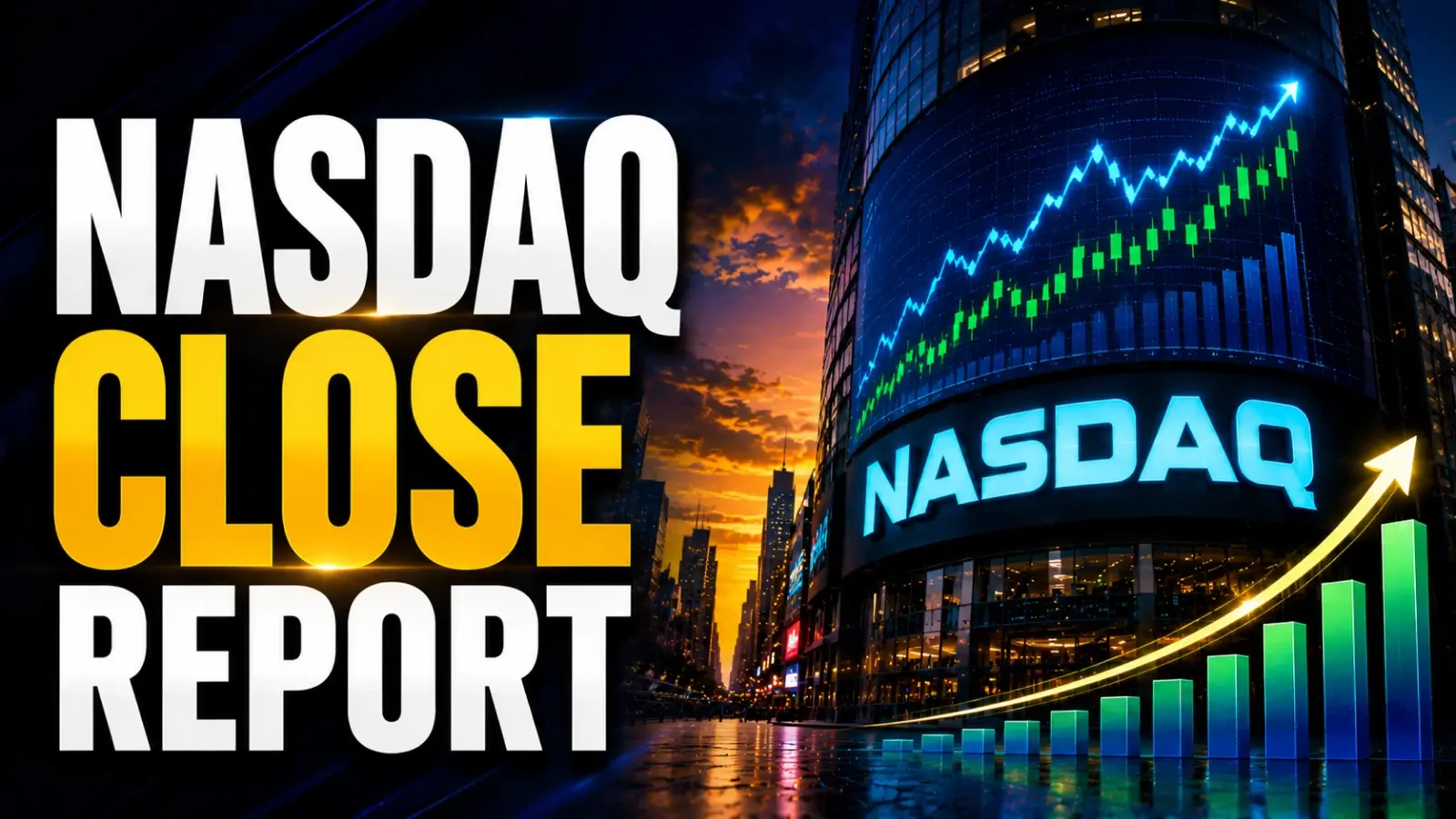
Nasdaq Falls 181 Points as Nvidia Earnings Anticipation Stirs Tech Market Volatility
The Nasdaq Composite opened at 24,528.06 and closed at 24,328.38, a decline of 181.37 points or 0.74%. Its intraday high stood at 24,547.66, while the low was 23,989.09. Technology and growth-oriented shares delivered mixed performances. Intuit dropped 7.48%, Adobe fell 4.25%, and Shopify declined 3.71%. Conversely, Arm Holdings surged 4.95%, Marvell Technology added 2.85%, and Broadcom gained 2.82%. The technology-heavy benchmark briefly sank as much as 2.1% to touch its lowest level since April before paring losses.
The session’s volatility coincided with reports that a classified network used by the National Security Agency experienced a temporary degradation during scheduled maintenance, an incident that added to recent jitters about technology infrastructure reliability.
Also Read: What Is the New York Stock Exchange (NYSE)?
Russell 2000 Slumps 41 Points as Smaller Stocks Track Broad Market Weakness
The Russell 2000 opened at 2,737.46 and closed at 2,702.15, losing 40.80 points or 1.49%. It recorded an intraday high of 2,741.11 and a low of 2,696.26. Among smaller-cap companies, Rhythm Pharmaceuticals gained 8.49% and Twist Bioscience rose 6.63%, while Nextpower plunged 12.37% and IDEAYA Biosciences fell 9.75%.
The small-cap benchmark closed at its lowest level in more than seven months as broad selling pressure overshadowed isolated gains. The decline reflected the same macroeconomic and technology-sector concerns that weighed on larger indices, with smaller companies proving unable to decouple from the prevailing risk-off tone.
S&P 100 Declines 34 Points as Large-Cap Shares Mirror the Broader Selloff
The S&P 100 opened at 3,637.91 and finished at 3,606.88, recording a loss of 34.32 points or 0.94%. The index traded between a high of 3,638.81 and a low of 3,572.36 during the session. Movements in major large-cap constituents, including Salesforce down 9.32% and UnitedHealth off 5.35%, contributed to the daily performance as markets responded to the Nvidia leadership crisis and the looming earnings release.
The large-cap gauge tracked the broader S&P 500 decline, with losses concentrated in technology, financials and health care, while defensive names provided only limited support.
Dow Composite Drops 263 Points as Transport and Utility Averages Also Fall
The Dow Jones Composite Average opened at 16,337.47 and closed at 16,133.19, losing 263.29 points or 1.61% after moving between a high of 16,357.23 and a low of 16,093.14. The Dow Jones Transportation Average ended at 20,337.03, compared with an opening level of 20,627.19, representing a decline of 312.64 points or 1.51%. The Dow Jones Utility Average closed at 1,104.09, down 17.72 points or 1.58% from its opening level of 1,116.12. Movements across transport and utility constituents reflected the broad market’s risk-averse posture, with few sectors escaping the selling pressure that dominated the session.
SOX Gains 32 Points as Chip Stocks Diverge From Broader Technology Weakness
The Philadelphia Semiconductor Index (SOX) opened at 9,698.26 and closed at 9,642.88, gaining 32.23 points or 0.34%. Its intraday high was 9,745.95, while the low was 9,295.02. Semiconductor constituents delivered a mixed performance, with Arm Holdings rising 4.95%, Marvell Technology adding 2.85%, and Broadcom gaining 2.82%.
These gains helped the sector benchmark finish in positive territory even as the broader technology sector declined. The SOX’s resilience contrasted with the weakness in software and other technology sub-sectors, where concerns about AI disruption and valuation remained acute ahead of Nvidia’s earnings release.
NYSE Composite Falls 350 Points as Broad Selling Pressure Dominates Trading Session
The NYSE Composite Index opened at 24,039.37 and closed at 23,813.93, recording a loss of 350.07 points or 1.45%. The index traded between a high of 24,128.25 and a low of 23,751.22 during the session. Movements across a wide range of market segments contributed to the decline, with decliners outnumbering advancers by nearly three to one on the New York Stock Exchange.
The broad-based nature of the selloff underscored that the session’s weakness was not confined to technology shares but reflected a comprehensive reassessment of risk across US equities.
Also Read: How to invest in US stocks
S&P MidCap 400 Falls 48 Points as SmallCap 600 Drops 24 Points
The S&P MidCap 400 opened at 3,623.03 and closed at 3,580.16, moving 47.70 points or 1.31% lower, with an intraday range of 3,569.61 to 3,636.48. The S&P SmallCap 600 opened at 1,683.50 and ended at 1,663.62, losing 24.09 points or 1.43%, after trading between 1,661.90 and 1,688.61.
The two benchmarks reflected weakness among mid- and small-cap shares as the technology-led selloff and uncertainty surrounding the AI trade spilled over into the broader market. Neither index was able to mount a sustained recovery despite brief intraday rebounds.
Nvidia Earnings and AI Trade Concerns Drive 1.6% Decline in Dow Jones
The principal catalyst for the session was Nvidia’s forthcoming third-quarter earnings report, scheduled for release after the closing bell, and the leadership vacuum at the chipmaker following Jensen Huang’s resignation. Huang’s statement that he would be willing to return as chief executive if the board deemed it in shareholders’ interests briefly pared losses in Nvidia shares, which ended the session 0.4% lower after falling nearly 4% earlier. The stock has declined 16% since the start of last week.
Reports that the US Commerce Department moved to close a loophole allowing Chinese companies to access Nvidia’s AI chips remotely added to the cautious tone. Separately, the National Security Agency confirmed a “temporary degradation” of some internal systems during routine maintenance, an incident that briefly dragged the major averages to their session lows. Retail sales data and Federal Reserve commentary also shaped the backdrop, with St. Louis Fed President Alberto Musalem calling for interest rate increases “sooner” to address broad-based inflation.
VIX Jumps 11% to 25.33 as Market Volatility Surges on AI Uncertainty
The CBOE Volatility Index (VIX) rose 2.42 points, or 10.56%, to 25.33, compared with its previous close of 22.91. The index, which measures expected volatility in the S&P 500 over the coming 30 days based on options trading, opened at 23.11 and traded between an intraday low of 22.36 and a high of 27.73.
The intraday peak marked its highest level since 6 November and represented a gain of as much as 21% during the session. The VIX registered gains for a fourth consecutive session, a streak not seen since 28 August. Its movement coincided with the selloff in US equities, the heightened uncertainty surrounding Nvidia’s quarterly earnings report and the broader artificial-intelligence investment cycle.
The volatility gauge’s advance came as the Dow Jones Industrial Average fell 1.64%, the S&P 500 declined 1.03% and the Nasdaq Composite dropped 0.74%. The session also included reports that a classified network used by the National Security Agency experienced a temporary degradation during scheduled maintenance, an incident that briefly dragged the major averages to their lows. The VIX’s close at 25.33 reflected the day’s elevated volatility conditions across US equity markets.
All 11 S&P 500 Sectors Fall as Technology and Financials Lead Losses
Performance across the 11 S&P 500 sectors was uniformly negative. Financials recorded the steepest decline at 1.89%, followed by Communication Services at 1.46% and Health Care at 1.41%. Information Technology fell 2.2% during the session, according to intraday data. Industrials eased 0.55%, while Energy declined 0.52%, the smallest loss among the sectors.
Consumer Discretionary, Consumer Staples, Utilities, Real Estate and Materials also closed lower, though their declines were less pronounced than those of the worst-performing groups. The sector movements followed the technology-led selloff and the risk-off sentiment that permeated trading throughout the day.
Also Read: US Stock Market Timings
Magnificent Seven Mixed as Tesla Gains 0.02% While Microsoft Falls 2.34% Today
Among the Magnificent Seven, Apple slipped 0.38%, Microsoft dropped 2.34%, and Nvidia lost 0.34%. Amazon edged down 0.11%, Alphabet fell 1.44%, and Meta Platforms declined 1.25%, while Tesla gained 0.02%. The mixed performance of the mega-cap technology cohort contributed to the broader indices’ daily movements, with the weakness in Microsoft and Alphabet offsetting the marginal gain in Tesla. Nvidia’s modest decline followed a session in which the stock fell nearly 4% before paring losses after former chief executive Jensen Huang said he would be willing to return if the board deemed it in shareholders’ interests.
Microsoft’s drop was among the largest contributors to the Dow Jones Industrial Average’s decline, while Alphabet and Meta weighed on the communication services sector, which fell 1.46%. Tesla’s fractional gain provided limited support. The divergence within the group coincided with a 2.2% decline in the S&P 500 information technology sector and a 1.46% drop in communication services on Tuesday, which weighed on the broader indices.
The group’s collective influence remains central to the direction of the major US equity benchmarks, and its divergence reflected the selective nature of the session’s technology selloff.
Chip Stocks Diverge as Financials and Energy Shares Post Sharp Broad Declines
Semiconductor stocks were mixed, with the Philadelphia Semiconductor Index gaining 0.34% even as the broader technology sector fell. Financial stocks recorded a decline of 1.89%, while energy stocks slipped 0.52% alongside little-changed crude oil prices. AI and growth stocks were mixed, with software names such as Salesforce and Intuit suffering sharp losses while chipmakers Arm and Broadcom advanced.
The divergence within technology and across sectors highlighted the selective nature of the selloff, which weighed most heavily on software and financials while sparing some semiconductor names.
Retail Sales Rise 0.2% as Homebuilder Sentiment Falls to 25 in November
The latest economic data showed US advance monthly retail sales increased 0.2% in October, following a revised 0.8% gain in September. Excluding autos and gas, sales rose 0.5%. The National Association of Homebuilders/Wells Fargo Housing Market Index dropped four points to 25 in November, the lowest reading since April 2012.
The releases provided the latest information on consumer activity and housing during the session, with the retail sales figure coming in slightly above expectations while homebuilder confidence continued to deteriorate amid high mortgage rates and affordability challenges.
10-Year Treasury Yield Eases to 5.10% as Fed Rate Hike Expectations Persist
The Federal Reserve remained a key focus as markets assessed comments from St. Louis Fed President Alberto Musalem, who said another interest rate increase would be needed soon, followed by more before the spring. Musalem said moving sooner, while inflation expectations are anchored, has a better chance of succeeding without adverse impact on the labour market or economic growth.
He said he expects the economy will require a real policy rate—the Fed’s benchmark rate adjusted for inflation—of “solidly” between 2% and 2.5% before the spring of 2027. That would imply 100 to 150 basis points worth of rate hikes and would push interest rates up to 4.75% to 5% by the spring. Musalem noted that inflation is not only too high but broad-based, and he thinks higher inflation will persist without Fed action.
Separately, Federal Reserve Chairman Kevin Warsh opened the first task force hearing on artificial intelligence, stating that the central bank’s role is neither advocacy nor opposition but to prepare for whatever comes next. The 10-year Treasury yield stood at 5.10%, down from 5.14% at the previous close, after rising sharply in recent weeks amid expectations the Federal Reserve will raise interest rates.
Shorter- and longer-dated Treasury yields reflected the market’s rate expectations, with the yield curve and Treasury trading reflecting the ongoing debate over the pace of monetary policy tightening. The session’s Treasury moves came as equity markets sold off amid technology-sector concerns, with the yield decline indicating demand for government debt even as rate-hike expectations persisted.
Also Read: What Are Fractional Shares?
WTI Crude Holds Near $85.75 as Dollar Index Climbs to 103.77 Level
Brent crude traded at $91.38 a barrel, while WTI crude stood at $85.75, little changed after Monday’s sharp selloff. Oil prices stabilised as recovering Middle East exports and expectations of a fourth-quarter global supply surplus offset concerns over tanker attacks near the Strait of Hormuz. The International Energy Agency now expects global petroleum supply to exceed demand by approximately 1.7 million barrels per day during the fourth quarter. Recovering crude exports from the Middle East reduced concerns about an immediate shortage, while lower tanker freight rates suggested some of the transportation risk premium built into prices during October was unwinding.
Gold traded at $3,850 an ounce, near its lowest levels in 13 months, as a stronger dollar and elevated Treasury yields weighed on the precious metal. The pressure followed hotter-than-expected US inflation figures for October and increasingly hawkish comments from Federal Reserve officials. Markets priced in more than a 95% probability of a 25-basis-point rate hike next month, with the remaining odds pointing to a possible 50-basis-point increase.
The US Dollar Index (DXY) climbed to 103.77, its highest since April 2025, as expectations of further Federal Reserve rate increases supported the currency. The index extended gains for a sixth consecutive session following stronger-than-expected inflation data and hawkish Fed signals. Bitcoin traded at $63,900, down from an overnight high around $65,500, as rising Treasury yields and persistent outflows from spot Bitcoin exchange-traded funds weighed on the largest digital asset. The commodity and currency moves followed the interest-rate backdrop and the broader risk-off sentiment in equity markets.
The closing session was shaped by Nvidia’s leadership turmoil and earnings anticipation, alongside a technology-led selloff and broad-based sector declines. The major US indices finished lower, while Treasury yields eased modestly, the dollar strengthened and commodities were little changed. These figures provide a factual summary of the session’s key market developments.
Disclaimer
The information shared here is intended solely for informational and educational purposes and does not constitute investment recommendations. While we practice strict due diligence in curating daily market data, readers must perform independent research before trading. To flag any real-time data discrepancies or content concerns, please write to us at content@hdfcsec.com.
 Join Us
 Add as preferred source on Google


More International News



















Invest Anytime, Anywhere


By signing up I certify terms, conditions & privacy policy