Nifty 50
- Adani Enterprises₹2,972.90141.80 (5.01%)
- Titan Company₹4,675-144.50 (-3.00%)
- Adani Ports₹1,82278.30 (4.49%)
- Wipro₹156.79-4.77 (-2.95%)
- Dr. Reddy's Labs₹1,251.9030.90 (2.53%)
- HCL Technologies₹1,222-30.60 (-2.44%)
- Sun Pharmaceutical₹1,86527.00 (1.47%)
- Apollo Hospitals₹8,659-201.00 (-2.27%)
- Infosys₹1,015.4012.20 (1.22%)
- Tech Mahindra₹1,510.50-31.70 (-2.06%)
- Kotak Mahindra Bank₹4064.45 (1.11%)
- Bajaj Auto₹10,811-213.00 (-1.93%)
- Tata Steel₹1881.70 (0.91%)
- TCS₹2,032.40-38.30 (-1.85%)
- Tata Consumer ₹967.707.70 (0.80%)
- Max Healthcare₹982.10-18.00 (-1.80%)
- NTPC₹323.502.40 (0.75%)
- UltraTech Cement₹10,829-196.00 (-1.78%)
- JSW Steel₹1,272.408.30 (0.66%)
- Hindustan Unilever₹1,863.80-32.20 (-1.70%)

- Offerings
- Tools & Platforms
Tools & Calculators
- Open API
- Calculators
- SIP Calculator
- CAGR Calculator
- Compound Interest Calculator
- FD Calculator
- RD Calculator
- EPF Calculator
- Retirement Calculator
- HDFC SIP Calculator
- Mutual Fund Return Calculator
- Lumpsum Calculator
- Step Up SIP Calculator
- ETF SIP Calculator
- Brokerage Calculator
- Equity Margin Calculator
- SWP Calculator
- EMI Calculator
- MTF Calculator
- Margin Pledge Calculator
- Algo Strategy
- Markets
Stocks
F&O
Mutual Funds
- More
Dow Jones, S&P 500, and Nasdaq Surge as Cooling PPI Data Eases Rate-Hike Fears; Russell 2000 Hits Record High
Authored By HDFC SKY | Last Modified: Aug 13, 2026 10:11 PM IST
Open Free Demat Account
Open Free Demat Account
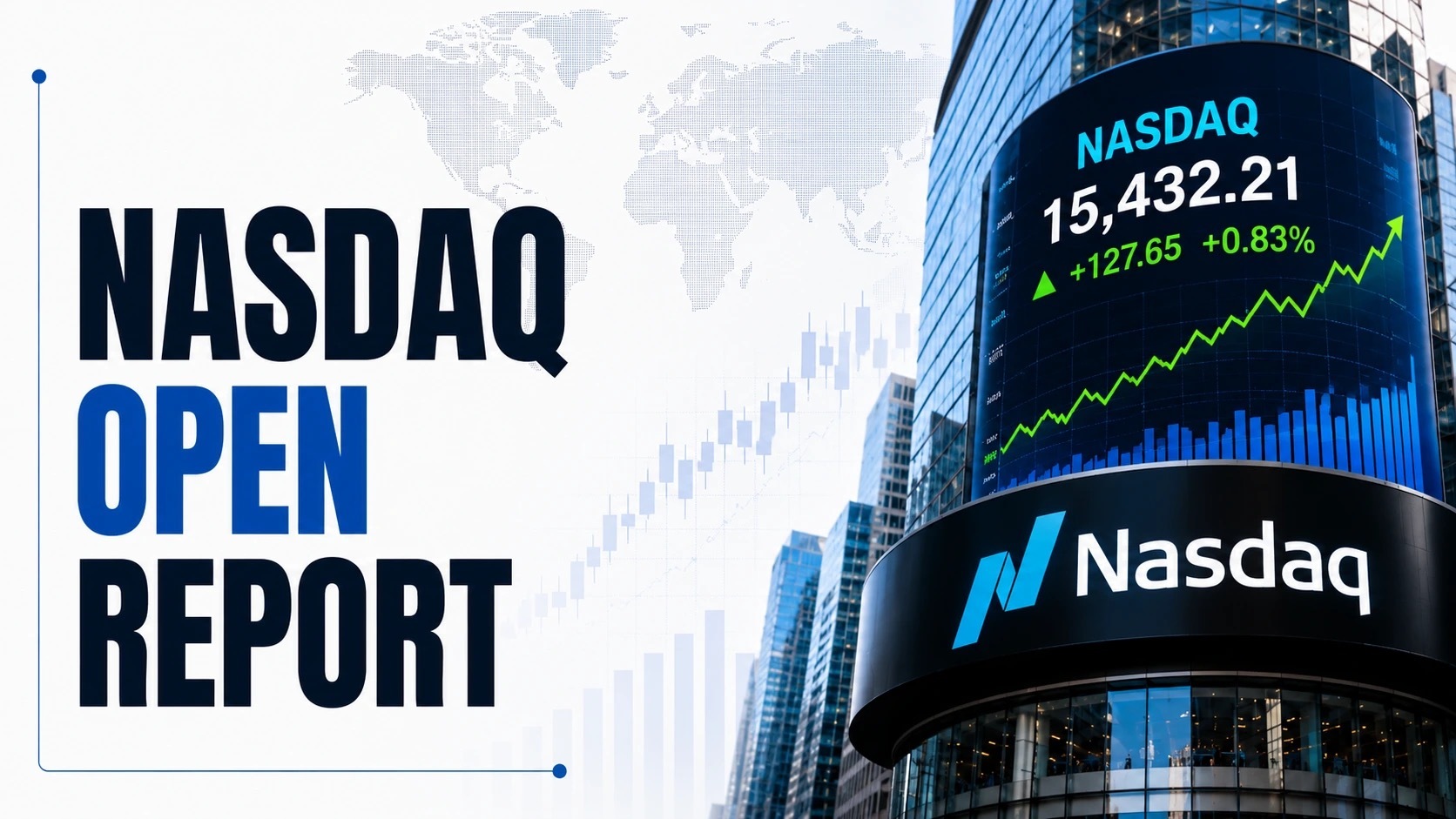
Mumbai, Aug 13: US stock markets opened firmly in the green on Thursday, with the Dow Jones Industrial Average (^DJI) , S&P 500 (^GSPC) , and Nasdaq Composite (^IXIC) all advancing after a softer-than-expected reading on wholesale inflation further reduced expectations for a September interest rate hike. The rally was supported by a continued decline in crude oil prices and a fresh wave of corporate earnings reports, which together improved risk appetite on Wall Street.
The Dow Jones Industrial Average gained 0.30%, or 162.89 points, to trade at 53,933.16 in the opening session. The broader S&P 500 climbed a stronger 0.5% to 7,763.18, while the tech-heavy Nasdaq Composite led the advance, rising 0.6% to 26,631.34. The positive open followed a mixed close on Wednesday, where the Dow had edged down 0.04% to 53,770.27, while the S&P 500 gained 0.26% to 7,748.50 and the Nasdaq rose 0.54% to 26,588.49.

July PPI Comes in Below Expectations at 4.7% Annual Rise, Strengthening Fed Pause Case
The primary catalyst for Thursday’s market optimism was the Producer Price Index (PPI) data released by the Bureau of Labor Statistics. The headline PPI for July remained flat month-over-month (0.0%), falling short of economists’ expectations of a 0.2% increase. On an annual basis, the PPI rose 4.7%, significantly cooling from June’s revised 5.5% print and coming in below the 4.9% forecast.
The core PPI, which excludes the more volatile food and energy costs, rose 0.2% month-over-month, also below the 0.3% estimate. The annual core rate came in at 4.2%, marginally above the 4.1% forecast but cooler than the previous month’s 4.7% gain. This marked the second consecutive day of encouraging inflation news, following Wednesday’s Consumer Price Index (CPI) report, which showed consumer prices rose 3.4% year-over-year in July, down from June’s 3.5% increase and in line with expectations.
Looking at specific components, final demand goods prices fell 0.7% in July, with energy prices dropping 3.1% and food prices declining 0.9%; gasoline prices fell 5.7%, becoming a major factor behind the pullback in goods prices. Meanwhile, final demand services prices rose 0.2% and construction prices rose 2.2%, partially offsetting the decline in goods prices.
The cooling PPI data prompted traders to further pare bets on a rate hike at the Federal Reserve’s September meeting. According to the CME Group’s FedWatch Tool, markets are now pricing a 40% likelihood of a rate increase in September, down from around 54% the previous week. Fed funds futures priced in an approximately 60% probability that the central bank would maintain its benchmark rate within the 3.5%-3.75% range.
Crude Oil Slides 2% to $81.14 as Geopolitical Tensions and Demand Concerns Weigh
Supporting the bullish sentiment in equities was a sharp decline in crude oil prices. Brent crude futures shed 2% to trade at $86.98 per barrel, while West Texas Intermediate (WTI) futures slid 2% to $81.14 per barrel. The drop came after six straight sessions of gains, as investors assessed prospects for weaker global demand this year and rising US crude stockpiles.
Geopolitical dynamics also played a role, with the Trump administration pivoting from an active military campaign to one focused on economic pressure against Iran. The administration has stated that the US retains “total control” over the Strait of Hormuz, disputing private data showing low shipping traffic. However, Iran and the United States remain at loggerheads over efforts to agree on a permanent end to the conflict in the Middle East, according to a senior Iranian source, while traffic through the vital strait remained severely curtailed.
The decline in oil prices is a key input for inflation, as lower energy costs help ease price pressures across the economy. This dynamic, combined with the softer PPI data, provided a double boost to rate-sensitive assets, driving gains in technology and growth stocks.
Initial Jobless Claims Rise to 209,000, Slightly Above Estimates
On the labour market front, the Department of Labor reported that initial jobless claims for the week ended August 8 rose to 209,000, an increase of 9,000 from the previous week’s revised level of 200,000. The figure came in above economists’ expectations of 202,000.
The four-week moving average of initial claims remained flat week-over-week at 199,000. Continuing claims, which track the unemployed population still seeking work, fell to 1.777 million in the week ended August 1, coming in below economists’ expectations of 1.794 million.
While the uptick in claims was modest, it adds to the narrative of a gradually cooling labour market, following last week’s surprisingly weak jobs report. This development further supports the case for the Federal Reserve to pause its rate-hiking cycle.
Also Read: How to Invest in the US Stocks From India
Cisco Shares Tumble 9% Despite Record Revenue on Margin Guidance Concerns
In corporate earnings, Cisco Systems Inc. (NASDAQ: CSCO) emerged as a key laggard, with shares falling 9% in early trading. The networking giant reported record fourth-quarter revenue of $17.3 billion, up 18% year-over-year, and non-GAAP earnings per share of $1.22, up 23% and beating the analyst estimate of $1.17. For the full fiscal year 2026, Cisco posted record revenue of $63.3 billion.
Despite the earnings beat, investor sentiment was dampened by the company’s guidance on gross margins. Cisco’s first-quarter fiscal 2027 gross margin guidance of 65% to 66% came in below the consensus estimate of 66.4%, according to analysts at Goldman Sachs. The company also implemented a global baseline price increase of 3.4% to 4.0% across its core hardware and technical services portfolio, which may have added to investor unease about future demand.
Cerebras Plunges 13% as AI Chipmaker Misses Revenue Estimates
Cerebras Systems Inc. (NASDAQ: CBRS) , an AI chipmaker often positioned as a challenger to Nvidia, saw its shares plummet 13% after reporting second-quarter results that missed expectations. The company reported revenue of $180.1 million, falling short of the $190.6 million FactSet estimate. The company posted a GAAP loss of $2.98 per share.
However, beneath the headline miss, there were some bright spots. Core revenue more than doubled to $210 million, while its cloud business nearly quadrupled year-over-year, with cloud revenue reaching $126 million. The company’s core operating margin remained in negative territory at approximately -16%, and it reported a net loss of $450.5 million for the quarter, compared to a net profit of $309.5 million in the same period last year.
Cerebras raised its full-year 2026 core revenue guidance to a range of $880 million to $890 million, up from a prior range of $855 million to $865 million. The company also projected third-quarter core revenue of approximately $214 million to $216 million. Despite the upbeat guidance, the earnings miss weighed heavily on the stock, which had rallied 42% since its IPO in May. The stock dropped from $261.81 to $224.64, a one-hour decline of 14.2%.
Applied Materials Gains 1.14% Ahead of Key Earnings After the Bell
Applied Materials Inc. (NASDAQ: AMAT) , which makes chipmaking equipment, saw its shares rise 1.14% in early trading as investors positioned for the company’s fiscal third-quarter results, scheduled for release after the market close. The stock has gained a whopping 190% over the past year, reflecting the strong demand for semiconductor manufacturing equipment driven by the AI boom.
Analysts expect Applied Materials to report quarterly earnings of $3.38 per share on revenue of $9.01 billion. The company has guided for non-GAAP earnings of $3.36 per share, which would represent a growth of about 36% year-over-year. The results will be closely watched for insights into the sustainability of the AI-driven capital expenditure cycle among major chipmakers.
Tapestry, Yeti, and Birkenstock: Retail Earnings Offer Insights into Consumer Spending
Beyond the technology sector, earnings from major retailers provided investors with a window into consumer spending trends amid an uncertain economic environment.
Tapestry Inc. (NYSE: TPR) , the parent company of Coach and Kate Spade, dropped 7% after reporting fiscal fourth-quarter results that underwhelmed the market. The company earned $1.32 per share on revenue of $1.88 billion. While earnings were above the FactSet consensus of $1.28 per share, revenue only just exceeded a $1.87 billion estimate. The company did increase its quarterly dividend to 46.25 cents per share from 40 cents per share.
Yeti Holdings Inc. (NYSE: YETI) , the drinkware and cooler maker, slipped nearly 4% after reporting mixed second-quarter results. The company earned an adjusted 67 cents per share, topping a FactSet consensus estimate of 54 cents per share. Revenue, meanwhile, came in at $483.9 million, just above a $483.8 million estimate.
Birkenstock Holding plc (NYSE: BIRK) , the UK-based shoe company, jumped 10% after its quarterly revenue and adjusted earnings before interest, taxes, depreciation, and amortisation (EBITDA) beat expectations. The company also said it expects its full-year revenue and adjusted EBITDA to come in at the high end of its prior guidance.
Fed Officials Remain Divided on Rate Path Amid Mixed Economic Signals
The mixed economic data continued to fuel debate among Federal Reserve officials about the appropriate path for monetary policy. Cleveland Fed President Beth Hammack doubled down on her hawkish view, stating that the central bank should raise rates immediately to bring down inflation. “It’s really critical we act now to bring inflation back to the target level,” Hammack said at the Dayton Area Chamber of Commerce. Hammack was one of three dissenters at the June meeting who voted to raise rates and has previously said that she expects multiple increases will likely be needed.
In contrast, Richmond Fed President Thomas Barkin struck a more dovish tone, noting that it is still an “open question” whether the Federal Reserve will have to raise interest rates to restore inflation to the central bank’s 2% target. “The inflation mystery is not whether inflation will come back to our 2% target or not,” Barkin said in remarks prepared for delivery to the Greenville Chamber of Commerce. He noted that headline PCE inflation remains at 3.7%, well above the Fed’s target, but declined to tip the September rate path. Barkin also noted that “many” at the Fed feel the current level is restrictive enough to bring inflation down.
Also Read: How to Invest in S&P 500 Stocks Through Index Funds
Treasury Yields Inch Lower as Rate-Hike Bets Ease
Treasury yields edged lower across the curve as traders digested the latest inflation data. The yield on the 10-year US Treasury note, a key benchmark for pricing mortgages and corporate debt, fell 1 basis point to 4.678%. The 2-year Treasury note yield, which more closely tracks expectations for Federal Reserve interest rate policy, declined more than 2 basis points to 4.1738%. The longer-dated 30-year Treasury bond yield held steady at 5.2371%.
The decline in yields reflects growing market conviction that the Federal Reserve may be nearing the end of its rate-hiking cycle, as inflation shows signs of moderating and the labour market begins to cool.
Russell 2000 Hits Record High as Small-Caps Outperform in 2026
The Russell 2000 small-cap index began Thursday at an all-time high of 3,045.48 after gaining 0.6% on Wednesday and finishing above its previous peak of 3,036.98. This marked its 27th record close of 2026. The small-cap index is up 22.7% so far this year, outpacing the S&P 500 by 9.5 percentage points. In comparison, the S&P 500 has advanced 13.2% in 2026, the Nasdaq Composite has gained 14.4%, and the Dow Jones Industrial Average has risen 11.9%.
The Russell 2000 has run up 22.6% in 2026, while the S&P 500 has advanced 13.2%. The iShares Russell 2000 ETF (NYSEARCA: IWM) comprised 1,967 holdings as of July 29, with health care and financials making up 39.86% of the portfolio. The ETF had a price-to-earnings ratio of 19.21 and a price-to-book ratio of 2.17 as of July 29, 2026.
Lower anticipated borrowing costs tend to benefit small caps more than larger companies. The producer-price report due Thursday was set to gauge if easing concerns over rates can maintain this advantage.
S&P 100, Nasdaq 100, and S&P MidCap 400 Show Mixed Performance
Among other key indices, the Nasdaq 100 rose 0.74% to 29,742.6 points, outperforming the broader Nasdaq Composite. The S&P 100 traded without clear direction, gaining 0.14%.
The S&P MidCap 400 showed resilience, with the Vanguard S&P Mid-Cap 400 Index Fund Institutional Shares rising 1.12% to $513.62. The index has gained 22.50% over the past year.
The S&P 500 Equal Weight Index has risen roughly 15% in 2026, compared to a 13.3% increase for the cap-weighted index. The Invesco S&P 500 Equal Weight ETF (RSP) has gained 13.34% for the year, opening 2026 at $192.86 and closing at $218.58. The equal-weight approach reduces the influence of mega-cap companies and serves as a key indicator of market breadth.
Gold Faces Resistance at 200-Day Moving Average of $4,484
In commodities, gold prices continued to face headwinds, trading lower at $4,363 per ounce after getting rejected at the key psychological 200-day moving average of approximately $4,484 per ounce. The precious metal has rallied about 6.3% over the past month, compared with a 2% advance in the S&P 500, but remains roughly 22% below its all-time high of $5,602 per ounce set on January 28, 2026.
Gold prices rose 0.9% to $4,410 per ounce on Wednesday. Following the PPI data release, gold rallied on the positive news, with prices quickly advancing toward the $4,400 mark.
“Gold’s recent rebound has been driven by fading expectations of further Fed tightening following weaker US labour market data,” said Renée Friedman, global head of research at Exante . “Central banks are likely to continue diversifying reserves away from US Treasuries, supporting longer-term demand for gold. Geopolitical uncertainty and sanctions risks continue to reinforce safe-haven demand for gold.”
Also Read : US Stock Market Timings
CBOE Volatility Index Falls to Lowest Level Since January
The CBOE Volatility Index (VIX) , also known as the “fear index,” fell 4.78% to 14.55, its lowest level since January. The decline in the VIX reflects easing investor anxiety about market volatility, supported by the cooling inflation data and reduced expectations for aggressive Federal Reserve rate hikes.
BlackRock Maintains Overweight Stance on US Equities Despite Valuation Concerns
BlackRock Inc. , the world’s largest asset manager, maintained an optimistic outlook for US equities while preparing for structural shifts across the broader economy. Despite economic headwinds, BlackRock remains “overweight” on US equities, pointing out that “strong corporate earnings, fueled by the AI buildout and a favourable macro backdrop, are outpacing higher interest rate expectations”.
Analysts project S&P 500 corporate earnings to grow by 11.6% annually over the next five years, though this outlook remains conditional on artificial intelligence boosting productivity and profit margins. Economically, BlackRock foresees an environment shaped by “a structurally higher cost of capital” alongside persistent inflation risks. The firm expects long-term bond yields to stay under upward pressure because “governments, AI hyperscalers, and companies across the economy are competing ever more intensely for capital”.
Regarding stock valuations, BlackRock noted, “we see valuations falling as earnings growth outpaces share price gains, allowing multiples to decline over time.” To navigate this regime, the firm prefers targeted equity exposures tied to AI infrastructure bottlenecks—such as chips, power, and data centres—as well as sectors like healthcare and technology.
The combination of cooling producer inflation and declining oil prices has reinforced expectations that the Federal Reserve may pause its rate-hiking cycle, providing a supportive backdrop for equities. The Russell 2000’s record high and its significant outperformance of the S&P 500 in 2026 highlight the ongoing rotation toward small-cap stocks, which tend to benefit more from easing borrowing costs. However, the mixed signals from Fed officials and the ongoing geopolitical uncertainties in the Middle East suggest that market volatility is likely to persist. The earnings season continues to offer insights into sector-specific trends, with technology, consumer discretionary, and semiconductor stocks remaining in focus.
Source
- https://www.nasdaq.com/
- spglobal.com/spdji/en/indices/equity/sp-500/
- https://www.dowjones.com/
- https://www.spglobal.com/spdji/en/indices/equity/dow-jones-industrial-average/
- https://www.spglobal.com/spdji/en/indices/equity/sp-500/
- https://www.nasdaq.com/market-activity/index/comp
- https://www.nasdaq.com/market-activity/quotes/nasdaq-ndx-index
- https://www.spglobal.com/spdji/en/indices/equity/sp-100/
- https://www.lseg.com/en/ftse-russell/indices/russell-us
- https://www.nyse.com/index
- https://www.nyse.com/index
- https://www.spglobal.com/spdji/en/indices/equity/dow-jones-transportation-average/
- https://www.spglobal.com/spdji/en/indices/equity/dow-jones-utility-average/
- https://www.spglobal.com/spdji/en/indices/equity/dow-jones-composite-average/
- https://www.nasdaq.com/market-activity/index/sox
- https://www.cboe.com/tradable_products/vix/
Disclaimer
If you have any concerns, questions, or wish to point out any discrepancies in our content, please feel free to write to us at content@hdfcsec.com.
Please Note: The information shared is intended solely for informational purposes and does not make any investment recommendations
Disclaimer
At HDFC SKY*, we take utmost care and due diligence in curating and presenting news and market-related content. However, inadvertent errors or omissions may occasionally occur.
If you have any concerns, questions, or wish to point out any discrepancies in our content, please feel free to write to us at content@hdfcsec.com.
Please Note: The information shared is intended solely for informational purposes and does not make any investment recommendations.
HDFC SKY from HDFC Securities, one of most trusted trading platforms in India, has been recognized with the *Next-Gen Digi Content Awards 2025-26.
 Join Us
 Add as preferred source on Google


More Business News








Open Free Demat Account
Open Free Demat Account








Invest Anytime, Anywhere


By signing up I certify terms, conditions & privacy policy