Nifty 50
- Bajaj Auto₹10,061283.00 (2.89%)
- Tech Mahindra₹1,452.20-61.90 (-4.09%)
- Dr. Reddy's Labs₹1,231.6034.60 (2.89%)
- ITC₹257.95-8.05 (-3.03%)
- Bharat Electronics₹373.505.35 (1.45%)
- Bharti Airtel₹1,770.10-35.00 (-1.94%)
- BSE₹3,33446.80 (1.42%)
- Coal India₹403.80-7.75 (-1.88%)
- Eicher Motors₹7,127.5077.50 (1.10%)
- SBI₹941.20-17.90 (-1.87%)
- Tata Motors PV₹282.903.00 (1.07%)
- L&T₹3,643-60.30 (-1.63%)
- Mahindra & Mahindra₹2,82023.80 (0.85%)
- Hindustan Unilever₹1,827.30-29.40 (-1.58%)
- Cipla₹1,305.104.10 (0.32%)
- SBI Life Insurance ₹1,658.10-26.50 (-1.57%)
- Tata Consumer ₹9583.00 (0.31%)
- Hindalco Industries₹889.25-11.10 (-1.23%)
- HDFC Life Insurance ₹558.251.60 (0.29%)
- ICICI Bank₹1,338.80-16.20 (-1.20%)

- Offerings
- Tools & Platforms
Tools & Calculators
- Open API
- Calculators
- SIP Calculator
- CAGR Calculator
- Compound Interest Calculator
- FD Calculator
- RD Calculator
- EPF Calculator
- Retirement Calculator
- HDFC SIP Calculator
- Mutual Fund Return Calculator
- Lumpsum Calculator
- Step Up SIP Calculator
- ETF SIP Calculator
- Brokerage Calculator
- Equity Margin Calculator
- SWP Calculator
- EMI Calculator
- MTF Calculator
- Margin Pledge Calculator
- Algo Strategy
- Markets
Stocks
F&O
Mutual Funds
- More
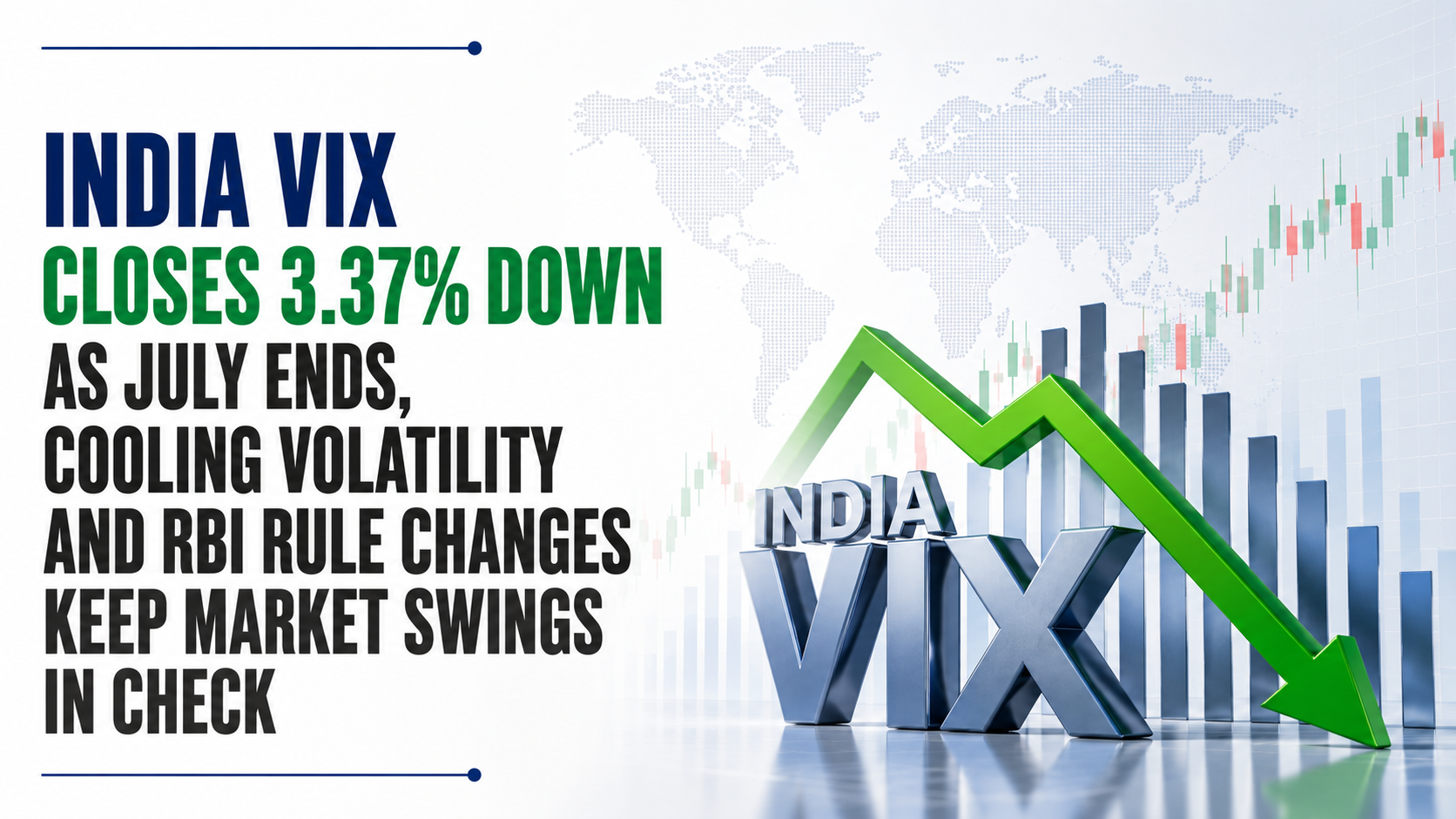
India VIX Closes 3.37% Down as July Ends, Cooling Volatility and RBI Rule Changes Keep Market Swings in Check
Authored By HDFC SKY | Last Modified: Jul 31, 2026 04:55 PM IST
Open Free Demat Account
Open Free Demat Account
Mumbai, July 31: India VIX, the National Stock Exchange’s (NSE) volatility index, ended the final trading session of July at 11.75, down 0.41 points (3.37%) from the previous close of 12.16, signalling that expectations of near-term market volatility continued to ease despite ongoing global uncertainties and the busy corporate earnings season. During the session, the index opened at 12.15, touched an intraday high of 12.21, slipped to a low of 11.64, and remained well within its 52-week range of 8.72 to 28.90. As of 31 July 2026, India VIX has delivered a 25.00% year-to-date (YTD) return while maintaining a Neutral technical trend rating.

India VIX Falls to 11.75 As Earlier July Spike Continues To Fade
The latest decline in India VIX reflects the continued unwinding of the sharp volatility witnessed during the third week of July. After surging amid heightened geopolitical uncertainty and elevated hedging activity, the volatility gauge gradually retreated towards the 12–13 range before closing at 11.75 on Friday. The move indicates that implied volatility embedded in Nifty options has moderated from the elevated levels recorded earlier this month. Although the index has eased considerably, it remains above the exceptionally low levels typically associated with prolonged periods of market calm, suggesting that option pricing continues to factor in a measured level of uncertainty.
Global Risks Persist But 11.64–12.21 Trading Range Shows Stability
Despite continuing concerns surrounding geopolitical developments in the Middle East, fluctuations in crude oil prices, uncertainty over United States monetary policy and the ongoing first-quarter FY27 corporate earnings season, Indian equity markets did not witness a fresh volatility-driven disruption on the final trading day of July. Instead, India VIX traded within a relatively narrow intraday band of 11.64 to 12.21, reflecting moderated expectations of near-term market swings. The easing in implied volatility has coincided with lower option premiums as broader market movements remained contained despite the presence of several external risk factors.
July Derivatives Turnover Drops 27.1%, Reducing Options Activity
One of the defining developments influencing India VIX throughout July has been the significant contraction in derivatives market activity. Average daily futures and options (F&O) turnover declined 27.1% month-on-month, while index futures turnover fell 37.2% and index options premium turnover decreased 23.5% compared with the previous month. Market activity during July has consequently fallen to its weakest levels since November 2023. As India VIX is derived from Nifty option prices, lower trading participation and reduced options turnover have contributed to comparatively subdued implied volatility even as macroeconomic and geopolitical developments continue to be monitored.
RBI Funding Rules Since 1 July 2026 Reshape Trading Patterns
A key structural factor influencing derivatives activity during July has been the implementation of the Reserve Bank of India’s (RBI) revised funding framework, which came into effect on July 1, 2026. Under the new regulations, banks can no longer finance proprietary trading activities, while broker funding now requires 100% collateral, significantly reducing leverage available to trading firms. These regulatory changes have resulted in lower speculative participation, reduced intraday trading activity and contraction in options volumes across the market. Analysts note that the full effect of these measures may become more visible as existing bank guarantees expire over the coming months.
Lower Options Participation Keeps Implied Volatility Contained
India VIX is calculated using pricing data from Nifty options, making derivatives activity a direct influence on the volatility index. During July, the decline in speculative participation, reduced hedging demand and lower options trading volumes compressed option premiums in the absence of any major external market shock. As a result, implied volatility has remained comparatively contained despite the continued presence of macroeconomic uncertainties. The moderation in derivatives participation has therefore emerged as one of the principal structural developments shaping India VIX during the month rather than any single market-moving event.
Q1 FY27 Earnings Maintain Stock-Specific Market Uncertainty
While overall market volatility has moderated, the ongoing first-quarter FY27 earnings season has continued to generate company-specific price movements across sectors. Corporate earnings announcements have contributed to sector rotation and selective hedging activity as investors assess individual financial performances. This stock-specific uncertainty has prevented India VIX from falling towards the single-digit levels typically associated with exceptionally calm market conditions. Instead, the index has remained close to the 12 mark, balancing lower broad-based volatility with continued earnings-related adjustments in selected stocks.
RBI Rate Outlook and Global Events Remain Key Market Focus
Alongside the earnings season, market participants continued tracking the Reserve Bank of India’s monetary policy outlook and global macroeconomic developments. Economists broadly expect the RBI to maintain the repo rate unchanged through the remainder of 2026, prioritising growth considerations while monitoring inflationary pressures arising from geopolitical developments and crude oil prices. Stable policy expectations have coincided with moderating implied volatility, although developments relating to global energy markets, geopolitical events and overseas central bank decisions remain closely watched because of their potential influence on option pricing and short-term market volatility.
India VIX Stays Well Below 28.90 Annual Peak
The latest closing level also highlights the substantial moderation in volatility since the elevated readings witnessed earlier this year. India VIX remains significantly below its 52-week high of 28.90, recorded during periods of heightened geopolitical uncertainty, while also remaining comfortably above its 52-week low of 8.72. Historical data further shows that 15 out of the last 18 years have recorded negative returns for India VIX during July, with an average monthly decline of 8.86%, a maximum positive change of 7.39% in 2011, and a maximum decline of 24.22% in 2022. Technically, the index continues to carry a Neutral trend rating, with the day’s Classic pivot levels placed at R1: 12.55, R2: 12.93, R3: 13.56, Pivot Point: 11.92, S1: 11.54, S2: 10.91, and S3: 10.53.
India VIX concluded July at 11.75, extending the moderation seen after the volatility spike earlier in the month. The closing session reflected the combined influence of lower derivatives activity, regulatory changes affecting trading patterns, ongoing corporate earnings announcements and stable monetary policy expectations, while global geopolitical developments and crude oil prices continued to remain important factors monitored by market participants.
Source
- https://www.nseindia.com/reports-indices-historical-vix
Disclaimer
If you have any concerns, questions, or wish to point out any discrepancies in our content, please feel free to write to us at content@hdfcsec.com.
Please Note: The information shared is intended solely for informational purposes and does not make any investment recommendations
Disclaimer
At HDFC SKY*, we take utmost care and due diligence in curating and presenting news and market-related content. However, inadvertent errors or omissions may occasionally occur.
If you have any concerns, questions, or wish to point out any discrepancies in our content, please feel free to write to us at content@hdfcsec.com.
Please Note: The information shared is intended solely for informational purposes and does not make any investment recommendations.
HDFC SKY from HDFC Securities, one of most trusted trading platforms in India, has been recognized with the *Next-Gen Digi Content Awards 2025-26.
 Join Us
 Add as preferred source on Google


More Business News









Open Free Demat Account
Open Free Demat Account












Invest Anytime, Anywhere


By signing up I certify terms, conditions & privacy policy