Nifty 50
- Bajaj Auto₹10,080302.00 (3.09%)
- Tech Mahindra₹1,469.80-44.30 (-2.93%)
- Dr. Reddy's Labs₹1,227.1030.10 (2.51%)
- ITC₹258.45-7.55 (-2.84%)
- BSE₹3,343.6056.40 (1.72%)
- Coal India₹403.70-7.85 (-1.91%)
- Bharat Electronics₹373.605.45 (1.48%)
- SBI₹941.50-17.60 (-1.84%)
- Mahindra & Mahindra₹2,82629.80 (1.07%)
- NTPC₹306.45-5.55 (-1.78%)
- Eicher Motors₹7,121.5071.50 (1.01%)
- Bharti Airtel₹1,774.10-31.00 (-1.72%)
- HDFC Life Insurance ₹560.053.40 (0.61%)
- L&T₹3,642.60-60.70 (-1.64%)
- Trent₹2,9289.80 (0.34%)
- Hindustan Unilever₹1,827.50-29.20 (-1.57%)
- Tata Consumer ₹958.203.20 (0.34%)
- ICICI Bank₹1,338-17.00 (-1.25%)
- Max Healthcare₹886.752.95 (0.33%)
- Nestle₹1,318.70-14.30 (-1.07%)

- Offerings
- Tools & Platforms
Tools & Calculators
- Open API
- Calculators
- SIP Calculator
- CAGR Calculator
- Compound Interest Calculator
- FD Calculator
- RD Calculator
- EPF Calculator
- Retirement Calculator
- HDFC SIP Calculator
- Mutual Fund Return Calculator
- Lumpsum Calculator
- Step Up SIP Calculator
- ETF SIP Calculator
- Brokerage Calculator
- Equity Margin Calculator
- SWP Calculator
- EMI Calculator
- MTF Calculator
- Margin Pledge Calculator
- Algo Strategy
- Markets
Stocks
F&O
Mutual Funds
- More
India VIX Rises 1.49% in Opening Trade as Markets Hold Steady After July’s Volatility Surge
Authored By HDFC SKY | Last Modified: Aug 6, 2026 11:17 AM IST
Open Free Demat Account
Open Free Demat Account
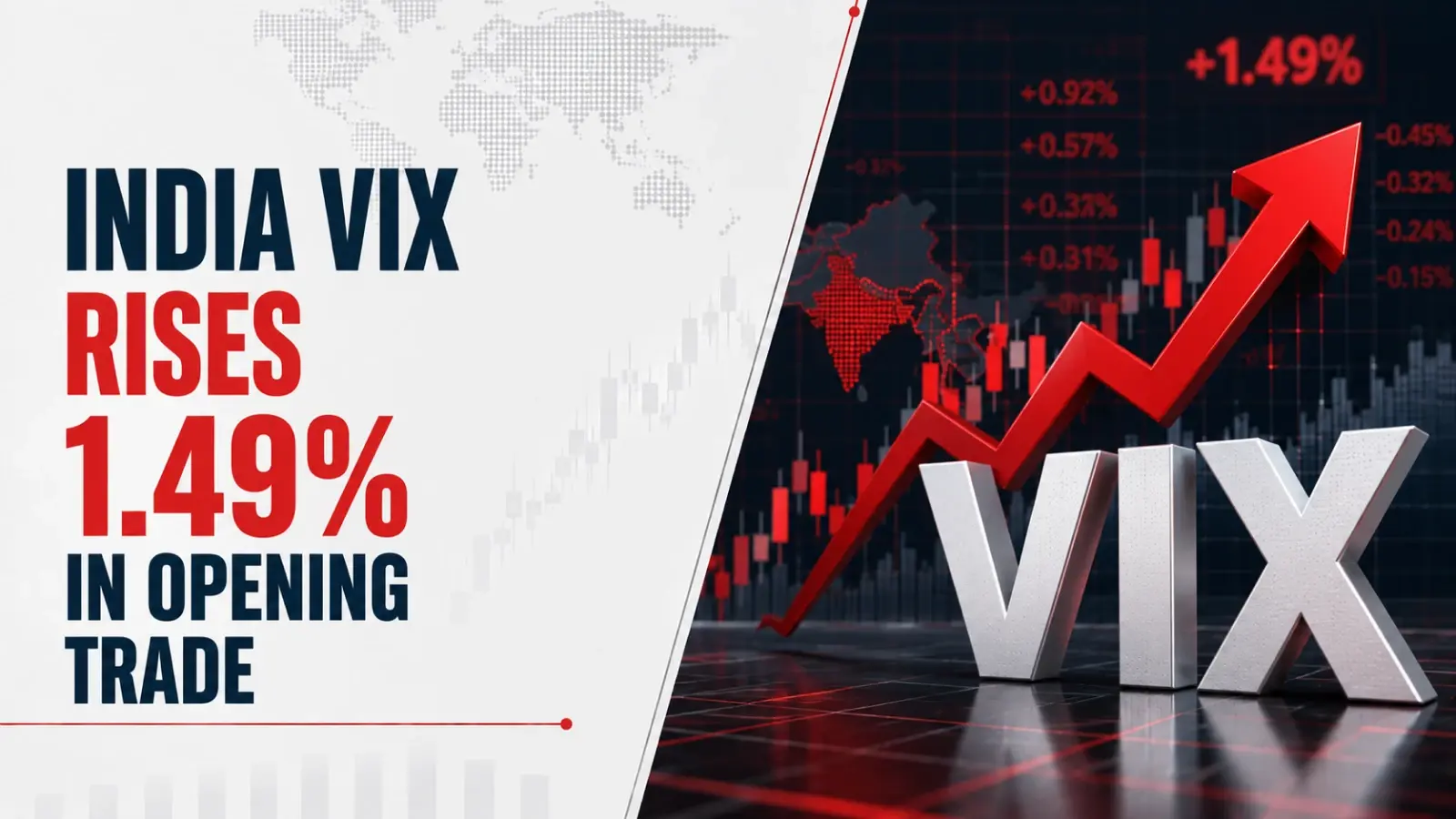
Mumbai, Aug 6: India VIX, the volatility index that measures the market’s expectation of near-term fluctuations, edged higher by 1.49% to 12.18 during the opening session on 6 August 2026, reflecting a measured increase in implied volatility following a period of stabilisation after the sharp swings witnessed in July.
As of 10:12 IST, the index had traded within a day range of 10.09–12.25, after opening at 12.06, matching its previous close of 12.06. India VIX continues to trade well below its 52-week high of 28.90, while remaining above its 52-week low of 8.72, with the index delivering 28.48% year-to-date returns.

India VIX Holds Above 12 After Opening Higher
The opening session indicates that implied volatility remains within a moderate range despite the significant fluctuations witnessed over the past month. During early trade, India VIX touched an intraday high of 12.25 before slipping towards its session low of 10.09, highlighting normal intraday movement rather than the sharp spikes experienced in early July. With the index hovering around the 12 mark, market expectations for near-term volatility remain considerably below the elevated levels recorded during last month’s risk-off phase. The latest technical assessment also classifies the trend as Neutral, with classical pivot levels placed at R1 12.89, R2 13.71, R3 14.76, Pivot Point 11.84, S1 11.02, S2 9.97, and S3 9.15.
July’s 26–30% Spike Continues To Define Recent Volatility
The most significant development shaping India VIX over the past month remains the sharp surge recorded on 8 July 2026, when the volatility gauge climbed by approximately 26–30% in a single trading session, making it one of the largest one-day increases of the year.
The jump coincided with a broad-based decline across Indian equities, as the Sensex fell more than 1,600 points, the Nifty slipped below 23,900, and the overall market capitalisation declined by nearly ₹9 lakh crore.
Defensive sectors outperformed during the session, while broader markets experienced widespread selling as volatility accelerated sharply within a single trading day.
Geopolitical Risks and Oil Prices Lifted Implied Volatility
Several developments combined to trigger the sharp rise in India VIX during early July. Escalating geopolitical tensions between the United States and Iran heightened concerns over potential disruptions to crude oil supply routes across West Asia. At the same time, higher crude oil prices increased concerns surrounding inflation, corporate profitability, fiscal conditions and currency expectations within the domestic market.
The beginning of the Q1 FY27 earnings season also introduced greater uncertainty around large-cap corporate performance, while professional market participants increased hedging activity through protective put options.
The combination of geopolitical developments, elevated oil prices, earnings uncertainty and heavier derivatives hedging resulted in a sharp rise in implied volatility.
Cooling Volatility Brought India VIX Back Towards 12
Following the early July spike, India VIX began easing within a few trading sessions as panic-driven activity reduced and option premiums moderated. Protective hedges were gradually unwound while broader market conditions stabilised.
The decline in implied volatility broadly coincided with improving global market conditions after the initial geopolitical shock eased. Although India VIX retreated from its July highs, it continued to trade above the comparatively lower levels seen during June, indicating that market participants remained attentive to external developments even as volatility moderated.
Mid-July Events Kept India VIX Elevated Above June Levels
During the middle of July, India VIX remained above its June range as several external and domestic developments continued influencing market expectations.
Ongoing geopolitical developments involving the United States and Iran, fluctuations in crude oil prices, foreign institutional investor activity and the progression of the Q1 FY27 corporate earnings season remained the principal factors monitored by market participants.
Although the sharp panic observed in early July had subsided, these developments prevented volatility from returning immediately to earlier lows, resulting in an extended period of elevated, though gradually moderating, implied volatility.
Fresh Rise Above 13 Faded Before August Stability
Around 23 July, India VIX witnessed another increase, moving back into the 13–14 range as crude oil prices strengthened again, Middle East-related concerns resurfaced, foreign institutional investor selling re-emerged and uncertainty increased ahead of key domestic developments.
However, the renewed rise remained considerably below the extreme levels recorded during the 8 July surge. By the final week of July, improving foreign institutional investor inflows and recovering benchmark indices contributed to easing volatility. As markets entered August, India VIX settled close to 11.9, indicating that implied volatility had largely normalised despite mixed global developments.
August Seasonality Shows 13 Of 18 Positive Years
Historical data continues to highlight August as a relatively stronger month for India VIX. Over the past 18 years, the index has delivered positive returns in 13 August trading periods. The month has recorded a maximum positive change of 68.84% in 2015, while the average positive change stands at 16.99%.
On the downside, the maximum negative change has been -11.26% in 2016, with an average negative change of -6.01%. Overall, the average August change is 10.60%, making the month historically stronger than several other periods for the volatility index.
India VIX Trades Near Long-Term Average Levels
As of the opening session on 6 August 2026, India VIX continues to trade close to its longer-term average, remaining substantially below the panic-driven highs recorded during early July.
With the index moving within the 10.09–12.25 range during early trade and standing at 12.18, implied volatility currently reflects a comparatively stable environment relative to the sharp fluctuations experienced one month earlier.
Analysts noted that recent trading conditions indicate moderate hedging activity and an absence of major domestic disruptions during the opening session, even as participants continue monitoring geopolitical developments, crude oil prices, corporate earnings and foreign institutional investor flows that influenced volatility throughout July.
India VIX opened 1.49% higher at 12.18 on 6 August 2026, remaining well below the sharp highs recorded during early July. The index continues to trade within a moderate volatility range after easing through the second half of July, while geopolitical developments, crude oil prices, corporate earnings and foreign institutional investor activity remain the principal factors influencing market volatility.
Source
- https://www.nseindia.com/reports-indices-historical-vix
Disclaimer
If you have any concerns, questions, or wish to point out any discrepancies in our content, please feel free to write to us at content@hdfcsec.com.
Please Note: The information shared is intended solely for informational purposes and does not make any investment recommendations
Disclaimer
At HDFC SKY*, we take utmost care and due diligence in curating and presenting news and market-related content. However, inadvertent errors or omissions may occasionally occur.
If you have any concerns, questions, or wish to point out any discrepancies in our content, please feel free to write to us at content@hdfcsec.com.
Please Note: The information shared is intended solely for informational purposes and does not make any investment recommendations.
HDFC SKY from HDFC Securities, one of most trusted trading platforms in India, has been recognized with the *Next-Gen Digi Content Awards 2025-26.
 Join Us
 Add as preferred source on Google


More Business News







Open Free Demat Account
Open Free Demat Account












Invest Anytime, Anywhere


By signing up I certify terms, conditions & privacy policy