Nifty 50
- Bajaj Auto₹10,063285.00 (2.91%)
- Tech Mahindra₹1,452.20-61.90 (-4.09%)
- Dr. Reddy's Labs₹1,231.6034.60 (2.89%)
- ITC₹257.95-8.05 (-3.03%)
- Bharat Electronics₹373.505.35 (1.45%)
- Coal India₹403.65-7.90 (-1.92%)
- BSE₹3,33446.80 (1.42%)
- Bharti Airtel₹1,770.70-34.40 (-1.91%)
- Eicher Motors₹7,127.5077.50 (1.10%)
- SBI₹941.20-17.90 (-1.87%)
- Tata Motors PV₹282.903.00 (1.07%)
- L&T₹3,643-60.30 (-1.63%)
- Mahindra & Mahindra₹2,82023.80 (0.85%)
- Hindustan Unilever₹1,827.30-29.40 (-1.58%)
- HCL Technologies₹1,221.705.00 (0.41%)
- NTPC₹307.10-4.90 (-1.57%)
- Cipla₹1,305.104.10 (0.32%)
- Hindalco Industries₹889.25-11.10 (-1.23%)
- Tata Consumer ₹9583.00 (0.31%)
- Infosys₹1,011.25-12.15 (-1.19%)

- Offerings
- Tools & Platforms
Tools & Calculators
- Open API
- Calculators
- SIP Calculator
- CAGR Calculator
- Compound Interest Calculator
- FD Calculator
- RD Calculator
- EPF Calculator
- Retirement Calculator
- HDFC SIP Calculator
- Mutual Fund Return Calculator
- Lumpsum Calculator
- Step Up SIP Calculator
- ETF SIP Calculator
- Brokerage Calculator
- Equity Margin Calculator
- SWP Calculator
- EMI Calculator
- MTF Calculator
- Margin Pledge Calculator
- Algo Strategy
- Markets
Stocks
F&O
Mutual Funds
- More
India VIX Rises 5.49% to 12.30 After US-Iran Tensions End Five-Month Calm in Indian Markets
Authored By HDFC SKY | Last Modified: Jul 8, 2026 11:20 AM IST
Open Free Demat Account
Open Free Demat Account
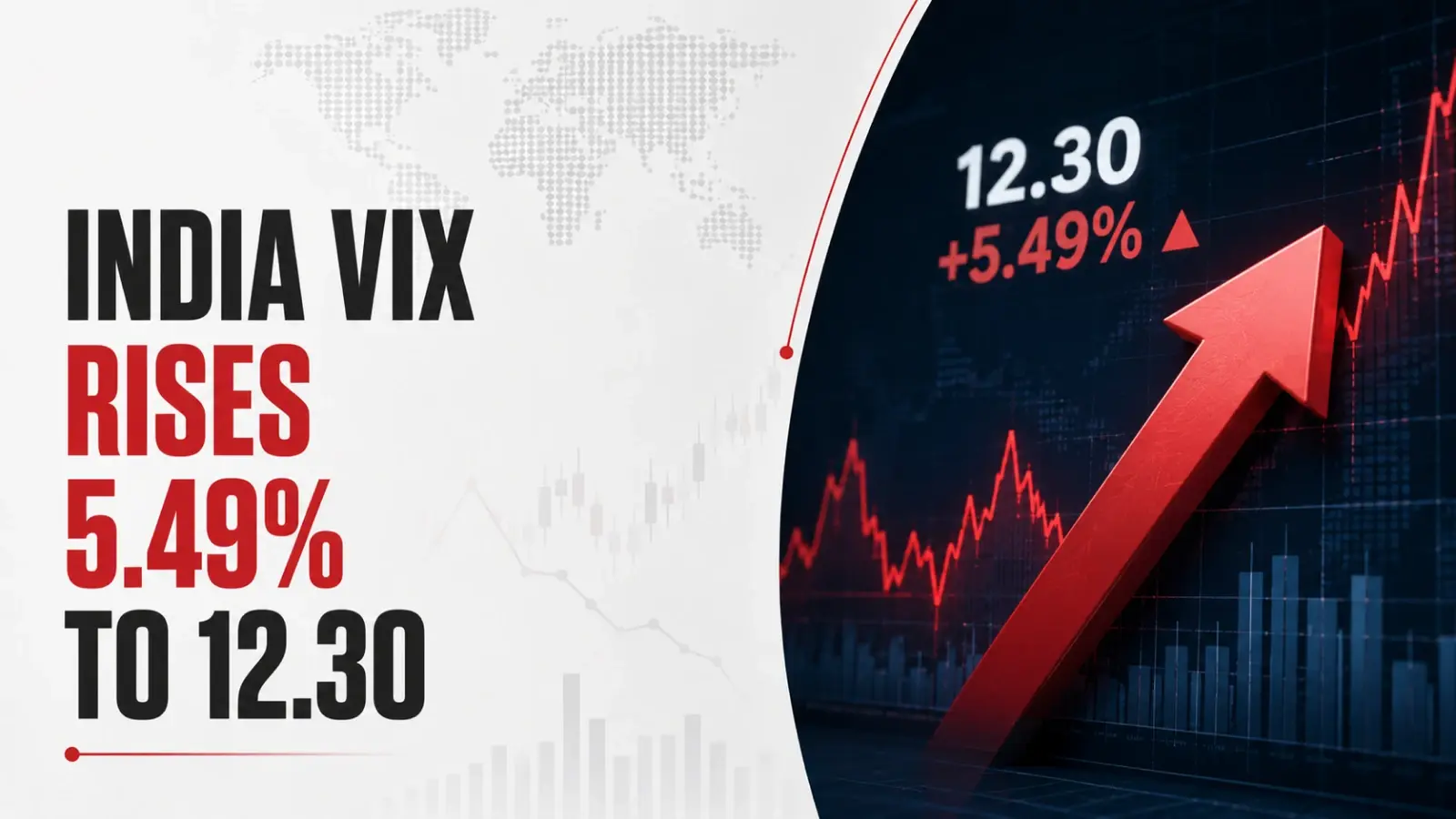
Mumbai, July 8: India’s market volatility gauge, India VIX, staged a sharp rebound during the opening session on 8 July 2026, climbing 5.49% to 12.30 after renewed geopolitical tensions in the Middle East unsettled global financial markets.
The surge came just a day after the volatility index had closed at around 11.65, its lowest level since February 2026, highlighting how quickly external developments altered market conditions.
The rise in volatility coincided with a broad decline in Indian equities as the BSE Sensex fell by nearly 600 points, while the Nifty 50 slipped towards 24,200 amid higher crude oil prices and increased demand for hedging through index options.
India VIX Climbs 5.49% as Global Risks Return
During the opening session, India VIX traded at 12.30, gaining 0.64 points or 5.49% from the previous close. The index opened at 11.64, touched an intraday high of 12.50, and slipped to a low of 11.33 before stabilising. The previous close stood at 11.65, while the volatility gauge continues to trade within its 52-week range of 8.72 to 28.90.
Also Read: What is India VIX Index?
The sharp rise followed a prolonged period of declining volatility. On 7 July, India VIX had fallen by around 1.44% to 1.52%, settling near 11.64-11.65, marking its lowest closing level in approximately five months.
The subdued reading had reflected relatively stable market conditions over recent weeks before geopolitical developments abruptly changed the outlook during Wednesday’s opening trade.
US-Iran Conflict Pushes Crude Higher and Markets Lower
The reversal in market sentiment followed fresh military developments involving the United States and Iran. Reports indicated that the United States launched military strikes after accusing Tehran of attacking ships in the Strait of Hormuz, while Iran reportedly retaliated with strikes targeting Bahrain and Kuwait.
The developments triggered a broad risk-off mood across global markets. Brent crude oil rose 2.6% to approximately US$76.1 per barrel, extending gains from the previous session as traders assessed the implications for global energy supplies. Asian equity markets also weakened, with Indian benchmarks following the broader global trend lower during the opening session.
The increase in oil prices added further pressure on domestic markets, given India’s dependence on crude imports, while heightened uncertainty encouraged market participants to seek additional downside protection through derivatives.
Sensex Drops Nearly 600 Points as Hedging Demand Increases
The spike in India VIX coincided with a broad-based decline across Indian equities. The Sensex dropped by around 600 points, while the Nifty 50 approached the 24,200 mark during early trade. Broader market indices also remained under pressure, with the Nifty Midcap 100 and Nifty Smallcap 100 declining by around 0.5% each.
Several heavyweight stocks traded lower during the session, including UltraTech Cement, Asian Paints, InterGlobe Aviation (IndiGo), Maruti Suzuki, Bajaj Finance, ITC, Kotak Mahindra Bank, State Bank of India (SBI) and Reliance Industries, with declines ranging between 1% and 3%.
Market reports attributed the rise in India VIX primarily to stronger demand for options protection rather than widespread panic selling, indicating that participants were increasing hedging activity amid elevated geopolitical uncertainty.
Five-Month Low Reverses Within a Single Session
The move on 8 July marked a sharp turnaround from the previous trading session. On 7 July, India VIX had traded between 11.05 and 11.93, before closing near 11.64-11.65, reflecting easing concerns after several weeks of improving market stability.
The gradual decline in volatility since April 2026 had been supported by easing geopolitical concerns, softer crude oil prices, reduced foreign institutional selling and relatively stable domestic macroeconomic conditions. The low-volatility environment had also resulted in comparatively lower option premiums, making portfolio hedging less expensive.
However, the latest geopolitical developments quickly reversed those conditions, with volatility expanding during the opening session as traders reassessed short-term market risks.
Technical Levels Show Neutral Trend Despite Volatility Rise
Despite the sharp opening-session increase, the technical outlook for India VIX remained classified as Neutral. The daily technical rating did not indicate a decisive directional trend even as volatility moved higher.
Based on the previous trading session’s price range, the Classic Pivot Point stood at 11.54, with resistance levels at 12.04, 12.42 and 12.92, while support levels were placed at 11.16, 10.66 and 10.28. Under the Fibonacci calculation, resistance levels were 11.88, 12.09 and 12.42, with support at 11.21, 11.00 and 10.66. The Camarilla model indicated resistance at 11.73, 11.81 and 11.89, while support levels were 11.57, 11.49 and 11.41.
Market technicians also identified immediate support for the Nifty 50 around 24,300, 24,200 and 24,000, with resistance placed between 24,500 and 24,600 during the session.
July History Shows Weak Seasonal Trend for India VIX
Historical data indicates that July has generally been a weaker month for India VIX. Over the past 18 years, the volatility index has delivered negative monthly returns in 15 instances.
The highest positive July movement was 7.39% recorded in 2011, while the largest decline stood at 24.22% in 2022. The average positive July gain has been 4.47%, whereas the average negative decline has been 11.24%, resulting in an overall average July change of -8.63%.
Year-to-date, however, India VIX has gained 29.64%, despite remaining significantly below the elevated levels witnessed during periods of heightened market stress earlier in 2026.
Moderate Volatility Replaces Earlier Market Calm
Although India VIX moved sharply higher during the opening session, its level remained within the low-teens range, considerably below the 20-25 levels typically associated with severe market stress.
The increase from around 11.65 to above 12.30, with an intraday high of 12.50, reflected higher expectations of short-term market fluctuations and increased pricing for index options. Market reports noted that the movement represented a reassessment of geopolitical risks following the latest developments rather than a return to the extreme volatility experienced earlier this year.
India VIX opened sharply higher on 8 July 2026, reversing its five-month low after renewed US-Iran tensions lifted crude oil prices and increased hedging activity across Indian markets. Despite the rise to 12.30, the volatility gauge remained well below levels historically associated with severe market stress, while its technical trend continued to be classified as Neutral.
Disclaimer
If you have any concerns, questions, or wish to point out any discrepancies in our content, please feel free to write to us at content@hdfcsec.com.
Please Note: The information shared is intended solely for informational purposes and does not make any investment recommendations
Disclaimer
At HDFC SKY*, we take utmost care and due diligence in curating and presenting news and market-related content. However, inadvertent errors or omissions may occasionally occur.
If you have any concerns, questions, or wish to point out any discrepancies in our content, please feel free to write to us at content@hdfcsec.com.
Please Note: The information shared is intended solely for informational purposes and does not make any investment recommendations.
HDFC SKY from HDFC Securities, one of most trusted trading platforms in India, has been recognized with the *Next-Gen Digi Content Awards 2025-26.
 Join Us
 Add as preferred source on Google


More ULTRACEMCO News









Open Free Demat Account
Open Free Demat Account
₹10,647












Invest Anytime, Anywhere


By signing up I certify terms, conditions & privacy policy