Nifty 50
- Eternal₹317.4012.95 (4.25%)
- Shriram Finance₹865-35.90 (-3.98%)
- Apollo Hospitals₹7,730125.50 (1.65%)
- Adani Enterprises₹2,477-73.00 (-2.86%)
- ONGC₹227.502.50 (1.11%)
- JSW Steel₹1,185.50-34.50 (-2.83%)
- Asian Paints₹2,30722.20 (0.97%)
- Jio Financial ₹205.03-5.77 (-2.74%)
- TCS₹2,53023.10 (0.92%)
- Tata Steel₹167.67-4.66 (-2.70%)
- UltraTech Cement₹11,05092.00 (0.84%)
- Adani Ports₹1,702.70-47.30 (-2.70%)
- Maruti Suzuki₹11,23060.00 (0.54%)
- Tech Mahindra₹1,790-39.10 (-2.14%)
- Cipla₹1,3387.10 (0.53%)
- Tata Motors PV₹264.60-5.40 (-2.00%)
- Reliance Industries₹1,1905.50 (0.46%)
- Hindalco Industries₹869.85-15.75 (-1.78%)
- Axis Bank₹1,217.505.50 (0.45%)
- Trent₹2,727.50-48.30 (-1.74%)

- Offerings
- Tools & Platforms
Tools & Calculators
- Open API
- Calculators
- SIP Calculator
- CAGR Calculator
- Compound Interest Calculator
- FD Calculator
- RD Calculator
- EPF Calculator
- Retirement Calculator
- HDFC SIP Calculator
- Mutual Fund Return Calculator
- Lumpsum Calculator
- Step Up SIP Calculator
- ETF SIP Calculator
- Brokerage Calculator
- Equity Margin Calculator
- SWP Calculator
- EMI Calculator
- MTF Calculator
- Margin Pledge Calculator
- Algo Strategy
- Markets
Stocks
F&O
Mutual Funds
- More
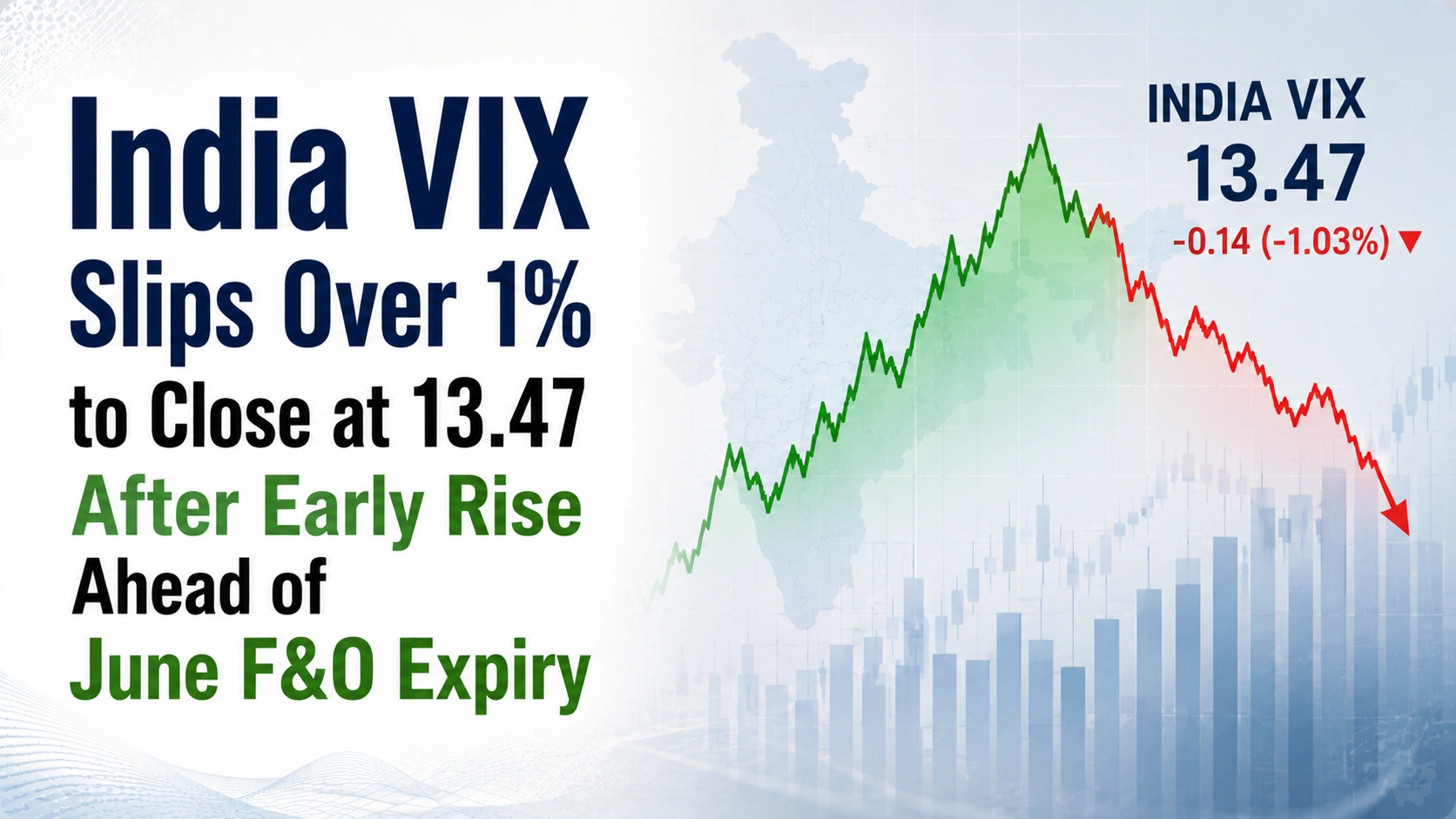
India VIX Slips Over 1% to Close at 13.47 After Early Rise Ahead of June F&O Expiry
Authored By HDFC SKY | Published at: Jun 30, 2026 04:54 PM IST
Open Free Demat Account
Open Free Demat Account
Mumbai, June 30: India VIX ended Tuesday’s session lower after opening on a firm note, reflecting easing market volatility as the trading day progressed. The volatility gauge initially climbed amid caution ahead of the National Stock Exchange (NSE) June futures and options (F&O) expiry, geopolitical developments in West Asia and recent profit booking in domestic equities. However, improving global cues and a recovery in Indian benchmark indices helped temper market concerns, pulling the index lower by the closing bell.
India VIX opened at 13.61, rose as much as 1.69% to an intraday high of 13.96, and later touched a day’s low of 13.15 before settling at 13.47, down by more than 1% from its intraday peak. The closing level followed Monday’s sharp 4.29% rise, when the volatility index had ended at 13.61.

India VIX Falls from 13.96 High as Markets Recover
The session reflected a clear shift in market mood. During early trade, India VIX traded around 13.85, indicating that participants were pricing in higher short-term volatility ahead of the monthly derivatives settlement. By mid-session, the index had eased to around 13.34, before finally closing at 13.47 as broader market conditions stabilised.
Although the volatility gauge remained above recent levels, it stayed well below the 20-mark, a level generally associated with elevated market stress. The movement suggested that while traders remained cautious through the expiry session, broader market conditions improved as the day progressed.
Geopolitical Developments and Expiry Trading Lifted Early Volatility
The initial rise in India VIX followed renewed geopolitical developments in West Asia after fresh hostilities between the United States and Iran over the weekend. Reports of missile exchanges and continued discussions surrounding safe navigation through the Strait of Hormuz added uncertainty to global financial markets, prompting traders to factor in higher near-term volatility before Tuesday’s opening.
Domestic factors also contributed to the cautious start. Monday’s session had witnessed profit booking across Indian equities after recent gains, with the Nifty 50 slipping below the 24,000 level to close at 23,946.25. Selling pressure in information technology and automobile stocks added to the cautious market tone carried into Tuesday’s trade.
In addition, 30 June marked the monthly futures and options expiry on the NSE, a period that typically sees higher trading activity and wider price movements as market participants adjust outstanding positions before contract settlement.
Positive Global Markets Helped Ease Domestic Volatility
As the session progressed, improving overseas market cues helped reduce volatility expectations. United States equities ended Monday’s trading session sharply higher, with the Dow Jones Industrial Average recording a fresh closing high as concerns surrounding the latest US-Iran developments moderated.
Asian equity markets also traded higher during Tuesday’s session, placing the regional benchmark on course for its strongest quarterly performance in 17 years. The improved global backdrop helped reduce immediate market concerns, contributing to the decline in India VIX from its intraday highs.
Sensex Ends at 76,478, Nifty at 23,865.75, While Advances Outpace Declines 2:1
While India VIX closed lower by over 1% at 13.47, the domestic benchmark indices told a mixed story. The Sensex faced a surprise sell-off, closing down 249.70 points at 76,478.67, dragged by heavyweights like Infosys and metal stocks.
The Nifty 50 erased all its intraday gains (which had pushed it near 24,000) and ended at 23,865.75. The positive market breadth (1,525 advances vs. 741 declines) suggests that the selling was concentrated in heavy-index-weight stocks (particularly IT and Metals), while mid-caps and sectoral players like Oil & Gas and PSU Banks held up well.
Thus, while the fear gauge (India VIX) dropped (good for bulls), the benchmark indices showed divergence, with Nifty and Sensex declining, indicating that investors rotated capital into broader markets while booking profits in large-cap IT and metal names on the monthly expiry day.
Technical Levels Show Neutral Trend Around 13.53 Pivot
Daily technical indicators continued to classify India VIX in a Neutral trend. According to the latest technical levels, the primary pivot point stood at 13.53.
Immediate resistance levels were placed at 14.15, 14.69 and 15.31, while immediate support levels stood at 12.99, 12.37 and 11.83.
Over the past 52 weeks, India VIX has traded within a broad range of 8.72 to 28.90, highlighting the significant swings in market volatility witnessed during the period. On a year-to-date basis, the volatility index has gained approximately 43.46%, reflecting higher overall volatility compared with the beginning of the calendar year.
Historical seasonality data also shows that 11 out of the past 18 June months have delivered negative returns for India VIX. The average decline for the month stands at 7.34%, while the largest June fall on record reached 43.90% in 2024.
Volatility Moderates Despite Higher Opening Levels
Tuesday’s trading session ultimately produced a “high-open, lower-close” pattern for India VIX. While the index initially reflected heightened caution surrounding geopolitical developments, derivatives expiry and the previous session’s profit booking, improving global sentiment and stronger domestic equity performance gradually reduced short-term volatility expectations.
The moderation in India VIX during the second half of the session coincided with the recovery in benchmark indices, allowing the volatility gauge to finish below its opening momentum despite remaining above levels seen earlier in the month.
India VIX closed at 13.47 after rising to an intraday high of 13.96, with the session reflecting changing market conditions as global cues improved and domestic benchmarks recovered. The movement came against the backdrop of the June derivatives expiry, recent geopolitical developments, and the previous session’s sharp rise in the volatility index, while technical indicators continued to indicate a Neutral trend.
Source
- https://www.nseindia.com/reports-indices-historical-vix
Disclaimer
If you have any concerns, questions, or wish to point out any discrepancies in our content, please feel free to write to us at content@hdfcsec.com.
Please Note: The information shared is intended solely for informational purposes and does not make any investment recommendations
Disclaimer
At HDFC SKY*, we take utmost care and due diligence in curating and presenting news and market-related content. However, inadvertent errors or omissions may occasionally occur.
If you have any concerns, questions, or wish to point out any discrepancies in our content, please feel free to write to us at content@hdfcsec.com.
Please Note: The information shared is intended solely for informational purposes and does not make any investment recommendations.
HDFC SKY from HDFC Securities, one of most trusted trading platforms in India, has been recognized with the *Next-Gen Digi Content Awards 2025-26.
 Join Us
 Add as preferred source on Google


More Markets News







Open Free Demat Account
Open Free Demat Account










Invest Anytime, Anywhere


By signing up I certify terms, conditions & privacy policy