Nifty 50
- Dr. Reddy's Labs₹1,229.4032.40 (2.71%)
- Apollo Hospitals₹7,775-252.50 (-3.15%)
- Bajaj Auto₹10,034256.00 (2.62%)
- ITC₹257.90-8.10 (-3.05%)
- Tata Motors PV₹284.454.55 (1.63%)
- Tech Mahindra₹1,471-43.10 (-2.85%)
- Bharat Electronics₹373.905.75 (1.56%)
- L&T₹3,627.50-75.80 (-2.05%)
- BSE₹3,330.2043.00 (1.31%)
- Max Healthcare₹865.95-17.85 (-2.02%)
- Cipla₹1,317.4016.40 (1.26%)
- Hindalco Industries₹882.50-17.85 (-1.98%)
- Eicher Motors₹7,11969.00 (0.98%)
- Hindustan Unilever₹1,820.70-36.00 (-1.94%)
- Mahindra & Mahindra₹2,81316.80 (0.60%)
- SBI₹941-18.10 (-1.89%)
- Kotak Mahindra Bank₹443.402.40 (0.54%)
- Coal India₹404.80-6.75 (-1.64%)
- HCL Technologies₹1,2236.30 (0.52%)
- Bharti Airtel₹1,778.70-26.40 (-1.46%)

- Offerings
- Tools & Platforms
Tools & Calculators
- Open API
- Calculators
- SIP Calculator
- CAGR Calculator
- Compound Interest Calculator
- FD Calculator
- RD Calculator
- EPF Calculator
- Retirement Calculator
- HDFC SIP Calculator
- Mutual Fund Return Calculator
- Lumpsum Calculator
- Step Up SIP Calculator
- ETF SIP Calculator
- Brokerage Calculator
- Equity Margin Calculator
- SWP Calculator
- EMI Calculator
- MTF Calculator
- Margin Pledge Calculator
- Algo Strategy
- Markets
Stocks
F&O
Mutual Funds
- More
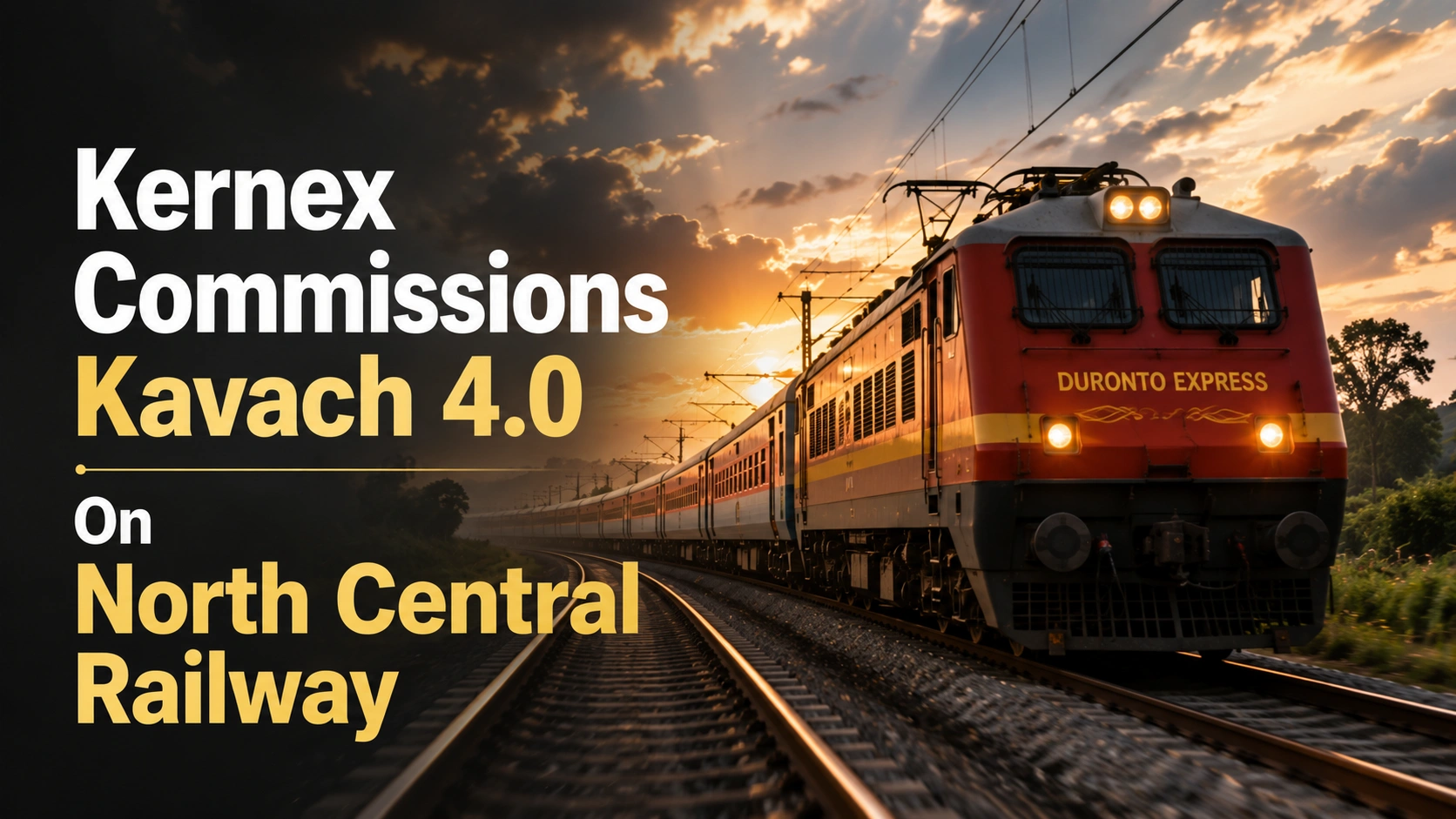
Kernex Commissions Kavach 4.0 On North Central Railway; Shares Edge Higher
Authored By HDFC SKY | Published at: Jul 2, 2026 01:16 PM IST
Kernex Microsystems commissioned its Kavach Version 4.0 system on a key North Central Railway section, expanding deployment of India’s indigenous train collision avoidance technology.
Open Free Demat Account
Open Free Demat Account
Mumbai, July 2:Kernex Microsystems (India) Ltd. has successfully commissioned its Kavach Version 4.0 on the 207-km Tundla-Panaki section of the North Central Railway, marking another milestone in the rollout of India’s indigenous train protection system.
The company said the upgraded Kavach system supports train operations at speeds of up to 130 kmph on the newly commissioned route. With this addition, the total operational coverage of Kavach Version 4.0 across the North Central Railway has increased to 652 route kilometres, of which 572 route kilometres have been executed by Kernex.
The commissioning comes as Indian Railways continues to expand deployment of Kavach, an automatic train protection system developed to improve rail safety and prevent collisions.

Stock Market Snapshot
The operational update drew a positive response from investors.
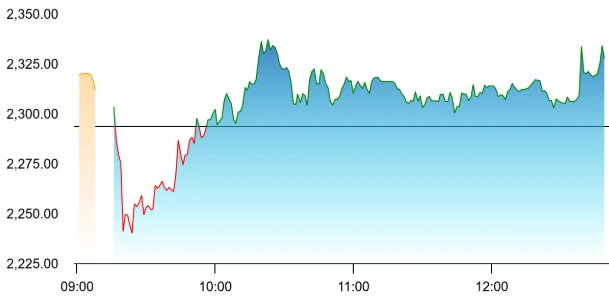
As of 12:48 PM IST on July 2, Kernex share price was trading at ₹2,327.60, up ₹34.00 or 1.48%.
While the announcement does not involve a fresh order, it highlights successful execution of an existing project, an important metric for infrastructure technology companies executing large government contracts. Timely commissioning can also strengthen a company’s credentials for future railway safety projects.
Project Expands Kavach Deployment on North Central Railway
According to the company, the newly commissioned stretch includes 39 railway stations, commissioning of 10 WAP-7 locomotives, installation of more than 4,600 RFID tags, construction of 17 communication towers, laying of 48-core optical fibre cable, and establishment of 30 equipment rooms.
The project also involved extensive testing and validation by the Research Designs and Standards Organisation (RDSO), North Central Railway and an Independent Safety Assessor before commissioning.
Kernex said the upgraded system has also demonstrated support for train operations at speeds of up to 160 kmph over an executed section spanning 175 route kilometres, highlighting the scalability of its indigenous railway signalling technology.
In addition, the commissioning included successful trial runs involving the Kanpur Shatabdi Express and Sikkim Mahananda Express, along with integration with the Hitachi Electronic Interlocking System, validating interoperability with existing railway infrastructure.
Company Background
Kernex Microsystems develops railway signalling and safety solutions, with Kavach forming a key part of its portfolio. The company has been involved in implementing India’s indigenous automatic train protection technology as Indian Railways accelerates network modernisation and safety upgrades.
Growing deployment of Kavach across multiple railway zones is expected to remain an important driver for companies operating in the rail signalling and transportation technology space.
Conclusion
The successful commissioning of the 207-km Tundla-Panaki section further expands Kernex’s footprint in India’s railway safety programme and reinforces its execution capabilities in large-scale signalling projects.
As Indian Railways continues to roll out Kavach across more routes, investors will be watching for additional commissioning milestones and fresh project awards that could support the company’s long-term growth trajectory.
Source:
- https://www.nseindia.com/get-quote/equity/KERNEX/Kernex-Microsystems-(India)-Limited
- https://nsearchives.nseindia.com/corporate/KERNEX_02072026124007_Intimation_commissioning.pdf
Disclaimer
If you have any concerns, questions, or wish to point out any discrepancies in our content, please feel free to write to us at content@hdfcsec.com.
Please Note: The information shared is intended solely for informational purposes and does not make any investment recommendations
Disclaimer
At HDFC SKY*, we take utmost care and due diligence in curating and presenting news and market-related content. However, inadvertent errors or omissions may occasionally occur.
If you have any concerns, questions, or wish to point out any discrepancies in our content, please feel free to write to us at content@hdfcsec.com.
Please Note: The information shared is intended solely for informational purposes and does not make any investment recommendations.
HDFC SKY from HDFC Securities, one of most trusted trading platforms in India, has been recognized with the *Next-Gen Digi Content Awards 2025-26.
 Join Us
 Add as preferred source on Google



Open Free Demat Account
Open Free Demat Account
₹1,779












Invest Anytime, Anywhere


By signing up I certify terms, conditions & privacy policy