Nifty 50
- Bajaj Finance₹1,043.2034.40 (3.41%)
- HCL Technologies₹1,256.70-13.70 (-1.08%)
- Hindalco Industries₹1,003.8030.80 (3.17%)
- Titan Company₹4,880-48.50 (-0.98%)
- Tata Steel₹190.825.85 (3.16%)
- Infosys₹1,020.50-8.90 (-0.86%)
- Apollo Hospitals₹9,056220.50 (2.50%)
- Coal India₹424.55-3.45 (-0.81%)
- JSW Steel₹1,297.8030.80 (2.43%)
- TCS₹2,089.60-15.40 (-0.73%)
- Grasim Industries₹3,188.5060.30 (1.93%)
- Wipro₹164.90-1.10 (-0.66%)
- Nestle₹1,387.2023.30 (1.71%)
- NTPC₹326-1.80 (-0.55%)
- L&T₹3,929.9063.50 (1.64%)
- Bharat Electronics₹396.05-1.85 (-0.46%)
- ITC₹270.154.35 (1.64%)
- Trent₹2,774-8.90 (-0.32%)
- Power Grid Corp₹270.204.25 (1.60%)
- Mahindra & Mahindra₹3,035-9.50 (-0.31%)

- Offerings
- Tools & Platforms
Tools & Calculators
- Open API
- Calculators
- SIP Calculator
- CAGR Calculator
- Compound Interest Calculator
- FD Calculator
- RD Calculator
- EPF Calculator
- Retirement Calculator
- HDFC SIP Calculator
- Mutual Fund Return Calculator
- Lumpsum Calculator
- Step Up SIP Calculator
- ETF SIP Calculator
- Brokerage Calculator
- Equity Margin Calculator
- SWP Calculator
- EMI Calculator
- MTF Calculator
- Margin Pledge Calculator
- Algo Strategy
- Markets
Stocks
F&O
Mutual Funds
- More
South Korea’s KOSPI Plunges 10% as Regulator’s Warning on Leveraged ETFs Sparks Scare Among Foreigners
Authored By HDFC SKY | Last Modified: Jun 23, 2026 03:30 PM IST
Open Free Demat Account
Open Free Demat Account
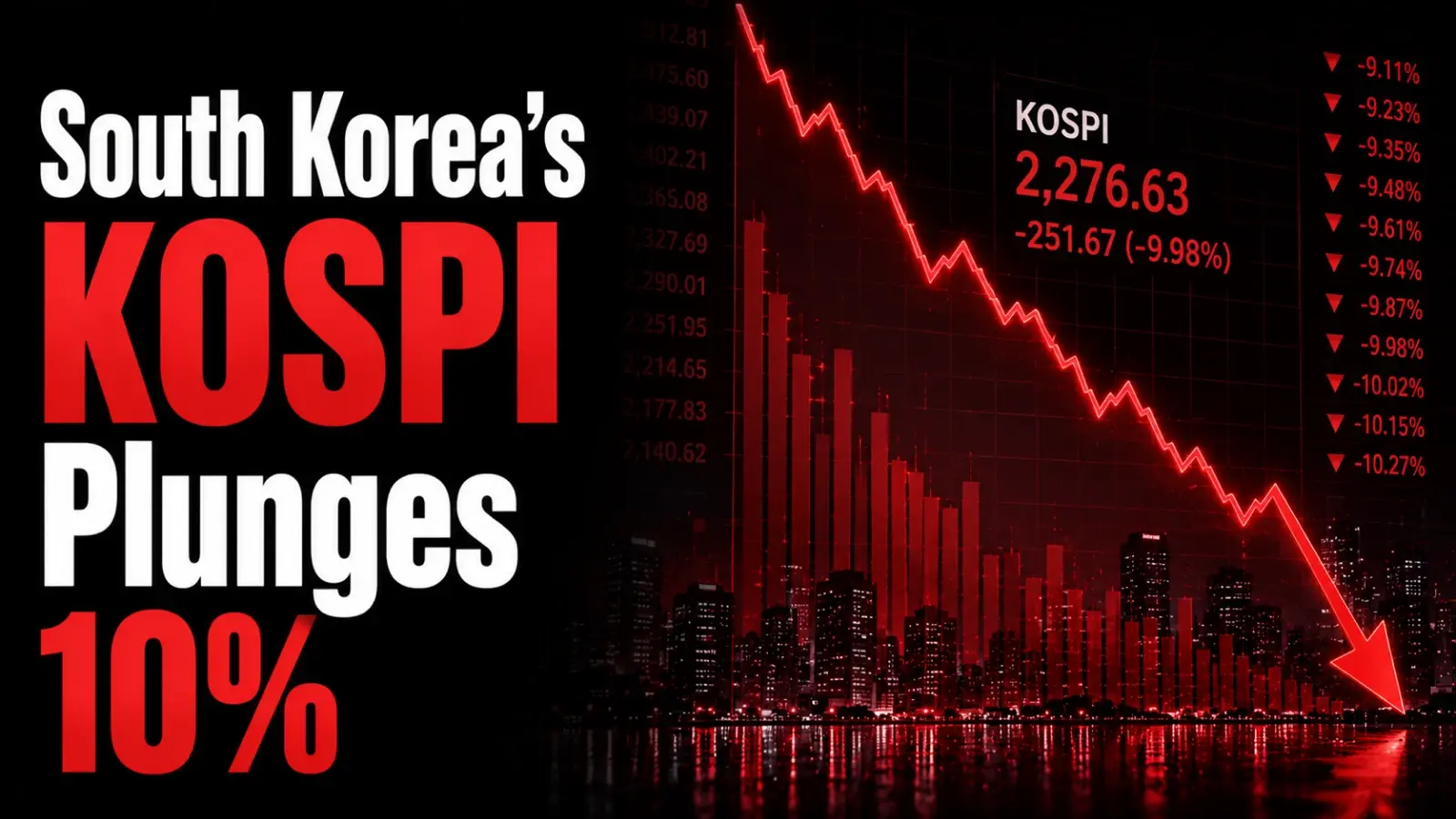
South Korea’s benchmark KOSPI index tumbled nearly 10% on Tuesday, marking its steepest one-day decline since March, after regulators cautioned investors about the risks associated with leveraged exchange-traded funds (ETFs), triggering a broad selloff by foreigners in heavyweight technology stocks.
The KOSPI closed down 9.99% at 8,203.84 points after a sharp decline in semiconductor shares wiped out hundreds of billions of dollars in market value and forced a temporary market-wide trading halt. The selloff was led by index heavyweights Samsung Electronics and SK Hynix, which each lost more than 12%.

Leveraged ETF Concerns Trigger Selling
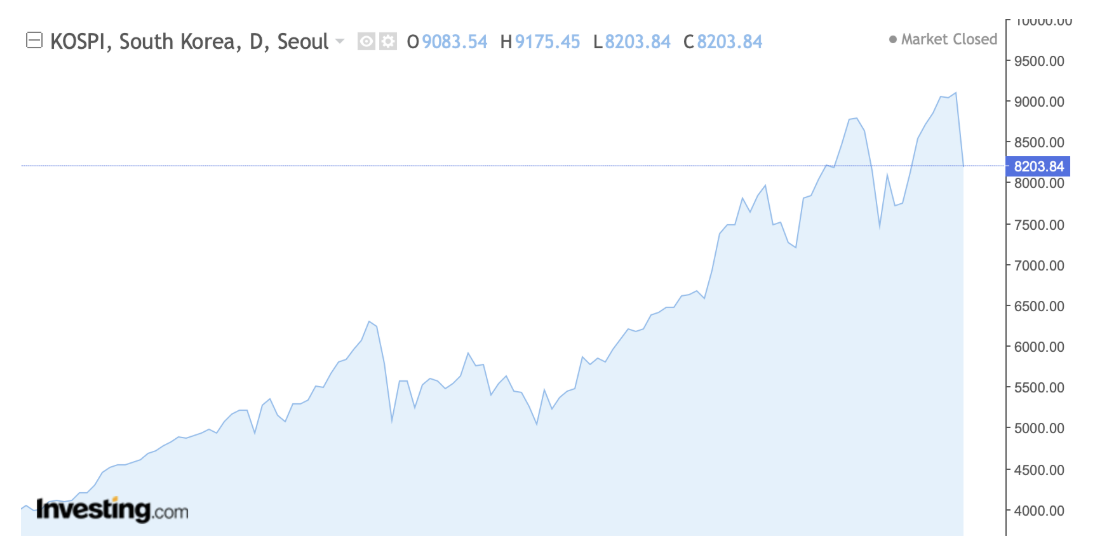
The index plunged as the regulator scared investors with its warning. Source: Investing.com
Investor sentiment deteriorated after South Korea’s Financial Supervisory Service (FSS) intensified warnings about leveraged investment products linked to individual stocks, particularly semiconductor companies. Regulators recently acknowledged they had moved too quickly in approving leveraged funds tied to popular chip stocks and urged investors to exercise caution amid rising market volatility.
The regulator’s comments added to concerns that excessive leverage had amplified speculation in a market already heavily driven by retail investors. Margin debt in the KOSPI market has surged to record levels this year, raising fears that any correction could trigger forced selling and exacerbate market swings.
Also Read: How to Invest in the US Stocks From India?
AI Rally Unravels
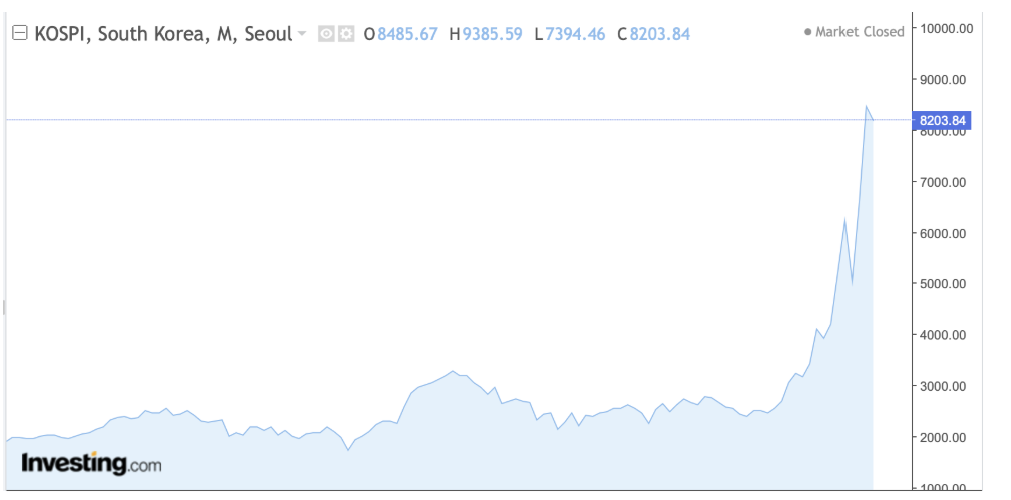
The monthly graph shows Kospi getting overheated as foreign investors overbuy chipmakers. Source: Investing.com
The latest decline represents a dramatic reversal for one of the world’s best-performing equity markets. South Korean stocks had rallied strongly over the past year, fuelled by enthusiasm surrounding artificial intelligence and soaring demand for advanced memory chips.
Samsung Electronics and SK Hynix, key beneficiaries of the AI boom, had become dominant contributors to the KOSPI’s rise, together accounting for more than half of the benchmark index’s market capitalization. However, concerns over elevated valuations, rising borrowing costs and speculative positioning have increasingly left the market vulnerable to sharp corrections.
Global Factors Add Pressure
The Korean selloff also came amid broader weakness across global technology stocks. Investors have been reassessing expectations for U.S. interest rates after stronger economic data fueled concerns that the Federal Reserve may hike rates later this year. Higher rates typically weigh on growth-oriented sectors such as technology.
The sharp decline in Seoul spilled over into other regional markets, while European equities opened lower as investors digested the fallout from the tech-led selloff.
Also Read: Understanding US Stock Market Timings
Outlook
Market participants are now closely watching whether regulators introduce additional measures to curb leverage and stabilise trading. Analysts caution that while the long-term outlook for South Korea’s semiconductor industry remains intact, elevated retail participation and record margin borrowing could keep volatility high in the near term.
Source:
- data from https://index.krx.co.kr/main/main.jsp, charts from investing.com
Disclaimer
If you have any concerns, questions, or wish to point out any discrepancies in our content, please feel free to write to us at content@hdfcsec.com.
Please Note: The information shared is intended solely for informational purposes and does not make any investment recommendations
Disclaimer
At HDFC SKY*, we take utmost care and due diligence in curating and presenting news and market-related content. However, inadvertent errors or omissions may occasionally occur.
If you have any concerns, questions, or wish to point out any discrepancies in our content, please feel free to write to us at content@hdfcsec.com.
Please Note: The information shared is intended solely for informational purposes and does not make any investment recommendations.
HDFC SKY from HDFC Securities, one of most trusted trading platforms in India, has been recognized with the *Next-Gen Digi Content Awards 2025-26.
 Join Us
 Add as preferred source on Google


More International News




Open Free Demat Account
Open Free Demat Account








Invest Anytime, Anywhere


By signing up I certify terms, conditions & privacy policy