Nifty 50
- Tata Consumer ₹1,00063.50 (6.78%)
- Asian Paints₹2,277-45.00 (-1.94%)
- Bharti Airtel₹1,978.8061.30 (3.20%)
- Coal India₹398-7.00 (-1.73%)
- Bajaj Auto₹10,390319.00 (3.17%)
- Grasim Industries₹2,900.80-49.20 (-1.67%)
- BSE₹3,441.1082.10 (2.44%)
- SBI₹945.10-15.70 (-1.63%)
- Trent₹2,820.6066.60 (2.42%)
- TCS₹2,496.90-38.10 (-1.50%)
- Maruti Suzuki₹11,450230.00 (2.05%)
- Adani Enterprises₹2,474.10-33.90 (-1.35%)
- Power Grid Corp₹251.754.75 (1.92%)
- Axis Bank₹1,205.70-14.30 (-1.17%)
- Eternal₹3315.45 (1.67%)
- ICICI Bank₹1,386.90-16.10 (-1.15%)
- Max Healthcare₹847.9012.90 (1.54%)
- HDFC Bank₹680.20-7.85 (-1.14%)
- Bharat Electronics₹368.155.15 (1.42%)
- HDFC Life Insurance ₹513.60-5.40 (-1.04%)

- Offerings
- Tools & Platforms
Tools & Calculators
- Open API
- Calculators
- SIP Calculator
- CAGR Calculator
- Compound Interest Calculator
- FD Calculator
- RD Calculator
- EPF Calculator
- Retirement Calculator
- HDFC SIP Calculator
- Mutual Fund Return Calculator
- Lumpsum Calculator
- Step Up SIP Calculator
- ETF SIP Calculator
- Brokerage Calculator
- Equity Margin Calculator
- SWP Calculator
- EMI Calculator
- MTF Calculator
- Margin Pledge Calculator
- Algo Strategy
- Markets
Stocks
F&O
Mutual Funds
- More
Holding Losing F&O Positions Overnight Hoping for a Reversal: The Most Expensive Habit
By Aseem Shrivastava | Published at: Jun 13, 2026 05:07 PM IST
Open Free Demat Account
Open Free Demat Account
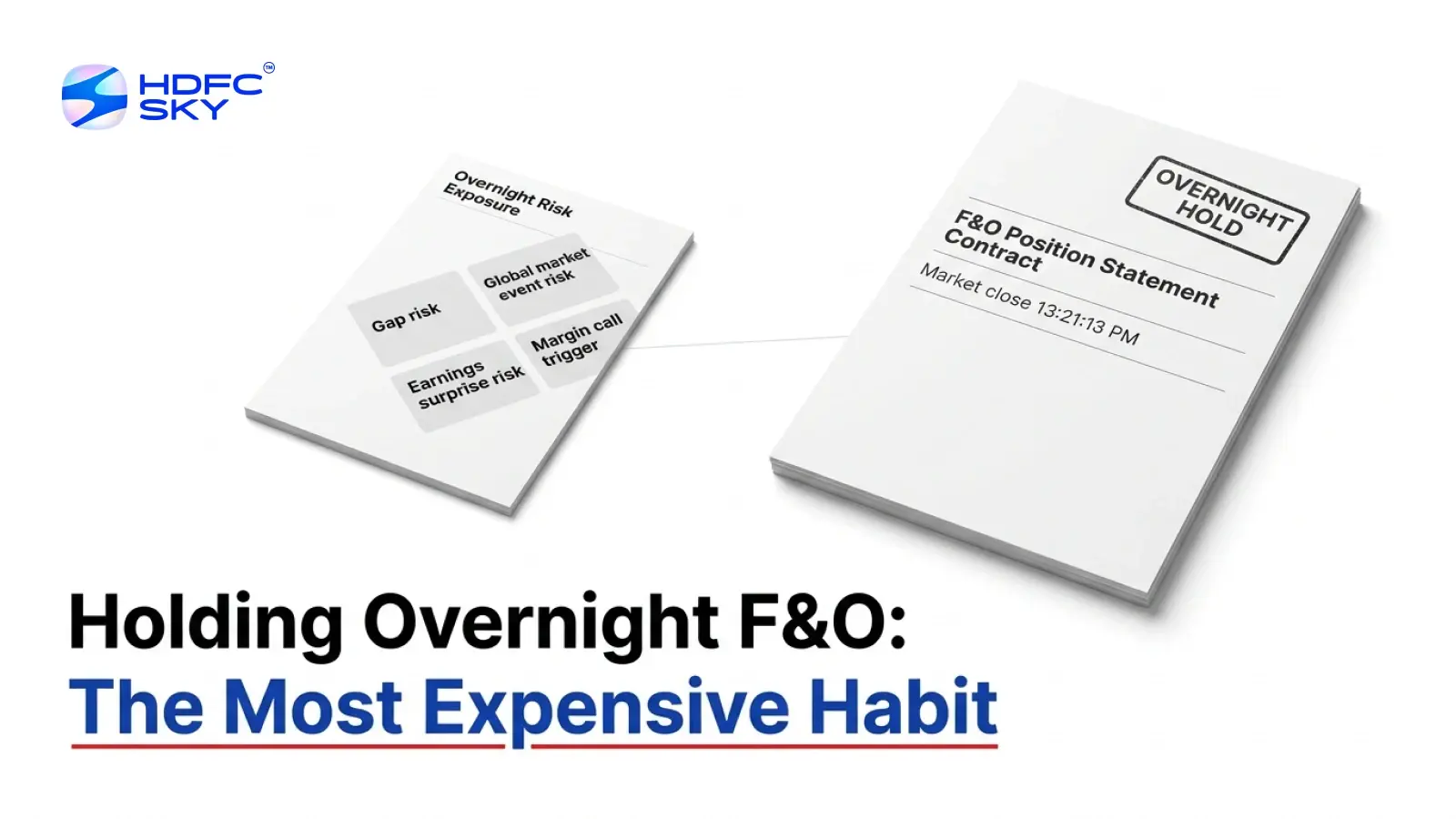
A large number of F&O traders refuse to exit losing positions before market close. The logic sounds simple. “The market may reverse tomorrow.” This habit often turns small losses into blows that can damage accounts.
Overnight risk is real and uncontrollable in futures and options trading. Global markets continue moving after Indian markets close. Crude oil prices can spike. US markets can crash. A weak global setup can trigger an unfavorable opening the next morning, before you even get the chance to react.
Your planned risk management strategy may also become irrelevant. This is one of the costliest habits when trading over a shorter term.
Hope Is Not a Trading Strategy
Most overnight holding decisions are emotional instead of analytical. You buy a call option expecting a breakout and the trade moves against you. You convince yourself that tomorrow could bring recovery rather than an exit. The stock gaps lower and the option premium collapses further the next day.
This cycle repeats because traders confuse hope with probability. Professional traders understand one thing clearly. A losing position does not become a good trade simply because you continue holding it. The market does not reward emotional attachment.
Overnight Risk Is Higher in F&O
Futures and options amplify both profits and losses because of leverage. That makes overnight exposure even more dangerous. A 3 percent overnight decline may be manageable in cash markets. The same move can wipe out a large portion of your premium value instantly in options trading.
Options also suffer from time decay. Your option can still lose value even if the price does not move sharply if the market remains sideways after you hold overnight.
This creates a double problem:
- Price risk
- Time decay risk
Many traders ignore this completely while holding losing option positions overnight.
Also Read: What the Buffett Indicator says about Indian market valuations right now
Gap Openings Can Trigger Panic Decisions
A major reason traders lose heavily is that overnight gaps deprive them of the flexibility to make decisions. Let’s assume you planned to exit if Nifty breaks a certain level. But the market opens far below that level the next morning. Now you are forced to exit at a much larger loss.
This usually triggers emotional reactions:
- Averaging losing positions
- Revenge trading
- Increasing position size to recover losses quickly
One poor overnight decision can easily affect the next several trades.
The Smarter Approach
Not every overnight position is wrong. Positional traders may carry trades based on a structured strategy and proper hedging. The problem starts when traders hold losing positions overnight without a clear plan. A disciplined trader focuses on capital protection first.



Open Free Demat Account
Open Free Demat Account
Popular Posts
- 10 Interesting Facts About NSE You Probably Didn’t KnowLast Updated: Sep 30, 2026
- 8-4-3 Rule of SIP - How Does That Work?Last Updated: Jul 30, 2025
- Let's view more exciting Post!
Popular Post from Dumb Money Mistakes
- Skipping Nominee Updates and Joint Holding: The Estate Planning Mistake That Freezes Family WealthLast Updated: Jun 13, 2026
- Chasing Last Year’s Top-Performing Mutual Fund: The Most Reliable Way to UnderperformLast Updated: Jun 13, 2026
- Investing Based on Neighbor's Tip: The Psychology and Math of Social Proof LossesLast Updated: Jun 13, 2026
- Selling Winning Stocks Too Early and Holding Losers Too Long: The Disposition Effect ExplainedLast Updated: Jun 13, 2026
- Ignoring Expense Ratios in Mutual Funds: How 1.5% Extra Cost Destroys ₹40 Lakh Over 20 YearsLast Updated: Jun 13, 2026
- Let's view more exciting Post!
Popular Post from Blogs
- “Bounce Back” Theme Gains Traction in 2026Last Updated: Apr 8, 2026
- 5 Takeaways for Tax Payers from the Budget 2025Last Updated: Jan 29, 2026
- Let’s view more exciting Posts


Invest Anytime, Anywhere


By signing up I certify terms, conditions & privacy policy