Nifty 50
- HDFC Bank₹708.2514.45 (2.08%)
- Hindalco Industries₹981.50-32.50 (-3.21%)
- Dr. Reddy's Labs₹1,165.5022.50 (1.97%)
- JSW Steel₹1,265-39.00 (-2.99%)
- Tech Mahindra₹1,54115.20 (1.00%)
- Eicher Motors₹7,530-167.00 (-2.17%)
- HDFC Life Insurance ₹5303.85 (0.73%)
- Tata Steel₹183-3.78 (-2.02%)
- Wipro₹167.401.10 (0.66%)
- ONGC₹232.50-4.77 (-2.01%)
- Kotak Mahindra Bank₹4192.45 (0.59%)
- Maruti Suzuki₹12,400-190.00 (-1.51%)
- InterGlobe Aviation₹4,97328.00 (0.57%)
- Bajaj Finserv₹1,913.50-27.00 (-1.39%)
- Eternal₹323.501.40 (0.43%)
- SBI₹995.70-14.00 (-1.39%)
- ITC₹259.850.55 (0.21%)
- Coal India₹426.40-5.60 (-1.30%)
- Tata Motors PV₹301.100.60 (0.20%)
- Reliance Industries₹1,257.50-16.50 (-1.30%)

- Offerings
- Tools & Platforms
Tools & Calculators
- Open API
- Calculators
- SIP Calculator
- CAGR Calculator
- Compound Interest Calculator
- FD Calculator
- RD Calculator
- EPF Calculator
- Retirement Calculator
- HDFC SIP Calculator
- Mutual Fund Return Calculator
- Lumpsum Calculator
- Step Up SIP Calculator
- ETF SIP Calculator
- Brokerage Calculator
- Equity Margin Calculator
- SWP Calculator
- EMI Calculator
- MTF Calculator
- Margin Pledge Calculator
- Algo Strategy
- Markets
Stocks
F&O
Mutual Funds
- More
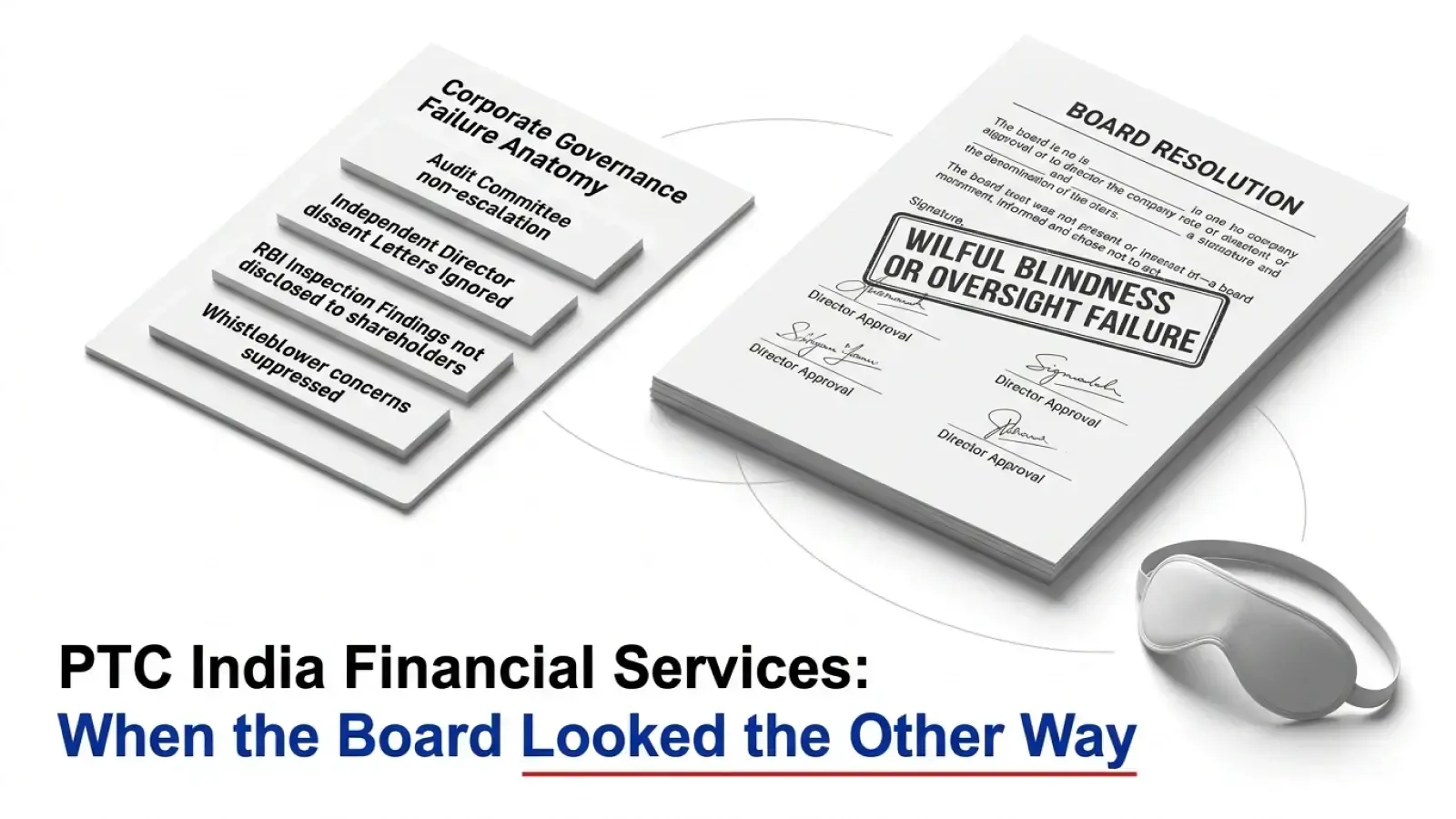
PTC India Financial Services Governance Fraud: Lessons From a Board That Looked the Other Way
By Aseem Shrivastava | Updated at: Jun 16, 2026 05:33 PM IST
Open Free Demat Account
Open Free Demat Account
Most investors focus on revenue growth and profits but sometimes the biggest risk comes from inside the boardroom. The governance crisis at PTC India Financial Services is a reminder that weak oversight can destroy trust faster than poor financial performance.
This incident raised serious questions about board independence and the responsibilities of directors charged with protecting shareholder interests. Let’s look at the lessons you can learn from the PTC controversy to help manage your investments better.
What Happened at PTC?
The controversy emerged in 2022 when independent directors at PTC resigned to publicly raise concerns regarding corporate governance practices within the company. The resignations were unusual because they were accompanied by allegations related to the handling of governance processes.
The issue attracted sparked concerns among shareholders about whether adequate oversight mechanisms were functioning effectively. The matter eventually led to increased scrutiny of the company’s governance framework. The reputational damage was significant even as the financial business itself remained operational.
Why the Board Came Under Scrutiny
A company’s board exists to represent shareholder interests and provide oversight of management. The PTC case saw questions arising about whether governance concerns were addressed appropriately. Critics argued that warning signs may not have received the level of attention expected from an independent board.
This is where governance failures become critical as problems rarely appear overnight. They develop gradually through weak internal controls and shareholders are usually the last to know and the first to suffer when oversight mechanisms fail.
The Importance of Independent Directors
Independent directors’ role is not to endorse management decisions automatically but challenge assumptions and protect minority shareholders. The PTC episode demonstrated why genuinely independent directors matter.
Their resignations became the catalyst that brought governance concerns into the public domain. The quality of independent directors can reveal more about a company than its quarterly earnings report.
Governance Red Flags You Should Watch
- The PTC case offers the following warning signs worth monitoring in any listed company –
- Sudden resignations of independent directors.
- Frequent disclosures related to governance.
- Whistleblower complaints that attract regulatory attention.
- Repeated disagreements between management and directors.
The Bigger Lesson for Investors
The PTC controversy reinforces a powerful principle. Strong governance is a business asset while weak governance is a hidden liability. Look beyond earnings growth to examine director independence and the company’s governance track record. Financial statements tell you how a company performed in the past but governance practices provide clues about how responsibly it may be managed in the future.



Open Free Demat Account
Open Free Demat Account
Popular Posts
- 3 Things New Investors Should Check Before Opening a Demat AccountLast Updated: Jul 15, 2026
- 5 Features Protecting Your Wealth on HDFC SKYLast Updated: Jul 1, 2026
- Let’s view more exciting Posts
Popular Post from Fraud Files by Sky
- The Roofit Industries Pump And Dump - What the SEBI Order Reveals About Stock ManipulationLast Updated: Jun 18, 2026
- Harshad Mehta’s Bank Receipt Scam - the Blueprint That Modern Fraudsters StillLast Updated: Jun 16, 2026
- The Vaswani Industries Penny Stock Scam: Step By Step Anatomy of a Retail Investor TrapLast Updated: Jun 18, 2026
- Bhansali Finance: How a Promoter Ran a INR 1200 Crore Scam Through Layered Shell CompaniesLast Updated: Jun 18, 2026
- The ABG Shipyard Bank Fraud: Red Flags That Auditors and Investors Overlooked for YearsLast Updated: Jun 18, 2026
- Let's view more exciting Post!
Popular Post from Blogs
- “Bounce Back” Theme Gains Traction in 2026Last Updated: Apr 8, 2026
- 5 Takeaways for Tax Payers from the Budget 2025Last Updated: Jan 29, 2026
- Let’s view more exciting Posts


Invest Anytime, Anywhere


By signing up I certify terms, conditions & privacy policy