Nifty 50
- HDFC Life Insurance ₹530.2014.10 (2.73%)
- TCS₹2,188.80-62.20 (-2.76%)
- SBI Life Insurance ₹1,697.9043.80 (2.65%)
- Wipro₹166.89-3.11 (-1.83%)
- SBI₹991.4023.40 (2.42%)
- Infosys₹1,060-17.00 (-1.58%)
- ITC₹264.156.15 (2.38%)
- Tech Mahindra₹1,558-17.90 (-1.14%)
- Nestle₹1,384.5022.50 (1.65%)
- L&T₹3,807.70-43.00 (-1.12%)
- JSW Steel₹1,248.9019.70 (1.60%)
- Bajaj Finserv₹1,837-18.50 (-1.00%)
- Axis Bank₹1,24118.10 (1.48%)
- InterGlobe Aviation₹4,733.50-42.50 (-0.89%)
- Bajaj Auto₹11,593169.00 (1.48%)
- Tata Motors PV₹301-2.60 (-0.86%)
- Hindalco Industries₹972.7014.00 (1.46%)
- NTPC₹327-2.50 (-0.76%)
- Trent₹2,769.7039.70 (1.45%)
- Maruti Suzuki₹12,166-65.00 (-0.53%)

- Offerings
- Tools & Platforms
Tools & Calculators
- Open API
- Calculators
- SIP Calculator
- CAGR Calculator
- Compound Interest Calculator
- FD Calculator
- RD Calculator
- EPF Calculator
- Retirement Calculator
- HDFC SIP Calculator
- Mutual Fund Return Calculator
- Lumpsum Calculator
- Step Up SIP Calculator
- ETF SIP Calculator
- Brokerage Calculator
- Equity Margin Calculator
- SWP Calculator
- EMI Calculator
- MTF Calculator
- Margin Pledge Calculator
- Algo Strategy
- Markets
Stocks
F&O
Mutual Funds
- More
The Roofit Industries Pump And Dump - What the SEBI Order Reveals About Stock Manipulation
By Aseem Shrivastava | Published at: Jun 18, 2026 04:03 PM IST
Open Free Demat Account
Open Free Demat Account
A rising stock price creates excitement. You see trading volumes exploding but that rally has little to do with business performance and everything to do with manipulation. The case of Roofit Industries is one such example.
SEBI’s investigation into trading activity in the company’s shares exposed how artificial demand can push prices higher before buyers get trapped. Let’s understand how such manipulation tactics work. We will also explore why blindly chasing momentum can be dangerous.
What Happened in the Roofit Industries Case?
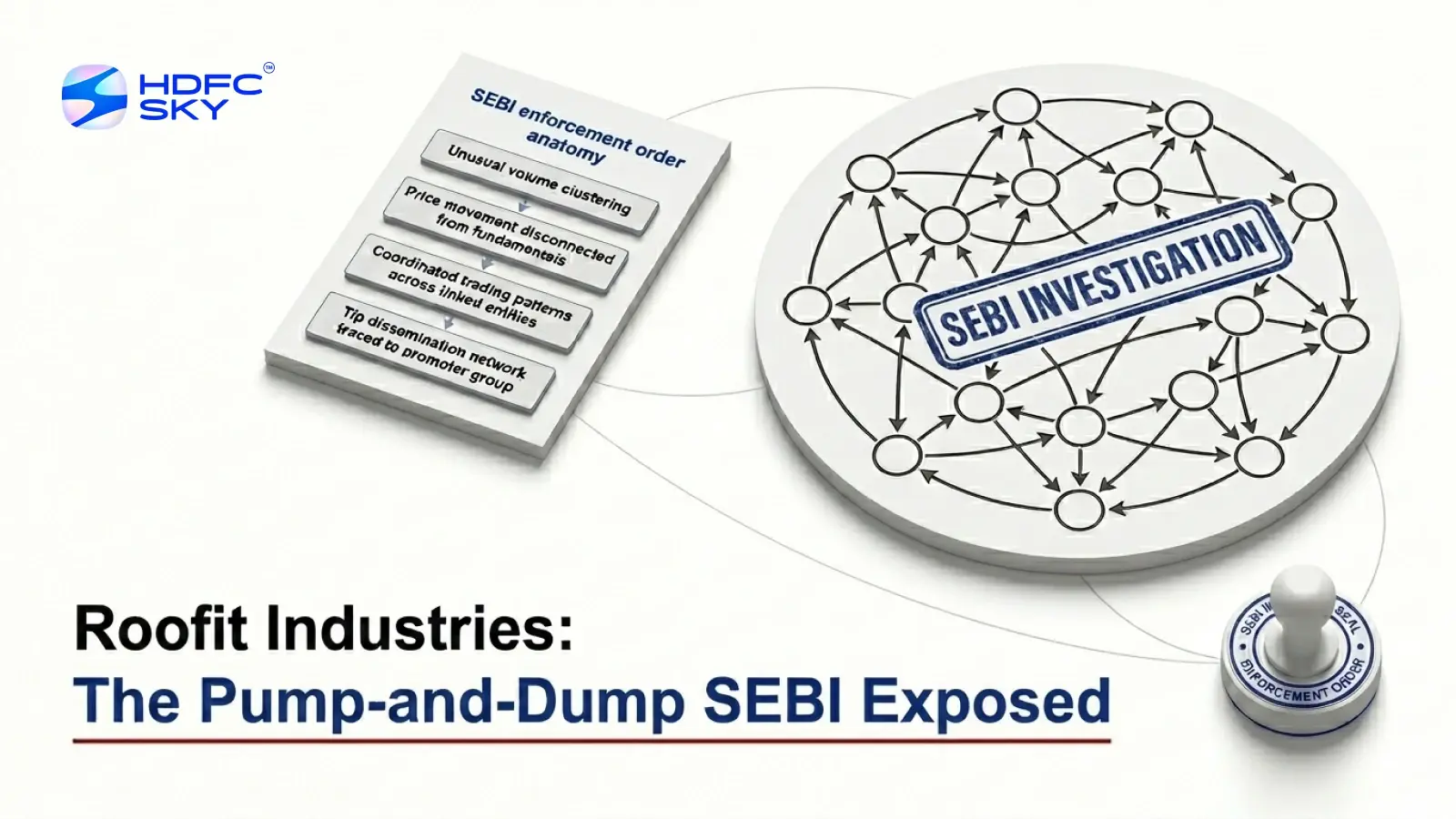
SEBI launched an investigation after noticing unusual price movements in the shares of Roofit Industries in 1999. The stock price during this period reportedly jumped from around INR 127 to INR 268 while daily trading volumes surged sharply.
Such dramatic moves attract attention but regulators became concerned that the activity was not being driven by genuine investor interest. SEBI’s investigation focused on whether certain market participants were creating artificial trading activity to influence the stock price.
Also Read: The repo rate transmission lag: why RBI rate cuts take 6–12 months to show up in your EMI
How Such Schemes Typically Work
The Roofit Industries episode highlights the basic structure of a pump and dump operation. Operators accumulate shares quietly while trading volumes remain low. They then create excitement around the stock through coordinated trading.
The stock price rises rapidly as more buyers enter the market. Retail participants interpret this price movement as a sign of opportunity and rush in to avoid missing out. The operators then sell their holdings at elevated prices. The stock falls sharply once the buying pressure disappears and leaves late entrants with significant losses.
What You Should Learn From This Case
- The biggest takeaway is that price movement alone is not proof of quality.
- Ask yourself these questions before buying any stock –
- Has the company reported meaningful growth in revenue and profits?
- Is there a genuine business trigger behind the rally?
- Are trading volumes increasing for a valid reason?
- Is the stock being aggressively promoted without supporting fundamentals?
- Caution is usually the better decision if the answers are unclear.
Bottom Line
Cases like Roofit Industries demonstrate why market surveillance is critical. A fair market depends on prices being driven by genuine investors. It is best to avoid confusing excitement with opportunity. A rapidly rising stock may look attractive but understanding why it is rising is far more important than the rally itself. Disciplined investing backed by research and business fundamentals remains more reliable than chasing stocks that appear to be making quick gains.



Open Free Demat Account
Open Free Demat Account
Popular Posts
- 3 Things New Investors Should Check Before Opening a Demat AccountLast Updated: Jul 15, 2026
- 5 Features Protecting Your Wealth on HDFC SKYLast Updated: Jul 1, 2026
- Let’s view more exciting Posts
Popular Post from Fraud Files by Sky
- Harshad Mehta’s Bank Receipt Scam - the Blueprint That Modern Fraudsters StillLast Updated: Jun 16, 2026
- The Vaswani Industries Penny Stock Scam: Step By Step Anatomy of a Retail Investor TrapLast Updated: Jun 18, 2026
- Bhansali Finance: How a Promoter Ran a INR 1200 Crore Scam Through Layered Shell CompaniesLast Updated: Jun 18, 2026
- The ABG Shipyard Bank Fraud: Red Flags That Auditors and Investors Overlooked for YearsLast Updated: Jun 18, 2026
- NSEL Crisis 2013: How a Commodity Exchange Ran an INR 5,600 Crore Fraud in Plain SightLast Updated: Jun 18, 2026
- Let's view more exciting Post!
Popular Post from Blogs
- “Bounce Back” Theme Gains Traction in 2026Last Updated: Apr 8, 2026
- 5 Takeaways for Tax Payers from the Budget 2025Last Updated: Jan 29, 2026
- Let’s view more exciting Posts


Invest Anytime, Anywhere


By signing up I certify terms, conditions & privacy policy