Nifty 50
- Apollo Hospitals₹8,027.50361.50 (4.72%)
- BSE₹3,287.20-47.60 (-1.43%)
- ITC₹26611.00 (4.31%)
- Reliance Industries₹1,170.30-7.70 (-0.65%)
- Eicher Motors₹7,050282.50 (4.17%)
- JSW Steel₹1,168-7.20 (-0.61%)
- TCS₹2,15680.00 (3.85%)
- Cipla₹1,301-5.80 (-0.44%)
- HCL Technologies₹1,216.7039.80 (3.38%)
- Adani Ports₹1,76153.00 (3.10%)
- Infosys₹1,023.4026.40 (2.65%)
- Shriram Finance₹940.4523.20 (2.53%)
- Tata Motors PV₹279.906.90 (2.53%)
- UltraTech Cement₹10,675249.00 (2.39%)

- Offerings
- Tools & Platforms
Tools & Calculators
- Open API
- Calculators
- SIP Calculator
- CAGR Calculator
- Compound Interest Calculator
- FD Calculator
- RD Calculator
- EPF Calculator
- Retirement Calculator
- HDFC SIP Calculator
- Mutual Fund Return Calculator
- Lumpsum Calculator
- Step Up SIP Calculator
- ETF SIP Calculator
- Brokerage Calculator
- Equity Margin Calculator
- SWP Calculator
- EMI Calculator
- MTF Calculator
- Margin Pledge Calculator
- Algo Strategy
- Markets
Stocks
F&O
Mutual Funds
- More
Oil Prices Today, August 20, 2026: Brent Hovers Around $92 Amid Absence of Major Middle East Trigger
Authored By HDFC SKY | Last Modified: Aug 20, 2026 11:23 AM IST
Open Free Demat Account
Open Free Demat Account
Mumbai, August 20: Oil prices remained elevated on Thursday, with Brent crude trading close to $92 a barrel.
Brent crude rose 0.08% to $91.7 a barrel, while US West Texas Intermediate crude was down 0.02% at $84.4 a barrel.
Both Brent and WTI settled at their highest levels since July 24 on Wednesday, extending their gains to a fourth straight session. The September WTI contract is due to expire later on Thursday, potentially adding some volatility to near-term price movements.
The latest move in crude comes as traders continue to assess whether the ongoing conflict in the Middle East could lead to a more significant disruption to global oil supplies. While prices have climbed sharply in recent sessions, the market has yet to see a fresh escalation large enough to trigger another major leg higher.

US-Iran conflict keeps traders cautious
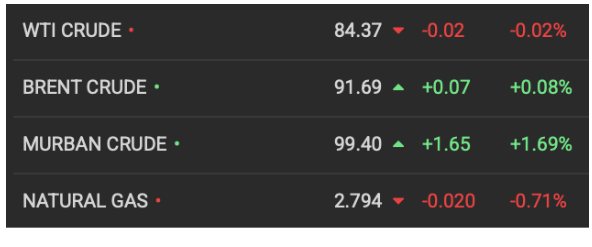
Both contracts steadied as Middle East failed to throw up surprises. Source: Oilprice.com
Market participants remain focused on developments surrounding the US-Iran war and the prospects for any progress towards peace talks. Analysts said oil prices remain supported by sporadic attacks in the Middle East but lack fresh momentum without a major escalation.
The uncertainty surrounding potential negotiations is also keeping traders cautious. The outlook remains particularly sensitive to developments involving Iran and Gulf states, including the United Arab Emirates and Oman.
The UAE has suspended all financial and economic transactions with Iran until further notice, putting additional focus on relations between the Gulf oil producer and Tehran. Any further deterioration in ties could raise concerns over regional stability and the security of energy infrastructure and shipping routes.
Also Read: How To Invest In Crude Oil
Strait of Hormuz emerges as key supply risk
The Strait of Hormuz remains at the centre of the oil market’s concerns. The narrow waterway is a critical route for global energy shipments, making any disruption potentially significant for crude supply and prices.
US President Donald Trump said on Tuesday that the Strait of Hormuz was open and that there were no talks taking place with Iran. Tehran, however, has maintained that the waterway remains shut.
Shipping activity through the Strait has slowed, with data showing that many shipowners have avoided the route because of uncertainty over whether the waterway has been fully reopened following the blockade imposed during the Iran war.
For oil traders, the conflicting claims have created uncertainty around the reliability of one of the world’s most important energy corridors. A prolonged reduction in shipping could tighten physical supplies and push crude prices higher, particularly if the disruption persists or expands.
US inventories provide some counterweight
The rise in oil prices has come despite data showing an unexpected increase in US crude inventories. The US Energy Information Administration said crude stockpiles rose by 4.4 million barrels in the week ended August 14, sharply exceeding market expectations for a draw of around 600,000 barrels.
Gasoline inventories also increased during the week, while distillate stockpiles declined. The inventory build could provide some relief to the market by indicating that US crude availability remains relatively comfortable.
However, inventory data is currently being weighed against geopolitical developments. Traders are more focused on whether the conflict could affect future supply flows rather than simply the immediate balance of US crude stocks.
What higher oil prices mean for India
The sustained rise in crude prices is particularly important for India, one of the world’s major oil-importing economies. Brent remaining above $90 a barrel could put pressure on India’s import bill and the rupee, while also complicating the inflation outlook.
Higher crude prices can increase input costs for several industries, particularly those with significant fuel and transportation expenses. Airlines, paints, chemicals, logistics and other oil-intensive businesses could face margin pressure if elevated prices persist.
The impact on Indian equities could therefore be mixed. Upstream oil producers may benefit from higher international prices, while downstream and oil-consuming companies could come under pressure. A weaker rupee caused by a widening import bill could add another layer of concern for domestic markets.
For the broader market, the direction of crude prices will remain closely linked to developments in the Middle East. A meaningful improvement in US-Iran relations or a clear reopening of the Strait of Hormuz could ease the risk premium in oil. Conversely, any escalation that threatens production or shipping could send Brent higher and intensify concerns for oil-importing economies.
Source
- oilprice.com
Disclaimer
If you have any concerns, questions, or wish to point out any discrepancies in our content, please feel free to write to us at content@hdfcsec.com.
Please Note: The information shared is intended solely for informational purposes and does not make any investment recommendations
HDFC SKY, one of India’s most trusted trading platforms, has been recognized with the Next-Gen Digi Content Awards 2025–26.
Disclaimer
At HDFC SKY*, we take utmost care and due diligence in curating and presenting news and market-related content. However, inadvertent errors or omissions may occasionally occur.
If you have any concerns, questions, or wish to point out any discrepancies in our content, please feel free to write to us at content@hdfcsec.com.
Please Note: The information shared is intended solely for informational purposes and does not make any investment recommendations.
HDFC SKY from HDFC Securities, one of most trusted trading platforms in India, has been recognized with the *Next-Gen Digi Content Awards 2025-26.
 Join Us
 Add as preferred source on Google


More Business News





Open Free Demat Account
Open Free Demat Account










Invest Anytime, Anywhere


By signing up I certify terms, conditions & privacy policy