Nifty 50
- Apollo Hospitals₹8,027.50361.50 (4.72%)
- BSE₹3,287.20-47.60 (-1.43%)
- ITC₹26611.00 (4.31%)
- Reliance Industries₹1,170.30-7.70 (-0.65%)
- Eicher Motors₹7,050282.50 (4.17%)
- JSW Steel₹1,168-7.20 (-0.61%)
- TCS₹2,15680.00 (3.85%)
- Cipla₹1,301-5.80 (-0.44%)
- HCL Technologies₹1,216.7039.80 (3.38%)
- Adani Ports₹1,76153.00 (3.10%)
- Infosys₹1,023.4026.40 (2.65%)
- Shriram Finance₹940.4523.20 (2.53%)
- Tata Motors PV₹279.906.90 (2.53%)
- UltraTech Cement₹10,675249.00 (2.39%)

- Offerings
- Tools & Platforms
Tools & Calculators
- Open API
- Calculators
- SIP Calculator
- CAGR Calculator
- Compound Interest Calculator
- FD Calculator
- RD Calculator
- EPF Calculator
- Retirement Calculator
- HDFC SIP Calculator
- Mutual Fund Return Calculator
- Lumpsum Calculator
- Step Up SIP Calculator
- ETF SIP Calculator
- Brokerage Calculator
- Equity Margin Calculator
- SWP Calculator
- EMI Calculator
- MTF Calculator
- Margin Pledge Calculator
- Algo Strategy
- Markets
Stocks
F&O
Mutual Funds
- More
Oil Prices Today, Augsut 25, 2026: Crude Ticks Up To $92.4 Per Barrel As Iran Hit With Fresh US Sanctions
Authored By HDFC SKY | Last Modified: Aug 25, 2026 10:14 AM IST
Open Free Demat Account
Open Free Demat Account
Mumbai, August 25: Oil prices edged higher on Tuesday after falling more than 2% in the previous session, as investors assessed the impact of tougher US sanctions on Iran and weighed the risk of further disruption to crude supplies from the Middle East. Brent crude futures rose 0.3% to $92.4 a barrel, while US West Texas Intermediate crude gained 0.4% to $85.4 a barrel.
The modest recovery came as traders weighed the potential impact of the latest US measures against Iran against signs that the sanctions may not immediately disrupt physical oil supplies. Crude prices had rallied for two weeks before retreating sharply on Monday.

US Expands Pressure On Iran
The latest decline in oil prices followed the US decision to expand secondary sanctions aimed at cutting off Iran’s economic lifeline and forcing an end to the conflict.
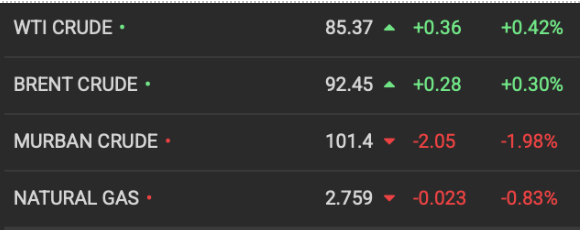
Benchmarks did not jump in response to fresh US sanctions on Iran, choosing to climb cautiously instead. Source: oilprice.com
US Treasury Secretary Scott Bessent said countries would need to sever business ties with Iran or risk losing access to the dollar-based financial system. The measures are intended to increase economic pressure on Tehran by targeting companies and countries that continue to maintain commercial relationships with Iran.
However, Washington has not yet identified the countries that could face penalties or specified when the measures would take effect. That uncertainty has limited the immediate impact on crude markets.
The relatively muted reaction in oil prices suggests investors currently view the sanctions as less threatening to physical crude supplies than direct military action. Traders remain focused on whether the measures eventually translate into lower Iranian exports or disrupt the movement of crude through key shipping routes.
Also Read: How To Invest In Crude Oil
Strait Of Hormuz Remains Key Risk
Despite the softer market reaction, geopolitical risks remain elevated.
An oil tanker was struck and disabled near Oman’s Ash Shishah, according to the UK Maritime Trade Operations. The incident added to concerns over the safety of commercial shipping in the region at a time when tensions surrounding Iran remain high.
Iran has also continued to assert control over the Strait of Hormuz and threatened action against tankers it says have violated its rules. The strategic waterway is particularly important for global energy markets, with cargoes equivalent to about 20% of global oil consumption normally passing through it.
Any sustained disruption to shipping through the strait could therefore trigger a sharp increase in crude prices by restricting the flow of oil from major Middle Eastern producers.
For now, however, traders appear to be pricing in the possibility of disruption rather than an immediate supply shock. This has helped keep oil below the highs reached during the recent rally, even as geopolitical risks remain a major source of uncertainty.
US Oil Reserves Fall
Another factor drawing market attention is the level of emergency oil inventories in the United States.
US Strategic Petroleum Reserve crude stocks fell by about 3.7 million barrels last week to 289.7 million barrels, their lowest level since November 1982. The decline comes as Washington draws down its emergency reserves amid supply disruptions linked to the conflict.
The shrinking reserve cushion could make the market more sensitive to further supply shocks. A significant disruption in Middle Eastern crude flows could therefore have a greater impact if US emergency inventories are less able to provide an immediate buffer.
The development is particularly relevant as traders assess how much additional supply could become available if sanctions begin to affect Iranian exports.
What It Means For India
For oil-importing economies such as India, crude prices above $90 a barrel remain a concern. India imports a large share of its crude requirements, leaving its economy and financial markets sensitive to movements in international oil prices.
Sustained elevated crude prices can increase the country’s import bill and put pressure on the trade deficit and the rupee. Higher energy costs can also feed into inflation and raise input costs for companies across sectors.
A prolonged period of elevated oil prices could therefore complicate the outlook for Indian equities, particularly if the rupee weakens alongside higher energy costs. Conversely, any easing in geopolitical tensions or signs that crude supplies remain unaffected by the latest sanctions could help prices retreat from current levels.
Markets will continue to track developments around US-Iran sanctions, the safety of commercial shipping through the Strait of Hormuz and any fresh indications of supply disruptions. The direction of crude prices will depend largely on whether the latest escalation remains an economic pressure campaign or develops into a disruption to actual oil flows.
Source
- oilprice.com
Disclaimer
If you have any concerns, questions, or wish to point out any discrepancies in our content, please feel free to write to us at content@hdfcsec.com.
Please Note: The information shared is intended solely for informational purposes and does not make any investment recommendations
HDFC SKY, one of India’s most trusted trading platforms, has been recognized with the Next-Gen Digi Content Awards 2025–26.
Disclaimer
At HDFC SKY*, we take utmost care and due diligence in curating and presenting news and market-related content. However, inadvertent errors or omissions may occasionally occur.
If you have any concerns, questions, or wish to point out any discrepancies in our content, please feel free to write to us at content@hdfcsec.com.
Please Note: The information shared is intended solely for informational purposes and does not make any investment recommendations.
HDFC SKY from HDFC Securities, one of most trusted trading platforms in India, has been recognized with the *Next-Gen Digi Content Awards 2025-26.
 Join Us
 Add as preferred source on Google


More Business News






Open Free Demat Account
Open Free Demat Account










Invest Anytime, Anywhere


By signing up I certify terms, conditions & privacy policy