Nifty 50
- Bajaj Finserv₹1,90358.00 (3.14%)
- ONGC₹226.80-8.00 (-3.41%)
- Bajaj Finance₹1,111.9533.15 (3.07%)
- Hindustan Unilever₹1,988.60-33.80 (-1.67%)
- HDFC Life Insurance ₹590.1016.55 (2.89%)
- Nestle₹1,267.20-20.80 (-1.61%)
- SBI Life Insurance ₹1,81144.00 (2.49%)
- Mahindra & Mahindra₹3,417.50-47.50 (-1.37%)
- Shriram Finance₹991.9022.75 (2.35%)
- Apollo Hospitals₹8,497.50-106.50 (-1.24%)
- SBI₹1,075.6014.40 (1.36%)
- NTPC₹323.10-3.90 (-1.19%)
- Bharat Electronics₹404.255.25 (1.32%)
- Sun Pharmaceutical₹1,882.30-20.00 (-1.05%)
- Eternal₹365.754.65 (1.29%)
- Power Grid Corp₹261.50-2.25 (-0.85%)
- Adani Enterprises₹2,745.3030.80 (1.13%)
- Grasim Industries₹3,134.50-22.20 (-0.70%)
- Adani Ports₹1,927.9020.90 (1.10%)
- Tech Mahindra₹1,776-12.50 (-0.70%)

- Offerings
- Tools & Platforms
Tools & Calculators
- Open API
- Calculators
- SIP Calculator
- CAGR Calculator
- Compound Interest Calculator
- FD Calculator
- RD Calculator
- EPF Calculator
- Retirement Calculator
- HDFC SIP Calculator
- Mutual Fund Return Calculator
- Lumpsum Calculator
- Step Up SIP Calculator
- ETF SIP Calculator
- Brokerage Calculator
- Equity Margin Calculator
- SWP Calculator
- EMI Calculator
- MTF Calculator
- Margin Pledge Calculator
- Algo Strategy
- Markets
Stocks
F&O
Mutual Funds
- More
Oil Prices Today, November 12, 2026: Brent Falls 1.2% To $91.7 As Peace Hopes Weigh
Authored By HDFC SKY | Published at: Nov 12, 2026 09:50 AM IST

Open Free Demat Account
Mumbai, November 12: Crude oil prices declined more than 1% on Thursday, November 12, as hopes of progress in diplomatic efforts to end the Iran and Russia-Ukraine wars eased concerns over potential disruptions to global energy supplies. Brent crude futures fell 1.2% to $91.7 per barrel, while US West Texas Intermediate (WTI) crude futures dropped 1.1% to $85.6. The decline came after both benchmarks recovered in the previous session, following a sharp fall to two-month lows earlier in the week. Investors are weighing the possibility of improved geopolitical stability against persistent supply-side uncertainties, particularly around the Strait of Hormuz.

Iran, Russia-Ukraine Peace Talks Weigh on Crude Prices
Expectations of progress in diplomatic efforts to resolve the Russia-Ukraine conflict and prevent further escalation in the Middle East have weighed on oil prices. Russian and Ukrainian negotiators agreed to a major prisoner exchange following two days of US-mediated discussions in Abu Dhabi, although significant differences remain over other contentious issues, including territorial arrangements.
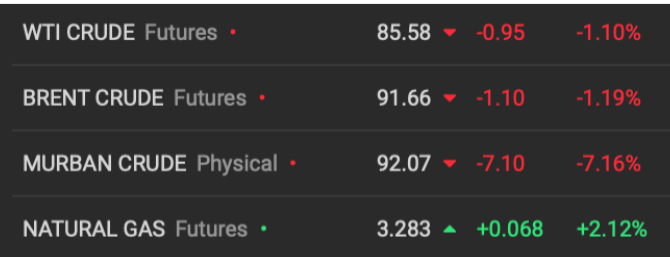
Both contracts declined as Middle East and Ukraine showed signs of progress towards ending their conflicts. Source: Oilprice.com
Ukrainian President Volodymyr Zelenskiy has expressed hope of achieving concrete results towards resolving the conflict before the end of the year. Any breakthrough could potentially reduce geopolitical risk premiums in international energy markets, particularly if it leads to an easing of restrictions and disruptions affecting Russian oil supplies.
Developments surrounding Iran are also being closely monitored by crude oil traders. Iranian security chief Mohsen Rezaei said Tehran would not allow any enriched nuclear material to leave the country and warned of consequences in the event of further US strikes. Washington, meanwhile, has maintained that nuclear issues must form part of any initial negotiations aimed at ending the eight-month-old conflict.
Market participants are also assessing the possibility that tensions could remain contained ahead of the US-China summit scheduled for next week. Hopes that diplomatic engagement could prevent another escalation have contributed to the easing of crude prices.
However, the outlook remains uncertain. The continued disruption of shipments through the Strait of Hormuz, one of the world’s most important energy transit routes, could prevent a deeper correction in international oil prices. Market strategists have cautioned that the geopolitical situation does not yet warrant expectations of a substantial collapse in crude prices.
Also Read: How To Invest In Crude Oil
Rising OPEC+ Output, US Inventories Add to Pressure
Supply-side developments have also contributed to the downward pressure on crude oil prices. OPEC+ production increased sharply in October, led by a significant rise in output from Saudi Arabia, even as shipments through the Strait of Hormuz continued to face disruptions.
The increase in production comes at a time when geopolitical uncertainty has kept global energy markets particularly sensitive to supply disruptions. Higher output from major producers could help compensate for some of the supply constraints and ease concerns over the availability of crude in international markets.
Meanwhile, US crude inventories increased by 9 million barrels in the latest week, according to figures from the American Petroleum Institute (API), cited by market sources. The larger-than-expected build-up in stockpiles has added to concerns about the balance between supply and demand in the world’s largest oil-consuming economy.
Investors are now awaiting official inventory figures from the US Energy Information Administration (EIA), scheduled for Thursday. The data was delayed by a day because of a US public holiday on Wednesday. A further increase in commercial crude inventories could reinforce concerns about demand and put additional pressure on prices.
What Falling Crude Oil Prices Mean for India
The decline in international crude prices is significant for India, one of the world’s largest oil-importing economies. The country depends heavily on overseas supplies to meet its domestic energy requirements, making its macroeconomic outlook particularly sensitive to fluctuations in global petroleum prices.
A sustained decline in crude oil prices could help moderate imported inflation, reduce the country’s oil import bill and ease pressure on the current account deficit. Lower energy costs could also support the Indian rupee by reducing demand for dollars to finance petroleum imports.
For the domestic equity market, softer crude prices are generally favourable, particularly for sectors with substantial exposure to fuel and energy costs. Aviation companies could benefit from lower aviation turbine fuel (ATF) costs, while paint manufacturers, chemical companies and logistics operators could see some improvement in their input-cost outlook.
Lower crude prices could also ease inflationary pressures, potentially giving the Reserve Bank of India greater room to manage monetary policy without having to contend with an additional imported inflation shock. A reduction in the oil import bill could further improve India’s external balances and provide some relief to the currency.
However, the benefits will depend on how long the decline in international prices lasts and whether geopolitical developments translate into a sustained improvement in global supply conditions.
Geopolitical Developments Remain the Key Trigger
Despite Thursday’s decline, crude oil markets remain vulnerable to sudden price movements as investors assess the competing forces of diplomatic progress, rising production and supply disruptions. The security of shipments through the Strait of Hormuz, developments in US-Iran negotiations and the trajectory of the Russia-Ukraine conflict will remain important determinants of the direction of international oil prices.
For India, a sustained easing in crude prices could provide meaningful macroeconomic and market support. However, any renewed escalation in geopolitical tensions or disruption to major shipping routes could quickly reverse the recent decline.
Source
- Oilprice.com
Disclaimer
The information shared here is intended solely for informational and educational purposes and does not constitute investment recommendations. While we practice strict due diligence in curating daily market data, readers must perform independent research before trading. To flag any real-time data discrepancies or content concerns, please write to us at content@hdfcsec.com.
 Join Us
 Add as preferred source on Google


More Business News





















Invest Anytime, Anywhere


By signing up I certify terms, conditions & privacy policy