Nifty 50
- Adani Enterprises₹2,745.1086.10 (3.24%)
- HCL Technologies₹1,355.70-28.90 (-2.09%)
- Eicher Motors₹7,828229.00 (3.01%)
- Power Grid Corp₹258-4.20 (-1.60%)
- Max Healthcare₹1,030.9021.00 (2.08%)
- HDFC Life Insurance ₹595.05-9.45 (-1.56%)
- Asian Paints₹2,62552.10 (2.02%)
- ONGC₹223.52-3.47 (-1.53%)
- Axis Bank₹1,36926.60 (1.98%)
- Coal India₹391.55-5.95 (-1.50%)
- Mahindra & Mahindra₹3,39960.00 (1.80%)
- Infosys₹1,130-15.10 (-1.32%)
- SBI₹1,108.6018.10 (1.66%)
- Tata Motors PV₹259.20-3.20 (-1.22%)
- Reliance Industries₹1,36722.20 (1.65%)
- Grasim Industries₹3,054.80-29.60 (-0.96%)
- Jio Financial ₹228.962.96 (1.31%)
- Trent₹3,176.30-27.40 (-0.86%)
- Adani Ports₹1,91724.00 (1.27%)
- Tech Mahindra₹1,762-14.40 (-0.81%)

- Offerings
- Tools & Platforms
Tools & Calculators
- Open API
- Calculators
- SIP Calculator
- CAGR Calculator
- Compound Interest Calculator
- FD Calculator
- RD Calculator
- EPF Calculator
- Retirement Calculator
- HDFC SIP Calculator
- Mutual Fund Return Calculator
- Lumpsum Calculator
- Step Up SIP Calculator
- ETF SIP Calculator
- Brokerage Calculator
- Equity Margin Calculator
- SWP Calculator
- EMI Calculator
- MTF Calculator
- Margin Pledge Calculator
- Algo Strategy
- Markets
Stocks
F&O
Mutual Funds
- More
Oil Prices Today, November 17, 2026: Brent Falls 0.7% to $91.8, WTI Slips to $85.2 as Surplus Looms
Authored By HDFC Sky | Published at: Nov 17, 2026 09:40 AM IST

Open Free Demat Account
Mumbai, November 17: Oil prices declined on Tuesday, November 17, as expectations of a global supply surplus and recovering exports from the Middle East outweighed concerns over continued attacks on oil tankers and energy infrastructure in the Gulf region.
Brent crude futures fell 0.7% to $91.8 per barrel, while US West Texas Intermediate (WTI) crude declined 0.6% to $85.2 per barrel. The weakness follows a sharp sell-off in the previous session, when investors increasingly focused on improving global supply prospects and the possibility that production could exceed demand in the coming months.
The decline in crude prices comes despite persistent geopolitical risks surrounding the Strait of Hormuz, a critical shipping route for global oil supplies. Market participants are increasingly weighing the prospect of higher supplies against the possibility of further disruptions to energy shipments from the region.

Global oil supply surplus outlook
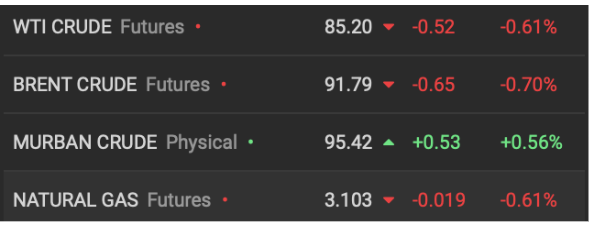
Both contracts declined despite continued attacks on oil tankers and energy infrastructure in the Gulf as traders expected surplus supplies ahead. Source: Oilprice.com
The International Energy Agency (IEA) said last Friday that the global oil market was expected to return to a surplus in the fourth quarter of 2026, as Middle Eastern exports recover faster than global demand despite continued attacks on shipping.
According to the agency, global oil supply is projected to average 105 million barrels per day (bpd) during the quarter, exceeding expected demand by 1.7 million bpd. The IEA had previously anticipated a supply deficit for the period, indicating a significant shift in its assessment of the market balance.
The improving supply outlook has put pressure on crude prices, with traders increasingly anticipating that additional barrels entering the market could outweigh demand growth. However, the recovery in exports remains vulnerable to further geopolitical disruptions, particularly around the Gulf.
Attacks on energy infrastructure and shipping in the region and the Strait of Hormuz have continued, maintaining uncertainty around one of the world’s most important oil-export routes.
Also Read: How To Invest In Crude Oil
OPEC production policy in focus
Meanwhile, the Organisation of the Petroleum Exporting Countries (OPEC) held an online meeting on Monday to discuss a review of members’ maximum sustainable production capacities. The exercise is expected to play an important role in determining production quotas for OPEC+ members in 2027 and beyond.
The wider OPEC+ group, which includes allies led by Russia, is scheduled to meet on November 29 to decide its oil production policy for 2027. Investors will monitor the group’s decisions for indications of whether major producers intend to increase, maintain or restrict output amid expectations of a supply surplus.
The production strategy adopted by OPEC+ could influence the extent of the anticipated surplus, particularly if global demand growth remains relatively subdued.
US strategic oil reserves fall to lowest since 1982
Separately, crude oil inventories held in the US Strategic Petroleum Reserve (SPR) declined to 276.4 million barrels last week, their lowest level since August 1982, according to data from the Department of Energy.
The recent drawdowns are part of a US agreement to release 172 million barrels from the reserve. The decline in inventories highlights the extent to which the US has been using its emergency stockpile to manage supply requirements.
While lower inventories could provide some support to oil prices, the broader market continues to focus on expectations of recovering global production and the possibility of a supply surplus.
What lower crude oil prices mean for India
The decline in international crude prices is positive for India, which depends heavily on imports to meet its domestic energy requirements. Lower oil prices can reduce the country’s import bill, ease pressure on inflation and improve its current account balance.
Cheaper crude also offers some relief to oil marketing companies, which face pressure on refining and marketing margins when input costs rise sharply. A sustained decline could additionally provide support to the rupee by reducing demand for dollars to finance energy imports.
However, continued geopolitical tensions in the Gulf and potential disruptions to shipments through the Strait of Hormuz remain important risks. Any escalation could reverse the recent decline in crude prices and put renewed pressure on India’s energy import costs.
For now, traders will track developments around Middle Eastern exports, OPEC+ production decisions and the evolving global demand-supply balance for further direction.
Source
- Oilprice.com
Disclaimer
The information shared here is intended solely for informational and educational purposes and does not constitute investment recommendations. While we practice strict due diligence in curating daily market data, readers must perform independent research before trading. To flag any real-time data discrepancies or content concerns, please write to us at content@hdfcsec.com.
 Join Us
 Add as preferred source on Google


More Uncategorized News






1 min read














Invest Anytime, Anywhere


By signing up I certify terms, conditions & privacy policy