Nifty 50
- Eternal₹317.4012.95 (4.25%)
- Shriram Finance₹865-35.90 (-3.98%)
- Apollo Hospitals₹7,730125.50 (1.65%)
- Adani Enterprises₹2,477-73.00 (-2.86%)
- ONGC₹227.502.50 (1.11%)
- JSW Steel₹1,185.50-34.50 (-2.83%)
- Asian Paints₹2,30722.20 (0.97%)
- Jio Financial ₹205.03-5.77 (-2.74%)
- TCS₹2,53023.10 (0.92%)
- Tata Steel₹167.67-4.66 (-2.70%)
- UltraTech Cement₹11,05092.00 (0.84%)
- Adani Ports₹1,702.70-47.30 (-2.70%)
- Maruti Suzuki₹11,23060.00 (0.54%)
- Tech Mahindra₹1,790-39.10 (-2.14%)
- Cipla₹1,3387.10 (0.53%)
- Tata Motors PV₹264.60-5.40 (-2.00%)
- Reliance Industries₹1,1905.50 (0.46%)
- Hindalco Industries₹869.85-15.75 (-1.78%)
- Axis Bank₹1,217.505.50 (0.45%)
- Trent₹2,727.50-48.30 (-1.74%)

- Offerings
- Tools & Platforms
Tools & Calculators
- Open API
- Calculators
- SIP Calculator
- CAGR Calculator
- Compound Interest Calculator
- FD Calculator
- RD Calculator
- EPF Calculator
- Retirement Calculator
- HDFC SIP Calculator
- Mutual Fund Return Calculator
- Lumpsum Calculator
- Step Up SIP Calculator
- ETF SIP Calculator
- Brokerage Calculator
- Equity Margin Calculator
- SWP Calculator
- EMI Calculator
- MTF Calculator
- Margin Pledge Calculator
- Algo Strategy
- Markets
Stocks
F&O
Mutual Funds
- More
Oil Prices Today: Brent Rises To $95.4, WTI At $90.66 As Fresh US-Iran Strikes Stoke Supply Fears
Authored By HDFC SKY | Last Modified: Sep 2, 2026 10:02 AM IST

Open Free Demat Account
Open Free Demat Account
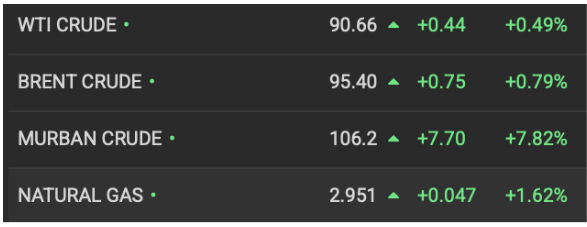
Mumbai, September 2: Oil prices extended their gains on Wednesday, with Brent crude rising 0.8% as fresh U.S. strikes on Iran heightened concerns about potential disruptions to global oil supplies and increased the risk of further escalation in the Middle East.
Brent crude rose 0.8% to $95.4 a barrel, while U.S. West Texas Intermediate crude gained 0.5% to $90.66 a barrel. The gains came after both benchmarks surged in the previous session, when Brent touched its highest level in five weeks.

Fresh Strikes Keep Oil Markets On Edge
The latest advance in crude prices came after renewed military action between the United States and Iran raised concerns that the conflict could broaden and disrupt energy infrastructure and oil shipments from the region.
Investors are particularly focused on the potential impact on crude flows through the Strait of Hormuz, a critical shipping route linking major oil-producing countries in the Middle East with global markets.
The waterway is one of the world’s most important oil transit routes, making any sustained disruption a major concern for energy markets. Even the prospect of interruptions can trigger a sharp increase in the risk premium embedded in crude prices as traders assess the possibility of tighter supplies.
The latest escalation has therefore shifted the focus in oil markets from broader geopolitical risk to the potential for an actual supply disruption.
Also Read: How To Invest In Crude Oil
Brent Climbs Above $95
Brent crude’s move above the $95-a-barrel mark marks a significant rise in oil prices in a relatively short period and could have wider implications for inflation and economic growth if sustained.
Brent rose 0.8% to $95.4 a barrel on Wednesday, while WTI climbed 0.5% to $90.66.
The benchmarks had already rallied sharply on Tuesday following the latest U.S. strikes on Iran. The move reflects growing expectations that the conflict could result in tighter crude supplies, particularly if shipping through the Strait of Hormuz is affected.
Traders are likely to remain highly sensitive to headlines from the region, with any indication of attacks on energy infrastructure or disruption to shipping potentially triggering another sharp move in prices.
Oil Revives Inflation Concerns
The jump in crude prices is also creating a fresh headache for central banks.
Energy is a major component of headline inflation, while higher oil prices can feed through to transportation, manufacturing and other business costs. A sustained increase in crude could therefore slow the pace at which inflation declines, complicating monetary policy decisions.
The concern is particularly significant for economies that are already dealing with elevated borrowing costs. Higher oil prices could keep inflationary pressures persistent even as other components of price growth moderate.
Oil’s rise has also coincided with higher global bond yields, adding to pressure on risk assets. Investors are assessing whether the combination of more expensive energy and tighter financial conditions could weigh on economic activity.
What Higher Oil Means For India
For India, the rise in crude prices is especially important because the country relies heavily on imports to meet its oil requirements.
A prolonged period of Brent crude prices around or above current levels could increase India’s import bill and put pressure on the current account and the rupee. It could also create inflationary pressures through higher fuel, transportation and input costs.
The impact on corporate India is likely to vary across sectors. Oil marketing companies, airlines, paints, chemicals, tyres and other fuel-intensive industries could face margin pressure if higher crude prices persist and costs cannot be passed on quickly.
Conversely, upstream oil producers could benefit from higher international crude prices, potentially providing some support to energy stocks.
Markets Await Further Developments
The immediate direction of crude prices is likely to remain closely tied to developments in the U.S.-Iran conflict. Markets will be watching for any signs that the latest strikes could lead to broader military action, attacks on energy infrastructure or restrictions on oil shipments.
The possibility of disruption to the Strait of Hormuz remains the biggest upside risk to crude prices. A prolonged interruption could tighten global supplies considerably and push prices higher.
For now, traders are likely to maintain a substantial geopolitical premium in oil prices, keeping both Brent and WTI vulnerable to sharp moves in either direction as fresh headlines emerge.
With Brent at $95.4 a barrel and WTI at $90.66, the renewed oil rally has emerged as a key global market trigger, with its implications for inflation, interest rates, currencies and risk assets likely to remain in focus.
Source
- oilprice.com
Disclaimer
If you have any concerns, questions, or wish to point out any discrepancies in our content, please feel free to write to us at content@hdfcsec.com.
Please Note: The information shared is intended solely for informational purposes and does not make any investment recommendations
HDFC SKY, one of India’s most trusted trading platforms, has been recognized with the Next-Gen Digi Content Awards 2025–26.
Disclaimer
At HDFC SKY*, we take utmost care and due diligence in curating and presenting news and market-related content. However, inadvertent errors or omissions may occasionally occur.
If you have any concerns, questions, or wish to point out any discrepancies in our content, please feel free to write to us at content@hdfcsec.com.
Please Note: The information shared is intended solely for informational purposes and does not make any investment recommendations.
HDFC SKY from HDFC Securities, one of most trusted trading platforms in India, has been recognized with the *Next-Gen Digi Content Awards 2025-26.
 Join Us
 Add as preferred source on Google


More Business News










Open Free Demat Account
Open Free Demat Account












Invest Anytime, Anywhere


By signing up I certify terms, conditions & privacy policy