Nifty 50
- Eternal₹317.4012.95 (4.25%)
- Shriram Finance₹865-35.90 (-3.98%)
- Apollo Hospitals₹7,730125.50 (1.65%)
- Adani Enterprises₹2,477-73.00 (-2.86%)
- ONGC₹227.502.50 (1.11%)
- JSW Steel₹1,185.50-34.50 (-2.83%)
- Asian Paints₹2,30722.20 (0.97%)
- Jio Financial ₹205.03-5.77 (-2.74%)
- TCS₹2,53023.10 (0.92%)
- Tata Steel₹167.67-4.66 (-2.70%)
- UltraTech Cement₹11,05092.00 (0.84%)
- Adani Ports₹1,702.70-47.30 (-2.70%)
- Maruti Suzuki₹11,23060.00 (0.54%)
- Tech Mahindra₹1,790-39.10 (-2.14%)
- Cipla₹1,3387.10 (0.53%)
- Tata Motors PV₹264.60-5.40 (-2.00%)
- Reliance Industries₹1,1905.50 (0.46%)
- Hindalco Industries₹869.85-15.75 (-1.78%)
- Axis Bank₹1,217.505.50 (0.45%)
- Trent₹2,727.50-48.30 (-1.74%)

- Offerings
- Tools & Platforms
Tools & Calculators
- Open API
- Calculators
- SIP Calculator
- CAGR Calculator
- Compound Interest Calculator
- FD Calculator
- RD Calculator
- EPF Calculator
- Retirement Calculator
- HDFC SIP Calculator
- Mutual Fund Return Calculator
- Lumpsum Calculator
- Step Up SIP Calculator
- ETF SIP Calculator
- Brokerage Calculator
- Equity Margin Calculator
- SWP Calculator
- EMI Calculator
- MTF Calculator
- Margin Pledge Calculator
- Algo Strategy
- Markets
Stocks
F&O
Mutual Funds
- More
Oil Prices Today, September 8, 2026: Crude Rises To $97.4 As Escalating Tensions In Middle East Raise Supply Risks
Authored By HDFC SKY | Last Modified: Sep 8, 2026 10:21 AM IST
Open Free Demat Account
Open Free Demat Account
New Delhi, September 8: Oil prices extended their gains on Tuesday as escalating tensions between the United States and Iran heightened fears of prolonged disruptions to crude supplies from the Middle East, with the threat of attacks on Gulf energy infrastructure adding to the risk premium in prices.
Brent crude futures rose 0.4% to $97.4 a barrel, while U.S. West Texas Intermediate crude climbed 1.5% to $92.9 a barrel. Brent has now risen to its highest levels since late July as traders assess the potential impact of renewed fighting on shipments through the Strait of Hormuz, a crucial route for global oil trade.

Iran Threatens Gulf Energy Infrastructure
The latest gains followed warnings from Iran that energy infrastructure across the Gulf, including U.S. oil and gas interests, could be targeted in retaliation for further American attacks.
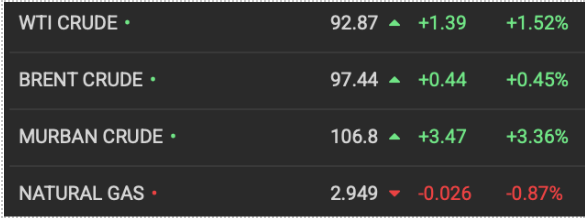
Both contracts rose for a third day. Source: oilprice.com
The threats came after a fresh round of tit-for-tat military action over the weekend. U.S. forces struck three Iranian oil tankers, including one near Kharg Island, Iran’s main oil export hub, while Iran’s Revolutionary Guards subsequently attacked U.S. warships operating in the region, according to Reuters.
The escalation has raised concerns that the conflict could become prolonged rather than remain a series of short-lived flare-ups.
That outlook has kept traders focused on the Strait of Hormuz, through which a substantial share of global oil and gas shipments normally pass. Shipping activity has already slowed, with only seven commodity vessels recorded transiting the waterway on Monday, compared with eight a day earlier, according to Kpler data.
Iran has also threatened to establish a new restricted zone in the Persian Gulf and create a separate shipping corridor through the Strait of Hormuz, adding another layer of uncertainty for energy markets.
Also Read: How To Invest In Crude Oil
Brokers Raise Oil Forecasts
The possibility of prolonged shipping disruptions has prompted banks to lift their oil-price expectations. Brokers raised Brent and WTI forecasts by $5 a barrel, citing expectations that disruptions to Middle East shipping could continue into 2027.
They now expect Brent crude to average $85 a barrel in December 2026, compared with previous forecast of $80, while WTI forecast was raised to $80 from $75. For 2027, they see Brent at $80 and WTI at $75.
Despite the sharp rise in geopolitical risk, Brent has remained below the $100-a-barrel threshold. Continued flows through the Strait of Hormuz, alternative export routes used by Gulf producers and higher production from non-OPEC countries have helped offset some of the supply disruption.
Why Oil Has Not Crossed $100
Middle Eastern oil shipments have fallen substantially since the conflict intensified, but significant volumes are still moving through the Strait of Hormuz. Gulf producers have also increased the use of alternative export routes, including Saudi Arabia’s Red Sea facilities and Egypt’s Sidi Kerir terminal.
Meanwhile, production from the United States, Canada and Guyana is expected to increase by around 1.4 million barrels per day this year, providing an additional cushion to global supplies. Russian crude exports have also remained relatively resilient despite disruptions to the country’s refining system.
Demand concerns have provided another brake on prices. China’s seaborne crude imports have declined sharply, while rising electrification and weaker demand for some petrochemical products have reduced consumption. China’s large oil inventories have also provided some comfort to the market.
However, physical oil markets remain tight. Spot premiums have risen sharply, while diesel prices have also surged as refiners struggle to meet demand for refined products. This suggests that headline Brent prices may not fully capture the extent of supply stress in physical markets.
India Faces Higher Oil Risk
For India, the sustained rise in crude prices is a key concern because the country relies heavily on imported oil. Prolonged prices near $100 a barrel could put pressure on the rupee, widen the trade deficit and complicate the inflation outlook.
Higher crude prices could also weigh on Indian equities by increasing input costs for fuel-intensive industries and putting pressure on corporate margins. Any further deterioration in the U.S.-Iran conflict, particularly around the Strait of Hormuz, could therefore keep volatility elevated across global and Indian markets.
Source
- oilprice.com
Disclaimer
If you have any concerns, questions, or wish to point out any discrepancies in our content, please feel free to write to us at content@hdfcsec.com.
Please Note: The information shared is intended solely for informational purposes and does not make any investment recommendations
HDFC SKY, one of India’s most trusted trading platforms, has been recognized with the Next-Gen Digi Content Awards 2025–26.
Disclaimer
At HDFC SKY*, we take utmost care and due diligence in curating and presenting news and market-related content. However, inadvertent errors or omissions may occasionally occur.
If you have any concerns, questions, or wish to point out any discrepancies in our content, please feel free to write to us at content@hdfcsec.com.
Please Note: The information shared is intended solely for informational purposes and does not make any investment recommendations.
HDFC SKY from HDFC Securities, one of most trusted trading platforms in India, has been recognized with the *Next-Gen Digi Content Awards 2025-26.
 Join Us
 Add as preferred source on Google


More Business News










Open Free Demat Account
Open Free Demat Account












Invest Anytime, Anywhere


By signing up I certify terms, conditions & privacy policy