Nifty 50
- Bajaj Auto₹10,077299.00 (3.06%)
- Tech Mahindra₹1,469.60-44.50 (-2.94%)
- Dr. Reddy's Labs₹1,226.5029.50 (2.46%)
- ITC₹258.70-7.30 (-2.74%)
- Mahindra & Mahindra₹2,830.6034.40 (1.23%)
- Bharti Airtel₹1,767.70-37.40 (-2.07%)
- Eicher Motors₹7,11868.00 (0.96%)
- SBI₹939.55-19.55 (-2.04%)
- BSE₹3,316.8029.60 (0.90%)
- NTPC₹306.25-5.75 (-1.84%)
- Bharat Electronics₹370.702.55 (0.69%)
- Hindustan Unilever₹1,826.30-30.40 (-1.64%)
- HDFC Life Insurance ₹559.502.85 (0.51%)
- Coal India₹404.95-6.60 (-1.60%)
- Max Healthcare₹888.254.45 (0.50%)
- L&T₹3,645.60-57.70 (-1.56%)
- JSW Steel₹1,173.505.50 (0.47%)
- ICICI Bank₹1,335.50-19.50 (-1.44%)
- Eternal₹324.851.40 (0.43%)
- Nestle₹1,320.80-12.20 (-0.92%)

- Offerings
- Tools & Platforms
Tools & Calculators
- Open API
- Calculators
- SIP Calculator
- CAGR Calculator
- Compound Interest Calculator
- FD Calculator
- RD Calculator
- EPF Calculator
- Retirement Calculator
- HDFC SIP Calculator
- Mutual Fund Return Calculator
- Lumpsum Calculator
- Step Up SIP Calculator
- ETF SIP Calculator
- Brokerage Calculator
- Equity Margin Calculator
- SWP Calculator
- EMI Calculator
- MTF Calculator
- Margin Pledge Calculator
- Algo Strategy
- Markets
Stocks
F&O
Mutual Funds
- More
Dow and Nasdaq Slide as Oil Surges 5% on Fading Iran Deal Hopes
Authored By HDFC SKY | Published at: Aug 11, 2026 08:48 AM IST
Open Free Demat Account
Open Free Demat Account
Mumbai, August 10, 2026: US stock markets ended Monday’s session with modest losses, as a sharp rally in crude oil prices and rising Treasury yields overshadowed a robust earnings season. The Dow Jones Industrial Average declined 60.95 points, or 0.11%, to close at 53,975.98, while the S&P 500 shed 4.53 points, or 0.06%, finishing at 7,753.11.
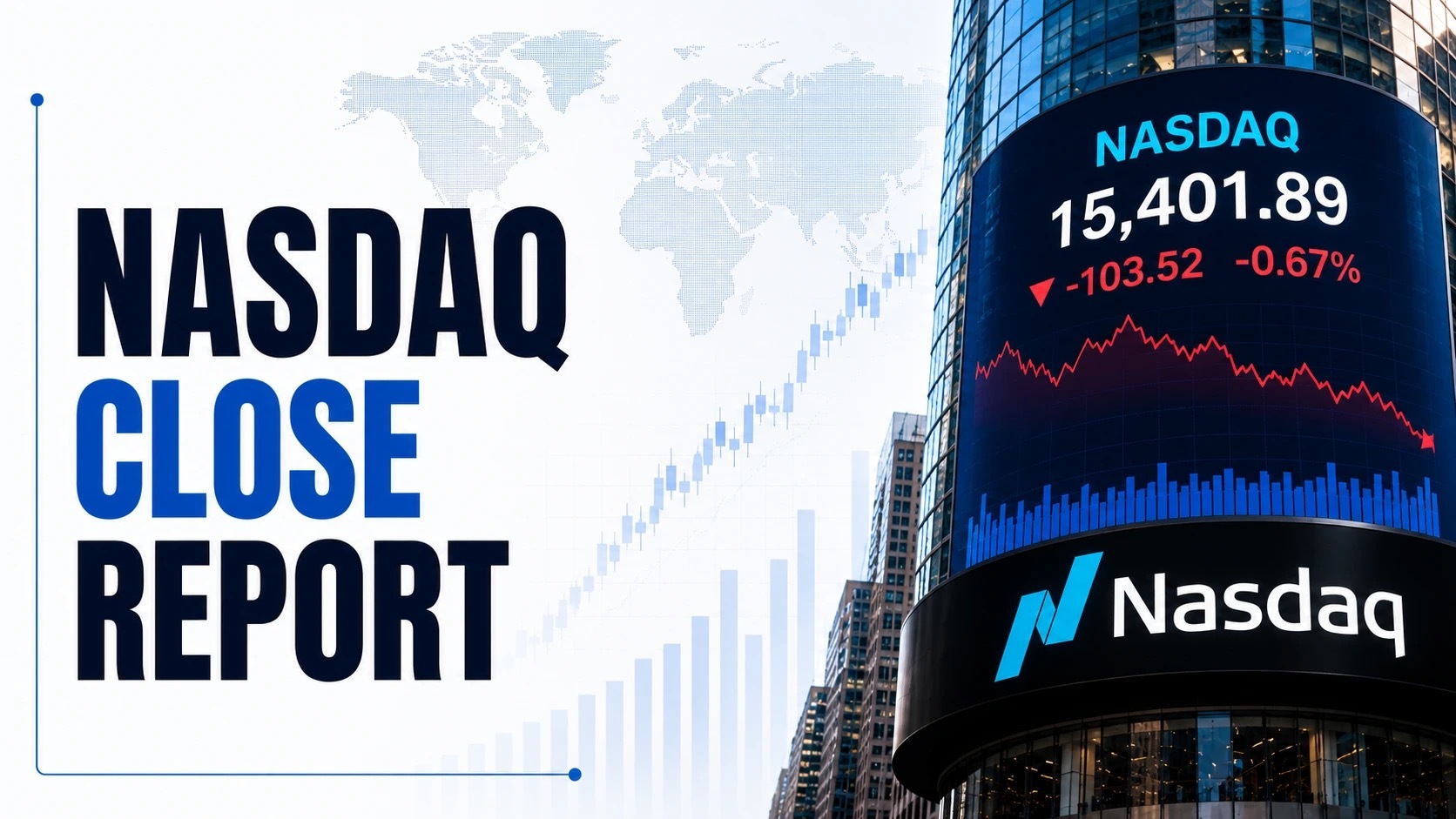
The tech-heavy Nasdaq Composite underperformed, dropping 85.26 points, or 0.32%, to settle at 26,605.36. The primary catalyst for the market’s cautious tone was the fading optimism surrounding a potential US-Iran agreement to reopen the strategic Strait of Hormuz, which sent oil prices soaring by over 5% and reintroduced inflationary concerns just days before a key inflation report.

Geopolitical Tensions, Oil Surge, and Fed Hawkishness Drive Caution
The primary catalysts driving Monday’s market movements were the sharp escalation in geopolitical tensions surrounding the Strait of Hormuz and the resulting 5% surge in oil prices. Hopes for a swift US-Iran agreement faded after Iranian Foreign Minister Abbas Araghchi stated there was “no possibility of restarting negotiations” unless the US compensated for its “violations” of the June memorandum. President Donald Trump further dampened optimism by telling Axios that the US was “only semi-negotiating” with Iran. This geopolitical uncertainty triggered a rally in crude, reigniting inflation fears just days before the July CPI report.
Treasury yields moved higher, with the 10-year yield climbing over 3 basis points, pressuring growth stocks. Federal Reserve policy remained in focus, with Cleveland Fed President Beth Hammack signaling that “several” rate hikes may be required, arguing that the current policy stance is not “meaningfully restrictive”. Corporate earnings continued to provide underlying support, with strong results underpinning the market’s resilience despite the headwinds. The US Dollar Index edged up 0.27%, while gold steadied after its best weekly gain since January.
Dow Jones Slips 61 Points as Energy Surge Offsets Tech Weakness
The Dow Jones Industrial Average traded in a narrow range, opening at 54,072.66 and touching an intraday high of 54,072.66 before retreating to a low of 53,850.19. The index’s marginal decline was a tug-of-war between surging energy stocks and sinking technology components. Chevron (CVX) emerged as the standout performer, rallying 4.48% as the primary beneficiary of higher oil prices, while Exxon Mobil (XOM) also contributed positively with a 4.41% gain.
On the flip side, Intel (INTC) was the heaviest drag, tumbling 4.05% after announcing a $15 billion common stock offering, which raised concerns about shareholder dilution. Apple (AAPL) and Nvidia (NVDA) also weighed on the index, falling 1.57% and 2.88%, respectively, as the tech sector came under broad pressure. The index’s movement reflected a broader rotation away from growth stocks towards energy and defensive names.
S&P 500 Closes Flat as Energy Rally Offsets Broad-Based Declines
The broader S&P 500 index opened at 7,751.74 and traded between an intraday high of 7,773.76 and a low of 7,743.11, ultimately closing virtually unchanged. Six of the 11 sectors were lower, with real estate and consumer staples the biggest weights. The energy sector was the undisputed leader, jumping 2.6% as investors priced in a geopolitical risk premium. Palo Alto Networks (PANW) and CrowdStrike (CRWD) were among the top gainers, surging 5.80% and 5.01% respectively, as cybersecurity stocks rallied on strong AI-driven demand themes.
However, these gains were largely neutralised by weakness in semiconductor stocks. Intel led the decline, followed by Nvidia and Advanced Micro Devices (AMD) , which fell 2.85%, as the Philadelphia Semiconductor Index (SOX) dropped nearly 3%. The index’s resilience, however, was notable, suggesting that strong underlying earnings fundamentals are providing a floor for the market.
Nasdaq Drops 0.3% as Semiconductor Sell-Off and Intel Dip Weigh Heavily
The Nasdaq Composite bore the brunt of Monday’s selling pressure, opening at 26,680.44 and hitting a session low of 26,548.26. The index’s underperformance was primarily driven by a broad-based sell-off in semiconductor and mega-cap technology stocks. Intel fell over 4%, while Nvidia dropped nearly 3%, and Apple declined 1.5%, collectively acting as significant headwinds. The S&P 500 information technology index lost 0.4%.
However, the declines were partially offset by gains in other mega-cap names. Netflix (NFLX) climbed 2.91%, Microsoft (MSFT) added 1.23%, and Amazon (AMZN) rose 1.32%, providing some support. The cybersecurity strength was also evident here, with Palo Alto Networks and CrowdStrike posting strong gains. Despite the losses, the Nasdaq remains well above its key moving averages, indicating that the recent uptrend remains intact for now.
Russell 2000 Drops 0.6% as Small-Caps Underperform and Open at 3,026.34
The Russell 2000 Index, a benchmark for small-cap stocks, fell 17.07 points, or 0.56%, to close at 3,017.42, making it the weakest performer among the major indices. The index opened at 3,026.34 and traded between a high of 3,031.81 and a low of 3,013.13. The underperformance of small caps suggests that investors are rotating away from riskier, domestically-focused companies amid geopolitical uncertainty. The S&P 100 Index declined 4.77 points, or 0.12%, to 3,834.27, reflecting similar pressures on the largest mega-cap stocks.
The Dow Jones Composite Average fell 56.69 points, or 0.33%, to 16,967.00, while the Dow Jones Transportation Average dropped 140.01 points, or 0.65%, to 21,366.08, indicating concerns about economic activity. The Dow Jones Utility Average shed 10.69 points, or 0.97%, closing at 1,088.09 as rising yields made their dividend payouts less attractive.
Also Read: How to Invest in S&P 500 Stocks Through Index Funds
S&P 100 Falls 0.12% to 3,834.27 as Mega-Cap Stocks Lose Momentum
The S&P 100 Index ended the session with a modest decline, falling 4.77 points, or 0.12%, to close at 3,834.27. The index opened at 3,833.52 and traded within a narrow range, hitting an intraday high of 3,845.59 and a low of 3,825.94. The weakness in mega-cap technology stocks was the primary driver, with Nvidia, Apple, and Intel exerting significant downward pressure.
However, the losses were partially cushioned by gains in energy and cybersecurity names like Chevron, Exxon Mobil, and Palo Alto Networks. The index’s performance underscores the tug-of-war between the positive momentum from strong earnings and the negative pressures from rising geopolitical risks and higher bond yields.
Philadelphia Semiconductor Index Plunges 2.9% as Intel’s $15 Billion Offering Upsets Investors
The PHLX Semiconductor Sector Index (SOX) was a major laggard, plummeting 362.93 points, or 2.94%, to settle at 11,993.86. The index opened at 12,424.67 and touched a low of 11,992.94 during the session. The sharp decline was triggered by Intel’s announcement of a $15 billion stock offering, which not only weighed on Intel’s own shares but also cast a shadow over the entire chip sector.
Other semiconductor heavyweights like Nvidia, AMD, and Broadcom (AVGO) also fell sharply, contributing to the index’s worst daily performance in weeks. The sell-off reflects investor concerns about potential dilution and the sustainability of the massive capital expenditure required to meet AI-driven demand, even as the long-term outlook for the sector remains robust.
NYSE Composite Gains 0.3% as Energy Stocks Outperform Broader Market
The NYSE Composite Index managed to buck the trend, gaining 72.63 points, or 0.30%, to close at 24,667.88. The index opened at 24,595.24 and touched a high of 24,692.69, outperforming its peers. This resilience was largely due to the heavy weighting of energy stocks within the NYSE, which rallied sharply on the back of rising oil prices. In contrast, the S&P MidCap 400 Index fell 14.02 points, or 0.36%, to 3,871.55, while the S&P SmallCap 600 Index also declined.
The weakness in mid and small-cap indices suggests that the market’s rotation is favouring large-cap energy names over smaller, more economically sensitive companies. The outperformance of the NYSE Composite highlights how sector composition can lead to divergent index performance during periods of geopolitical-driven commodity shocks.
VIX Falls 1.65% to 14.90 as Market Volatility Remains Subdued
The CBOE Volatility Index (VIX), often referred to as Wall Street’s “fear gauge,” declined 1.65% to settle at 14.90. The index opened at 15.10 and touched a high of 15.72 during the session, indicating that despite geopolitical tensions, market anxiety remained relatively contained. The VIX remains well below its long-term average, suggesting that investors are not pricing in significant near-term disruption.
The CBOE Nasdaq Volatility Index (VXN), which measures expected volatility in the tech-heavy Nasdaq 100, traded around 28.39, reflecting the tech sector’s sensitivity to rising yields and the semiconductor sell-off. The overall volatility picture suggests that while the market is not in a panic, there is a growing sense of caution as investors navigate a complex landscape of geopolitical tensions and monetary policy uncertainty.
Energy Sector Surges 2.6% as Real Estate and Tech Sectors Weigh on Markets
The S&P 500 sectors displayed a clear rotation, with Energy emerging as the best-performing sector, soaring 2.6% on the back of a 5% surge in crude oil prices. Chevron and Exxon Mobil were the primary drivers, with gains of over 4% each. Consumer Discretionary and Materials also posted gains. Information Technology was among the worst performers, losing 0.4%, dragged down by semiconductor weakness and declines in mega-cap names like Apple and Nvidia. Real Estate and Consumer Staples were the biggest weights on the index.
Utilities also underperformed as rising Treasury yields made their dividend yields less attractive. The Financials sector showed mixed performance, with banks like JPMorgan gaining while others like Goldman Sachs slipped. Health Care saw strength from Vertex Pharmaceuticals, while Industrials were mixed. Communication Services declined, with energy down 1.15% in some measures. The overall sector performance highlights a classic rotation, with investors moving out of growth and into energy names.
Airbnb and Vertex Lead Gainers as Intel and Trade Desk Top Losers
Among the standout gainers, Airbnb (ABNB) surged 17.4% after posting upbeat Q2 results and raising its full-year revenue growth guidance. Vertex Pharmaceuticals rose 7.48%, leading healthcare stocks higher. Honeywell International gained 7.5%. Microchip Technology advanced 13.9% and Coherent rose 13.4%. On the losing side, Trade Desk (TTD) plunged 21.9%, the day’s biggest loser. Intel fell nearly 4% after announcing its $15 billion stock offering.
Coterra Energy dropped 8.62%. Zoetis declined 5.97%. Apple fell 2.4% following a downgrade by Jefferies. The Magnificent Seven stocks were mixed. Nvidia dropped nearly 3%, Apple fell over 2%, while Microsoft gained over 1%, Amazon rose over 1%, Meta edged up, Tesla added modestly, and Alphabet rose nearly 1%.
Also Read: How to Invest in the US Stocks From India
Semiconductor Stocks Tumble 3% as Financials Show Mixed Performance
Semiconductor stocks were the hardest hit, with the SOX index falling nearly 3% as Intel’s capital raise spooked investors. Nvidia, AMD, and Broadcom all declined sharply, reflecting concerns about valuation and potential dilution in the sector. The sell-off was exacerbated by broader concerns about the sustainability of AI-driven capital expenditure, though long-term demand fundamentals remain robust. Financial stocks showed a mixed performance, with banks like JPMorgan and Bank of America gaining, while others like Goldman Sachs and Morgan Stanley fell.
The divergence suggests that investors are selectively buying banks less exposed to capital markets volatility. Energy stocks were the clear outperformers, with the sector rallying as oil prices surged on geopolitical tensions. AI and growth stocks were under pressure, with the technology sector broadly declining, though some names like Palo Alto Networks and CrowdStrike bucked the trend, highlighting the ongoing demand for cybersecurity solutions in an AI-driven world.
July Jobs Report Shows 23,000 Contraction as CPI Data Takes Centre Stage
The economic calendar was highlighted by last Friday’s July nonfarm payrolls report, which showed an unexpected contraction of 23,000 jobs, compared with consensus estimates of 82,000. The unemployment rate came in at 4.1% , below the consensus estimate of 4.8%. Average hourly earnings increased 0.1% sequentially, below the 0.3% estimate. The weak jobs data eased fears of an imminent rate hike. Investors are now focused on the upcoming July Consumer Price Index (CPI) report scheduled for Wednesday. Consensus estimates suggest that headline CPI will rise 3.4% year-over-year, down from 3.5% in June, while core CPI is expected to moderate to 2.5% from 2.6%. The Producer Price Index (PPI) is due on Thursday, followed by retail sales and consumer sentiment data on Friday. The surge in oil prices has reintroduced inflationary concerns, making this week’s data releases particularly critical for market direction.
10-Year Yield Rises to 4.69% as Hammack Signals Multiple Rate Hikes
Federal Reserve officials remain divided on the path forward for interest rates. Cleveland Fed President Beth Hammack stated on Monday that she anticipates “several” rate hikes will be required to bring inflation back to the 2% target, arguing that one 25-basis-point move “probably doesn’t do a whole lot for the economy”. Hammack, who dissented at the July FOMC meeting in favour of a hike, noted that the current 3.5%-3.75% range is not “meaningfully restrictive”.
However, Fed funds futures traders currently price in only a 44% likelihood of a rate hike at the September meeting, down from 67% seen a week prior. In the bond market, the 10-year Treasury yield rose over 3 basis points to 4.692%, while the 2-year yield climbed to 4.212% and the 5-year yield advanced to around 4.45%. The 30-year yield increased to 5.206%. The yield curve remains inverted, with 2-year yields below 10-year yields, a classic recession signal.
Also Read : US Stock Market Timings
Brent Crude Surges 5% to $87.72 as Geopolitical Premium Returns to Oil Markets
Commodities were sharply higher, with WTI crude settling up 5.05% at $82.13 per barrel and Brent crude rising 4.99% to $87.72 as hopes for a Hormuz deal faded. The surge was also supported by data showing US Strategic Petroleum Reserve stocks fell to the lowest level since January 1983. Gold steadied after its biggest weekly gain since January, with spot gold trading near $4,333 per ounce, as investors assessed the inflation outlook. Silver edged higher, while copper declined on concerns about global demand.
Natural gas futures climbed 5% to a two-week high on forecasts for continued hot weather. In currency markets, the US Dollar Index (DXY) edged up 0.27% to 99.809. The Japanese yen weakened against the dollar to around 158.30. The euro was little changed at $1.1542, while the British pound traded at $1.3509. The dollar’s modest strength reflects its safe-haven status amid geopolitical uncertainty, though gains were capped by expectations of a more dovish Fed.
Gold Steadies as Oil Surges Nearly 5% Amid US-Iran Tensions
Gold steadied after its biggest weekly gain since January, with spot gold trading near $4,333 per ounce. Silver advanced over 2% to $64.82 per ounce. Copper declined, with LME copper falling 0.50% to $14,022 per metric ton. Natural gas futures climbed 4.42% to 141.96 on the ICE exchange, reaching a two-week high on forecasts for continued hot weather and rising LNG export flows.
In currency markets, the US Dollar Index (DXY) edged up 0.27% to 99.809. The euro weakened slightly to $1.1542, while the British pound rose to $1.3509. The Japanese yen weakened against the dollar to 159.24. The in-season RMB strengthened, with the onshore yuan closing at 6.7442, up 59 points from the previous session and at its strongest level since February 2023
The convergence of geopolitical risk, rising oil prices, and key inflation data presents a complex near-term outlook. The market’s ability to hold near record highs despite these headwinds suggests strong underlying fundamentals, but the upcoming CPI report will be crucial in determining the Federal Reserve’s next move. Investors should closely monitor the 10-year Treasury yield and oil prices, as these are likely to be the primary drivers of equity market direction in the coming sessions.
Source
- https://www.nasdaq.com/
- spglobal.com/spdji/en/indices/equity/sp-500/
- https://www.dowjones.com/
- https://www.spglobal.com/spdji/en/indices/equity/dow-jones-industrial-average/
- https://www.spglobal.com/spdji/en/indices/equity/sp-500/
- https://www.nasdaq.com/market-activity/index/comp
- https://www.nasdaq.com/market-activity/quotes/nasdaq-ndx-index
- https://www.spglobal.com/spdji/en/indices/equity/sp-100/
- https://www.lseg.com/en/ftse-russell/indices/russell-us
- https://www.nyse.com/index
- https://www.nyse.com/index
- https://www.spglobal.com/spdji/en/indices/equity/dow-jones-transportation-average/
- https://www.spglobal.com/spdji/en/indices/equity/dow-jones-utility-average/
- https://www.spglobal.com/spdji/en/indices/equity/dow-jones-composite-average/
- https://www.nasdaq.com/market-activity/index/sox
- https://www.cboe.com/tradable_products/vix/
Disclaimer
If you have any concerns, questions, or wish to point out any discrepancies in our content, please feel free to write to us at content@hdfcsec.com.
Please Note: The information shared is intended solely for informational purposes and does not make any investment recommendations
Disclaimer
At HDFC SKY*, we take utmost care and due diligence in curating and presenting news and market-related content. However, inadvertent errors or omissions may occasionally occur.
If you have any concerns, questions, or wish to point out any discrepancies in our content, please feel free to write to us at content@hdfcsec.com.
Please Note: The information shared is intended solely for informational purposes and does not make any investment recommendations.
HDFC SKY from HDFC Securities, one of most trusted trading platforms in India, has been recognized with the *Next-Gen Digi Content Awards 2025-26.
 Join Us
 Add as preferred source on Google


More Business News








Open Free Demat Account
Open Free Demat Account











Invest Anytime, Anywhere


By signing up I certify terms, conditions & privacy policy