Nifty 50
- Apollo Hospitals₹8,027.50361.50 (4.72%)
- BSE₹3,287.20-47.60 (-1.43%)
- ITC₹26611.00 (4.31%)
- Reliance Industries₹1,170.30-7.70 (-0.65%)
- Eicher Motors₹7,050282.50 (4.17%)
- JSW Steel₹1,168-7.20 (-0.61%)
- TCS₹2,15680.00 (3.85%)
- Cipla₹1,301-5.80 (-0.44%)
- HCL Technologies₹1,216.7039.80 (3.38%)
- Adani Ports₹1,76153.00 (3.10%)
- Infosys₹1,023.4026.40 (2.65%)
- Shriram Finance₹940.4523.20 (2.53%)
- Tata Motors PV₹279.906.90 (2.53%)
- UltraTech Cement₹10,675249.00 (2.39%)

- Offerings
- Tools & Platforms
Tools & Calculators
- Open API
- Calculators
- SIP Calculator
- CAGR Calculator
- Compound Interest Calculator
- FD Calculator
- RD Calculator
- EPF Calculator
- Retirement Calculator
- HDFC SIP Calculator
- Mutual Fund Return Calculator
- Lumpsum Calculator
- Step Up SIP Calculator
- ETF SIP Calculator
- Brokerage Calculator
- Equity Margin Calculator
- SWP Calculator
- EMI Calculator
- MTF Calculator
- Margin Pledge Calculator
- Algo Strategy
- Markets
Stocks
F&O
Mutual Funds
- More
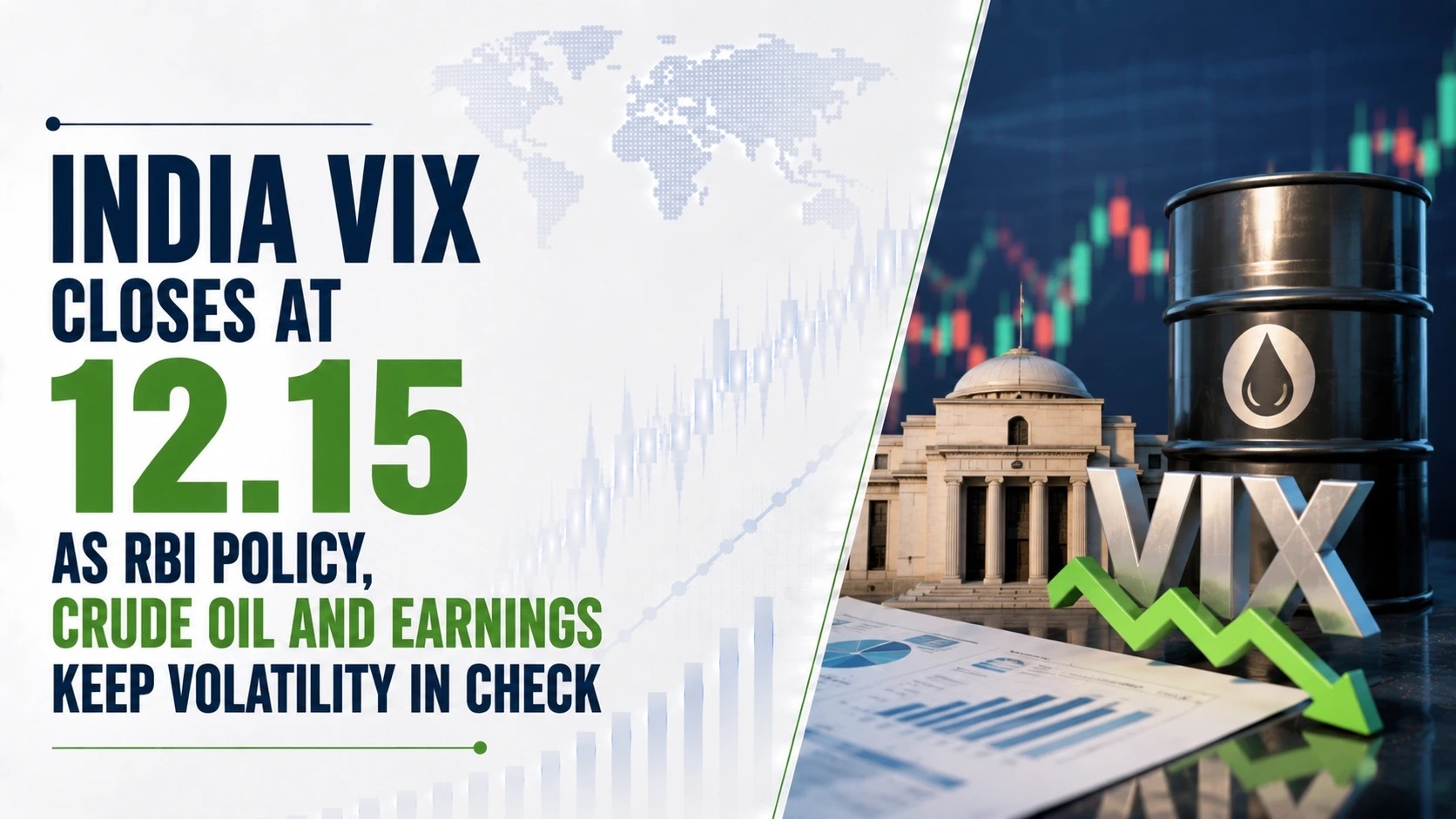
India VIX Closes at 12.15 as RBI Policy, Crude Oil and Earnings Keep Volatility in Check
Authored By HDFC SKY | Published at: Aug 7, 2026 04:23 PM IST
Open Free Demat Account
Open Free Demat Account
Mumbai, Aug 7: India VIX, the volatility index that reflects the market’s expectation of fluctuations over the next 30 days based on Nifty options prices, ended the trading session on August 7, 2026 at 12.15, down 0.01 point (0.08%) from the previous close of 12.16.
During the session, the index traded between a day low of 11.30 and a day high of 12.54, indicating that expected market volatility remained within a moderate range despite several domestic and global developments during the week. The index opened at 12.15, while its 52-week range stood between 8.72 and 28.90, with year-to-date returns of 28.16%.

India VIX Holds Above 12 As Volatility Remains Moderate
The closing level of 12.15 suggests that expected market volatility remained contained through the first week of August even as traders navigated multiple event-driven risks. Throughout the week, India VIX largely moved within the 11.5-12.5 range, briefly rising ahead of the Reserve Bank of India’s monetary policy announcement before easing by the close.
Although the index recorded intraday movements, it stayed well below the 20-plus levels that are generally associated with periods of heightened market uncertainty, indicating that anticipated market fluctuations remained moderate rather than extreme.
RBI Policy Meeting Lifts Hedging Before Decision
One of the primary developments influencing implied volatility during the week was the Reserve Bank of India (RBI) monetary policy meeting. Ahead of the policy announcement, market participants increased hedging activity, resulting in higher option premiums and a temporary rise in India VIX to its highest level in about a week.
The policy meeting drew attention because traders awaited the central bank’s commentary on inflation, liquidity conditions, economic growth projections and interest-rate guidance. The combination of these uncertainties contributed to a measured increase in implied volatility during the lead-up to the announcement without triggering a sharp surge in the index.
Brent Above $80 Supports Higher Volatility Expectations
International crude oil prices remained another significant factor influencing volatility expectations during the week. Brent crude traded above $80 per barrel, renewing attention on imported inflation, India’s current account position and the potential effect of higher input costs on corporate profitability.
As India imports a substantial portion of its crude oil requirements, elevated oil prices remained an important macroeconomic factor monitored by market participants. Against this backdrop, higher crude prices coincided with a modest increase in hedging activity, contributing to the movement in India VIX while keeping overall volatility expectations within a controlled range.
Q1 FY27 Earnings Sustain Stock-Specific Option Activity
The ongoing Q1 FY27 earnings season also continued to influence options pricing during the week. Rather than triggering broad-based market volatility, earnings announcements primarily led to stock-specific movements, with option premiums increasing ahead of scheduled corporate results.
As companies reported quarterly financial performance, daily price movements became more pronounced in individual stocks while the broader volatility index remained comparatively stable. Analysts noted that earnings-related developments continued to account for a significant share of daily options activity, even as wider market volatility remained restrained.
Market Weakness Fails to Push India VIX Sharply Higher
Indian equity markets experienced weakness on August 7, with the Sensex declining by more than 400 points in early trade and the Nifty slipping below 24,550. The decline coincided with higher crude oil prices, profit booking and cautious global cues.
However, despite the weakness in benchmark indices, India VIX recorded only a limited movement and closed marginally lower at 12.15. The relatively stable close suggested that the day’s market decline did not translate into a significant increase in expectations of future market volatility, unlike episodes witnessed earlier during 2026.
July’s Sharp Spike Gives Way to Stable August Trading
The current trading pattern contrasts with conditions seen during July 2026, when India VIX recorded a considerably sharper rise amid geopolitical developments, elevated crude oil prices, monetary policy uncertainty and broader global risk-off conditions. During that period, volatility increased significantly before easing in subsequent weeks.
By the first week of August, much of that elevated volatility had moderated, allowing the index to stabilise above the 12 mark. The latest closing level therefore reflects a comparatively calmer trading environment than that experienced during the previous month.
NSE Auction Changes Add Temporary Trading Adjustments
Another domestic development monitored during the week was the introduction of the National Stock Exchange (NSE) closing-auction mechanism for futures and options stocks. The implementation of the revised mechanism prompted temporary adjustments in institutional positioning around market close as participants adapted to the operational changes.
According to reports during the week, the transition contributed to a brief increase in uncertainty and a moderate rise in India VIX. However, the impact appeared temporary, with volatility normalising as trading participants adjusted to the revised market structure.
August History Shows 13 Positive Years Out Of 18
Historical seasonality data continues to indicate that August has generally been a stronger month for India VIX. Over the past 18 years, the index has delivered positive returns in 13 years during August. The month’s maximum positive change stood at 68.84% in 2015, while the average positive gain measured 16.95%.
On the downside, the largest decline during August was 11.26% in 2016, with an average negative change of 6.01%. Overall, the historical average August change stands at 10.57%, reflecting that the month has often witnessed periodic increases in expected market volatility, although yearly outcomes have varied considerably.
Global Developments Continue to Shape Volatility Outlook
Alongside domestic events, several international developments remained under observation during the week. Market participants continued tracking US Treasury yields, crude oil prices, global central bank expectations, US employment data, developments in the Middle East and the progress of the global corporate earnings season. These factors remained part of the broader backdrop influencing short-term volatility expectations as India VIX completed the week at 12.15, remaining well below the elevated levels recorded earlier this year.
India VIX concluded the August 7, 2026 trading session at 12.15, remaining within a moderate range despite the RBI policy meeting, elevated crude oil prices, the ongoing Q1 FY27 earnings season and changes to the NSE closing-auction mechanism. The week’s movements reflected measured changes in expected market volatility while remaining significantly below the elevated readings recorded during July 2026.
Source
- https://www.nseindia.com/reports-indices-historical-vix
Disclaimer
If you have any concerns, questions, or wish to point out any discrepancies in our content, please feel free to write to us at content@hdfcsec.com.
Please Note: The information shared is intended solely for informational purposes and does not make any investment recommendations
Disclaimer
At HDFC SKY*, we take utmost care and due diligence in curating and presenting news and market-related content. However, inadvertent errors or omissions may occasionally occur.
If you have any concerns, questions, or wish to point out any discrepancies in our content, please feel free to write to us at content@hdfcsec.com.
Please Note: The information shared is intended solely for informational purposes and does not make any investment recommendations.
HDFC SKY from HDFC Securities, one of most trusted trading platforms in India, has been recognized with the *Next-Gen Digi Content Awards 2025-26.
 Join Us
 Add as preferred source on Google


More Business News





Open Free Demat Account
Open Free Demat Account











Invest Anytime, Anywhere


By signing up I certify terms, conditions & privacy policy