Nifty 50
- Dr. Reddy's Labs₹1,229.4032.40 (2.71%)
- Apollo Hospitals₹7,775-252.50 (-3.15%)
- Bajaj Auto₹10,034256.00 (2.62%)
- ITC₹257.90-8.10 (-3.05%)
- Tata Motors PV₹284.454.55 (1.63%)
- Tech Mahindra₹1,471-43.10 (-2.85%)
- Bharat Electronics₹373.905.75 (1.56%)
- L&T₹3,627.50-75.80 (-2.05%)
- BSE₹3,330.2043.00 (1.31%)
- Max Healthcare₹865.95-17.85 (-2.02%)
- Cipla₹1,317.4016.40 (1.26%)
- Hindalco Industries₹882.50-17.85 (-1.98%)
- Eicher Motors₹7,11969.00 (0.98%)
- Hindustan Unilever₹1,820.70-36.00 (-1.94%)
- Mahindra & Mahindra₹2,81316.80 (0.60%)
- SBI₹941-18.10 (-1.89%)
- Kotak Mahindra Bank₹443.402.40 (0.54%)
- Coal India₹404.80-6.75 (-1.64%)
- HCL Technologies₹1,2236.30 (0.52%)
- Bharti Airtel₹1,778.70-26.40 (-1.46%)

- Offerings
- Tools & Platforms
Tools & Calculators
- Open API
- Calculators
- SIP Calculator
- CAGR Calculator
- Compound Interest Calculator
- FD Calculator
- RD Calculator
- EPF Calculator
- Retirement Calculator
- HDFC SIP Calculator
- Mutual Fund Return Calculator
- Lumpsum Calculator
- Step Up SIP Calculator
- ETF SIP Calculator
- Brokerage Calculator
- Equity Margin Calculator
- SWP Calculator
- EMI Calculator
- MTF Calculator
- Margin Pledge Calculator
- Algo Strategy
- Markets
Stocks
F&O
Mutual Funds
- More
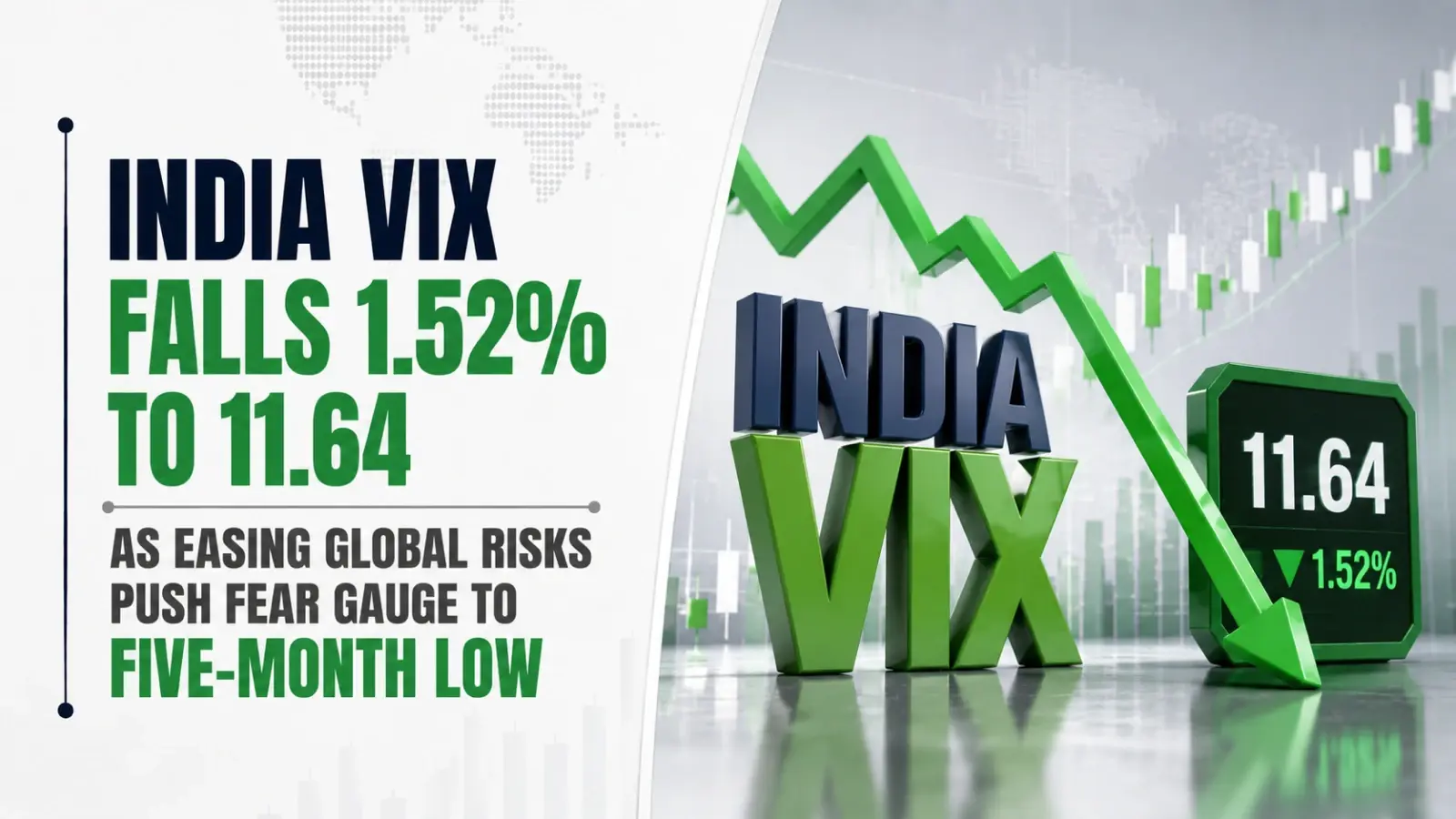
India VIX Falls 1.52% to 11.64 as Easing Global Risks Push Fear Gauge to Five-Month Low
Authored By HDFC SKY | Published at: Jul 7, 2026 04:26 PM IST
Open Free Demat Account
Open Free Demat Account
Mumbai, July 7: India VIX, the National Stock Exchange’s (NSE) volatility index and the market’s widely tracked fear gauge, closed the trading session at 11.64, down 0.18 points or 1.52% from the previous close of 11.82. The index traded between 11.05 and 11.93 during the session, marking its lowest levels since February 2026 and extending the sustained decline seen since April.
The latest movement reflects expectations of relatively subdued market volatility over the next 30 days as geopolitical concerns ease, crude oil prices retreat and domestic macroeconomic conditions remain stable.
India VIX Ends At 11.64 After Touching 11.05 Intraday
India VIX opened at 11.81 and remained under pressure throughout the session before settling at 11.64. During the day, it touched an intraday high of 11.93 and a low of 11.05, remaining close to its five-month lows.
Despite the decline, the volatility index continues to trade well above its 52-week low of 8.72 while remaining significantly below its 52-week high of 28.90, highlighting the sharp moderation in implied market volatility since the spike witnessed earlier this year.
On a year-to-date basis, India VIX has delivered a return of 22.78%, reflecting the elevated volatility experienced during the first quarter before conditions gradually normalised over recent months.
Cooling Global Risks Keep Volatility Near Multi-Month Lows
The latest decline in India VIX follows a steady easing in several global and domestic risk factors that had previously fuelled volatility. Earlier in 2026, the index surged sharply as geopolitical tensions in the Middle East intensified, crude oil prices climbed and the Indian rupee weakened. India VIX subsequently reached nearly a two-year high of around 28.91 during March before beginning a sustained correction.
Since April, the volatility gauge has moved lower each month as diplomatic efforts to reduce tensions in the Middle East gathered pace, crude oil prices retreated towards the USD 70 per barrel mark and the intensity of foreign capital outflows eased. Stable domestic macroeconomic conditions, moderating inflation risks and expectations surrounding global monetary policy have also contributed to the calmer trading environment reflected in the latest reading.
Experts Say Low Readings Reflect Stability But Require Vigilance
Market participants noted that India VIX has now entered the 11-12 range, which has historically been associated with relatively low implied market volatility.
The recent decline reflects several concurrent developments. Realised volatility has eased as crude oil prices softened, diplomatic discussions between the United States and Iran progressed, and the Q1 FY27 corporate earnings season has yet to produce any significant negative surprises.
Historical market trends indicate that India VIX readings below 12 have often coincided with periods of subdued volatility. However, previous market corrections have also been preceded by volatility readings within the 10-12 range before expanding sharply. At the same time, the lower volatility environment has reduced option premiums, making portfolio hedging through index put options comparatively less expensive than earlier this year.
The latest decline has also been supported by lower crude oil prices and stability in the currency market, indicating that market participants are currently not pricing in any major near-term disruptions. Even so, the upcoming corporate earnings season, progress of the southwest monsoon and global monetary policy developments remain key factors being closely monitored.
Lower Option Premiums Highlight Changing Market Conditions
The decline in India VIX has also affected the derivatives market by reducing implied volatility across option contracts. Lower volatility has resulted in comparatively cheaper option premiums, lowering the cost of portfolio protection through index options.
Market participants continue to monitor several scheduled developments that could influence implied volatility over the coming weeks, including the Q1 FY27 corporate earnings season, further developments in geopolitical negotiations involving the Middle East, progress of the southwest monsoon and future commentary from the United States Federal Reserve regarding interest rate policy.
Technical Levels Show Neutral Trend Despite Lower Close
India VIX continues to carry a Neutral technical rating on daily charts. The classic pivot point stands at 11.96, with resistance levels placed at 12.21, 12.61 and 12.86, while immediate support levels are positioned at 11.56, 11.31 and 10.91.
Fibonacci pivot calculations place resistance at 12.20, 12.36 and 12.61, with support levels at 11.71, 11.55 and 11.31. Camarilla levels indicate resistance at 11.88, 11.94 and 12.00, while support is seen at 11.76, 11.70 and 11.64. These levels are calculated using the previous trading session’s price range and are widely monitored by derivatives market participants.
July History Shows Weak Seasonal Trend For India VIX
Historical seasonality data indicates that India VIX has recorded negative returns in July during 15 out of the past 18 years. The month has historically delivered an average decline of 8.91%.
The strongest positive July performance was 7.39% in 2011, with an average positive gain of 4.47%. Conversely, the steepest July decline was 24.22% in 2022, while the average negative July movement stands at 11.59%. The seasonal data highlights that volatility has generally moderated during July over a longer historical period.
Volatility Retreat Follows Sharp Swings Earlier This Year
India VIX has experienced significant fluctuations throughout 2026. The index touched its yearly low of 8.72 in January before geopolitical developments, rising crude oil prices and increased hedging demand pushed volatility sharply higher during February and March. The index subsequently climbed close to 28.91, its highest level of the year, before reversing direction as global risk conditions improved.
The latest closing level of 11.64 represents a substantial decline from those elevated readings, reflecting the broad moderation in market uncertainty witnessed during the second quarter. At the same time, the index remains above its January low, indicating that implied volatility continues to be higher than the year’s lowest levels despite the recent decline.
India VIX closed at 11.64 on 7 July 2026, extending its decline to the lowest levels seen since February. The latest reading reflects easing market volatility amid improving global and domestic conditions, while upcoming corporate earnings, geopolitical developments, monsoon progress and global central bank commentary remain the key events scheduled over the coming weeks.
Source
Disclaimer
If you have any concerns, questions, or wish to point out any discrepancies in our content, please feel free to write to us at content@hdfcsec.com.
Please Note: The information shared is intended solely for informational purposes and does not make any investment recommendations
Disclaimer
At HDFC SKY*, we take utmost care and due diligence in curating and presenting news and market-related content. However, inadvertent errors or omissions may occasionally occur.
If you have any concerns, questions, or wish to point out any discrepancies in our content, please feel free to write to us at content@hdfcsec.com.
Please Note: The information shared is intended solely for informational purposes and does not make any investment recommendations.
HDFC SKY from HDFC Securities, one of most trusted trading platforms in India, has been recognized with the *Next-Gen Digi Content Awards 2025-26.
 Join Us
 Add as preferred source on Google


More Business News










Open Free Demat Account
Open Free Demat Account












Invest Anytime, Anywhere


By signing up I certify terms, conditions & privacy policy