Nifty 50
- Dr. Reddy's Labs₹1,229.4032.40 (2.71%)
- Apollo Hospitals₹7,775-252.50 (-3.15%)
- Bajaj Auto₹10,034256.00 (2.62%)
- ITC₹257.90-8.10 (-3.05%)
- Tata Motors PV₹284.454.55 (1.63%)
- Tech Mahindra₹1,471-43.10 (-2.85%)
- Bharat Electronics₹373.905.75 (1.56%)
- L&T₹3,627.50-75.80 (-2.05%)
- BSE₹3,330.2043.00 (1.31%)
- Max Healthcare₹865.95-17.85 (-2.02%)
- Cipla₹1,317.4016.40 (1.26%)
- Hindalco Industries₹882.50-17.85 (-1.98%)
- Eicher Motors₹7,11969.00 (0.98%)
- Hindustan Unilever₹1,820.70-36.00 (-1.94%)
- Mahindra & Mahindra₹2,81316.80 (0.60%)
- SBI₹941-18.10 (-1.89%)
- Kotak Mahindra Bank₹443.402.40 (0.54%)
- Coal India₹404.80-6.75 (-1.64%)
- HCL Technologies₹1,2236.30 (0.52%)
- Bharti Airtel₹1,778.70-26.40 (-1.46%)

- Offerings
- Tools & Platforms
Tools & Calculators
- Open API
- Calculators
- SIP Calculator
- CAGR Calculator
- Compound Interest Calculator
- FD Calculator
- RD Calculator
- EPF Calculator
- Retirement Calculator
- HDFC SIP Calculator
- Mutual Fund Return Calculator
- Lumpsum Calculator
- Step Up SIP Calculator
- ETF SIP Calculator
- Brokerage Calculator
- Equity Margin Calculator
- SWP Calculator
- EMI Calculator
- MTF Calculator
- Margin Pledge Calculator
- Algo Strategy
- Markets
Stocks
F&O
Mutual Funds
- More
India VIX Climbs 8.41% to 13.28 as US-Iran Tensions and Oil Prices Keep Volatility Elevated
Authored By HDFC SKY | Last Modified: Jul 13, 2026 05:30 PM IST
Open Free Demat Account
Open Free Demat Account
Mumbai, July 13: India VIX, widely tracked as the market’s volatility gauge, ended Monday’s trading session with a sharp gain, reflecting heightened uncertainty across domestic equity markets.
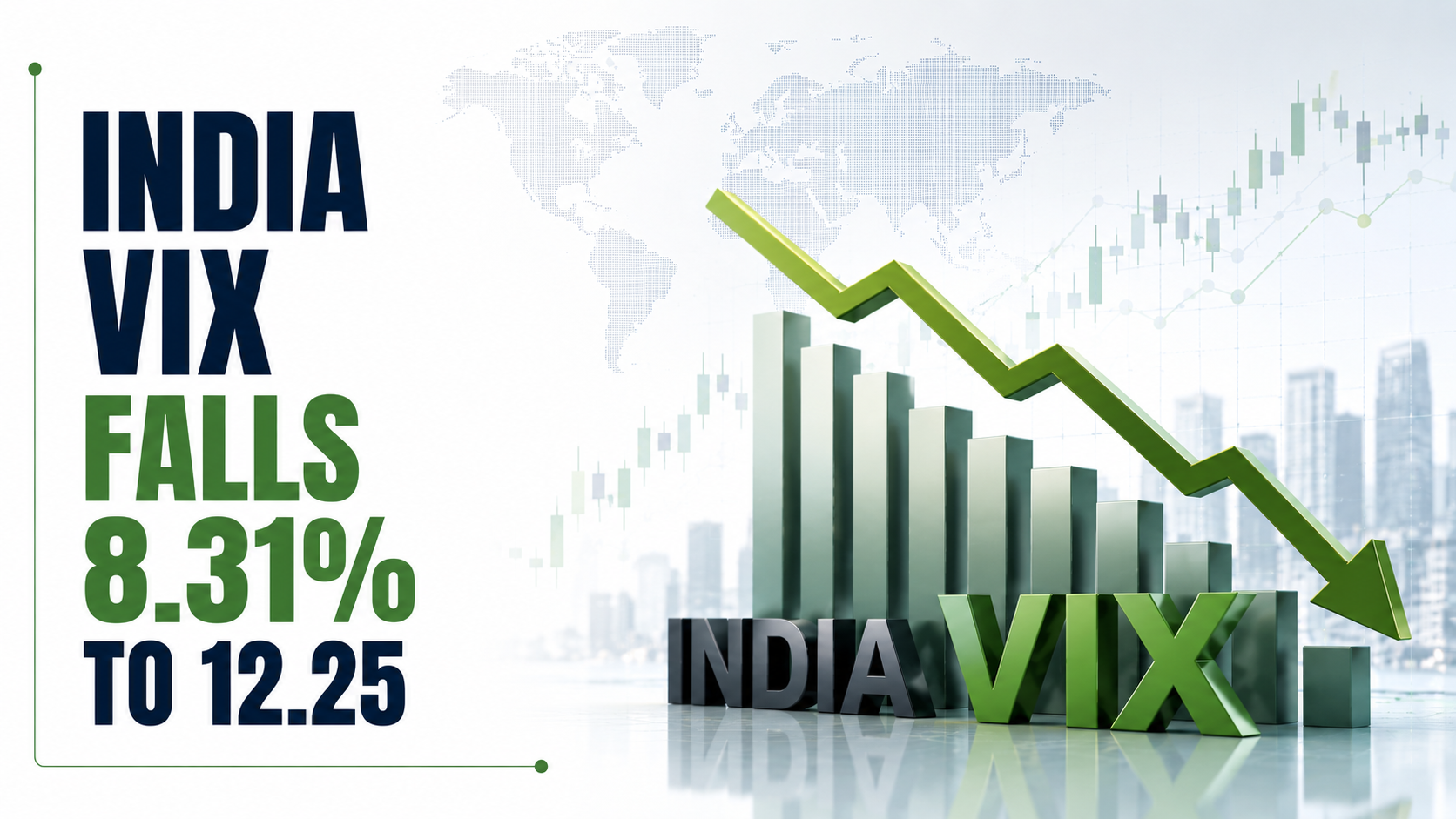
The index closed at 13.28, up 1.03 points or 8.41% from the previous close of 12.25, after touching an intraday high of 13.52 and a low of 9.47.
The rise came as renewed geopolitical tensions in West Asia, stronger crude oil prices and caution ahead of the ongoing first-quarter FY27 earnings season increased demand for hedging in the derivatives market.
The volatility index opened at 12.25 before moving higher through the session. During early trade, India VIX climbed to around 13.14, reflecting a gain of nearly 7.92%, and remained elevated throughout the day.
By the close, the index had extended its gains to 8.41%, while continuing to trade well below its 52-week high of 28.90 but comfortably above its 52-week low of 8.72. Despite Monday’s rise, India VIX has delivered a 40.08% year-to-date return, highlighting the elevated volatility witnessed in 2026.

India VIX Ends at 13.28 After Touching 13.52
India VIX remained firm throughout Monday’s session, with reported levels ranging from 13.14 in opening trade to 13.39 during afternoon trading before settling at 13.28. Minor differences in reported values reflected updates at different times during market hours, but the broader trend remained unchanged, with volatility staying nearly 8% to 10% above the previous session for most of the day.
The sustained rise followed Friday’s decline, when volatility had eased below the 13 level as market conditions stabilised. Monday’s move marked a reversal of that trend, indicating renewed uncertainty during the trading session.
US-Iran Conflict and Oil Above $79 Lift Volatility
Fresh geopolitical developments emerged as the principal driver behind Monday’s rise in India VIX. Reports of renewed military exchanges between the United States and Iran over the weekend heightened concerns over developments in West Asia. According to reports, Tehran targeted US facilities across the Gulf and claimed to have closed the strategic Strait of Hormuz, while the United States Central Command carried out another round of strikes against Iranian positions.
The geopolitical developments also pushed global crude oil prices higher. Brent crude traded above $79 per barrel, renewing concerns over energy costs. As India imports nearly 85% to 90% of its crude oil requirements, rising oil prices remain closely monitored due to their potential impact on inflation, corporate costs and the country’s external balances.
The resurgence in geopolitical risks and higher energy prices contributed to increased hedging activity in the options market, resulting in higher implied volatility and supporting the rise in India VIX throughout the trading session.
Sensex, Nifty Decline Before Recovering Intraday
The rise in India VIX coincided with weakness in domestic benchmark indices during the first half of trading. The Sensex declined by more than 700 points, touching an intraday low of around 76,857, while the Nifty 50 fell by approximately 207 points, briefly testing the 24,000 mark.
The broader market also witnessed pressure, with the combined market capitalisation of BSE-listed companies falling to nearly ₹479 lakh crore from approximately ₹481.75 lakh crore, reducing market value by almost ₹2 lakh crore during the session.
Selling was visible across several sectors, with stocks including InterGlobe Aviation (IndiGo), Tata Steel, Maruti Suzuki, HDFC Bank, Asian Paints and Bajaj Finance among the notable decliners during early trade. In contrast, information technology stocks such as TCS, HCLTech, Tech Mahindra and Infosys traded higher after stronger quarterly earnings from TCS supported the sector.
As the session progressed, benchmark indices recovered a significant portion of their losses. Around the afternoon, the Sensex briefly moved into positive territory while the Nifty pared most of its decline. However, India VIX remained elevated near 13.39 during the same period, indicating that volatility continued despite the recovery in headline indices.
Earnings Season and Hedging Keep Activity Elevated
Apart from geopolitical developments, the ongoing Q1 FY27 earnings season also contributed to higher market activity. Investors tracked quarterly financial results, management commentary, demand trends and margin performance across sectors, leading to increased positioning in the derivatives market.
Market reports also indicated stronger demand for protective put options and increased institutional hedging activity across near-month contracts. Such activity typically results in higher implied volatility, which is directly reflected in India VIX readings.
Monday’s move also followed a volatile sequence over recent trading sessions. India VIX had slipped below 12 on 3 July, marking its lowest level since February. It then surged by nearly 30% on 8 July, reaching an intraday high of around 15.15 amid geopolitical concerns and a sharp equity market decline. The index subsequently fell by more than 6% on 10 July as market conditions stabilised before climbing back above 13 on Monday.
Technical Levels Show Neutral Trend Despite Rise
Technical indicators continued to classify the overall trend in India VIX as Neutral despite Monday’s advance. For the session, the classical pivot point stood at 12.58, while resistance levels were placed at 13.03, 13.82 and 14.27. Support levels were identified at 11.79, 11.34 and 10.55.
Seasonality data also indicates that July has historically been a weaker month for the volatility index. Over the past 18 years, India VIX has delivered negative returns in 15 July observations. The month has recorded a maximum positive change of 7.39% in 2011, while the largest decline stood at 24.22% in 2022. Historically, July has produced an average monthly change of -8.24%.
Volatility Stays Below Historical Stress Levels
Although Monday’s gains marked a notable increase in market volatility, India VIX continued to remain below levels generally associated with extreme market stress. The index ended at 13.28, remaining below the 15 mark despite trading at its highest level of the day at 13.52.
The closing level indicates that volatility increased compared with the previous trading session, while remaining significantly below the 52-week high of 28.90 recorded over the past year.
India VIX closed 8.41% higher at 13.28 on 13 July 2026, with geopolitical developments, higher crude oil prices, earnings season activity and increased hedging contributing to elevated market volatility. Although the index remained above recent levels throughout the session, it finished below the highs recorded earlier this month and continued to trade well below its 52-week peak of 28.90.
Source
- https://www.nseindia.com/reports-indices-historical-vix
Disclaimer
If you have any concerns, questions, or wish to point out any discrepancies in our content, please feel free to write to us at content@hdfcsec.com.
Please Note: The information shared is intended solely for informational purposes and does not make any investment recommendations
Disclaimer
At HDFC SKY*, we take utmost care and due diligence in curating and presenting news and market-related content. However, inadvertent errors or omissions may occasionally occur.
If you have any concerns, questions, or wish to point out any discrepancies in our content, please feel free to write to us at content@hdfcsec.com.
Please Note: The information shared is intended solely for informational purposes and does not make any investment recommendations.
HDFC SKY from HDFC Securities, one of most trusted trading platforms in India, has been recognized with the *Next-Gen Digi Content Awards 2025-26.
 Join Us
 Add as preferred source on Google


More Business News










Open Free Demat Account
Open Free Demat Account












Invest Anytime, Anywhere


By signing up I certify terms, conditions & privacy policy