Nifty 50
- Dr. Reddy's Labs₹1,268.2038.70 (3.15%)
- Shriram Finance₹825.25-39.75 (-4.60%)
- Kotak Mahindra Bank₹440.409.90 (2.30%)
- Tata Consumer ₹924-39.90 (-4.14%)
- JSW Steel₹1,205.5020.00 (1.69%)
- Asian Paints₹2,249.80-57.20 (-2.48%)
- Sun Pharmaceutical₹1,761.3013.30 (0.76%)
- HDFC Life Insurance ₹514-9.75 (-1.86%)
- Adani Ports₹1,71310.30 (0.60%)
- Bajaj Finance₹912-16.95 (-1.82%)
- Cipla₹1,345.507.50 (0.56%)
- Tata Motors PV₹260-4.60 (-1.74%)
- Max Healthcare₹818.753.75 (0.46%)
- Eicher Motors₹6,945-121.00 (-1.71%)
- BSE₹3,24413.20 (0.41%)
- Infosys₹1,137-16.80 (-1.46%)
- Coal India₹397.800.35 (0.09%)
- Hindustan Unilever₹1,789.40-25.30 (-1.39%)
- SBI Life Insurance ₹1,618.80-21.20 (-1.29%)

- Offerings
- Tools & Platforms
Tools & Calculators
- Open API
- Calculators
- SIP Calculator
- CAGR Calculator
- Compound Interest Calculator
- FD Calculator
- RD Calculator
- EPF Calculator
- Retirement Calculator
- HDFC SIP Calculator
- Mutual Fund Return Calculator
- Lumpsum Calculator
- Step Up SIP Calculator
- ETF SIP Calculator
- Brokerage Calculator
- Equity Margin Calculator
- SWP Calculator
- EMI Calculator
- MTF Calculator
- Margin Pledge Calculator
- Algo Strategy
- Markets
Stocks
F&O
Mutual Funds
- More
Weekend Bullion Wrap: Gold & Silver Crash as US Jobs Data Crushes Rate Cut Hopes
Authored By HDFC SKY | Last Modified: Jun 8, 2026 10:01 AM IST
Open Free Demat Account
Open Free Demat Account
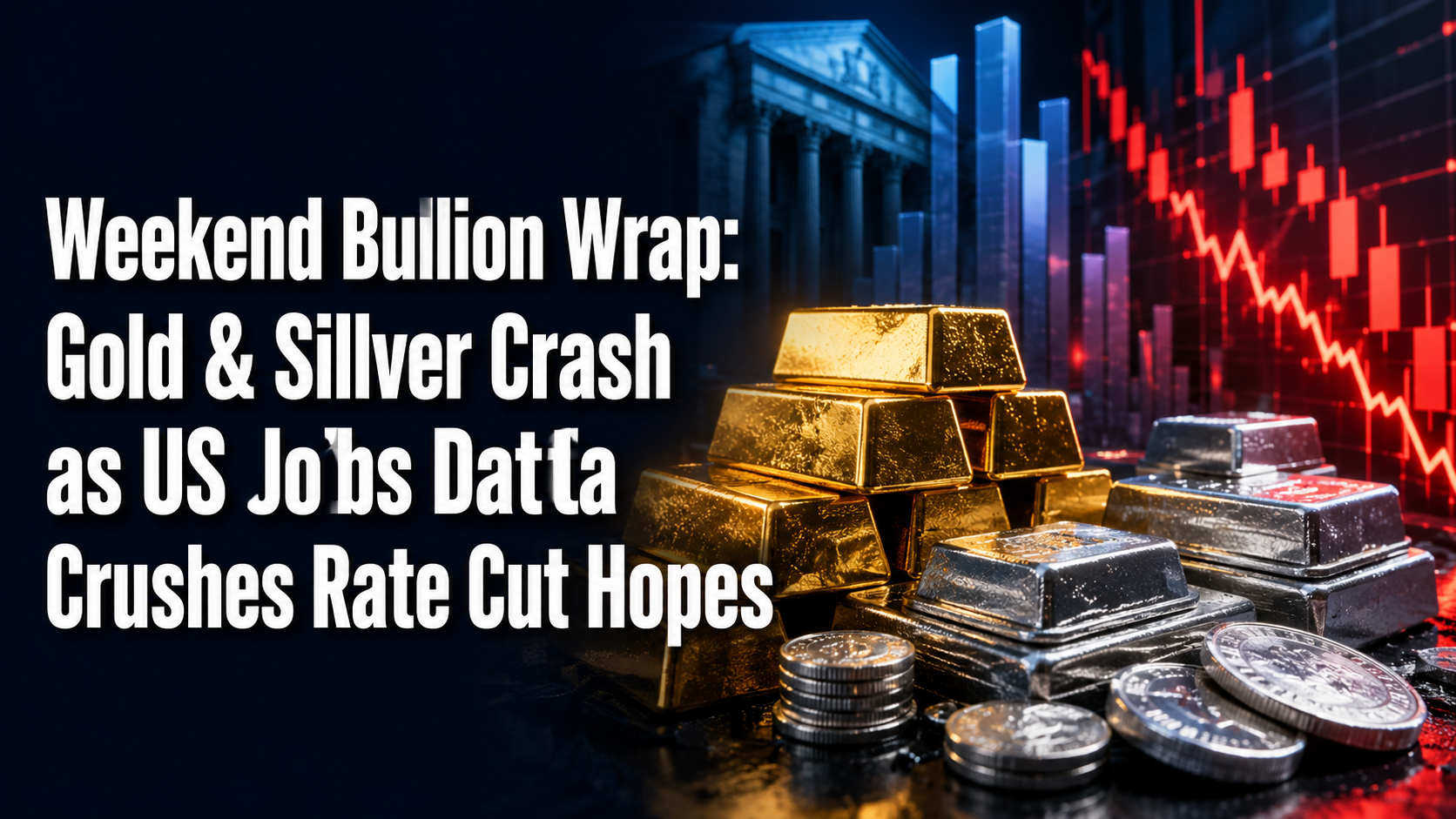
Mumbai, June 6: For precious metals, a turbulent five-day stretch culminated in a decisive sell-off on Friday, leaving both gold and silver nursing steep weekly losses. The trigger was the U.S. May payrolls report, which came in with an addition of 172,000 new jobs, much better than forecasts and leading markets to discount virtually any possibility of Federal Reserve interest rate reductions in 2026. By the close, gold had fallen 1.6% over the week to trade at $4,462.22/oz while silver had slumped over 6% after dropping to as low as $68.63/oz in intraday trading on Friday.
The downturn in India was worsened by declining physical demand – dealers had to offer discounts of as much as $87 per ounce – and a monthly outflow of gold exchange-traded funds for the first time in 12 months. Efforts at imposing stricter silver import restrictions midway through the week failed to prevent silver’s decline.
Global Gold Opens June Near $4,500 As Geopolitics
Gold entered the new month perched near historic highs. On 1 June, spot gold settled at $4,514.30/oz, up 0.18% on the day, supported by long‑standing safe‑haven demand from the West Asian conflict. At the same time, central‑bank data showed that official institutions bought a net 244 tonnes of gold in the first quarter – the fastest accumulation pace in more than a year – which kept a structural bid under the market even as tactical traders grew cautious.
Check list of Gold ETFs in India
However, opposing forces were already gathering. Crude oil remained above $95/barrel amid the unresolved Iran‑Israel‑Lebanon standoff, feeding global inflation fears. Those fears, in turn, reinforced the view that the Federal Reserve would be forced to keep interest rates higher for longer – a headwind for non‑yielding assets such as gold and silver.
Gold Slips 0.3% As US Payrolls Kill Rate‑Cut Bets For 2026
The week’s dominant news event landed on Friday. U.S. non‑farm payrolls rose by 172,000 in May, substantially exceeding consensus expectations. Markets immediately re‑priced the trajectory of monetary policy: the probability of a Fed rate cut in 2026 collapsed, while bond yields surged and the U.S. dollar strengthened across the board.
The reaction in precious metals was swift and severe. Spot gold fell 0.3% to $4,462.22/oz, bringing its weekly decline to 1.6%. U.S. gold futures for August delivery slipped 0.4% to $4,489/oz. But silver – which is more sensitive to industrial demand and interest‑rate expectations – was hit far harder. Spot silver dropped 0.6% to $73.45/oz in regular trade, but during Friday’s session it had plunged as low as $68.63/oz, a $5.34 intraday collapse that marked its weakest level since March.
Also Read: How to Invest in Gold for Beginners: Simple Start Guide
The logic was straightforward: a strong jobs market gives the Fed no reason to ease policy. Higher rates lift Treasury yields, which makes holding non‑yielding gold less attractive; they also strengthen the dollar, making dollar‑priced bullion more expensive for foreign buyers.
Silver Crashes ₹5,600/kg In India As Global Sell‑Off Deepens
The domestic white metal mirrored and at times amplified the international downturn. On 5 June, silver futures on the MCX for July delivery plunged ₹5,811 (‑2.19%) to close at ₹2,58,000/kg. Across major markets, the fall was even more dramatic in intraday terms, with some dealers reporting declines of roughly ₹5,600/kg as global benchmark prices buckled after the U.S. jobs report.
Check list of Silver ETFs in India
The gold‑silver ratio, which measures how many ounces of silver it takes to buy one ounce of gold, widened to approximately 59‑60 – a level that suggests silver remains relatively undervalued against gold compared with historical averages. However, analysts cautioned that silver’s higher volatility makes it far more reactive to changes in interest‑rate expectations, a feature that was starkly on display during Friday’s sell‑off.
India Tightens Silver Import Rules After Record $12bn FY26 Bill
Midweek, the Indian government made a determined bid to rein in soaring silver imports. On 2 June, the Directorate General of Foreign Trade (DGFT) issued a notification placing imports of silver grains, powder and other forms containing 99.9% or more purity under the “restricted” category. Effective immediately, importers – including RBI‑nominated agencies, DGFT‑approved entities and qualified jewellers using the India International Bullion Exchange (IIBX) – must obtain a valid import authorisation before any shipment can enter the country.
Also Read: How to Invest in Silver: 6 Best Ways (2026)
The move followed a record‑breaking fiscal year: India spent $12 billion on silver imports in FY26, a 150% surge from $4.8 billion a year earlier. Even in April 2026 alone, imports jumped 157% year‑on‑year to $411 million. The government cited pressure on foreign‑exchange reserves, elevated oil prices and a weakening rupee as the principal reasons for the clampdown.
While the measure was intended to support the rupee by curbing dollar outflows, it did little to prevent the sharp price decline that followed the Friday jobs data. Domestic silver futures still ended the week down sharply, illustrating that global interest‑rate expectations can overwhelm even major policy interventions.
India’s Gold Demand Fades as Dealers Offer $87 Discounts and Wedding Season Ends
Physical appetite for gold in the world’s second‑largest consumer market showed clear signs of fatigue. According to Reuters, dealers quoted discounts of up to $87 an ounce over official domestic prices during the week, a figure that includes the 15% import duty and 3% sales levy imposed in May. That represented a narrowing from the previous week’s discounts of up to $106/oz, but the market remained firmly a buyer’s market.
A Mumbai‑based bullion dealer told Reuters that retail demand continued to moderate, with jewellery stores reporting lower footfall across the country as the wedding season – a major driver of gold purchases – drew to a close. “Older gold stocks are getting sold in cash at a deeper discount,” said analysts.
In top consumer China, demand was likewise subdued. Bullion traded at premiums of $7‑$10/oz over the global benchmark, down from $9‑$12 the previous week. Bernard Sin, regional director of Greater China at MKS PAMP, noted that anxiety over potential interest‑rate hikes and the impact of rising bond yields appeared to be weighing on investor appetite for gold.
Gold ETFs See First Monthly Outflow in a Year as Investors Lock in Profits
May marked a turning point for India’s gold exchange‑traded funds. According to World Gold Council data, gold ETFs registered net outflows of $61 million (0.4 tonnes) during the month, reducing total holdings to 116.3 tonnes. It was the first net monthly outflow in a year, ending a twelve‑month run of consecutive inflows.
The reversal was triggered by the government’s decision on 13 May to raise import duties on gold and silver from 6% to 15%. That duty hike pushed domestic gold prices sharply higher – rates touched ₹1.64 lakh per 10 grams, their highest in more than two months – prompting investors to lock in gains through ETF redemptions.
Despite May’s outflow, the broader 2026 picture remains strongly positive. Year‑to‑date net inflows into Indian gold ETFs stand at $3.48 billion, suggesting that while tactical profit‑taking has occurred, underlying investor interest in gold as a financial asset remains intact.
RBI Denies $12bn Gold Sale Report; Says Physical Stock Unchanged At 880.52 Tonnes
A major controversy erupted midweek after Bloomberg Economics published an analysis suggesting that the Reserve Bank of India (RBI) had sold roughly $12 billion worth of gold reserves in the two weeks through 22 May – potentially to defend the rupee. The report, citing senior economist Abhishek Gupta, also claimed the central bank had simultaneously bought $7.5 billion in foreign‑currency assets.
The RBI moved swiftly to quash the speculation. On 3 June, it issued a statement categorically rejecting the claims, saying such media reports were “not correct” and that its physical gold holdings remain unchanged at 880.52 tonnes. The central bank noted that the share of gold in India’s foreign‑exchange reserves had risen from 13.92% at end‑September 2025 to 16.70% on 31 March 2026, and further to 16.85% as of 22 May 2026.
Bloomberg later retracted its story, citing a “methodological error” in the analysis. The episode, however, underscored how sensitive markets remain to any suggestion that central banks might be liquidating gold reserves at a time of elevated prices.
Central Banks Bought 244 Tonnes in Q1, Gold Now Accounts for 27% of Global Reserves
While tactical traders sold on the jobs data, strategic buyers – central banks – continued to accumulate gold at a steady pace. Data from the European Central Bank showed that official institutions bought a net 244 tonnes of gold in the first quarter of 2026, marking the fastest pace of accumulation in more than a year. For the first time on record, gold now accounts for 27% of global central‑bank reserves, overtaking U.S. Treasuries at 22%.
Poland led the buying with a 14‑tonne addition in April alone, bringing its year‑to‑date purchases to 45 tonnes. China added 8 tonnes in the same month, the strongest monthly increase since late 2024 and an extension of an extraordinary 18‑month consecutive buying streak. Uzbekistan also posted its fifth consecutive month of net purchases.
Analysts pointed to a structural shift: after the freezing of roughly $300 billion in Russian reserves, several reserve managers are explicitly reducing reliance on counterparties that can be sanctioned or restricted. That has made gold a strategic inventory rather than a purely speculative asset – a factor that may continue to support prices even during periods of U.S. dollar strength.
Over the week, global gold and silver prices were driven primarily by U.S. interest‑rate expectations, with the 172,000 May payrolls number extinguishing hopes of a 2026 Fed cut. In India, weakening physical demand – reflected in $87/oz dealer discounts and $61m ETF outflows – added to downward pressure, while the government’s DGFT silver import authorisation requirement did not prevent a sharp sell‑off after the U.S. jobs report.
Disclaimer
If you have any concerns, questions, or wish to point out any discrepancies in our content, please feel free to write to us at content@hdfcsec.com.
Please Note: The information shared is intended solely for informational purposes and does not make any investment recommendations
Disclaimer
At HDFC SKY*, we take utmost care and due diligence in curating and presenting news and market-related content. However, inadvertent errors or omissions may occasionally occur.
If you have any concerns, questions, or wish to point out any discrepancies in our content, please feel free to write to us at content@hdfcsec.com.
Please Note: The information shared is intended solely for informational purposes and does not make any investment recommendations.
HDFC SKY from HDFC Securities, one of most trusted trading platforms in India, has been recognized with the *Next-Gen Digi Content Awards 2025-26.
 Join Us
 Add as preferred source on Google


More Business News









Open Free Demat Account
Open Free Demat Account










Invest Anytime, Anywhere


By signing up I certify terms, conditions & privacy policy