Nifty 50
- HDFC Bank₹708.2514.45 (2.08%)
- Hindalco Industries₹981.50-32.50 (-3.21%)
- Dr. Reddy's Labs₹1,165.5022.50 (1.97%)
- JSW Steel₹1,265-39.00 (-2.99%)
- Tech Mahindra₹1,54115.20 (1.00%)
- Eicher Motors₹7,530-167.00 (-2.17%)
- HDFC Life Insurance ₹5303.85 (0.73%)
- Tata Steel₹183-3.78 (-2.02%)
- Wipro₹167.401.10 (0.66%)
- ONGC₹232.50-4.77 (-2.01%)
- Kotak Mahindra Bank₹4192.45 (0.59%)
- Maruti Suzuki₹12,400-190.00 (-1.51%)
- InterGlobe Aviation₹4,97328.00 (0.57%)
- Bajaj Finserv₹1,913.50-27.00 (-1.39%)
- Eternal₹323.501.40 (0.43%)
- SBI₹995.70-14.00 (-1.39%)
- ITC₹259.850.55 (0.21%)
- Coal India₹426.40-5.60 (-1.30%)
- Tata Motors PV₹301.100.60 (0.20%)
- Reliance Industries₹1,257.50-16.50 (-1.30%)

- Offerings
- Tools & Platforms
Tools & Calculators
- Open API
- Calculators
- SIP Calculator
- CAGR Calculator
- Compound Interest Calculator
- FD Calculator
- RD Calculator
- EPF Calculator
- Retirement Calculator
- HDFC SIP Calculator
- Mutual Fund Return Calculator
- Lumpsum Calculator
- Step Up SIP Calculator
- ETF SIP Calculator
- Brokerage Calculator
- Equity Margin Calculator
- SWP Calculator
- EMI Calculator
- MTF Calculator
- Margin Pledge Calculator
- Algo Strategy
- Markets
Stocks
F&O
Mutual Funds
- More
The Saradha Chit Fund Collapse - How A Million People Lost Savings and What Regulators Missed
By Aseem Shrivastava | Updated at: Jun 16, 2026 05:34 PM IST
Open Free Demat Account
Open Free Demat Account
The collapse of Saradha Group in 2013 led to many people discovering that the money they had been depositing for years was gone. Some had invested for their children’s education while others were saving for future expenses and retirement.
The collapse did not happen overnight as the group had been raising money for years before the scheme ran out of funds. Understanding how the operation worked can help you identify similar warning signs before committing your money.
How the Scheme Raised Money
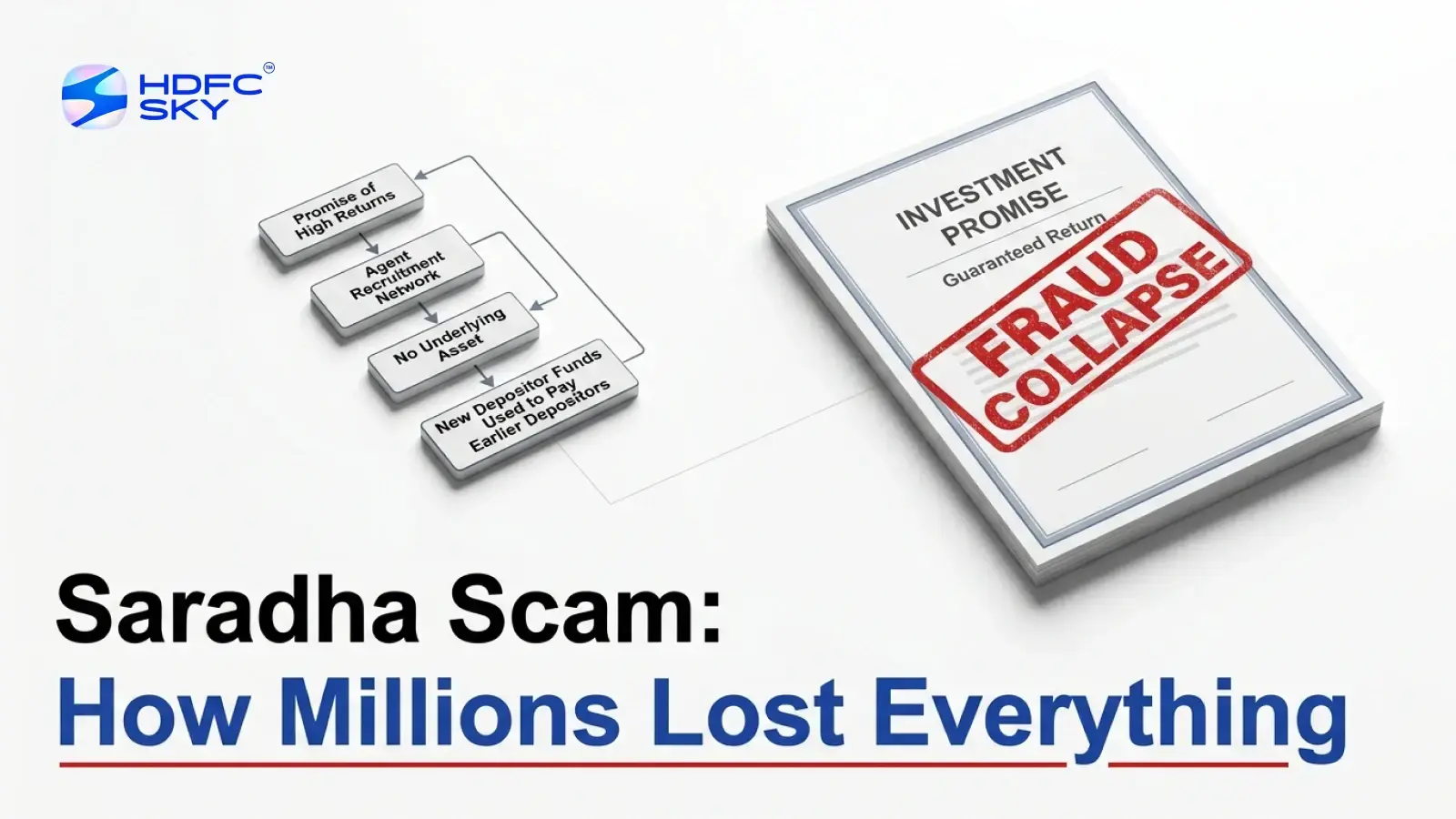
The Saradha Group offered investment plans through a network of agents who collected money from people and promised returns after a fixed period. The process appeared simple as people deposited money regularly and received documents acknowledging the investment. Many people continued investing because payments to existing participants were being made on time.
The problem was that the business relied heavily on new deposits. The system could continue making payouts as long as fresh money kept coming in. But the structure collapsed once the flow of new money slowed.
Also Read: https://hdfcsky.com/blogs/market-decoded-by-sky/what-the-buffett-indicator-says-about-indian-market-valuations-right-now
Why People Trusted the Company
The people collecting money were familiar faces within the community. Trust in the agent mattered more than understanding the investment itself. The group also built visibility through newspapers and television channels. This created the impression that the company was running successful businesses. Investing through Saradha felt easier than dealing with traditional financial institutions. The promised returns also encouraged more deposits.
What Regulators Failed to Catch Early
The Saradha case exposed gaps in regulatory oversight. The group operated through multiple entities that made supervision more complicated. Questions were later raised about whether warning signs should have been identified earlier. Fundraising from the public combined with return promises that appeared difficult to sustain should have attracted closer scrutiny.
The case also highlighted the need for better coordination between different authorities responsible for monitoring companies that collect money from the public.
Lessons You Can Learn from the Saradha Collapse
It is crucial to understand how your returns will be generated. You should proceed with caution if the explanation is unclear or difficult to verify. It is also necessary is to verify whether the entity collecting your money is authorised to offer the investment product being marketed. Do not rely solely on advertisements or local agents.
Be cautious whenever an investment promises high returns without explaining the risks involved. Taking time to verify the details before investing can help you avoid losses that may be difficult to recover later.



Open Free Demat Account
Open Free Demat Account
Popular Posts
- 3 Things New Investors Should Check Before Opening a Demat AccountLast Updated: Jul 15, 2026
- 5 Features Protecting Your Wealth on HDFC SKYLast Updated: Jul 1, 2026
- Let’s view more exciting Posts
Popular Post from Fraud Files by Sky
- The Roofit Industries Pump And Dump - What the SEBI Order Reveals About Stock ManipulationLast Updated: Jun 18, 2026
- Harshad Mehta’s Bank Receipt Scam - the Blueprint That Modern Fraudsters StillLast Updated: Jun 16, 2026
- The Vaswani Industries Penny Stock Scam: Step By Step Anatomy of a Retail Investor TrapLast Updated: Jun 18, 2026
- Bhansali Finance: How a Promoter Ran a INR 1200 Crore Scam Through Layered Shell CompaniesLast Updated: Jun 18, 2026
- The ABG Shipyard Bank Fraud: Red Flags That Auditors and Investors Overlooked for YearsLast Updated: Jun 18, 2026
- Let's view more exciting Post!
Popular Post from Blogs
- “Bounce Back” Theme Gains Traction in 2026Last Updated: Apr 8, 2026
- 5 Takeaways for Tax Payers from the Budget 2025Last Updated: Jan 29, 2026
- Let’s view more exciting Posts


Invest Anytime, Anywhere


By signing up I certify terms, conditions & privacy policy