Nifty 50
- Eternal₹317.4012.95 (4.25%)
- Shriram Finance₹865-35.90 (-3.98%)
- Apollo Hospitals₹7,730125.50 (1.65%)
- Adani Enterprises₹2,477-73.00 (-2.86%)
- ONGC₹227.502.50 (1.11%)
- JSW Steel₹1,185.50-34.50 (-2.83%)
- Asian Paints₹2,30722.20 (0.97%)
- Jio Financial ₹205.03-5.77 (-2.74%)
- TCS₹2,53023.10 (0.92%)
- Tata Steel₹167.67-4.66 (-2.70%)
- UltraTech Cement₹11,05092.00 (0.84%)
- Adani Ports₹1,702.70-47.30 (-2.70%)
- Maruti Suzuki₹11,23060.00 (0.54%)
- Tech Mahindra₹1,790-39.10 (-2.14%)
- Cipla₹1,3387.10 (0.53%)
- Tata Motors PV₹264.60-5.40 (-2.00%)
- Reliance Industries₹1,1905.50 (0.46%)
- Hindalco Industries₹869.85-15.75 (-1.78%)
- Axis Bank₹1,217.505.50 (0.45%)
- Trent₹2,727.50-48.30 (-1.74%)

- Offerings
- Tools & Platforms
Tools & Calculators
- Open API
- Calculators
- SIP Calculator
- CAGR Calculator
- Compound Interest Calculator
- FD Calculator
- RD Calculator
- EPF Calculator
- Retirement Calculator
- HDFC SIP Calculator
- Mutual Fund Return Calculator
- Lumpsum Calculator
- Step Up SIP Calculator
- ETF SIP Calculator
- Brokerage Calculator
- Equity Margin Calculator
- SWP Calculator
- EMI Calculator
- MTF Calculator
- Margin Pledge Calculator
- Algo Strategy
- Markets
Stocks
F&O
Mutual Funds
- More
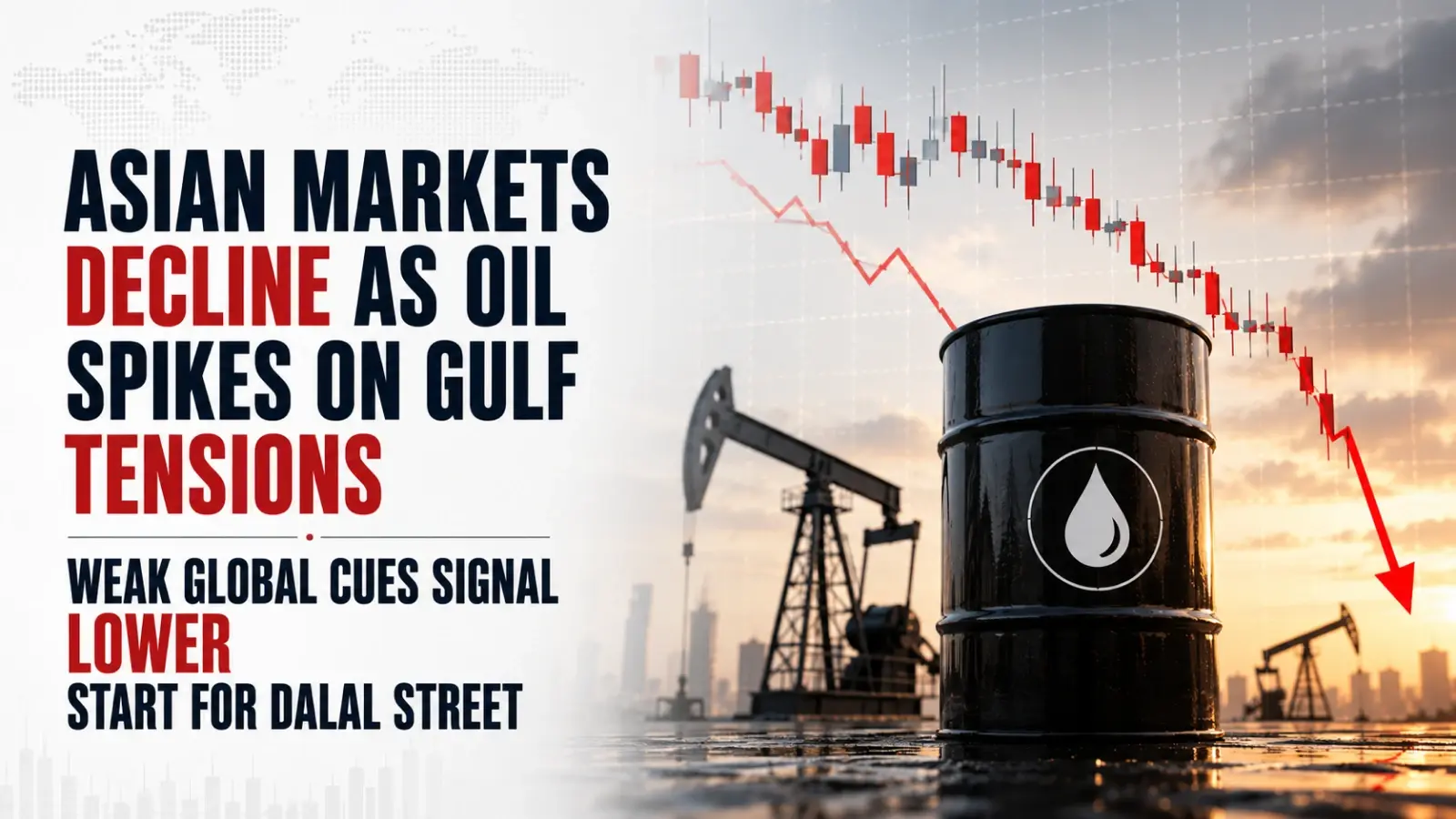
Asian Markets Decline As Oil Spikes On Gulf Tensions; Weak Global Cues Signal Lower Start For Dalal Street
Authored By HDFC SKY | Last Modified: Jul 14, 2026 11:21 AM IST
Open Free Demat Account
Open Free Demat Account
Mumbai, July 14: Indian benchmark indices are likely to open lower on Tuesday, tracking declines in Asian equities after Wall Street ended lower overnight amid renewed geopolitical tensions in the Middle East. A sharp rise in crude oil prices, firmer US Treasury yields and persistent risk aversion are expected to keep investors on edge, particularly ahead of key US inflation data due later in the day.

Asian markets decline; investors assess geopolitical risks
Asian equities traded lower, with investors weighing the impact of escalating hostilities between the US and Iran and the implications for global growth and inflation.
Japan’s Nikkei traded 0.8% lower, while South Korean equities went down 1.5%. Broader sentiment remained fragile as investors reacted to losses on Wall Street overnight and monitored developments in the Middle East. MSCI’s broadest index of Asia-Pacific shares outside Japan was down 2.3%. US stock futures also traded lower in Asian hours, indicating that risk appetite remained subdued.
The latest bout of volatility followed US President Donald Trump’s move to tighten pressure on Iran by announcing a blockade on Iranian shipping and proposing levies on cargo transiting the Strait of Hormuz, raising fears of disruptions to one of the world’s most critical oil trade routes.
Oil jumps to one-month high
Crude oil prices extended their rally, with Brent crude climbing to a one-month high at around $85 per barrel after surging in the previous session as traders priced in the possibility of supply disruptions from the Gulf region.
The rally in oil is particularly significant for India, one of the world’s largest crude importers. Higher crude prices could increase inflationary pressures, widen the current account deficit and weigh on the rupee. The move is also likely to keep oil marketing companies, aviation stocks and other fuel-intensive sectors in focus, while upstream oil and gas companies could benefit from firmer crude prices.
Higher oil prices also pushed US Treasury yields higher as investors reassessed the outlook for inflation and monetary policy. Market participants are now awaiting the US Consumer Price Index (CPI) data for fresh clues on the Federal Reserve’s rate trajectory.
Wall Street ends lower
US equities came under selling pressure on Monday as geopolitical concerns triggered a broad risk-off move across financial markets.
The S&P 500 (0.79% down), Nasdaq Composite (1.55%) and Dow Jones Industrial Average (0.26%) all ended lower, with technology shares leading declines. Semiconductor stocks remained under pressure, while rising bond yields and higher oil prices further dented investor sentiment.
The renewed uncertainty prompted investors to move toward traditional safe-haven assets, supporting the US dollar while weighing on riskier assets globally. A stronger dollar and elevated crude prices could also pose challenges for emerging market currencies and foreign portfolio flows.
European shares flat as tensions overshadow markets
European markets ended flat on Monday as investors assessed the implications of renewed US-Iran tensions.
Energy shares, however, outperformed the broader market, tracking the sharp rally in crude oil prices.
What it means for Indian markets
The global backdrop points to a lower start for Indian equities despite domestic resilience in previous session.
Apart from developments in the Middle East, traders will closely monitor crude oil prices, the rupee, foreign institutional investor flows and the US inflation data later in the day. Any further escalation in geopolitical tensions or a continued rise in oil prices could increase volatility across global markets.
At the same time, domestic investors are expected to remain focused on the ongoing June-quarter earnings season, with stock-specific action likely to continue alongside global macro developments. Overall, elevated volatility is likely to persist as markets balance geopolitical risks, inflation concerns and expectations around global interest rates.
Source
- Exchanges
Disclaimer
If you have any concerns, questions, or wish to point out any discrepancies in our content, please feel free to write to us at content@hdfcsec.com.
Please Note: The information shared is intended solely for informational purposes and does not make any investment recommendations
Disclaimer
At HDFC SKY*, we take utmost care and due diligence in curating and presenting news and market-related content. However, inadvertent errors or omissions may occasionally occur.
If you have any concerns, questions, or wish to point out any discrepancies in our content, please feel free to write to us at content@hdfcsec.com.
Please Note: The information shared is intended solely for informational purposes and does not make any investment recommendations.
HDFC SKY from HDFC Securities, one of most trusted trading platforms in India, has been recognized with the *Next-Gen Digi Content Awards 2025-26.
 Join Us
 Add as preferred source on Google


More Markets News






Open Free Demat Account
Open Free Demat Account








Invest Anytime, Anywhere


By signing up I certify terms, conditions & privacy policy