Nifty 50
- Bajaj Auto₹10,102324.00 (3.31%)
- Tech Mahindra₹1,465.30-48.80 (-3.22%)
- Dr. Reddy's Labs₹1,223.8026.80 (2.24%)
- Bharti Airtel₹1,768.80-36.30 (-2.01%)
- Bharat Electronics₹374.956.80 (1.85%)
- ITC₹261.15-4.85 (-1.82%)
- Mahindra & Mahindra₹2,835.7039.50 (1.41%)
- SBI₹943.25-15.85 (-1.65%)
- BSE₹3,329.5042.30 (1.29%)
- NTPC₹308.45-3.55 (-1.14%)
- JSW Steel₹1,181.9013.90 (1.19%)
- ICICI Bank₹1,342.70-12.30 (-0.91%)
- Eicher Motors₹7,12878.00 (1.11%)
- Hindustan Unilever₹1,842.10-14.60 (-0.79%)
- Tata Steel₹175.131.33 (0.77%)
- Axis Bank₹1,250.10-9.00 (-0.71%)
- Trent₹2,940.5022.30 (0.76%)
- L&T₹3,682.60-20.70 (-0.56%)
- InterGlobe Aviation₹4,860.6027.60 (0.57%)
- Reliance Industries₹1,164-6.30 (-0.54%)

- Offerings
- Tools & Platforms
Tools & Calculators
- Open API
- Calculators
- SIP Calculator
- CAGR Calculator
- Compound Interest Calculator
- FD Calculator
- RD Calculator
- EPF Calculator
- Retirement Calculator
- HDFC SIP Calculator
- Mutual Fund Return Calculator
- Lumpsum Calculator
- Step Up SIP Calculator
- ETF SIP Calculator
- Brokerage Calculator
- Equity Margin Calculator
- SWP Calculator
- EMI Calculator
- MTF Calculator
- Margin Pledge Calculator
- Algo Strategy
- Markets
Stocks
F&O
Mutual Funds
- More
Oil Price Today, August 13, 2026: Crude Falls Over 1% To $87.9 Per Barrel As Demand Forecasts Weaken
Authored By HDFC SKY | Last Modified: Aug 13, 2026 10:33 AM IST
Open Free Demat Account
Open Free Demat Account
Mumbai, August 13: Oil prices fell more than 1% on Thursday as weaker global demand expectations outweighed concerns over supply disruptions stemming from the U.S.-Israeli war on Iran. Brent crude futures fell 1.2% to $87.9 a barrel, while U.S. West Texas Intermediate crude declined 1.4% to $82. The decline came even as the ongoing conflict and attacks on key shipping routes continued to raise concerns over Middle Eastern oil supplies.

OPEC Cuts 2026 Oil Demand Growth Forecast
Pressure on crude prices intensified after the Organization of the Petroleum Exporting Countries lowered its forecast for global oil demand growth in 2026 to 580,000 barrels per day in its latest monthly oil market report.
The revision underlined growing concerns over the impact of the conflict, higher fuel prices and supply disruptions on global consumption. The International Energy Agency also turned more bearish, forecasting that global oil consumption will contract by 1.6 million barrels per day this year, compared with its previous estimate of a 1 million bpd decline.
The weaker demand outlook has emerged as a key counterweight to the supply risks generated by the conflict, preventing crude prices from gaining further despite heightened geopolitical uncertainty.
US Crude Inventories Surge
Oil prices also came under pressure after U.S. crude inventories recorded their largest weekly increase since January 2023.
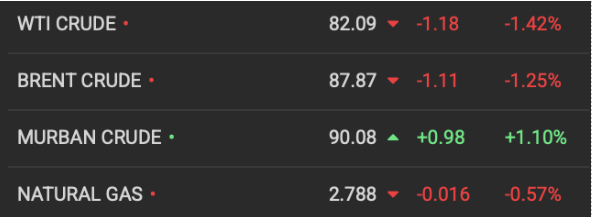
Both benchmarks declined as lower demand forecasts depressed sentiment with Middle East uncertainty providing a floor to prices. Source: Oilprice.com
Commercial crude stockpiles jumped by 17.4 million barrels to 424.4 million barrels in the week ended August 7, according to the U.S. Energy Information Administration. The build was significantly larger than market expectations.
The inventory increase, which took U.S. crude stocks to their highest level since June 5, was partly linked to a sharp decline in crude exports. The unexpected build has added to concerns about near-term demand and helped push oil prices lower.
Also Read: How To Invest In Crude Oil
US-Iran Talks Remain Deadlocked
Despite the bearish demand and inventory signals, the downside in crude remains constrained by geopolitical risks. Talks between the United States and Iran aimed at ending the war in the Gulf remain deadlocked, with a senior Iranian source saying there had been no progress on efforts to revive an interim agreement reached in June.
The lack of progress has kept the possibility of further disruptions to regional oil supplies firmly in focus. Traders are also monitoring the security situation around key energy corridors, where any escalation could quickly reverse the recent decline in crude prices.
Strait of Hormuz Risk Keeps Oil Volatile
Attacks on shipping in the Strait of Hormuz and Bab el-Mandeb Strait have highlighted the vulnerability of Middle Eastern oil and gas flows. Both waterways are critical routes for energy exports, making any disruption a significant concern for global markets.
The deterioration in maritime security has also made it harder for traders to assess actual supply levels. Some vessels have reportedly switched off their tracking signals, reducing visibility over shipping movements and adding uncertainty to the market.
India Could Benefit From Lower Crude Prices
For India, the fall in international crude prices is a positive development. Lower oil prices can reduce pressure on the country’s import bill and help contain inflation, while also supporting margins for companies that are sensitive to energy and transportation costs.
However, the benefit for Indian markets could prove temporary if the geopolitical situation deteriorates. A disruption to supplies through the Strait of Hormuz could trigger a sharp rebound in crude prices, increasing India’s import costs and putting pressure on inflation, the rupee and corporate profitability.
Oil Outlook Remains Caught Between Demand And Supply Risks
The crude market is currently being pulled in two directions. Weaker demand forecasts and a sharp increase in U.S. inventories are weighing on prices, while the unresolved U.S.-Iran conflict and threats to major shipping routes are providing a floor.
For now, the demand concerns appear to have taken the upper hand, pushing Brent below $88 a barrel. But with geopolitical risks still elevated, traders are likely to remain highly sensitive to developments in the Gulf, shipping disruptions and any signs of a change in the U.S.-Iran negotiations.
Source
- oilprice.com
Disclaimer
If you have any concerns, questions, or wish to point out any discrepancies in our content, please feel free to write to us at content@hdfcsec.com.
Please Note: The information shared is intended solely for informational purposes and does not make any investment recommendations
Disclaimer
At HDFC SKY*, we take utmost care and due diligence in curating and presenting news and market-related content. However, inadvertent errors or omissions may occasionally occur.
If you have any concerns, questions, or wish to point out any discrepancies in our content, please feel free to write to us at content@hdfcsec.com.
Please Note: The information shared is intended solely for informational purposes and does not make any investment recommendations.
HDFC SKY from HDFC Securities, one of most trusted trading platforms in India, has been recognized with the *Next-Gen Digi Content Awards 2025-26.
 Join Us
 Add as preferred source on Google


More Business News







Open Free Demat Account
Open Free Demat Account











Invest Anytime, Anywhere


By signing up I certify terms, conditions & privacy policy