Nifty 50
- Reliance Industries₹1,300135.10 (11.60%)
- Infosys₹1,161-24.00 (-2.03%)
- Tata Steel₹177.379.77 (5.83%)
- ICICI Bank₹1,387.40-10.60 (-0.76%)
- JSW Steel₹1,309.9063.90 (5.13%)
- Dr. Reddy's Labs₹1,342-10.00 (-0.74%)
- Coal India₹40819.00 (4.88%)
- Kotak Mahindra Bank₹458.35-3.25 (-0.70%)
- Shriram Finance₹863.3540.20 (4.88%)
- Axis Bank₹1,209-8.00 (-0.66%)
- Jio Financial ₹213.258.75 (4.28%)
- BSE₹3,490-20.40 (-0.58%)
- ONGC₹234.839.44 (4.19%)
- HDFC Life Insurance ₹522.25-2.65 (-0.50%)
- UltraTech Cement₹11,387342.00 (3.10%)
- Sun Pharmaceutical₹1,770-7.70 (-0.43%)
- Hindalco Industries₹911.4026.70 (3.02%)
- Tech Mahindra₹1,786.90-3.90 (-0.22%)
- Max Healthcare₹884.7524.75 (2.88%)
- Bajaj Auto₹10,339-11.00 (-0.11%)

- Offerings
- Tools & Platforms
Tools & Calculators
- Open API
- Calculators
- SIP Calculator
- CAGR Calculator
- Compound Interest Calculator
- FD Calculator
- RD Calculator
- EPF Calculator
- Retirement Calculator
- HDFC SIP Calculator
- Mutual Fund Return Calculator
- Lumpsum Calculator
- Step Up SIP Calculator
- ETF SIP Calculator
- Brokerage Calculator
- Equity Margin Calculator
- SWP Calculator
- EMI Calculator
- MTF Calculator
- Margin Pledge Calculator
- Algo Strategy
- Markets
Stocks
F&O
Mutual Funds
- More
Oil Prices Today, September 18, 2026: Brent Falls 1% To $103.8 Per Barrel As Supply Disruption Fears Ease; Middle East Risks Persist
Authored By HDFC SKY | Last Modified: Sep 18, 2026 10:31 AM IST

Open Free Demat Account
Open Free Demat Account
Mumbai, September 18: Oil prices extended their decline for a third straight session on Friday as expectations that alternative routes could help keep Middle Eastern crude flowing outweighed concerns over fresh strikes between Saudi Arabia and Yemen’s Iran-backed Houthis. Brent crude futures fell 0.9% to $103.8 a barrel, while US West Texas Intermediate crude declined 0.8% to $101.1 a barrel. Both benchmarks had dropped about 1% in the previous session.

Crude Prices Extend Decline
The latest fall in oil prices comes after crude had climbed to around four-month highs earlier this week, driven by concerns over disruptions to Saudi Arabia’s oil infrastructure. The market has remained highly sensitive to developments in the Middle East as attacks on critical energy infrastructure have raised the prospect of tighter global supplies.
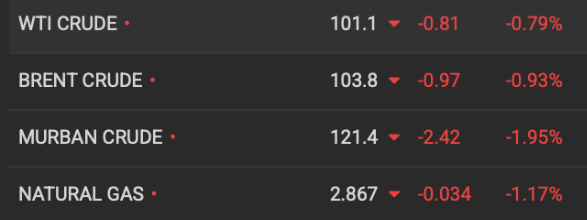
Both contracts fell as supply concerns eased. Source: oilprice.com
Three pumping stations along Saudi Arabia’s East-West pipeline have been damaged, according to satellite imagery and industry sources cited by Reuters. The pipeline is an important route for moving Saudi crude to the Red Sea, allowing exports to reach international markets without passing through the Strait of Hormuz.
A prolonged shutdown of the pipeline to Yanbu could potentially cut off as much as 4% of global oil supply, according to traders. However, expectations that Saudi Arabia can restore part of the pipeline’s capacity and use alternative routes have helped ease some of the immediate supply concerns.
Also Read: How To Invest In Crude Oil
Saudi Arabia Looks For Alternative Export Routes
Saudi Arabia is seeking to restore around half the capacity of its East-West pipeline within days, according to a Bloomberg report cited by Reuters. The kingdom has also offered additional crude cargoes to Asian refiners through ship-to-ship transfers off Oman’s Sohar port.
The alternative shipping arrangements could help compensate for some of the disruption caused by the attacks on the pipeline. US Energy Secretary Chris Wright has also said crude should begin flowing through the damaged pipeline within days.
The developments have helped shift investor attention away from the immediate supply shock, although the broader geopolitical risks remain unresolved. Oil prices remain above $100 a barrel, reflecting the continued risk premium attached to Middle East energy supplies.
Fresh Saudi-Houthi Strikes Add To Uncertainty
The decline in crude prices came despite fresh military exchanges between Saudi Arabia and the Houthis across their border on Thursday. The strikes have expanded the Middle East conflict and renewed concerns over the security of regional energy infrastructure and shipping routes.
The Strait of Hormuz remains another key point of concern for the oil market.
Any sustained disruption around the Strait of Hormuz could have a significant impact on global oil flows because of its importance to crude and other energy shipments. The latest developments therefore leave traders balancing signs of improving physical supply with the possibility of further disruptions.
Oil Market Outlook Remains Uncertain
The conflicting signals have made the outlook for crude particularly difficult to assess.
For India, the retreat in Brent crude from recent highs provides some relief, particularly as the country remains heavily dependent on imported oil. However, Brent and WTI prices above $100 a barrel continue to pose risks for the country’s import bill, inflation and the rupee.
Lower crude prices can also ease pressure on sectors such as aviation, paints, chemicals and logistics, while refiners and oil marketing companies may respond differently depending on refining margins, inventory costs and domestic pricing. The direction of crude through the coming sessions is likely to remain closely linked to developments around Saudi oil infrastructure, the Strait of Hormuz and the wider Middle East conflict.
Source
- oilprice.com
Disclaimer
The information shared here is intended solely for informational and educational purposes and does not constitute investment recommendations. While we practice strict due diligence in curating daily market data, readers must perform independent research before trading. To flag any real-time data discrepancies or content concerns, please write to us at content@hdfcsec.com.
 Join Us
 Add as preferred source on Google


More Business News










Open Free Demat Account
Open Free Demat Account












Invest Anytime, Anywhere


By signing up I certify terms, conditions & privacy policy