Nifty 50
- Bajaj Finance₹942.1016.10 (1.74%)
- HDFC Life Insurance ₹522.05-17.60 (-3.26%)
- Cipla₹1,330.9016.90 (1.29%)
- Nestle₹1,185.20-38.70 (-3.16%)
- UltraTech Cement₹10,958109.00 (1.00%)
- Eternal₹304.45-7.90 (-2.53%)
- ICICI Bank₹1,398.5013.50 (0.97%)
- Tata Motors PV₹270-5.70 (-2.07%)
- Bajaj Auto₹10,15583.00 (0.82%)
- Reliance Industries₹1,184.50-24.50 (-2.03%)
- Sun Pharmaceutical₹1,75812.90 (0.74%)
- HDFC Bank₹694.05-12.90 (-1.82%)
- SBI₹9707.00 (0.73%)
- Bharat Electronics₹364.50-6.70 (-1.80%)
- BSE₹3,26516.70 (0.51%)
- Adani Enterprises₹2,550-44.50 (-1.72%)
- Bharti Airtel₹1,8953.30 (0.17%)
- Trent₹2,775.80-46.20 (-1.64%)
- Axis Bank₹1,2122.00 (0.17%)
- Asian Paints₹2,284.80-34.60 (-1.49%)

- Offerings
- Tools & Platforms
Tools & Calculators
- Open API
- Calculators
- SIP Calculator
- CAGR Calculator
- Compound Interest Calculator
- FD Calculator
- RD Calculator
- EPF Calculator
- Retirement Calculator
- HDFC SIP Calculator
- Mutual Fund Return Calculator
- Lumpsum Calculator
- Step Up SIP Calculator
- ETF SIP Calculator
- Brokerage Calculator
- Equity Margin Calculator
- SWP Calculator
- EMI Calculator
- MTF Calculator
- Margin Pledge Calculator
- Algo Strategy
- Markets
Stocks
F&O
Mutual Funds
- More
Crude Falls 5.3% for the Week as Hormuz Flows Rise and Iran Sanctions Fail to Boost Markets
Authored By HDFC SKY | Last Modified: Aug 29, 2026 10:32 AM IST
Open Free Demat Account
Open Free Demat Account
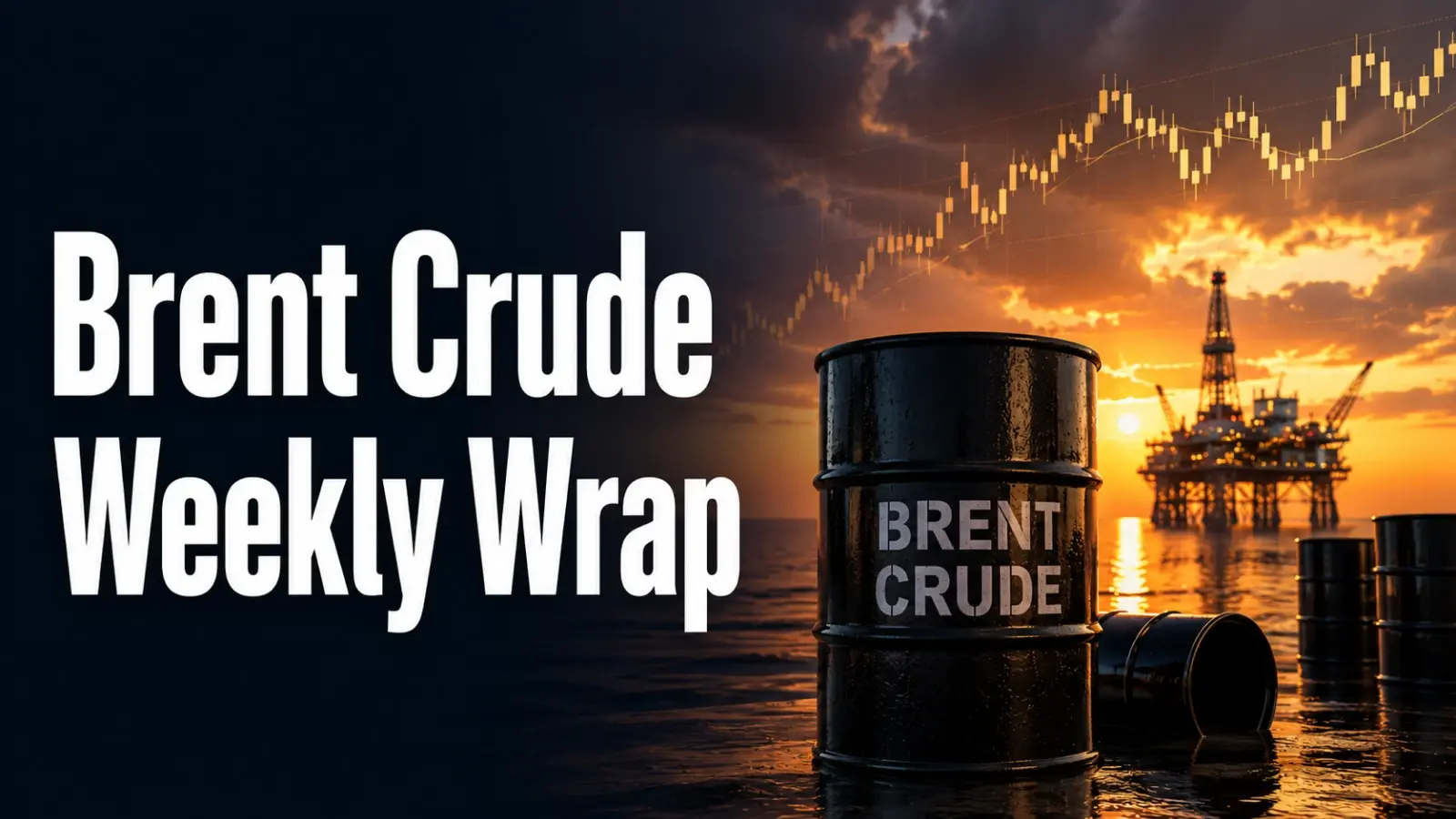
Mumbai, Aug 29: Crude oil markets, both at the domestic level and internationally, experienced a highly turbulent week with prices eventually settling down sharply at the end of this five-day period. Brent crude oil futures are set to end the two-week winning streak with a weekly loss of 5.3%, whereas WTI crude oil futures will lose 4.3%.
This decline was fueled by a combination of geopolitical developments, supply fundamentals and economic factors, as oil markets ignored the fresh US sanctions against Iran even as they priced in the rise in oil shipments via the key Strait of Hormuz.
On the other hand, the domestic retail petroleum scene remained immune to such fluctuations in crude oil prices, with petrol and diesel rates remaining unchanged in India’s major cities.
Brent Crude Opens Week at $92.17 Before Erasing Gains in Brutal Sell-Off
The trading week commenced with Brent crude oil futures opening at $93.55 per barrel on Monday, 24 August, reaching a daily high of $93.81 before settling at $92.17 with robust volume of 179,500 contracts. WTI crude oil futures, meanwhile, slipped to $85 per barrel to start the week, as persistent Middle East tensions provided some underlying support.
However, this early stability proved fleeting. By Monday itself, Brent crude oil prices fell roughly 2.5% to $92.06, while WTI eased a similar amount to $84.89. The trigger for this sharp decline was the US Treasury’s announcement of new economic sanctions targeting entities doing business with Iran, including those in China. In a surprising market reaction, crude oil markets largely brushed off the news.
Also Read: How to invest in crude oil
Market participants interpreted the measures as an economic pressure campaign rather than a direct risk to physical oil production, effectively removing some of the geopolitical risk premium that had been built into energy markets. The focus swiftly shifted to upcoming inventory reports, with traders watching closely for signs of domestic crude builds.
WTI Crude Plunges Over 4% to $81.54 as Market Shrugs Off New Iran Sanctions
The bearish momentum intensified on Monday as WTI crude oil futures saw significant downward pressure, dropping over 4% to hit $81.54, their lowest level since mid-August. This represented one of the most aggressive single-session declines in recent weeks, as the market’s interpretation of the US sanctions as purely economic rather than physically disruptive removed a substantial layer of geopolitical risk premium.
The market’s reaction underscored a growing sentiment that despite the ongoing conflict between the US and Iran, physical oil supplies remained largely unaffected. Adding to the downward pressure, there were increasing signs that additional oil was flowing through the Strait of Hormuz. ING had assumed around 5 million barrels of oil a day were exiting the waterway, but some suggested the figure could be as high as 6 million to 8 million barrels a day. As the conflict persisted, producers were adapting to new realities and becoming increasingly comfortable navigating the strait, though analysts noted the market remained “clearly still far from normalization”.
Brent Plunges to $86.22 Intraday as Selling Pressure Intensifies Mid-Week
The selling pressure continued unabated through the middle of the trading week. On Tuesday, 25 August, Brent crude opened at $92.11, hit a high of $92.90, but then collapsed to an intraday low of $86.11 before settling at $88.58 on massive volume of 267,948 contracts. This represented a staggering $6.79 swing from the day’s high to low, reflecting extreme volatility and aggressive profit-taking.
Wednesday, 26 August, saw further declines, with Brent opening at $87.04, reaching a high of $89.71, but plunging to a low of $85.41 before closing at $87.84 on volume of 170,146 contracts. The cumulative effect of these sessions pushed Brent firmly below the $90 psychological threshold. The macroeconomic environment added to the headwinds, as the Federal Reserve’s preferred inflation gauge, the Personal Consumption Expenditures (PCE) price index, rose by 0.2% in July, adding to pressure on Treasury yields that had jumped to multiyear highs. Higher yields typically strengthen the dollar and make dollar-denominated commodities like oil more expensive for holders of foreign currencies.
Brent Recovers to $89.70 on Thursday Before Settling at $89.56 on Friday
A sharp late-session rebound on Thursday, 27 August, provided some respite for bulls. Brent crude opened at $87.27, hit a high of $90.34, and climbed to a low of $86.22 before closing at $89.70 on volume of 123,405 contracts. This recovery pushed Brent back above the $89 level, though it remained below the key $90 mark.
Also Read: Russia-Ukraine vs US-Iran War: A Tale of Two Oil Shocks and Divergent Recovery Paths
By Friday, 28 August, Brent crude oil price sat at $90.07 per barrel in early trading, while WTI crude oil price held at $83.79. However, the recovery proved short-lived. Brent crude futures fell 0.3%, down by 25 cents, to trade around $89.45 a barrel by 0035 GMT.
Meanwhile, WTI crude futures also fell 0.3%, down by 22 cents, to trade around $83.31. The final settlement for Friday showed Brent at $89.56, with an intraday range of $88.82 to $89.82. Both benchmarks are poised to snap their winning streak and end the week lower, with Brent down 5.3% and WTI falling 4.3%.
Hormuz Diplomacy Stalls as US Shows No Interest in Reviving June Memorandum
Geopolitical developments surrounding the Strait of Hormuz remained a central focus throughout the week, though their impact on prices was increasingly muted. Hopes that diplomatic efforts between Oman and Iran would lead to a reopening of the strait faded as the week wore on. A joint statement from the countries said they discussed a framework that would establish a temporary shipping route through the Strait of Hormuz. However, sentiment was significantly dampened by US disinterest in the talks, while the White House told mediators the US would not return to temporary peace terms agreed with Iran in June.
As mediators pushed to revive stalled US-Iran diplomacy six months into the war, Washington on Thursday showed no interest in reviving the June memorandum of understanding. Complicating diplomatic efforts to restart talks, White House press secretary Karoline Leavitt said that US President Donald Trump “continues to retain all options on the table” with regard to Iran. Amid the US economic campaign to pressure Tehran, Leavitt stated in an interview with Fox News, “We’ve had Operation Epic Fury to destroy their military.
Now we have Operation Economic Outcast to destroy their economy”. She added, “No negotiations are happening right now, and this will continue until the president feels that maybe they come to the table in a meaningful way”. To aggressively press economic sanctions, the US needs to take steps against Iranian trade partners, including China and India.
OPEC+ Faces Growing Influence Crisis as Venezuela Mulls Exit and China Gains Sway
The Organisation of the Petroleum Exporting Countries and its allies (OPEC+) found itself in an increasingly precarious position during the week, as the Iran war fundamentally reshaped global oil market dynamics. Six months into the conflict, the world’s most powerful oil alliance found itself in an unfamiliar position, with its global market share of oil production dropping to 40%. China has emerged as a swing consumer as OPEC+ can no longer function as the swing producer.
Adding to the alliance’s woes, unconfirmed reports emerged that Venezuela is considering exiting the Organization of the Petroleum Exporting Countries. Venezuela is weighing a departure from OPEC as relations with the US improve following the ousting of Nicolas Maduro at the start of the year. How much impact this would have on oil prices remains unclear given the disarray of the country’s oil sector and limited capacity to rapidly increase production.
This development follows the United Arab Emirates’ withdrawal from OPEC membership and the OPEC+ coalition effective 1 May. The Joint Ministerial Monitoring Committee of OPEC+ held its regular bimonthly meeting virtually during the week, emphasising the importance of adhering to agreed production levels. OPEC+ had earlier approved a plan from September to increase oil production quotas by about 188,000 barrels per day, completing the exit from voluntary production cuts.
Petrol and Diesel Prices Hold Steady Across Cities as OMCs Shield Consumers
Despite the extreme volatility in global crude oil markets, domestic petrol and diesel prices remained remarkably stable throughout the week. Prices of petrol, diesel and CNG remained unchanged on Friday, 28 August 2026.
Oil marketing companies and natural gas distribution companies revise fuel prices at 6 am every day, but there has been largely no change in fuel rates in India as state-owned fuel retailers continue to shield domestic consumers from global price volatility and fluctuation in fuel rates. Oil marketing companies last brought about a major price revision on 25 May, when petrol prices were increased by ₹2.61 per litre and diesel rates by ₹2.71 per litre.
On 28 August, in New Delhi, petrol was priced at ₹102.12 per litre and diesel at ₹95.20 per litre. Mumbai recorded petrol at ₹111.21 and diesel at ₹97.83. Kolkata saw petrol at ₹113.51 and diesel at ₹99.82. Chennai registered petrol at ₹107.76 and diesel at ₹99.55.
Hyderabad continued to have the highest petrol price among major cities at ₹115.69 per litre, while diesel was also the highest in Thiruvananthapuram at ₹104.41 per litre. Chandigarh maintained the lowest petrol price at ₹98.10 per litre and the lowest diesel price at ₹86.09 per litre. Bengaluru recorded petrol at ₹110.82 and diesel at ₹98.77. Jaipur saw petrol at ₹112.66 and diesel at ₹97.78. Lucknow reported petrol at ₹101.86 and diesel at ₹95.36. Patna registered petrol at ₹113.37 and diesel at ₹99.36.
CNG Prices Remain Unchanged Across Major Cities on 28 August
Compressed Natural Gas prices also remained stable across major cities on Friday, 28 August. In New Delhi, CNG was priced at ₹83.09 per kg. Mumbai recorded CNG at ₹86 per kg. Ahmedabad saw CNG at ₹82.25 per kg. Gurgaon and Noida both registered CNG at ₹91.70 per kg. Bengaluru reported CNG at ₹90 per kg. Jaipur saw CNG at ₹90.91 per kg. Chennai recorded CNG at ₹91.50 per kg.
Pune registered CNG at ₹92.50 per kg. Kolkata saw CNG at ₹93.50 per kg. Lucknow reported CNG at ₹95.75 per kg. Hyderabad recorded the highest CNG price at ₹97 per kg. This stability in retail fuel prices, despite significant global crude volatility, underscores the buffer provided by the government’s dynamic fuel pricing mechanism and the OMCs’ strategy to absorb international price fluctuations.
Jackson Hole Symposium and Inventory Data in Focus for Market Direction
Looking ahead, market watchers will have a close eye on the Jackson Hole symposium for any signals on the path of US interest rates. Fed Chairman Kevin Warsh’s speech later on Friday at the Jackson Hole summit will help shape market expectations for the central bank’s rate-setting path, with yields rising slightly ahead of the speech. Traders were pricing in a 64% probability that the Federal Reserve will leave rates unchanged at its next meeting, according to CME Group’s FedWatch tool.
Market participants will also be watching further intervention by the US Treasury in the long-dated debt markets. The supply picture remains muddied by the ongoing conflict and the evolving role of OPEC+ in global oil markets. The upcoming API and official EIA inventory reports will be closely monitored, as traders watch to see if recent trends of domestic crude oil builds continue or if a surprise draw materialises. The interplay between geopolitical risks, supply dynamics, and macroeconomic signals will likely continue to dictate the near-term trajectory of crude oil prices.
The crude oil market’s sharp weekly decline, despite stalled Hormuz diplomacy and new Iran sanctions, highlights the market’s focus on actual supply flows over geopolitical headlines. The divergence between volatile global crude prices and stable domestic retail fuel prices underscores the protective buffer provided by OMCs. Market participants should closely monitor Jackson Hole signals for rate guidance, ongoing Hormuz flow data, and OPEC+ production adjustments, as these factors will shape the supply-demand balance in the coming weeks.
Disclaimer
If you have any concerns, questions, or wish to point out any discrepancies in our content, please feel free to write to us at content@hdfcsec.com.
Please Note: The information shared is intended solely for informational purposes and does not make any investment recommendations
Source
Disclaimer
At HDFC SKY*, we take utmost care and due diligence in curating and presenting news and market-related content. However, inadvertent errors or omissions may occasionally occur.
If you have any concerns, questions, or wish to point out any discrepancies in our content, please feel free to write to us at content@hdfcsec.com.
Please Note: The information shared is intended solely for informational purposes and does not make any investment recommendations.
HDFC SKY from HDFC Securities, one of most trusted trading platforms in India, has been recognized with the *Next-Gen Digi Content Awards 2025-26.
 Join Us
 Add as preferred source on Google


More RELIANCE News










Open Free Demat Account
Open Free Demat Account
₹1,184.50











Invest Anytime, Anywhere


By signing up I certify terms, conditions & privacy policy