Nifty 50
- Tech Mahindra₹1,790140.00 (8.48%)
- InterGlobe Aviation₹4,686.90-91.40 (-1.91%)
- TCS₹2,465115.00 (4.89%)
- BSE₹3,363-65.00 (-1.90%)
- Infosys₹1,161.2051.20 (4.61%)
- Max Healthcare₹846-12.00 (-1.40%)
- Bharti Airtel₹1,90551.00 (2.75%)
- Tata Consumer ₹978.90-12.55 (-1.27%)
- Mahindra & Mahindra₹2,920.9059.20 (2.07%)
- Jio Financial ₹216.25-2.76 (-1.26%)
- Bajaj Finance₹98115.75 (1.63%)
- ONGC₹222-2.64 (-1.18%)
- Hindalco Industries₹90814.15 (1.58%)
- Bharat Electronics₹376.85-3.55 (-0.93%)
- HCL Technologies₹1,38020.00 (1.47%)
- Nestle₹1,265.50-10.30 (-0.81%)
- JSW Steel₹1,216.4016.00 (1.33%)
- Adani Enterprises₹2,680.90-19.10 (-0.71%)
- Grasim Industries₹2,92034.10 (1.18%)
- Bajaj Finserv₹1,720-12.00 (-0.69%)

- Offerings
- Tools & Platforms
Tools & Calculators
- Open API
- Calculators
- SIP Calculator
- CAGR Calculator
- Compound Interest Calculator
- FD Calculator
- RD Calculator
- EPF Calculator
- Retirement Calculator
- HDFC SIP Calculator
- Mutual Fund Return Calculator
- Lumpsum Calculator
- Step Up SIP Calculator
- ETF SIP Calculator
- Brokerage Calculator
- Equity Margin Calculator
- SWP Calculator
- EMI Calculator
- MTF Calculator
- Margin Pledge Calculator
- Algo Strategy
- Markets
Stocks
F&O
Mutual Funds
- More
Dow, S&P 500, Nasdaq Snap 3-Day Losing Streak as Treasury Doubles Debt Buybacks to Curb Yields
Authored By HDFC SKY | Published at: Aug 20, 2026 08:46 AM IST
Open Free Demat Account
Open Free Demat Account
Mumbai, Aug 19: US stock markets closed modestly higher on Wednesday, snapping a three-day losing streak, after the Treasury Department announced it would at least double its buyback operations for long-dated government debt. The move triggered a sharp pullback in Treasury yields, easing immediate pressure on equities and providing some relief to growth-oriented stocks that had been under pressure from rising borrowing costs.
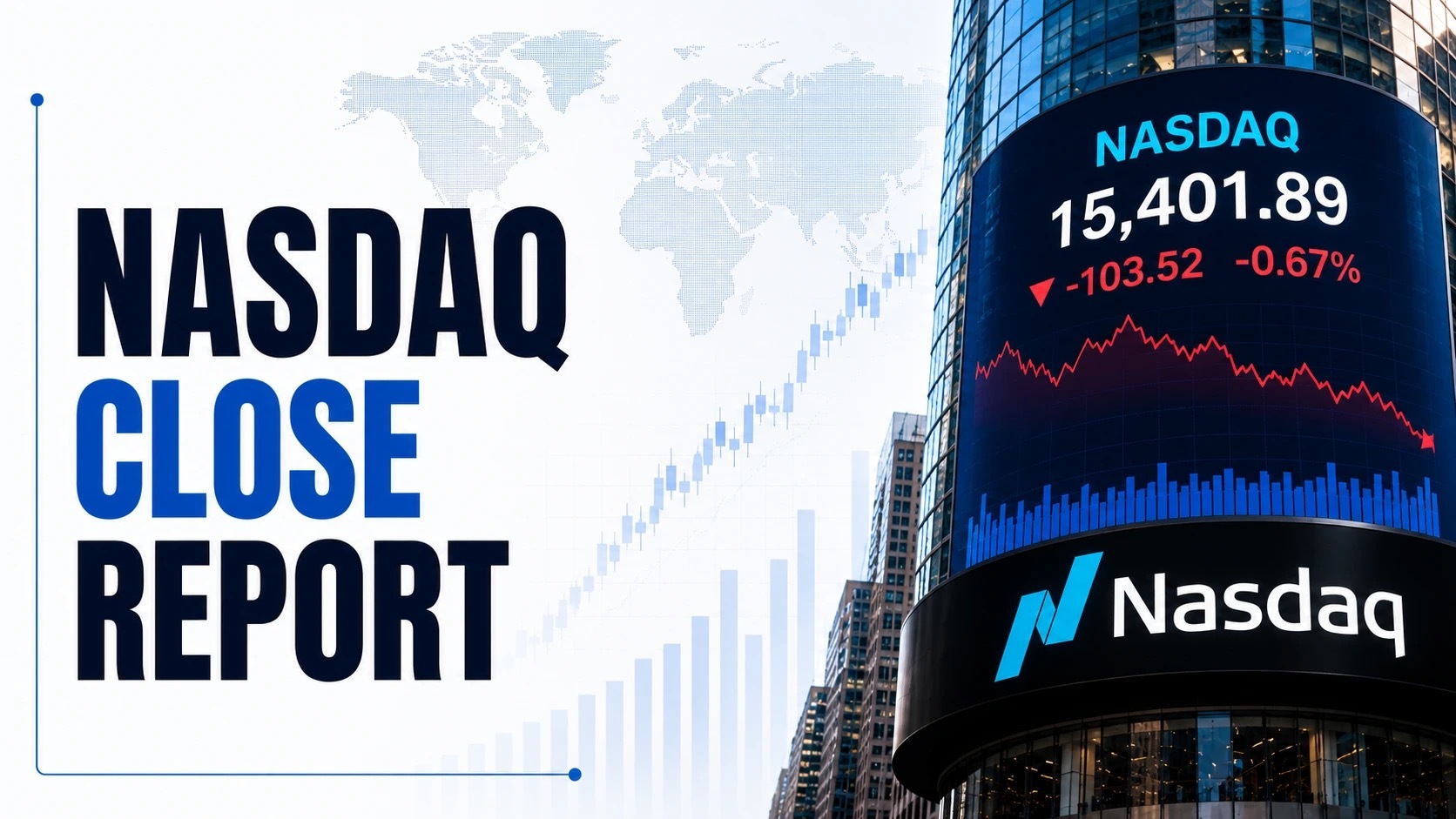
The Dow Jones Industrial Average rose 119.65 points, or 0.22%, to close at 53,463.05. The index opened at 53,463.47 and traded within a daily range of 53,399.53 to 53,710.06. The S&P 500 advanced 16.22 points, or 0.21%, finishing at 7,707.98. It opened at 7,716.74 and fluctuated between an intraday low of 7,700.07 and a high of 7,743.93. The Nasdaq Composite gained 41.38 points, or 0.16%, closing at 26,331.09. The tech-heavy index opened at 26,393.89 and traded between 26,185.13 and 26,456.78.
All three major averages had earlier rallied more than 0.6% in intraday trade, but gains were pared as investors weighed hawkish undertones from the Federal Reserve’s July meeting minutes released in the afternoon. The combination of falling long-term yields and renewed concerns over the path of monetary policy created a mixed backdrop, preventing the initial rally from extending into a stronger broad-based advance.

Treasury’s Surprise Buyback Expansion Sparks Sharp Pullback in 30-Year Yields from 19-Year Highs
The primary catalyst behind Wednesday’s rebound was an unanticipated Treasury Department intervention. The department announced it would “at least double” the maximum size of its liquidity-support buyback operations for longer-dated nominal coupon securities, targeting the 10-year to 20-year and 20-year to 30-year sectors. The maximum size per operation was increased from USD 2 billion to a minimum of USD 4 billion, effective from 9 September through 4 November.
The announcement was closely watched because the long end of the Treasury curve had become a major source of concern for financial markets. Rising long-term yields had increased financing costs for companies and governments while also putting pressure on equity valuations, particularly among technology and other growth-oriented businesses whose valuations depend heavily on future earnings.
The move came after the 30-year Treasury yield hit its highest level since 2007 on Tuesday, breaching 5.33% amid mounting concerns over fiscal deficits, heavy corporate borrowing for artificial intelligence infrastructure, and sticky inflation. Following the buyback announcement, the 30-year yield cratered by over 10 basis points to 5.19%, while the benchmark 10-year yield dropped 6 basis points to 4.65%. The yield on the 20-year Treasury also held its declines, trading down approximately 7 basis points at 5.211% after an auction later in the day.
The sharp reaction showed how sensitive markets had become to developments in the long-dated Treasury market. Lower yields reduced the immediate discount-rate pressure on equities and helped revive demand for selected growth stocks.
However, strategists cautioned against reading the move as quantitative easing. “The reality is that Treasury buybacks simply retire older issues and replace them with new ones, which is liquidity housekeeping, not an outright purchase program,” said Ben Emons, investing chief at Fed Watch Advisors. “Unlike the Fed, Treasury doesn’t create money supply in the process.”
Fed Minutes Reveal Three Dissenters Sought Immediate Rate Hike Amid Broad-Based Inflation Pressures
Investors also digested the release of the minutes from the Federal Open Market Committee’s July 28-29 policy meeting. The document revealed deepening concern about inflation, with three voting members—Cleveland Fed President Beth Hammack, Dallas Fed President Lorie Logan, and Minneapolis Fed President Neel Kashkari—dissenting in favour of a quarter-point rate hike.
The minutes stated that “several” policymakers favoured raising rates at the meeting, while “many” participants assessed that policy tightening would likely be necessary if inflation did not decline toward the central bank’s 2% target. Policymakers who supported a rate increase remarked that price pressures appeared broad-based and judged that the committee should adopt a more restrictive policy stance. Failure to do so, they argued, would risk “a steeper and potentially more costly sequence of tightening moves at a later stage.”
The minutes added a layer of caution to an otherwise supportive trading session. While the Treasury announcement directly reduced long-term yields, the prospect of tighter monetary policy kept investors from treating the decline in yields as a clear signal that financial conditions would remain easier.
Since that meeting, other officials, including Kansas City Fed President Jeff Schmid, have echoed the view that rates should be higher to rein in inflation. Market pricing currently implies at least one quarter-point rate hike by the end of 2026, though expectations for a move as early as September have faded following last week’s benign inflation data.
Secondary Indices Mirror Gains as Russell 2000 Outperforms While SOX Plunges on Semiconductor Sell-Off
The broader market saw mixed performance across secondary indices, with small-cap stocks leading the advance while semiconductor-heavy benchmarks faced significant headwinds. The divergence reflected the uneven impact of falling Treasury yields, with some economically sensitive stocks benefiting while companies exposed to elevated technology valuations remained under pressure.
The Russell 2000 Index, tracking small-cap US equities, rose 15.05 points, or 0.50%, to close at 3,032.94. It opened at 3,036.08 and traded between an intraday low of 3,029.98 and a high of 3,050.25. The index’s outperformance reflected the broader risk-on sentiment following the Treasury’s yield-curve intervention.
The S&P 100 Index added 11.16 points, or 0.29%, closing at 3,800.55. It opened at 3,798.04 and traded within a range of 3,788.00 to 3,816.23. The NYSE Composite Index advanced 78.13 points, or 0.32%, to finish at 24,707.27, after opening at 24,629.14 and hitting an intraday high of 24,866.75.
In contrast, the Philadelphia Semiconductor Index (SOX) plunged 254.24 points, or 2.12%, closing at 11,738.23. The index opened at 12,063.85 and fell to an intraday low of 11,633.80, weighed down by broad-based selling in chip stocks amid ongoing concerns about AI spending returns and valuation pressures.
The Dow Jones Composite Average rose 19.72 points, or 0.12%, to 16,914.76, while the Dow Jones Transportation Average fell 34.39 points, or 0.16%, to 21,460.84, reflecting weakness in logistics and freight names. The Dow Jones Utility Average edged up 1.06 points, or 0.096%, to 1,109.87, as defensive sectors saw modest buying.
The S&P MidCap 400 declined 10.63 points, or 0.28%, closing at 3,843.99, while the S&P SmallCap 600 rose 3.69 points, or 0.21%, to 1,797.22, indicating selective appetite for smaller names despite the broader tech-led volatility.
Also Read: How to Invest in the US Stocks From India
Volatility Indexes Ease as Treasury Action Calms Fixed-Income Jitters
The CBOE Volatility Index (VIX), often referred to as Wall Street’s fear gauge, declined on Wednesday as the Treasury’s intervention alleviated immediate concerns over surging long-term borrowing costs. The VIX eased approximately 4%, reflecting reduced demand for portfolio protection as yields stabilised from their multi-decade peaks.
The CBOE Nasdaq Volatility Index (VXN) also retreated, indicating a moderation in options-market anxiety specific to technology-heavy exposure. The pullback in volatility underscored the market’s relief that the Treasury was actively monitoring liquidity conditions in the long-dated segment of the sovereign bond market.
However, analysts noted that the VIX remains elevated relative to recent lows, suggesting that underlying caution persists ahead of the Federal Reserve’s Jackson Hole symposium later this week, where Chairman Kevin Warsh is expected to provide further policy clarity. The volatility response therefore pointed to a reduction in immediate stress rather than a complete reversal of the broader concerns surrounding rates, inflation and fiscal policy.
Healthcare Sector Soars 3.7% on Moderna’s 177% Surge as Energy and Tech Weigh on S&P 500
All 11 S&P 500 sectors closed with mixed results, with healthcare delivering a standout performance while information technology and energy lagged. The sector rotation highlighted the market’s selective approach, with investors responding differently to company-specific catalysts and broader changes in bond yields.
The healthcare sector surged approximately 3.7%, leading all groups by a wide margin. The rally was overwhelmingly driven by Moderna (MRNA), which skyrocketed 176.97% to close at USD 174.38 after announcing positive Phase 3 results for its mRNA-based melanoma vaccine developed with Merck. Merck (MRK) rose 12.60%, significantly boosting the Dow. Danaher (DHR) added 5.97%, while Eli Lilly (LLY) advanced 4.55%.
The energy sector was the weakest performer, declining approximately 1.2%, despite oil prices settling near four-week highs. The sell-off was attributed to profit-taking after recent strength and concerns that prolonged high yields could dampen economic activity and fuel demand. Halliburton and Schlumberger were among the notable laggards.
The technology sector traded lower, with semiconductor names leading the decline. AI-related hardware and chip stocks came under pressure following a Wall Street Journal report that OpenAI disclosed second-quarter results with widening losses, disappointing investors. This reignited concerns about the returns on massive AI capital expenditures and whether the pace of infrastructure investment can be sustained without corresponding improvements in profitability.
The financials sector fell roughly 0.8% as the yield curve flattened following the Treasury buyback announcement. Banks, which benefit from a steeper curve, saw broad-based selling. JP Morgan fell 1.65%, Goldman Sachs declined 1.81%, and Citigroup dropped 3.46%.
The consumer discretionary sector advanced 0.6%, supported by strength in home improvement and travel names. Tesla surged 4.33%, Amazon rose 2.46%, and Booking Holdings gained 2.28%. However, TJX Companies fell 4.21% after quarterly results.
Magnificent Seven Performance Shows Sharp Divergence as Tesla and Amazon Rally While Nvidia Slips
The so-called Magnificent Seven mega-cap technology stocks displayed significant divergence on Wednesday, reflecting the market’s selective appetite for growth names amid the bond market turmoil.
Tesla (TSLA) emerged as the top performer, jumping 4.33% as investors rotated back into high-growth names following the relief in yields. Amazon (AMZN) rose 2.46% and Apple (AAPL) gained 2.13%, both benefiting from the broader risk-on sentiment and stabilising fixed-income markets.
Microsoft (MSFT) added 0.56% and Meta Platforms (META) advanced 0.43%, while Alphabet (GOOGL) edged up 0.15%. Nvidia (NVDA), however, bucked the trend, falling 0.99% to close at USD 217.56.
The chipmaker recovered from earlier session lows after the Financial Times reported that China had allowed small shipments of Nvidia’s H200 chips to ByteDance and Tencent, and Bank of America reiterated that shares looked cheap relative to AI peers. However, concerns over AI spending returns continued to weigh on the stock and the broader semiconductor complex.
The contrasting performance of the Magnificent Seven highlighted how investors were differentiating between individual company catalysts rather than moving uniformly into large-cap technology stocks. Falling yields provided some support to growth valuations, but concerns around AI expenditure and semiconductor demand remained significant headwinds.
Semiconductor Stocks Plunge as AI Spending Doubts Linger, While Financials and Energy Face Sector-Specific Headwinds
The semiconductor sector was the most notable laggard of the day, with the SOX index plunging 2.12%. Lam Research (LRCX) tumbled 6.33%, Western Digital (WDC) dropped 6.87%, and Seagate Technology (STX) slid 7.87%. Broadcom (AVGO) fell 4.57%, while Advanced Micro Devices (AMD) shed 3.71%.
The sell-off was exacerbated by a report that OpenAI’s second-quarter losses widened, stoking fears that hyperscalers may not see immediate returns on their massive AI infrastructure spending. The development raised questions about the sustainability of the current capital expenditure cycle and added to valuation concerns across chip and hardware companies.
Financial stocks weakened as the yield curve flattened, with the SPDR S&P Bank ETF (KBE) declining approximately 1.5%. Citigroup fell 3.46%, Goldman Sachs shed 1.81%, and JP Morgan lost 1.65%. Insurance stocks, however, bucked the trend, with Progressive (PGR) rising 4.84%.
Energy stocks traded lower despite firmer crude prices, as investors took profits following a multi-week rally. Marathon Petroleum (MPC) and Phillips 66 (PSX) fell over 2% each. The market also absorbed news that the UAE had suspended financial transactions with Iran, escalating Middle East tensions, but the impact on oil-sensitive equities was muted.
AI and growth stocks showed a split personality: while Marvell Technology (MRVL) surged 9.88% on a partnership with Google, AI-exposed hardware names such as Dell (DELL) slid 6.64% and CrowdStrike (CRWD) dropped 5.30%. The wide performance gap illustrated how company-specific developments continued to dominate trading even as the broader market responded to changes in Treasury yields.
Also Read: How to Invest in S&P 500 Stocks Through Index Funds
Bond Market Stabilises as Treasury Intervention Flattens Yield Curve; Fed Rate Hike Expectations Persist
The US Treasury market saw significant moves across the curve following the department’s buyback announcement. The 2-year Treasury yield fell approximately 1.3 basis points to 4.162%, while the 5-year yield eased to around 4.05%. The 10-year yield dropped 6.5 basis points to 4.641%, and the 30-year yield plummeted 9.6 basis points to 5.189%.
The yield curve between the 2-year and 30-year flattened notably following the announcement, as long-end yields declined more sharply than short-end yields. This flattening weighed on bank stocks, which typically benefit from a steeper curve.
Federal Reserve expectations remained intact, with markets pricing in approximately 70% probability of at least one quarter-point rate hike by December 2026. The Fed minutes reinforced this view, showing that a growing number of officials see tightening as necessary if inflation does not cool soon.
The bond market therefore remained central to the direction of US equities. While the Treasury intervention offered short-term relief by reducing long-term yields, the Fed’s inflation concerns continued to limit expectations for an extended period of easier monetary policy. Investors consequently remained focused on the interaction between fiscal borrowing, inflation and future interest-rate decisions.
Gold Surges 3.6% to 11-Week High as Dollar Weakens, While Oil Settles Near Four-Week Peak on Middle East Fears
Commodities saw sharp moves as the weaker dollar and lower bond yields boosted non-yielding assets, while escalating geopolitical tensions lifted crude prices.
Gold surged 3.6% to USD 4,487.91 per ounce, after touching an intraday high of USD 4,499.20—its strongest level since 4 June. The rally was driven by a 0.7% drop in the US Dollar Index (DXY) and the sharp pullback in Treasury yields, which reduced the opportunity cost of holding bullion. Gold futures for December delivery settled 2.8% higher at USD 4,545.30.
Silver climbed alongside gold, while copper fell 0.7% to a two-week low of USD 13,888 per metric ton, pressured by a further build-up in London Metal Exchange inventories that eased supply fears. Natural gas traded mixed, with weather forecasts and storage data dictating near-term moves.
Brent crude settled at USD 91.62 per barrel, up 60 cents or 0.7%, while WTI crude rose 89 cents or 1.1% to close at USD 85.83 per barrel. Prices hit four-week highs as investors worried about escalating Middle East tensions after the UAE suspended financial transactions with Iran. Ship traffic through the Strait of Hormuz also remained sluggish, exacerbating supply concerns.
The contrasting moves across commodities reflected the different forces influencing each market. Gold benefited from lower yields and dollar weakness, while crude continued to receive support from geopolitical risks and concerns surrounding supply routes.
Also Read : US Stock Market Timings
US Dollar Index Falls 0.7% as Treasury Intervention Pressures Greenback; Yen and Pound Strengthen
The US Dollar Index (DXY) declined 0.7% to 98.95, pressured by the Treasury’s yield-curve intervention, which reduced the yield advantage of holding US assets. The index had earlier traded at 99.36 before the announcement.
EUR/USD rose approximately 0.8% to trade around 1.1350, benefiting from the dollar weakness. USD/JPY fell sharply, trading near 145.50 as the Japanese yen gained on safe-haven demand and the narrowing US-Japan yield differential. GBP/USD advanced to 1.3150, supported by firmer risk appetite and expectations of a hawkish Bank of England.
The dollar’s weakness provided additional support to gold and other dollar-denominated commodities. Strategists at Societe Generale noted that softer consumption, inflation, and employment data had weakened the argument for maintaining bullish dollar positions, while Saxo’s Charu Chanana suggested that higher Treasury yields no longer necessarily support the dollar if investors believe the increase reflects fiscal risk rather than stronger US growth.
Overall, Wednesday’s market action reflected a temporary easing of pressure across US financial markets following the Treasury’s decision to expand long-dated debt buybacks. The decline in 10-year and 30-year yields supported equities and commodities while weakening the dollar, but the reaction remained uneven across sectors. Strong gains in healthcare and selected consumer and growth names contrasted with pronounced weakness in semiconductors, financials and energy.
The session also showed that the Treasury announcement did not eliminate broader concerns surrounding inflation, fiscal deficits, AI-related capital expenditure and the Federal Reserve’s policy outlook. With Fed officials continuing to debate the need for tighter policy and the Jackson Hole symposium approaching, investors remained focused on whether the recent rise in long-term yields represents a temporary market adjustment or a more persistent shift in the US rate and fiscal outlook.
Source
- https://www.nasdaq.com/
- spglobal.com/spdji/en/indices/equity/sp-500/
- https://www.dowjones.com/
- https://www.spglobal.com/spdji/en/indices/equity/dow-jones-industrial-average/
- https://www.spglobal.com/spdji/en/indices/equity/sp-500/
- https://www.nasdaq.com/market-activity/index/comp
- https://www.nasdaq.com/market-activity/quotes/nasdaq-ndx-index
- https://www.spglobal.com/spdji/en/indices/equity/sp-100/
- https://www.lseg.com/en/ftse-russell/indices/russell-us
- https://www.nyse.com/index
- https://www.nyse.com/index
- https://www.spglobal.com/spdji/en/indices/equity/dow-jones-transportation-average/
- https://www.spglobal.com/spdji/en/indices/equity/dow-jones-utility-average/
- https://www.spglobal.com/spdji/en/indices/equity/dow-jones-composite-average/
- https://www.nasdaq.com/market-activity/index/sox
- https://www.cboe.com/tradable_products/vix/
Disclaimer
If you have any concerns, questions, or wish to point out any discrepancies in our content, please feel free to write to us at content@hdfcsec.com.
Please Note: The information shared is intended solely for informational purposes and does not make any investment recommendations
HDFC SKY, one of India’s most trusted trading platforms, has been recognized with the Next-Gen Digi Content Awards 2025–26.
Disclaimer
At HDFC SKY*, we take utmost care and due diligence in curating and presenting news and market-related content. However, inadvertent errors or omissions may occasionally occur.
If you have any concerns, questions, or wish to point out any discrepancies in our content, please feel free to write to us at content@hdfcsec.com.
Please Note: The information shared is intended solely for informational purposes and does not make any investment recommendations.
HDFC SKY from HDFC Securities, one of most trusted trading platforms in India, has been recognized with the *Next-Gen Digi Content Awards 2025-26.
 Join Us
 Add as preferred source on Google


More International News







Open Free Demat Account
Open Free Demat Account










Invest Anytime, Anywhere


By signing up I certify terms, conditions & privacy policy