Nifty 50
- Infosys₹1,167.8037.10 (3.28%)
- Eicher Motors₹7,168.50-180.50 (-2.46%)
- Tech Mahindra₹1,818.5039.40 (2.21%)
- Bajaj Finance₹936.40-20.95 (-2.19%)
- TCS₹2,510.7049.80 (2.02%)
- Eternal₹315.55-4.65 (-1.45%)
- UltraTech Cement₹10,857207.00 (1.94%)
- Bajaj Finserv₹1,677.10-22.90 (-1.35%)
- HCL Technologies₹1,405.8025.90 (1.88%)
- Mahindra & Mahindra₹2,870.60-36.40 (-1.25%)
- Reliance Industries₹1,221.2019.20 (1.60%)
- Maruti Suzuki₹11,342-133.00 (-1.16%)
- ICICI Bank₹1,402.3021.30 (1.54%)
- Bajaj Auto₹10,174-113.00 (-1.10%)
- ITC₹264.153.35 (1.28%)
- HDFC Life Insurance ₹540.45-5.05 (-0.93%)
- SBI₹981.457.75 (0.80%)
- InterGlobe Aviation₹4,657.10-42.90 (-0.91%)
- Bharti Airtel₹1,888.6013.40 (0.71%)
- Trent₹2,865.50-26.10 (-0.90%)

- Offerings
- Tools & Platforms
Tools & Calculators
- Open API
- Calculators
- SIP Calculator
- CAGR Calculator
- Compound Interest Calculator
- FD Calculator
- RD Calculator
- EPF Calculator
- Retirement Calculator
- HDFC SIP Calculator
- Mutual Fund Return Calculator
- Lumpsum Calculator
- Step Up SIP Calculator
- ETF SIP Calculator
- Brokerage Calculator
- Equity Margin Calculator
- SWP Calculator
- EMI Calculator
- MTF Calculator
- Margin Pledge Calculator
- Algo Strategy
- Markets
Stocks
F&O
Mutual Funds
- More
Oil Prices Today, October 21, 2026: Brent Above $110, WTI Near $100 as Middle East Supply Risks Intensify
Authored By HDFC SKY | Published at: Oct 21, 2026 09:56 AM IST

Open Free Demat Account
Open Free Demat Account
Mumbai, October 21: Crude oil prices climbed on Wednesday, October 21, as escalating tensions in the Middle East heightened concerns over supply disruptions, attacks on energy infrastructure and growing risks to commercial shipping. Brent crude futures gained 1.4% to $110.40 a barrel, while US West Texas Intermediate (WTI) crude advanced 1.4% to $99.20 a barrel, extending gains after a volatile trading session in which prices touched multi-month highs.
Oil prices have remained elevated as traders assess the potential impact of attacks on vessels and energy facilities across the region. The latest developments have raised concerns that disruptions could extend beyond the Strait of Hormuz to other important shipping routes and oil-loading facilities, threatening the movement of crude and petroleum products at a time when global fuel supplies are already under pressure.

Middle East Tensions Raise Supply Disruption Fears
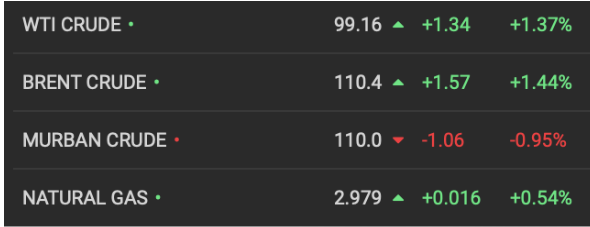
Both contracts advanced as risks intensified in the Middle East. Source: Oilprice.com
Concerns over oil supplies intensified after a supertanker caught fire after reportedly striking a sea mine south of the Strait of Hormuz. Iran’s Revolutionary Guards Navy said the vessel had violated Iranian regulations, according to Iranian media. Shipping data firm Kpler reported at least 18 vessel attacks over a two-week period.
The widening geographical reach of the attacks has become a particular concern for energy markets. Analysts at LSEG warned that vessels were being targeted as far south as the Gulf of Oman, putting oil loadings outside the Persian Gulf at risk. Ship-to-ship transfers that have helped sustain regional oil shipments during the conflict could also face disruption.
The Houthis on Monday claimed responsibility for attacks on a Saudi Aramco facility in Yanbu, the Shaybah oilfield and airports in Riyadh and Abha. The developments have added to concerns over the security of Saudi Arabia’s energy infrastructure and the possibility of further interruptions to regional supplies.
The attacks have sustained a geopolitical risk premium in crude prices, with traders weighing the possibility of a prolonged disruption against prospects of diplomatic intervention.
Also Read: How To Invest In Crude Oil
Diplomatic Efforts Offer Limited Relief
Oil prices had declined in the previous session after Iranian President Masoud Pezeshkian discussed mediation efforts with Pakistan’s army chief during a meeting in Tehran. However, hopes of a diplomatic breakthrough remain uncertain.
Iranian Foreign Minister Abbas Araqchi said in a television interview aired on Tuesday that Tehran had not received a response from Saudi Arabia or Yemen’s Houthi movement to its offer to help broker peace talks.
The lack of progress has left markets vulnerable to further volatility, with any escalation in attacks on tankers or oil infrastructure potentially pushing prices higher. Conversely, credible progress towards de-escalation could ease some of the risk premium currently embedded in crude futures.
Brent crude had settled 0.69% lower at $108.79 a barrel on Tuesday after touching a five-month high of $111.99. The November WTI contract, which expired on Tuesday, ended 1.8% lower at $101.79 a barrel.
US Diesel Shortage, Inventory Data in Focus
Developments in the US fuel market are adding another dimension to the oil outlook. US Energy Department officials are working with refiners globally to increase fuel production amid a diesel shortage that has pushed prices higher.
Market participants are also awaiting US inventory data for the week ended October 16. Eight analysts polled by Reuters estimated that US crude stockpiles had declined by around 800,000 barrels, alongside expected drawdowns in petroleum product inventories.
A larger-than-expected decline in inventories could reinforce concerns about tight supplies and provide further support to prices. However, the extent of any price reaction will depend on the inventory figures, refinery output and developments in the Middle East.
What Higher Crude Oil Prices Mean for India
Sustained crude oil prices above $110 a barrel pose a significant challenge for India, which relies heavily on imports to meet its energy requirements. A prolonged rise could increase the country’s import bill, put pressure on the rupee and complicate efforts to contain inflation.
Higher crude prices can also affect the profitability of oil marketing companies if retail fuel prices do not adjust sufficiently to reflect rising input costs. Aviation, paints, chemicals, logistics and other fuel-intensive industries could face margin pressure, while elevated energy costs may weigh on consumption and corporate earnings.
For equity investors, the trajectory of crude oil prices will remain an important factor alongside foreign fund flows, domestic economic indicators and the September-quarter earnings season. Further gains in oil could revive concerns over inflation and India’s external balances, potentially limiting the recovery in domestic equities.
The near-term direction of crude will depend largely on whether geopolitical tensions lead to actual supply losses or whether diplomatic efforts manage to contain the disruption. Until there is greater clarity, oil markets are likely to remain sensitive to developments around shipping routes, energy infrastructure and regional negotiations.
Source
- Oilprice.com
Disclaimer
The information shared here is intended solely for informational and educational purposes and does not constitute investment recommendations. While we practice strict due diligence in curating daily market data, readers must perform independent research before trading. To flag any real-time data discrepancies or content concerns, please write to us at content@hdfcsec.com.
 Join Us
 Add as preferred source on Google


More Business News










Open Free Demat Account
Open Free Demat Account












Invest Anytime, Anywhere


By signing up I certify terms, conditions & privacy policy