Nifty 50
- Eternal₹317.4012.95 (4.25%)
- Shriram Finance₹865-35.90 (-3.98%)
- Apollo Hospitals₹7,730125.50 (1.65%)
- Adani Enterprises₹2,477-73.00 (-2.86%)
- ONGC₹227.502.50 (1.11%)
- JSW Steel₹1,185.50-34.50 (-2.83%)
- Asian Paints₹2,30722.20 (0.97%)
- Jio Financial ₹205.03-5.77 (-2.74%)
- TCS₹2,53023.10 (0.92%)
- Tata Steel₹167.67-4.66 (-2.70%)
- UltraTech Cement₹11,05092.00 (0.84%)
- Adani Ports₹1,702.70-47.30 (-2.70%)
- Maruti Suzuki₹11,23060.00 (0.54%)
- Tech Mahindra₹1,790-39.10 (-2.14%)
- Cipla₹1,3387.10 (0.53%)
- Tata Motors PV₹264.60-5.40 (-2.00%)
- Reliance Industries₹1,1905.50 (0.46%)
- Hindalco Industries₹869.85-15.75 (-1.78%)
- Axis Bank₹1,217.505.50 (0.45%)
- Trent₹2,727.50-48.30 (-1.74%)

- Offerings
- Tools & Platforms
Tools & Calculators
- Open API
- Calculators
- SIP Calculator
- CAGR Calculator
- Compound Interest Calculator
- FD Calculator
- RD Calculator
- EPF Calculator
- Retirement Calculator
- HDFC SIP Calculator
- Mutual Fund Return Calculator
- Lumpsum Calculator
- Step Up SIP Calculator
- ETF SIP Calculator
- Brokerage Calculator
- Equity Margin Calculator
- SWP Calculator
- EMI Calculator
- MTF Calculator
- Margin Pledge Calculator
- Algo Strategy
- Markets
Stocks
F&O
Mutual Funds
- More
Swiggy Shares Fall Over 7% As Foreign Ownership Cap Sparks Concerns
Authored By HDFC SKY | Last Modified: Jul 24, 2026 02:57 PM IST

Open Free Demat Account
Open Free Demat Account
Mumbai, July 24: Shares of Swiggy fell more than 7% on Friday after the food delivery and quick-commerce company proposed capping foreign ownership at 49.5%, triggering concerns that the move could lead to the stock being removed from major global equity indices and prompt significant selling by passive funds.
Swiggy’s stock declined as investors assessed the potential impact of the proposed ownership change. The company’s board has approved lowering the aggregate foreign ownership limit from the existing 100% to 49.5%, subject to shareholder approval at its annual general meeting scheduled for August 18.
The proposal will also require regulatory approval from the Reserve Bank of India. While the move is aimed at increasing domestic ownership and strengthening Swiggy’s status as an Indian-owned and controlled company, investors are concerned that the lower foreign ownership ceiling could restrict the ability of overseas investors to hold the stock. As of writing the stock was down 4.6% at Rs 249.58.

MSCI, FTSE Exclusion Could Trigger Heavy Passive Selling
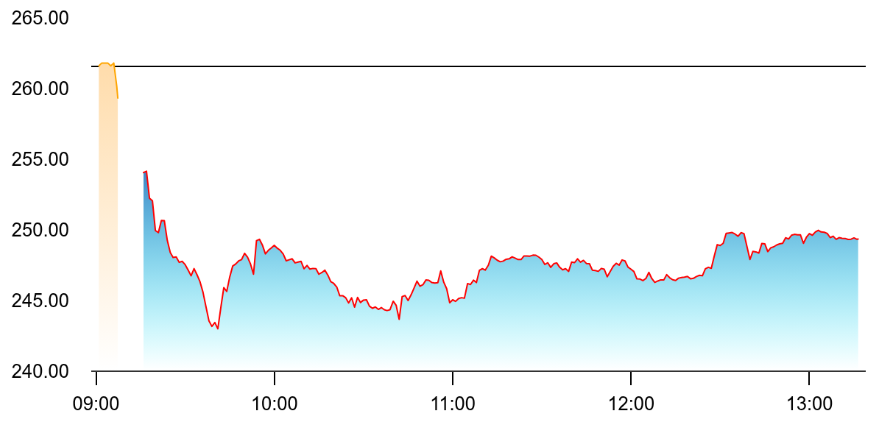
The biggest concern for investors is the potential impact on Swiggy’s inclusion in global equity indices. The proposed foreign ownership cap could make the stock ineligible for inclusion in key benchmarks tracked by passive funds, potentially forcing these funds to sell their holdings.
Stock fell after the introduction of the cap on foreign ownership. Source: NSE
According to estimates cited in reports, Swiggy’s removal from the MSCI Standard index could result in passive outflows of around $340 million. Its exclusion from FTSE indices could lead to another $120 million of selling pressure.
The combined potential outflow of around $460 million is equivalent to roughly 171 million shares, raising concerns about a substantial supply overhang in the stock. The possibility of large index-linked selling has weighed on investor sentiment and contributed to the sharp decline in Swiggy shares.
Passive funds typically replicate the composition of benchmark indices and are required to buy or sell stocks when their weightings change or when companies are removed from the indices. As a result, any potential exclusion could create selling pressure independent of the company’s underlying business performance.
Swiggy Seeks Greater Domestic Ownership
The proposed ownership restructuring is linked to Swiggy’s efforts to strengthen its position as an Indian-owned and controlled company. The move could have strategic implications for its quick-commerce business, Instamart.
Achieving Indian-owned and controlled status could allow Instamart to directly purchase inventory from suppliers and potentially change the way it recognises revenue. Rather than recording only marketplace fees, the business could recognise the full value of goods sold where it owns the inventory.
The change could therefore provide greater operational flexibility to Instamart as it competes in India’s rapidly expanding quick-commerce market against rivals such as Zomato-owned Blinkit and Zepto.
However, the proposed cap also creates a delicate balance between the company’s strategic objectives and its appeal to global investors. The lower ceiling could reduce the room available for additional foreign investment and potentially affect the stock’s accessibility to international funds.
Foreign Holding Already Near Proposed Ceiling
Swiggy’s latest disclosure showed foreign investment at 49.76% as of July 6, while Indian ownership stood at 50.24%. The proposed 49.5% ceiling is therefore only marginally below the company’s existing foreign shareholding.
The company has said that crossing the 50% domestic ownership threshold did not, by itself, change its ownership or control status, management or operations.
The proposed limit, however, would formalise a ceiling on foreign holdings and could require adjustments to the company’s shareholder structure. Investors will now closely monitor the shareholder vote and the subsequent regulatory process.
Stock Under Pressure As Investors Weigh Strategic Benefits Against Selling Risk
For investors, the proposed foreign ownership cap presents both potential advantages and risks. On the positive side, greater domestic ownership could help Swiggy secure greater operational flexibility for Instamart and strengthen its position within India’s e-commerce and quick-commerce ecosystem.
At the same time, the prospect of exclusion from global indices and the resulting passive fund outflows could create near-term pressure on the stock. The estimated $460 million potential outflow has emerged as the key overhang, particularly given the scale of index-linked selling that could follow if Swiggy loses its eligibility.
The stock’s reaction on Friday suggests investors are currently focusing more on the potential liquidity impact than on the longer-term strategic rationale behind the ownership restructuring. The company’s shareholder approval, regulatory clearances and any subsequent changes to its index eligibility are likely to remain key triggers for the stock in the coming months.
Source
- https://www.nseindia.com/get-quote/equity/SWIGGY/Swiggy-Limited
Disclaimer
If you have any concerns, questions, or wish to point out any discrepancies in our content, please feel free to write to us at content@hdfcsec.com.
Please Note: The information shared is intended solely for informational purposes and does not make any investment recommendations
Disclaimer
At HDFC SKY*, we take utmost care and due diligence in curating and presenting news and market-related content. However, inadvertent errors or omissions may occasionally occur.
If you have any concerns, questions, or wish to point out any discrepancies in our content, please feel free to write to us at content@hdfcsec.com.
Please Note: The information shared is intended solely for informational purposes and does not make any investment recommendations.
HDFC SKY from HDFC Securities, one of most trusted trading platforms in India, has been recognized with the *Next-Gen Digi Content Awards 2025-26.
 Join Us
 Add as preferred source on Google


More SWIGGY News









Open Free Demat Account
Open Free Demat Account
₹176









Invest Anytime, Anywhere


By signing up I certify terms, conditions & privacy policy