Nifty 50
- Tech Mahindra₹1,790140.00 (8.48%)
- InterGlobe Aviation₹4,686.90-91.40 (-1.91%)
- TCS₹2,465115.00 (4.89%)
- BSE₹3,363-65.00 (-1.90%)
- Infosys₹1,161.2051.20 (4.61%)
- Max Healthcare₹846-12.00 (-1.40%)
- Bharti Airtel₹1,90551.00 (2.75%)
- Tata Consumer ₹978.90-12.55 (-1.27%)
- Mahindra & Mahindra₹2,920.9059.20 (2.07%)
- Jio Financial ₹216.25-2.76 (-1.26%)
- Bajaj Finance₹98115.75 (1.63%)
- ONGC₹222-2.64 (-1.18%)
- Hindalco Industries₹90814.15 (1.58%)
- Bharat Electronics₹376.85-3.55 (-0.93%)
- HCL Technologies₹1,38020.00 (1.47%)
- Nestle₹1,265.50-10.30 (-0.81%)
- JSW Steel₹1,216.4016.00 (1.33%)
- Adani Enterprises₹2,680.90-19.10 (-0.71%)
- Grasim Industries₹2,92034.10 (1.18%)
- Bajaj Finserv₹1,720-12.00 (-0.69%)

- Offerings
- Tools & Platforms
Tools & Calculators
- Open API
- Calculators
- SIP Calculator
- CAGR Calculator
- Compound Interest Calculator
- FD Calculator
- RD Calculator
- EPF Calculator
- Retirement Calculator
- HDFC SIP Calculator
- Mutual Fund Return Calculator
- Lumpsum Calculator
- Step Up SIP Calculator
- ETF SIP Calculator
- Brokerage Calculator
- Equity Margin Calculator
- SWP Calculator
- EMI Calculator
- MTF Calculator
- Margin Pledge Calculator
- Algo Strategy
- Markets
Stocks
F&O
Mutual Funds
- More
- What Is India VIX?
- Why India VIX Matters for Your Portfolio
- What India VIX 15 Means
- What India VIX 25 Means
- India VIX 15 vs 25: What Changes for Investors
- How India VIX Affects Different Types of Investors
- When High India VIX Can Create Opportunity
- Common Mistakes Investors Make with India VIX
- How Investors Should Use India VIX in Practice
- India VIX 15 vs 25: Portfolio Risk Comparison
- Conclusion
- What Is India VIX?
- Why India VIX Matters for Your Portfolio
- What India VIX 15 Means
- What India VIX 25 Means
- India VIX 15 vs 25: What Changes for Investors
- How India VIX Affects Different Types of Investors
- When High India VIX Can Create Opportunity
- Common Mistakes Investors Make with India VIX
- How Investors Should Use India VIX in Practice
- India VIX 15 vs 25: Portfolio Risk Comparison
- Conclusion
Understanding India VIX: What 15 vs 25 Means for Your Portfolio Risk in Plain Language
By Aseem Shrivastava | Published at: Jun 3, 2026 11:14 AM IST
Open Free Demat Account
Open Free Demat Account
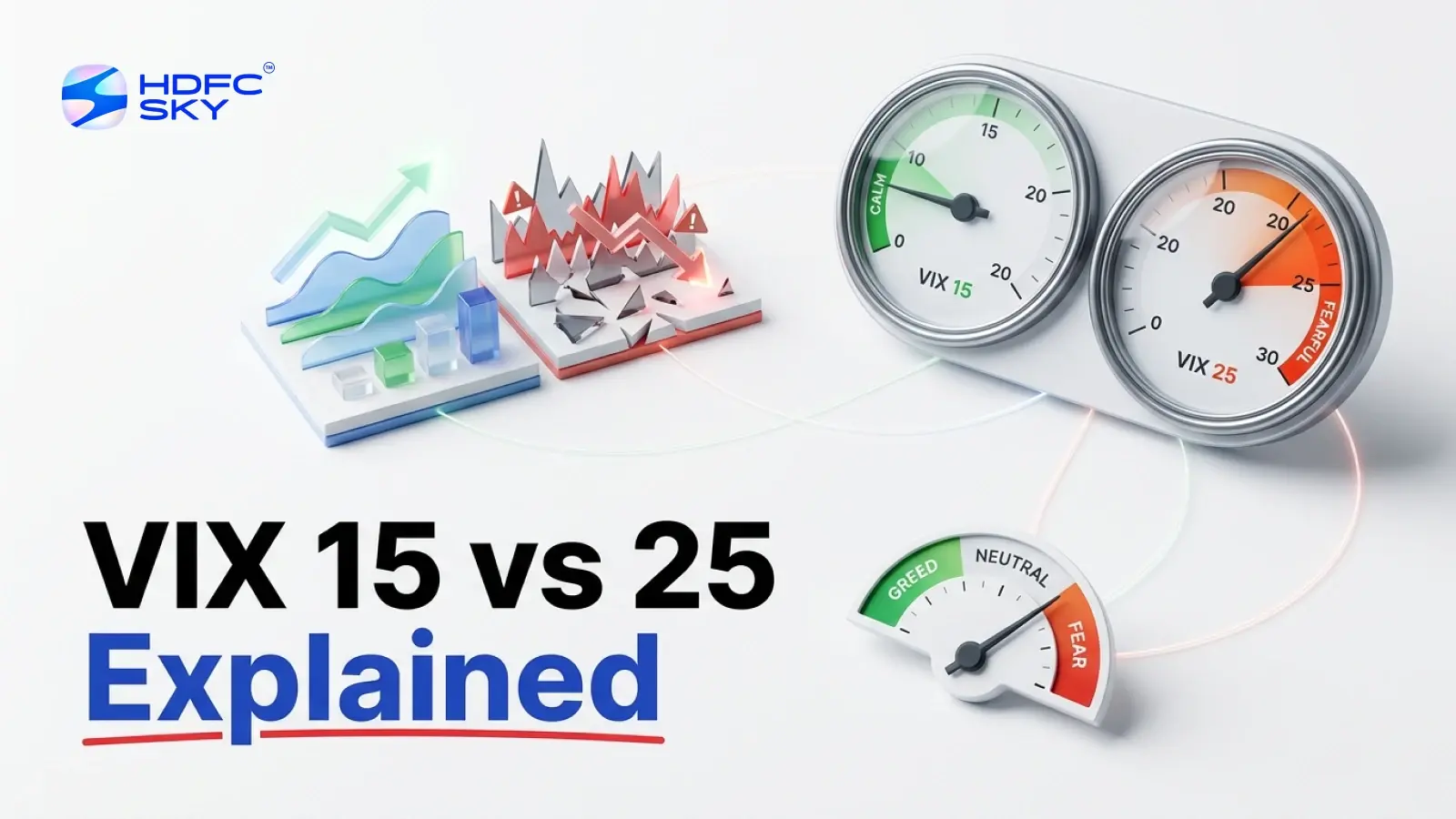
Stock prices tell investors what the market has already done, but India VIX helps reveal what investors fear might happen next. Often called the market’s fear gauge, India VIX acts like a volatility thermometer for market sentiment. Many investors hear about it during uncertain periods but do not know how to use it in practical portfolio decisions. A move from India VIX 15 to 25 can significantly increase portfolio risk, even when stock prices appear stable. India VIX does not predict market direction; it estimates expected market movement.
What Is India VIX?
India VIX measures the market’s expected volatility over the next 30 days based on Nifty 50 options prices. In simple terms, it estimates how much the market may move, not whether it will rise or fall. The National Stock Exchange of India (NSE) calculates and publishes India VIX daily.
A higher India VIX means investors expect larger market swings and greater uncertainty. A lower India VIX suggests calmer market conditions and smaller expected price movements. However, low volatility does not mean there is no risk. It only means the market currently feels more stable. For first-time investors, India VIX offers an early warning system for possible market turbulence.
Also Read: The VIX spike nobody saw coming: Decoding what caused the 2024 India volatility shock
Why India VIX Matters for Your Portfolio
India VIX helps investors understand how much market risk may lie ahead.
- It Measures Market Fear
India VIX reflects investor sentiment in real time. A rising VIX often signals growing nervousness about future market conditions. A falling VIX usually shows improving confidence and suggests that investors expect calmer and more stable market behaviour. - It Helps Estimate Risk
A higher India VIX indicates that your portfolio may face larger short-term price swings. A lower VIX suggests smoother market conditions. This helps investors prepare for possible volatility and manage portfolio exposure more carefully. - It Influences Investment Decisions
Many investors use India VIX to adjust stock exposure, review hedging strategies, or increase cash holdings. It helps them make better risk decisions and avoid emotional reactions during periods of sudden market uncertainty.
What India VIX 15 Means
A VIX near 15 usually reflects a calm or stable market environment.
- Lower Expected Market Swings
At India VIX 15, investors expect relatively smaller daily price movements. Market conditions usually feel steady, and sudden sharp swings appear less likely over the short term. - Higher Investor Confidence
Lower fear levels often improve investor confidence and encourage stronger risk-taking. Buyers usually feel more comfortable increasing exposure during these calmer market conditions. - Cheaper Hedging Costs
Options typically cost less when volatility expectations remain low. Investors can protect their portfolios more affordably through hedging strategies when India VIX stays near lower levels. - Hidden Complacency Risk
Very low VIX can sometimes create overconfidence among investors. Calm markets may hide risks that can quickly trigger unexpected volatility when sentiment suddenly changes.
What India VIX 25 Means
A VIX near 25 usually signals rising uncertainty and higher market stress.
- Bigger Expected Market Moves
At India VIX 25, investors expect larger and faster price swings across the market. Daily volatility often increases, making short-term market movements harder to predict. - Higher Fear Levels
Global uncertainty, policy concerns, or sharp market corrections often push India VIX higher. Investor caution usually increases during these periods of elevated market stress. - More Expensive Protection
Option premiums rise when volatility expectations increase. Investors must pay significantly more to hedge portfolios or protect positions during periods of higher market fear. - Greater Portfolio Volatility
Equity portfolios may experience sharper gains and losses when VIX rises. Emotional pressure often increases as market movements become faster and more unpredictable.
India VIX 15 vs 25: What Changes for Investors
A move from 15 to 25 can change risk more than many investors realise.
- Portfolio Risk Increases
A rising India VIX can significantly increase short-term portfolio fluctuations. Even fundamentally strong stocks may experience sharper daily price swings during volatile periods. - Emotional Pressure Rises
Large market swings often trigger fear-based decisions among investors. Emotional pressure can lead to panic selling or poor investment choices during uncertainty. - Asset Allocation May Need Adjustment
Higher volatility may encourage investors to increase cash levels or shift toward defensive sectors. Portfolio adjustments can help reduce overall risk exposure. - Trading Costs Often Change
Hedging strategies and options trades usually become more expensive when India VIX rises. Investors may need to rethink short-term risk management costs.
How India VIX Affects Different Types of Investors
India VIX matters differently depending on your investment style.
- Long-Term Investors
Long-term investors should use India VIX to manage emotions and stay disciplined. It should guide patience, not short-term market predictions. - Short-Term Traders
Active traders often track India VIX closely for position sizing and better trade timing. Volatility directly affects short-term strategy decisions. - Options Investors
India VIX plays a major role in option pricing and strategy selection. Rising volatility can create both higher costs and new trading opportunities. - Retirement or Conservative Investors
Higher India VIX may signal the need for stronger diversification. Conservative investors often focus more on capital protection during volatile periods.
When High India VIX Can Create Opportunity
Rising volatility can create risk, but also potential opportunity.
- Sharp fear can create attractive stock entry points.
- High VIX often reflects temporary emotional market reactions.
- Long-term investors may find better valuations during volatile periods.
- Panic-driven selling can create pricing inefficiencies.
Common Mistakes Investors Make with India VIX
Many investors misunderstand what India VIX actually signals.
- Assume high VIX always means markets will fall.
- Assume low VIX means markets are completely safe.
- Use VIX alone without checking business fundamentals.
- React emotionally to short-term volatility spikes.
- Ignore how VIX affects portfolio position sizing.
How Investors Should Use India VIX in Practice
India VIX works best as a risk tool, not a prediction tool.
- Track VIX trends rather than one-day spikes.
- Review portfolio risk when VIX rises sharply.
- Maintain diversification during volatile periods.
- Avoid aggressive decisions based only on fear.
- Combine VIX with earnings, valuations, and macro signals.
India VIX 15 vs 25: Portfolio Risk Comparison
| Factor | India VIX Around 15 | India VIX Around 25 |
| Market mood | Calm, stable, and confident market conditions with lower investor fear | Nervous and uncertain environment with stronger caution |
| Expected price swings | Smaller and more manageable daily market movements | Larger and more unpredictable market fluctuations |
| Portfolio volatility | Lower short-term portfolio movement and smoother performance | Higher short-term risk with sharper gains and losses |
| Option costs | Lower premiums and cheaper hedging opportunities | Higher premiums and more expensive portfolio protection |
| Investor behaviour | Confidence, optimism, and willingness to take risk | Defensive positioning and greater emotional caution |
Conclusion
India VIX helps investors understand expected market risk, not market direction. A level near 15 usually signals calm conditions, while 25 often reflects higher uncertainty and wider market swings. Investors should use India VIX to improve risk management, not to trigger panic. Understanding this fear gauge can help investors stay calmer, think more clearly, and make better decisions when markets become uncertain.



Open Free Demat Account
Open Free Demat Account
Popular Posts
- 10 Interesting Facts About NSE You Probably Didn’t KnowLast Updated: Sep 30, 2026
- 8-4-3 Rule of SIP - How Does That Work?Last Updated: Jul 30, 2025
- Let's view more exciting Post!
Popular Post from Market Decoded by Sky
- What the Buffett Indicator Says About Indian Market Valuations Right Now and Its LimitationsLast Updated: Jun 3, 2026
- What Is “Yield Curve Inversion” and Why Does It Make Economists Nervous About India’s Growth?Last Updated: Jun 3, 2026
- What Happens to Indian Stocks When the US Fed Changes Rates: The Historical Correlation DecodedLast Updated: Jun 3, 2026
- The Repo Rate Transmission Lag: Why RBI Rate Cuts Take 6–12 Months to Show Up in Your EMILast Updated: Jun 3, 2026
- The Difference Between SEBI’s SAST Regulations and an Open Offer: Explained for Everyday InvestorsLast Updated: Jun 1, 2026
- Let's view more exciting Post!
Popular Post from Blogs
- “Bounce Back” Theme Gains Traction in 2026Last Updated: Apr 8, 2026
- 5 Takeaways for Tax Payers from the Budget 2025Last Updated: Jan 29, 2026
- Let’s view more exciting Posts


Invest Anytime, Anywhere


By signing up I certify terms, conditions & privacy policy