Nifty 50
- Tech Mahindra₹1,63054.80 (3.48%)
- Nestle₹1,301.60-81.60 (-5.90%)
- ICICI Bank₹1,384.2045.60 (3.41%)
- Trent₹2,940.10-30.90 (-1.04%)
- Reliance Industries₹1,214.6040.00 (3.41%)
- Adani Enterprises₹2,703.20-19.40 (-0.71%)
- Bharti Airtel₹1,855.1060.50 (3.37%)
- Bharat Electronics₹380.20-2.15 (-0.56%)
- HCL Technologies₹1,368.6041.60 (3.13%)
- Maruti Suzuki₹11,500322.00 (2.88%)
- BSE₹3,426.2088.20 (2.64%)
- JSW Steel₹1,205.8029.60 (2.52%)
- Eicher Motors₹7,260177.50 (2.51%)
- TCS₹2,359.4054.50 (2.36%)

- Offerings
- Tools & Platforms
Tools & Calculators
- Open API
- Calculators
- SIP Calculator
- CAGR Calculator
- Compound Interest Calculator
- FD Calculator
- RD Calculator
- EPF Calculator
- Retirement Calculator
- HDFC SIP Calculator
- Mutual Fund Return Calculator
- Lumpsum Calculator
- Step Up SIP Calculator
- ETF SIP Calculator
- Brokerage Calculator
- Equity Margin Calculator
- SWP Calculator
- EMI Calculator
- MTF Calculator
- Margin Pledge Calculator
- Algo Strategy
- Markets
Stocks
F&O
Mutual Funds
- More
- What is SEBI’s SAST Regulations?
- Why SAST Regulations Exist in the First Place
- What is an Open Offer?
- How SAST and Open Offer Are Connected
- When Does an Open Offer Get Activated?
- Step-by-Step: What Happens When SAST is Triggered
- Why the Open Offer Price Is Often Higher Than the Market Price
- Common Misunderstandings Investors Have
- Why SAST Matters for Retail Investors
- How Investors Should Read SAST + Open Offer News
- Conclusion
- What is SEBI’s SAST Regulations?
- Why SAST Regulations Exist in the First Place
- What is an Open Offer?
- How SAST and Open Offer Are Connected
- When Does an Open Offer Get Activated?
- Step-by-Step: What Happens When SAST is Triggered
- Why the Open Offer Price Is Often Higher Than the Market Price
- Common Misunderstandings Investors Have
- Why SAST Matters for Retail Investors
- How Investors Should Read SAST + Open Offer News
- Conclusion
The Difference Between SEBI’s SAST Regulations and an Open Offer: Explained for Everyday Investors
By Aseem Shrivastava | Updated at: Jun 1, 2026 06:55 PM IST
Open Free Demat Account
Open Free Demat Account
A stock market headline flashes: “Acquirer triggers SAST compliance” or “Open offer announced for target company.” Many investors pause here, unsure what it really means. Both terms appear together, yet they are not the same thing. This confusion is common among first-time investors who follow takeover news in India. The reality is simple: SAST is the regulatory framework, while an open offer is the mandatory action that follows certain triggers. Understanding this difference helps investors read corporate news with clarity and avoid misinterpretation during ownership changes.
What is SEBI’s SAST Regulations?
SEBI’s SAST Regulations refer to the Substantial Acquisition of Shares and Takeovers Regulations. These rules govern how ownership in listed companies changes hands in India.
They apply when an investor or promoter acquires a significant stake or gains control in a company. The purpose is to ensure that large share purchases follow a transparent process.
SAST also protects minority shareholders by making sure they receive fair treatment during major ownership changes. SAST is the rulebook that controls large share acquisitions in listed companies.
Also Read: The insider selling cluster: when three or more key executives sell shares in the same quarter
Why SAST Regulations Exist in the First Place
SAST exists to maintain fairness and clarity in the market when ownership shifts happen in listed companies. It prevents sudden or hidden control transfers that can harm small investors.
- Prevents Secret or Unfair Takeovers
SAST ensures that no investor quietly builds a controlling stake without public knowledge. It forces disclosure when ownership crosses key limits, which keeps the market informed and fair for all participants. - Ensures Minority Shareholders Get Exit Opportunity
When control changes hands, small investors need a way to exit if they choose. SAST ensures they receive an offer at a fair price during such events. - Brings Transparency in Ownership Changes
Every major stake increase must be disclosed under SAST rules. This transparency helps investors understand who is gaining influence in a company. - Avoids Sudden Control Shifts Without Notice
SAST prevents abrupt takeovers that can surprise the market. It ensures investors get time to react to ownership changes in a structured way.
SAST ensures that big ownership changes do not happen in the dark.
What is an Open Offer?
An open offer is a mandatory public offer made to existing shareholders of a listed company. It allows them to sell their shares at a predetermined price when a major acquisition or control change takes place.
It is triggered when an investor crosses a specific shareholding threshold or gains control of a company.
The key purpose is to give public shareholders an exit opportunity at a fair price. An open offer is not optional; it is a consequence of crossing SAST thresholds.
How SAST and Open Offer Are Connected
SAST and open offer work together, but they are not the same thing. One defines the rules, and the other executes the outcome when conditions are met.
- SAST Defines Ownership Thresholds
SAST sets the legal limits for share acquisition. It decides when disclosures and additional obligations must begin, based on stake levels or control changes. - Threshold Breach Triggers Action
When an investor crosses these defined thresholds, it activates mandatory requirements. The market and regulators are informed immediately through disclosures. - Open Offer Becomes Mandatory
Once triggered, the acquirer must make an open offer to public shareholders. This step ensures fairness during the ownership transition. - Rule vs Action Relationship
SAST acts as the governing framework, while the open offer is the practical outcome required under that framework.
SAST is the law, and open offer is the mandatory response.
When Does an Open Offer Get Activated?
An open offer does not happen in every transaction. It gets activated only under specific conditions defined by SEBI.
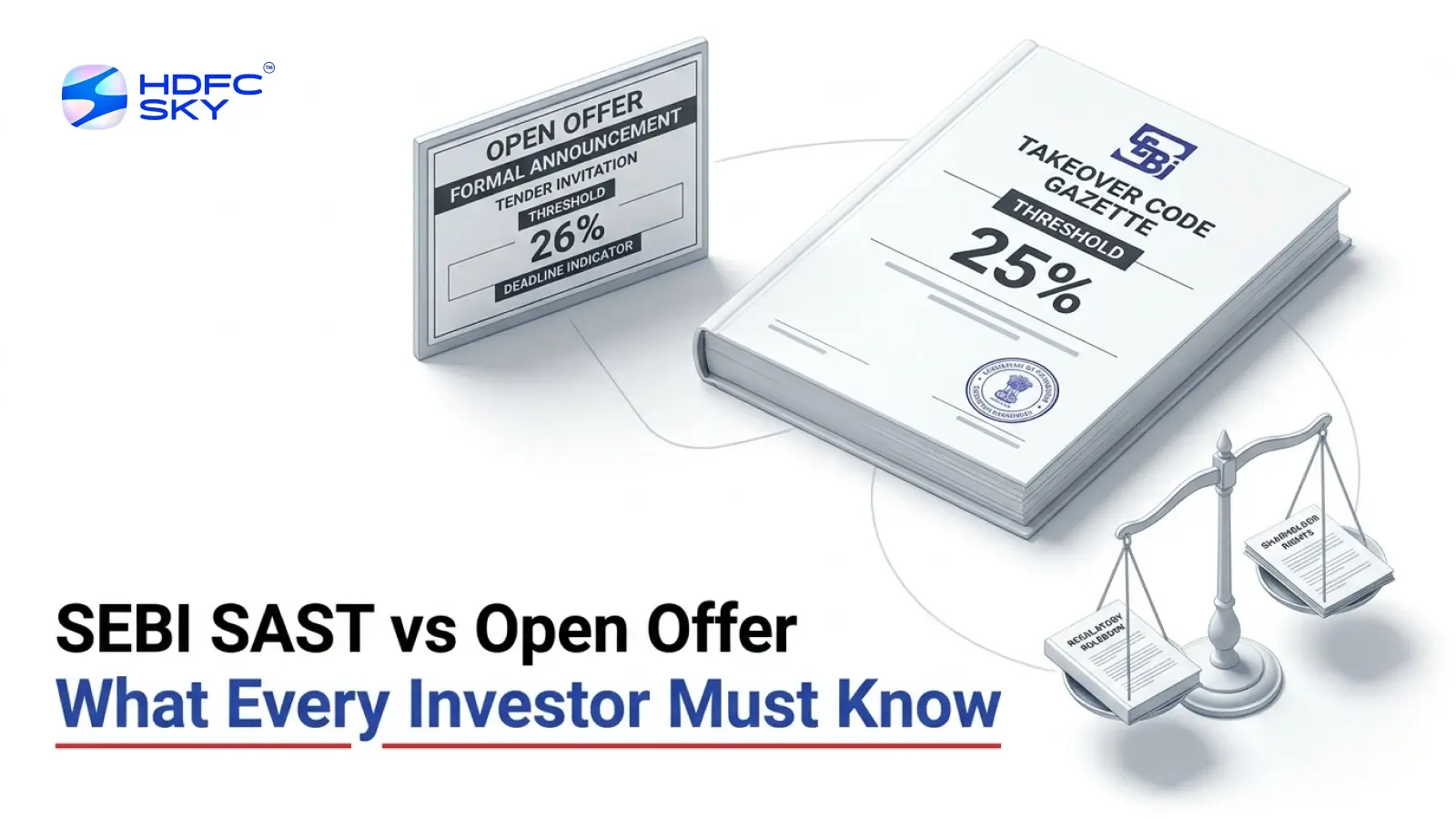
- Acquisition of 25% or More Voting Rights
When an investor acquires 25% or more voting rights, SAST rules require them to make an open offer to public shareholders. - Acquisition of Control Even Below 25%
Even if the stake is below 25%, gaining control over a company can still trigger an open offer requirement. - Creeping Acquisition Rules
SAST also tracks gradual stake increases over time. Once certain incremental limits are crossed, an open offer may be required.
It is not just a percentage—it is also about gaining control.
Step-by-Step: What Happens When SAST is Triggered
- Investor acquires shares or control above threshold
- Mandatory disclosures are made to stock exchanges
- Public announcement of the acquisition is released
- Open offer process officially begins
- Independent valuation determines fair offer price
- Shareholders decide whether to sell or hold shares
SAST triggers transparency, and an open offer enables exit.
Why the Open Offer Price Is Often Higher Than the Market Price
Open offer prices are not random. SEBI rules require a fair valuation process to protect shareholders.
The price is calculated using historical market averages, recent trading prices, and other valuation methods.
In many cases, buyers offer a premium to encourage shareholders to sell during the acquisition process. Open offers often include a control premium.
Common Misunderstandings Investors Have
SAST and open offers are often misunderstood by retail investors. Here are some common misconceptions:
- SAST does not mean a takeover automatically happens
- Open offers can occur without hostile intentions
- Not every share purchase triggers an open offer
- Acceptance of an open offer is voluntary for shareholders
These rules regulate the process, not guarantee outcomes.
Why SAST Matters for Retail Investors
SAST plays an important role in protecting small investors during corporate ownership changes.
- It helps investors understand sudden price movements during takeover news
- It protects minority shareholders from unfair treatment in control changes
- It gives an exit option when major ownership shifts occur
- It improves transparency in corporate actions and disclosures
SAST ensures retail investors are not left out during big corporate moves.
How Investors Should Read SAST + Open Offer News
When investors see takeover-related news, they should focus on key details rather than headlines alone.
- Identify who is acquiring a stake or gaining control
- Check whether regulatory thresholds have been crossed
- Compare the open offer price with the current market price
- Understand timelines for completion and approvals
- Watch for SEBI and exchange regulatory updates
News is not just about acquisition—it is about process and timing.
Conclusion
SAST is the regulatory framework that governs large share acquisitions in India’s stock market. An open offer is the mandatory action that follows when specific thresholds are crossed. Together, they ensure fairness, transparency, and protection for minority shareholders. For everyday investors, understanding this difference makes takeover news easier to interpret and helps avoid confusion during major corporate developments.



Open Free Demat Account
Open Free Demat Account
Popular Posts
- 10 Interesting Facts About NSE You Probably Didn’t KnowLast Updated: Sep 30, 2026
- 8-4-3 Rule of SIP - How Does That Work?Last Updated: Jul 30, 2025
- Let's view more exciting Post!
Popular Post from Market Decoded by Sky
- What the Buffett Indicator Says About Indian Market Valuations Right Now and Its LimitationsLast Updated: Jun 3, 2026
- What Is “Yield Curve Inversion” and Why Does It Make Economists Nervous About India’s Growth?Last Updated: Jun 3, 2026
- What Happens to Indian Stocks When the US Fed Changes Rates: The Historical Correlation DecodedLast Updated: Jun 3, 2026
- Understanding India VIX: What 15 vs 25 Means for Your Portfolio Risk in Plain LanguageLast Updated: Jun 3, 2026
- The Repo Rate Transmission Lag: Why RBI Rate Cuts Take 6–12 Months to Show Up in Your EMILast Updated: Jun 3, 2026
- Let's view more exciting Post!
Popular Post from Blogs
- “Bounce Back” Theme Gains Traction in 2026Last Updated: Apr 8, 2026
- 5 Takeaways for Tax Payers from the Budget 2025Last Updated: Jan 29, 2026
- Let’s view more exciting Posts


Invest Anytime, Anywhere


By signing up I certify terms, conditions & privacy policy