Nifty 50
- Apollo Hospitals₹8,027.50361.50 (4.72%)
- BSE₹3,287.20-47.60 (-1.43%)
- ITC₹26611.00 (4.31%)
- Reliance Industries₹1,170.30-7.70 (-0.65%)
- Eicher Motors₹7,050282.50 (4.17%)
- JSW Steel₹1,168-7.20 (-0.61%)
- TCS₹2,15680.00 (3.85%)
- Cipla₹1,301-5.80 (-0.44%)
- HCL Technologies₹1,216.7039.80 (3.38%)
- Adani Ports₹1,76153.00 (3.10%)
- Infosys₹1,023.4026.40 (2.65%)
- Shriram Finance₹940.4523.20 (2.53%)
- Tata Motors PV₹279.906.90 (2.53%)
- UltraTech Cement₹10,675249.00 (2.39%)

- Offerings
- Tools & Platforms
Tools & Calculators
- Open API
- Calculators
- SIP Calculator
- CAGR Calculator
- Compound Interest Calculator
- FD Calculator
- RD Calculator
- EPF Calculator
- Retirement Calculator
- HDFC SIP Calculator
- Mutual Fund Return Calculator
- Lumpsum Calculator
- Step Up SIP Calculator
- ETF SIP Calculator
- Brokerage Calculator
- Equity Margin Calculator
- SWP Calculator
- EMI Calculator
- MTF Calculator
- Margin Pledge Calculator
- Algo Strategy
- Markets
Stocks
F&O
Mutual Funds
- More
- What Are Debtor Days?
- Why Debtor Days Matter for Cash Flow Health
- How Rising Debtor Days Signal a Future Cash Flow Crisis
- The Hidden Cash Flow Cycle Problem
- Industry Patterns in Rising Debtor Days
- Early Warning Signs That Appear Along with Rising Debtor Days
- Real Market Risk Pattern Observed in Companies
- Why Investors Often Miss This Signal
- How Investors Should Interpret Rising Debtor Days
- What Investors Should Watch Instead of Ignoring It
- What Are Debtor Days?
- Why Debtor Days Matter for Cash Flow Health
- How Rising Debtor Days Signal a Future Cash Flow Crisis
- The Hidden Cash Flow Cycle Problem
- Industry Patterns in Rising Debtor Days
- Early Warning Signs That Appear Along with Rising Debtor Days
- Real Market Risk Pattern Observed in Companies
- Why Investors Often Miss This Signal
- How Investors Should Interpret Rising Debtor Days
- What Investors Should Watch Instead of Ignoring It
How Rising Debtor Days in a Company’s Balance Sheet Predict a Cash Flow Crisis Months Ahead
By Aseem Shrivastava | Updated at: May 29, 2026 06:10 PM IST
Open Free Demat Account
Open Free Demat Account
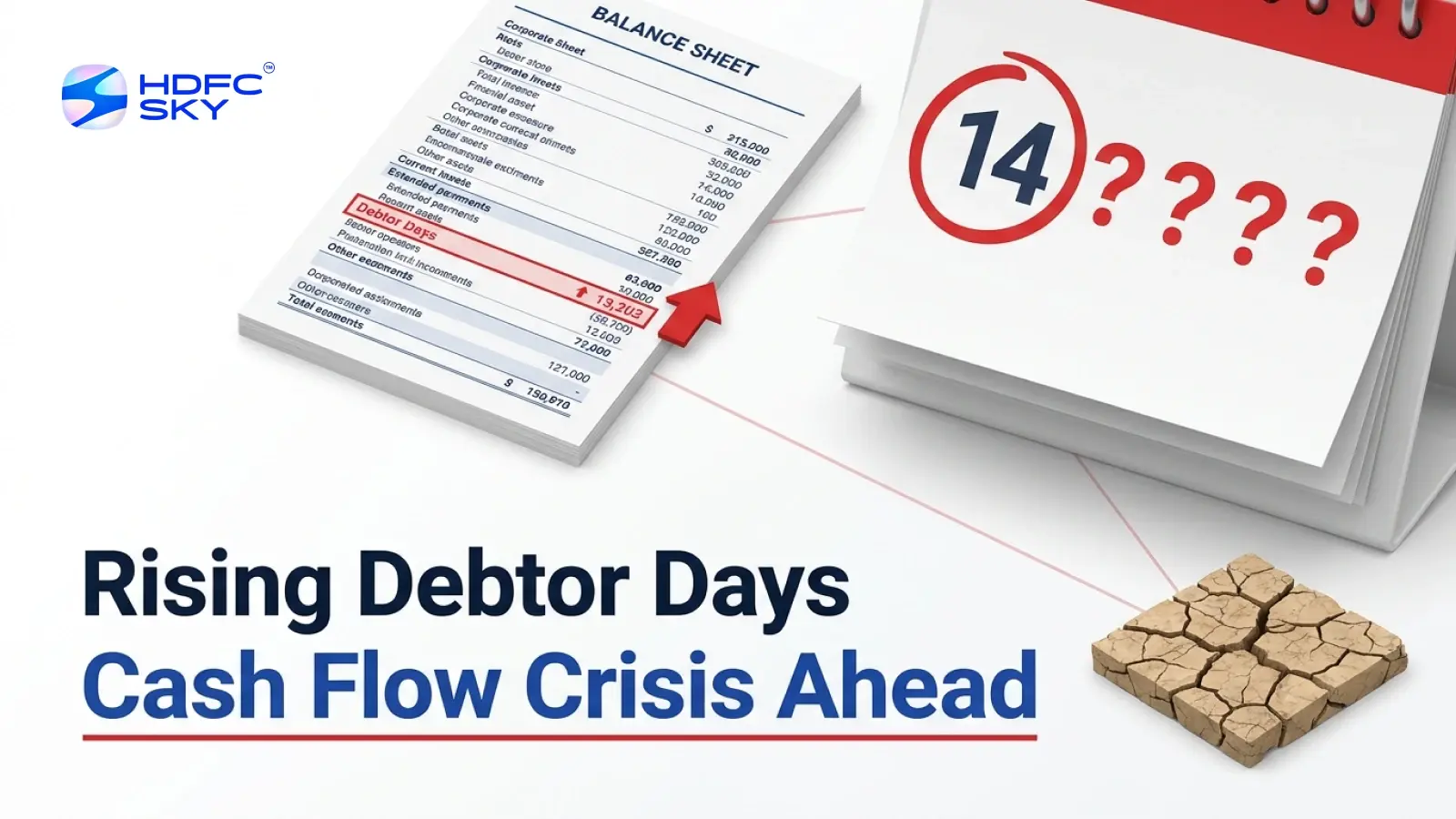
Companies can show strong profits on paper yet struggle to pay their daily bills. This happens because profit does not always equal cash flow. In many cases, cash flow problems appear months before earnings weaken. One early signal is rising debtor days, also called receivable days. Investors often ignore this and focus only on revenue growth.
What Are Debtor Days?
Debtor days show how long a company takes to collect money from customers after making a sale. It measures the efficiency of cash collection.
The formula is simple: (Trade Receivables ÷ Credit Sales) × 365
It is also called Days Sales Outstanding (DSO).
In simple terms, higher debtor days mean slower cash collection. Even if sales increase, cash may not come in quickly. That creates pressure on working capital and daily operations.
For example, if a company sells goods worth ₹100 crore but collects payment after 90 days instead of 60 days, it must fund operations for a longer period. This may force the company to borrow money even if it looks profitable on paper.
Also Read: FII ownership dropping below 10% in a large-cap: what this risk signal has meant historically
Why Debtor Days Matter for Cash Flow Health
Debtor days directly show how efficiently a company converts sales into real cash.
- Cash Lock-In Effect
Higher debtor days mean a larger portion of sales remains unpaid for longer periods. This locks cash inside receivables instead of bringing it into the business. As a result, companies struggle to fund salaries, supplier payments, and daily operations, even when their profit numbers appear stable on financial statements. - Growing Working Capital Requirement
When cash inflows slow due to rising debtor days, companies must rely more on external funding to maintain operations. This increases working capital requirements and short-term borrowing. Over time, interest costs rise, and financial flexibility reduces, creating pressure on the business even if sales continue to grow steadily. - Early Liquidity Stress Signal
Rising debtor days often appear in financial statements before any visible decline in profits. This makes them a leading indicator of liquidity stress. Investors who track this metric can identify weakening cash conversion early, well before the company shows clear signs of financial trouble in earnings reports.
How Rising Debtor Days Signal a Future Cash Flow Crisis
A steady rise in debtor days often signals weakening business quality.
- Customers Are Delaying Payments
When customers start delaying payments, it directly slows down cash inflows for the company. This often happens during demand slowdown or financial stress in the customer base. Even if sales remain stable, delayed collections reduce liquidity and force the company to depend more on external funding sources. - Revenue vs Cash Mismatch Grows
Sales figures may continue to rise, but cash collection does not keep pace. This creates a widening gap between accounting profit and real cash availability. Over time, the company looks profitable on paper but struggles to meet day-to-day financial needs, exposing hidden stress in operations. - Increasing Dependence on Borrowing
As cash inflows weaken, companies often turn to short-term borrowing to cover expenses. This increases interest costs and reduces overall profitability. Continuous borrowing also signals financial strain, as the business relies on external funds to sustain operations instead of generating enough internal cash flow. - Stress on Supplier Payments
To manage cash shortages, companies may delay payments to suppliers and vendors. This creates strain in business relationships and signals deeper liquidity issues. If this continues, it shows the company is struggling to balance cash inflows and outflows, which is a strong early warning sign of financial stress.
The Hidden Cash Flow Cycle Problem
Rising debtor days disturb the entire working capital cycle of a business.
- Cash remains stuck in receivables for longer periods
- Inventory cycles may remain stable, but cash inflow slows down
- Payables remain fixed or reduce, creating imbalance in operations
- Overall cash conversion cycle becomes longer and inefficient
- The company appears profitable but remains cash poor
Industry Patterns in Rising Debtor Days
Not all industries react the same way to debtor days changes.
- Infrastructure & EPC: Naturally high debtor days due to milestone-based billing cycles.
- Real Estate: Payments depend on project stages, leading to delayed collections.
- Manufacturing: Rising debtor days often indicate weakening demand or buyer stress.
- FMCG: Usually stable; any rise in debtor days is a strong warning sign.
- IT Services: Moderate risk, but long billing cycles can still stretch cash flow.
Early Warning Signs That Appear Along with Rising Debtor Days
- Increasing receivables quarter after quarter indicating slower customer payments
- Declining operating cash flow despite stable or rising profits
- Rising short-term borrowings to manage daily business expenses
- Delayed vendor or supplier payments due to cash shortages
- Higher interest expenses caused by reliance on working capital loans
Real Market Risk Pattern Observed in Companies
Rising debtor days often appear 2–4 quarters before financial stress becomes visible. Companies may still show stable profits during this period, but cash generation weakens significantly.
Over time, liquidity pressure increases and forces restructuring, write-offs, or aggressive borrowing. Small and mid-cap companies show this pattern more frequently because they have weaker bargaining power with customers and suppliers.
Why Investors Often Miss This Signal
Many investors overlook debtor days because they focus more on profits than cash flow warning signs.
- Focus mainly on profit and loss statements while ignoring balance sheet trends
- Overlook receivables data and working capital movement across quarters
- Assume revenue growth automatically reflects strong financial health
- Fail to track cash flow statements alongside earnings reports
- Lack understanding of how working capital affects liquidity
How Investors Should Interpret Rising Debtor Days
Debtor days should always be analysed as a trend, not a single number.
- Stable debtor days indicate healthy and predictable cash flow
- Gradual increase signals early warning and needs close monitoring
- Sharp rise shows strong risk and potential cash stress ahead
- Consistently high levels indicate structural weakness in cash flow cycle
What Investors Should Watch Instead of Ignoring It
Investors should track a few key financial indicators alongside debtor days to get a clearer picture of a company’s cash flow health.
- Trend of receivables growth compared to revenue expansion
- Operating cash flow changes across multiple financial quarters
- Working capital movement shown in the balance sheet statements
- Rising short-term and working capital borrowings over time
- Customer payment behaviour and overall sector demand conditions
Conclusion
Rising debtor days are one of the earliest signs of cash flow stress in a company. They show delays in converting sales into actual cash, not just accounting profits. While not a final verdict on failure, consistent increases signal risk. Investors should always study this trend carefully before investing.



Open Free Demat Account
Open Free Demat Account
Popular Posts
- 10 Interesting Facts About NSE You Probably Didn’t KnowLast Updated: Sep 30, 2026
- 8-4-3 Rule of SIP - How Does That Work?Last Updated: Jul 30, 2025
- Let's view more exciting Post!
Popular Post from Sky Risk Radar
- When Inventory Piles Up and Sales Stall: The Supply Chain Signal That Precedes Earnings MissesLast Updated: May 29, 2026
- When EBITDA Grows but Cash Flow Doesn’t: The Red Flag That Precedes Most Accounting FraudsLast Updated: May 29, 2026
- The Sudden Auditor Change Signal: What It Means When a Big-4 Firm Walks Away from a Listed CompanyLast Updated: May 29, 2026
- The Insider Selling Cluster: When Three or More Key Executives Sell Shares in the Same QuarterLast Updated: May 29, 2026
- Rising NPAs in a Bank's Quarterly Disclosure: How to Detect Stress Before the Stock ReactsLast Updated: May 29, 2026
- Let's view more exciting Post!
Popular Post from Blogs
- “Bounce Back” Theme Gains Traction in 2026Last Updated: Apr 8, 2026
- 5 Takeaways for Tax Payers from the Budget 2025Last Updated: Jan 29, 2026
- Let’s view more exciting Posts


Invest Anytime, Anywhere


By signing up I certify terms, conditions & privacy policy