Nifty 50
- Dr. Reddy's Labs₹1,232.2035.20 (2.94%)
- Tech Mahindra₹1,452.90-61.20 (-4.04%)
- Bajaj Auto₹10,030252.00 (2.58%)
- ITC₹257.40-8.60 (-3.23%)
- Bharat Electronics₹373.855.70 (1.55%)
- L&T₹3,618-85.30 (-2.30%)
- BSE₹3,334.4047.20 (1.44%)
- SBI₹939.95-19.15 (-2.00%)
- Tata Motors PV₹282.852.95 (1.05%)
- Coal India₹403.70-7.85 (-1.91%)
- Eicher Motors₹7,123.5073.50 (1.04%)
- Bharti Airtel₹1,770.70-34.40 (-1.91%)
- Cipla₹1,306.805.80 (0.45%)
- Hindustan Unilever₹1,823.90-32.80 (-1.77%)
- Mahindra & Mahindra₹2,808.3012.10 (0.43%)
- Hindalco Industries₹888-12.35 (-1.37%)
- HCL Technologies₹1,221.705.00 (0.41%)
- Reliance Industries₹1,154.80-15.50 (-1.32%)
- Kotak Mahindra Bank₹442.151.15 (0.26%)
- ICICI Bank₹1,338-17.00 (-1.25%)

- Offerings
- Tools & Platforms
Tools & Calculators
- Open API
- Calculators
- SIP Calculator
- CAGR Calculator
- Compound Interest Calculator
- FD Calculator
- RD Calculator
- EPF Calculator
- Retirement Calculator
- HDFC SIP Calculator
- Mutual Fund Return Calculator
- Lumpsum Calculator
- Step Up SIP Calculator
- ETF SIP Calculator
- Brokerage Calculator
- Equity Margin Calculator
- SWP Calculator
- EMI Calculator
- MTF Calculator
- Margin Pledge Calculator
- Algo Strategy
- Markets
Stocks
F&O
Mutual Funds
- More
- What Is EBITDA and Why Do Companies Highlight It?
- Why Cash Flow Matters More Than EBITDA
- What It Means When EBITDA Grows but Cash Flow Doesn’t
- How This Pattern Often Precedes Accounting Frauds
- Key Financial Signals That Confirm the Red Flag
- Industries Where This Happens More Often
- Why Retail Investors Often Miss This Warning
- How Investors Should Analyze EBITDA vs Cash Flow
- EBITDA Growth vs Cash Flow Reality
- Conclusion
- What Is EBITDA and Why Do Companies Highlight It?
- Why Cash Flow Matters More Than EBITDA
- What It Means When EBITDA Grows but Cash Flow Doesn’t
- How This Pattern Often Precedes Accounting Frauds
- Key Financial Signals That Confirm the Red Flag
- Industries Where This Happens More Often
- Why Retail Investors Often Miss This Warning
- How Investors Should Analyze EBITDA vs Cash Flow
- EBITDA Growth vs Cash Flow Reality
- Conclusion
When EBITDA Grows but Cash Flow Doesn’t: The Red Flag That Precedes Most Accounting Frauds
By Aseem Shrivastava | Updated at: May 29, 2026 06:12 PM IST
Open Free Demat Account
Open Free Demat Account
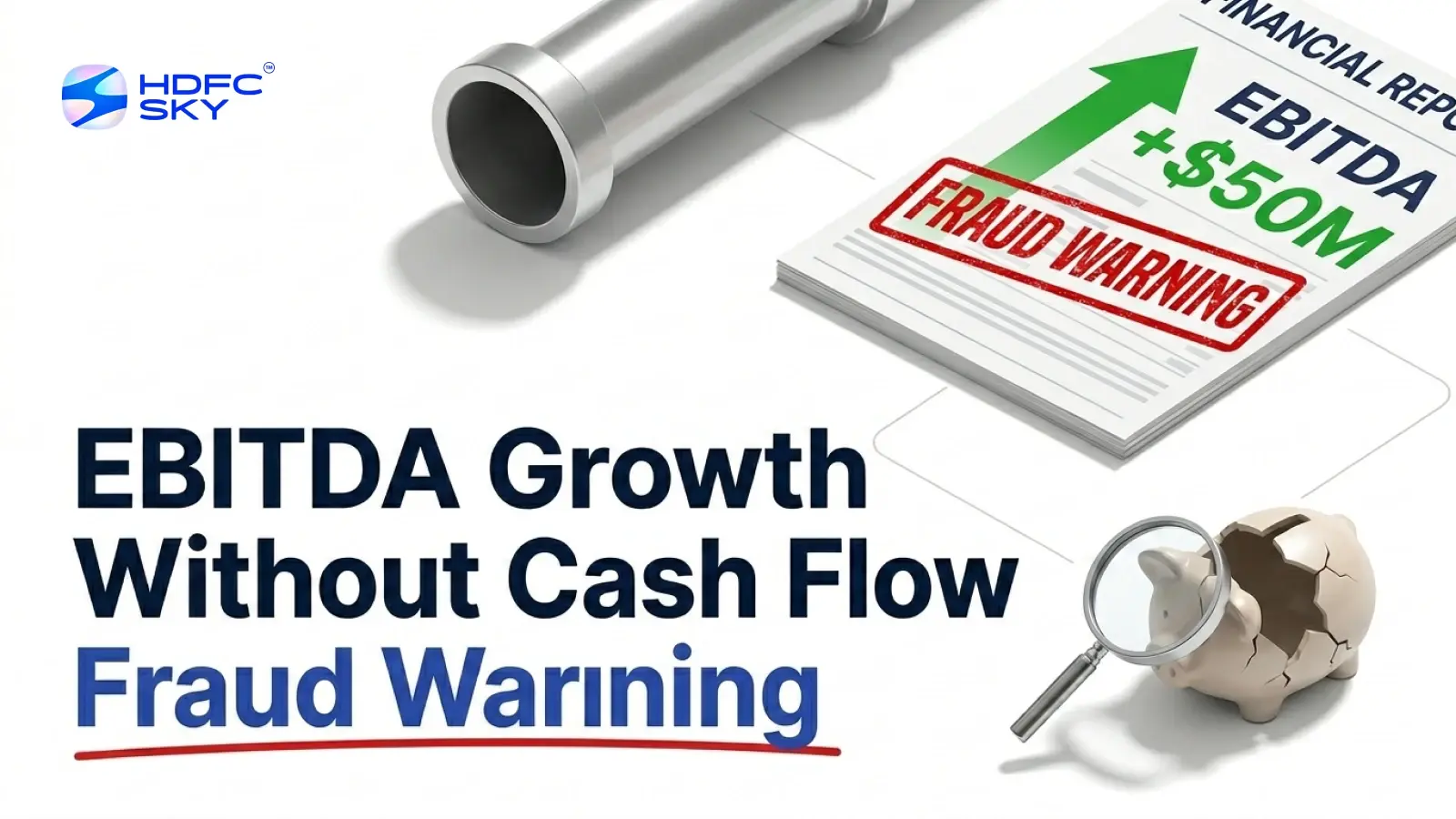
A company can report rising profits and still move toward serious financial trouble. EBITDA often looks strong, but it does not show whether real cash is entering the business. When EBITDA rises while operating cash flow stays flat or declines, investors should pay attention. This gap often appears before accounting issues or financial stress become visible. Many corporate frauds have shown this warning early, making it a critical signal.
What Is EBITDA and Why Do Companies Highlight It?
EBITDA stands for Earnings Before Interest, Taxes, Depreciation, and Amortisation. It measures a company’s operating profitability before financing and accounting adjustments.
Companies often highlight EBITDA because it makes performance look cleaner and easier to compare across businesses. It removes expenses that may vary based on capital structure or accounting choices.
This can be useful, but EBITDA has one major limitation. It does not show actual cash generation. A company can report rising EBITDA while cash inflows weaken. For beginner investors, this distinction matters because profit on paper does not always mean financial strength in reality.
Also Read: How rising debtor days in a company’s balance sheet predict a cash flow crisis months ahead
Why Cash Flow Matters More Than EBITDA
EBITDA shows accounting profit, but cash flow shows business reality.
- Cash Pays the Bills
Companies need actual cash to pay employees, suppliers, lenders, and daily operating expenses. EBITDA cannot cover these obligations unless the business converts earnings into cash. Without strong cash flow, even profitable companies can face serious financial pressure and operational disruptions. - Cash Is Harder to Manipulate
Accounting profits can change through assumptions, estimates, and timing adjustments that management controls. Operating cash flow usually provides a clearer and more honest picture of financial health because it reflects actual money entering and leaving the business over time. - Cash Reveals Earnings Quality
Strong businesses usually convert reported profits into real cash consistently. When EBITDA rises but operating cash flow does not, it often signals weak earnings quality. This mismatch can suggest aggressive accounting practices or deeper operational problems within the business.
What It Means When EBITDA Grows but Cash Flow Doesn’t
A widening gap between EBITDA and cash flow is often an early warning sign.
- Revenue May Be Recognised Too Early
Companies may book sales before receiving payment from customers. This increases EBITDA immediately, but actual cash does not arrive. Such early revenue recognition can create a misleading picture of business performance. - Receivables May Be Rising Too Fast
Customers may take longer to pay outstanding invoices. Sales remain strong on paper, but delayed collections weaken operating cash flow and increase pressure on working capital management. - Costs May Be Shifted or Deferred
Some companies delay recording expenses or move them into future periods. This boosts EBITDA temporarily, but it does not remove the actual cash burden from the business. - Business Growth May Be Low Quality
Revenue growth may depend on weak customers or generous credit terms. Sales look impressive, but slower cash conversion shows that business growth may not be financially healthy.
How This Pattern Often Precedes Accounting Frauds
Many accounting problems begin with profit numbers that stop matching cash reality.
- Aggressive Revenue Recognition
Companies may record revenue before delivering products or collecting payment. This inflates profitability and often marks an early stage of earnings manipulation. - Channel Stuffing
Businesses may push extra inventory to distributors to increase reported sales. Cash often lags because actual customer demand remains weak and unsold products may return later. - Expense Capitalisation
Some firms record regular operating expenses as long-term assets. This reduces reported costs and increases EBITDA temporarily, even though the cash has already left the business. - Window Dressing Before Reporting Periods
Companies sometimes take temporary actions to improve financial statements before reporting deadlines. Cash flow often exposes these tactics because real liquidity remains unchanged.
Key Financial Signals That Confirm the Red Flag
EBITDA and cash flow mismatch becomes more concerning when other warning signs appear.
- Receivables growing faster than revenue
- Rising debtor days or delayed customer payments
- Operating cash flow declining despite profit growth
- Higher short-term borrowing despite reported profitability
- Frequent use of adjusted or non-GAAP profit measures
- Sudden changes in accounting policies or disclosures
Industries Where This Happens More Often
Some sectors face higher risk of EBITDA and cash flow divergence.
- Infrastructure & Construction
Long project cycles and delayed billing make aggressive revenue recognition easier, increasing the risk of profit and cash flow mismatch. - Technology & SaaS
Subscription-based models can create timing gaps between reported earnings and actual cash collection, especially when customer payments are delayed. - Real Estate
Project-based accounting often creates large timing differences between recognised revenue and incoming cash from buyers. - Small and Mid-Cap Manufacturing
Credit-heavy sales can inflate reported earnings while delaying cash collection, creating hidden pressure on liquidity.
Why Retail Investors Often Miss This Warning
Many investors focus on reported profits and ignore cash quality.
- Focus only on EBITDA growth and earnings headlines
- Ignore the cash flow statement completely
- Assume profit growth means business strength
- Do not compare EBITDA with operating cash flow trends
- Miss balance sheet signals like rising receivables or debt
How Investors Should Analyze EBITDA vs Cash Flow
A few simple checks can reveal whether profits are backed by real cash.
- Compare EBITDA growth with operating cash flow over multiple quarters
- Check if receivables are rising faster than sales
- Review debtor days and working capital trends
- Watch for repeated adjustments in management presentations
- Read auditor comments and accounting policy notes carefully
EBITDA Growth vs Cash Flow Reality
| Signal | Healthy Business | Warning Sign |
| EBITDA growth | Supported by rising operating cash flow and stronger liquidity | Cash flow stays flat or declines despite reported profit growth |
| Receivables | Stable relative to sales and collected on time | Growing faster than revenue with delayed customer payments |
| Borrowing | Controlled or declining as internal cash supports operations | Rising despite profit growth, showing dependence on external funding |
| Earnings quality | Strong and consistent conversion of profit into cash | Weak or deteriorating, suggesting aggressive accounting or hidden stress |
Conclusion
EBITDA growth alone does not prove financial strength. Weak or stagnant cash flow often signals deeper problems beneath strong profit numbers. Many accounting issues begin when reported earnings stop matching cash reality. Not every mismatch means fraud, but every gap deserves closer attention and careful financial analysis.



Open Free Demat Account
Open Free Demat Account
Popular Posts
- 10 Interesting Facts About NSE You Probably Didn’t KnowLast Updated: Sep 30, 2026
- 8-4-3 Rule of SIP - How Does That Work?Last Updated: Jul 30, 2025
- Let's view more exciting Post!
Popular Post from Sky Risk Radar
- When Inventory Piles Up and Sales Stall: The Supply Chain Signal That Precedes Earnings MissesLast Updated: May 29, 2026
- The Sudden Auditor Change Signal: What It Means When a Big-4 Firm Walks Away from a Listed CompanyLast Updated: May 29, 2026
- The Insider Selling Cluster: When Three or More Key Executives Sell Shares in the Same QuarterLast Updated: May 29, 2026
- Rising NPAs in a Bank's Quarterly Disclosure: How to Detect Stress Before the Stock ReactsLast Updated: May 29, 2026
- Related-Party Transactions Above 15% of Revenue: The Governance Red Flag Every Investor Should Screen forLast Updated: May 29, 2026
- Let's view more exciting Post!
Popular Post from Blogs
- “Bounce Back” Theme Gains Traction in 2026Last Updated: Apr 8, 2026
- 5 Takeaways for Tax Payers from the Budget 2025Last Updated: Jan 29, 2026
- Let’s view more exciting Posts


Invest Anytime, Anywhere


By signing up I certify terms, conditions & privacy policy