Nifty 50
- Apollo Hospitals₹8,027.50361.50 (4.72%)
- BSE₹3,287.20-47.60 (-1.43%)
- ITC₹26611.00 (4.31%)
- Reliance Industries₹1,170.30-7.70 (-0.65%)
- Eicher Motors₹7,050282.50 (4.17%)
- JSW Steel₹1,168-7.20 (-0.61%)
- TCS₹2,15680.00 (3.85%)
- Cipla₹1,301-5.80 (-0.44%)
- HCL Technologies₹1,216.7039.80 (3.38%)
- Adani Ports₹1,76153.00 (3.10%)
- Infosys₹1,023.4026.40 (2.65%)
- Shriram Finance₹940.4523.20 (2.53%)
- Tata Motors PV₹279.906.90 (2.53%)
- UltraTech Cement₹10,675249.00 (2.39%)

- Offerings
- Tools & Platforms
Tools & Calculators
- Open API
- Calculators
- SIP Calculator
- CAGR Calculator
- Compound Interest Calculator
- FD Calculator
- RD Calculator
- EPF Calculator
- Retirement Calculator
- HDFC SIP Calculator
- Mutual Fund Return Calculator
- Lumpsum Calculator
- Step Up SIP Calculator
- ETF SIP Calculator
- Brokerage Calculator
- Equity Margin Calculator
- SWP Calculator
- EMI Calculator
- MTF Calculator
- Margin Pledge Calculator
- Algo Strategy
- Markets
Stocks
F&O
Mutual Funds
- More
- What Does an Auditor Do—and Why Does It Matter?
- Why a Sudden Big-4 Auditor Exit Matters
- Common Reasons a Big-4 Firm Walks Away
- When Auditor Change Is a Serious Red Flag
- How This Signal Has Appeared Before Major Corporate Problems
- What Investors Should Check Immediately
- When an Auditor Change May Be Harmless
- Why Retail Investors Often Ignore This Signal
- How Investors Should Interpret Auditor Changes
- Auditor Change Signal vs Investor Interpretation
- Conclusion
- What Does an Auditor Do—and Why Does It Matter?
- Why a Sudden Big-4 Auditor Exit Matters
- Common Reasons a Big-4 Firm Walks Away
- When Auditor Change Is a Serious Red Flag
- How This Signal Has Appeared Before Major Corporate Problems
- What Investors Should Check Immediately
- When an Auditor Change May Be Harmless
- Why Retail Investors Often Ignore This Signal
- How Investors Should Interpret Auditor Changes
- Auditor Change Signal vs Investor Interpretation
- Conclusion
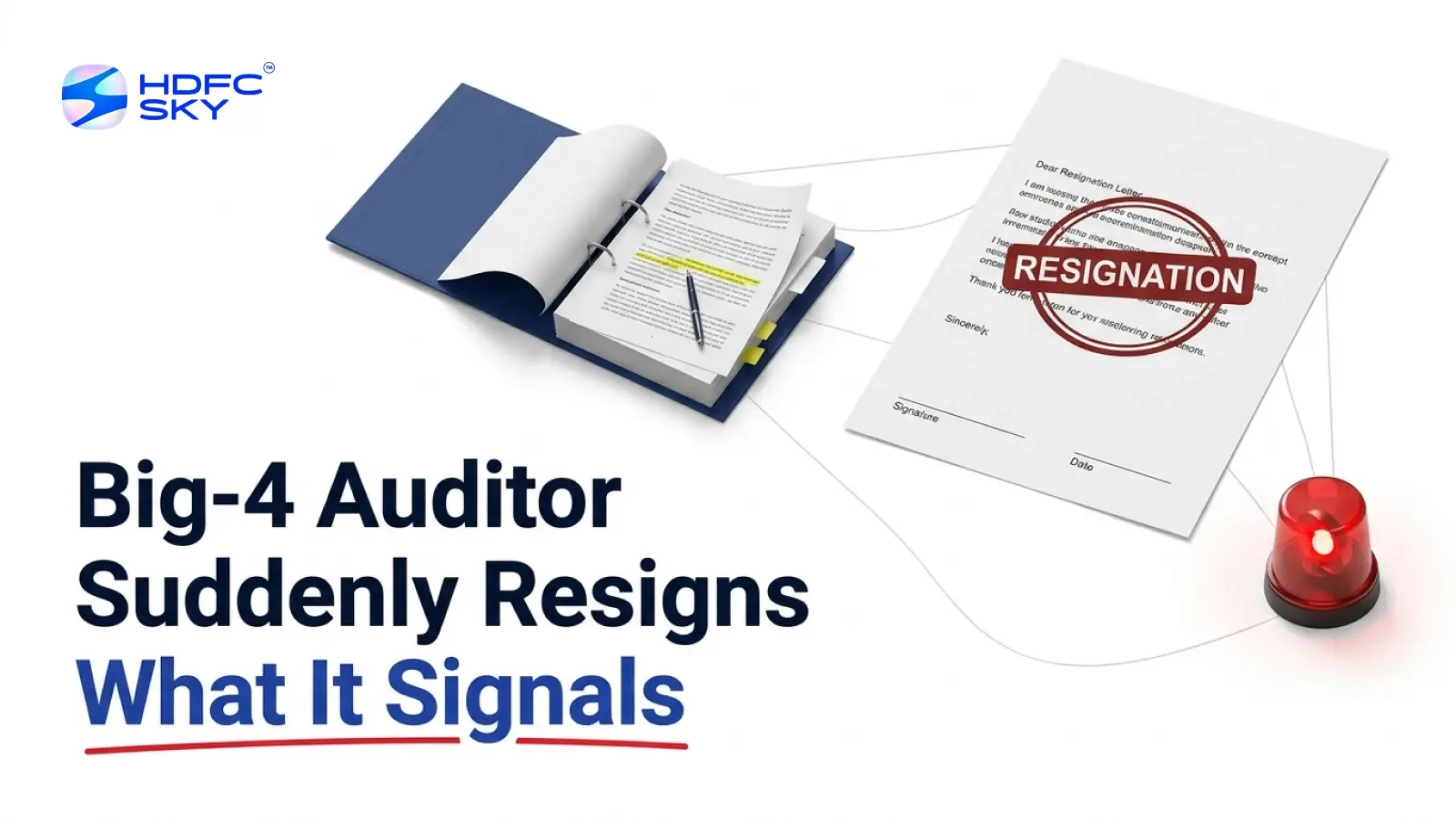
The Sudden Auditor Change Signal: What It Means When a Big-4 Firm Walks Away from a Listed Company
By Aseem Shrivastava | Updated at: May 29, 2026 06:13 PM IST
Open Free Demat Account
Open Free Demat Account
Investors often react quickly to earnings misses, but some of the biggest warning signs appear quietly in corporate filings. One such signal is the sudden exit of a Big-4 audit firm. Auditors rarely walk away from listed companies without important reasons. Many corporate problems have shown this warning early. This blog explains what an auditor change means, when investors should worry, and how to interpret the signal correctly.
What Does an Auditor Do—and Why Does It Matter?
Auditors play a key role in helping investors trust a company’s financial statements. Their work goes beyond checking numbers and often acts as an important layer of financial accountability.
- Independent Financial Verification
Auditors independently review whether a company’s financial statements present a reliable picture of its business. They verify revenue, expenses, assets, and liabilities to ensure the reported numbers match underlying records and follow accepted accounting standards. - Review of Controls and Disclosures
Auditors also examine internal controls, accounting processes, and company disclosures. This helps identify reporting weaknesses, missing information, or unusual accounting practices that may affect the accuracy and transparency of financial statements. - Big-4 Reputation Builds Investor Confidence
Firms like Deloitte, PwC, EY, and KPMG carry strong reputational value. Investors often trust audited numbers more when a well-known firm signs off. A sudden departure can quickly weaken that confidence and raise concerns.
Also Read: How rising debtor days in a company’s balance sheet predict a cash flow crisis months ahead
Why a Sudden Big-4 Auditor Exit Matters
A mid-term auditor change often signals more than a routine corporate decision.
- Reputation Risk for the Auditor
Big-4 firms protect their credibility very carefully. They may choose to resign when audit risk becomes too high, key information remains incomplete, or management responses fail to satisfy their professional concerns about financial reporting quality. - Possible Management Cooperation Issues
Auditors often need access to records, explanations, and internal documents. If management delays cooperation or fails to provide clear answers, the auditor may lose confidence and decide to step away from the engagement. - Investor Confidence Drops Quickly
Markets often interpret sudden auditor exits as a sign of hidden financial stress or governance weakness. Stock prices can react sharply because investors worry that deeper problems may surface after the resignation.
Common Reasons a Big-4 Firm Walks Away
Not every auditor change signals fraud, but some reasons deserve close attention.
- Lack of Access to Information
Management may fail to provide important documents, supporting evidence, or timely responses. Without reliable information, auditors cannot complete their work or confidently sign off on the company’s financial statements. - Disagreement on Accounting Treatment
Auditors and management may disagree on revenue recognition, asset valuation, or liability disclosures. If these disagreements remain unresolved, the audit relationship can break down and lead to a sudden resignation. - Concerns About Internal Controls
Weak internal controls can increase the risk of financial errors or misstatements. If management fails to fix these issues, auditors may refuse to continue due to concerns over reporting reliability. - Governance or Integrity Concerns
Auditors may lose trust in management behaviour, transparency, or ethical standards. Protecting their own reputation often becomes more important than staying associated with a company facing governance concerns.
When Auditor Change Is a Serious Red Flag
Some patterns make an auditor exit far more concerning than others.
- Mid-Year or Mid-Term Resignation
Sudden resignations before the audit cycle ends deserve greater scrutiny than planned changes. Unexpected timing often suggests unresolved concerns that prevented the auditor from completing its work normally. - Vague Resignation Language
Phrases like “pre-occupation” or “personal reasons” can sound harmless, but they sometimes hide deeper concerns. Investors should read resignation letters carefully and watch for missing details or unusual wording. - Replacement by a Smaller, Unknown Firm
A switch from a Big-4 auditor to a lesser-known firm can weaken investor confidence. Markets may question whether the company sought a less demanding auditor after disagreements. - Delay in Financial Reporting
Missed filing deadlines after an auditor exit often increase concern. Delays can suggest unresolved accounting issues or difficulty finalising financial statements after the auditor’s departure.
How This Signal Has Appeared Before Major Corporate Problems
Auditor exits have often appeared before larger financial issues became public.
- Early Warning Before Accounting Irregularities
Auditor concerns sometimes emerge months before fraud investigations begin. Sudden resignations can act as an early signal that financial reporting problems may exist beneath the surface. - Delayed Discovery of Hidden Liabilities
Some companies reveal off-balance-sheet debt or undisclosed obligations only after deeper scrutiny. Auditor exits can sometimes point to risks that have not yet reached investors. - Governance Breakdowns
Auditor resignations can expose weak board oversight, poor internal accountability, or management resistance. These issues often damage trust even before financial losses become visible. - Market Value Erosion
Stocks can decline sharply when investors lose confidence in audited financial statements. Once trust weakens, recovery can take time even if no major fraud emerges.
What Investors Should Check Immediately
A few quick checks can help investors assess the seriousness of an auditor change.
- Read the resignation letter carefully and note the exact stated reasons
- Check whether the company disclosed disagreements with the outgoing auditor
- Compare the reputation of both the outgoing and incoming auditors
- Watch for delays in quarterly or annual financial filings
- Review recent receivables, cash flow, and debt trends carefully
- Monitor stock exchange disclosures and audit committee responses closely
When an Auditor Change May Be Harmless
Not every auditor switch signals trouble.
- Mandatory auditor rotation under Indian regulations may require planned changes
- Audit fee disputes can happen without deeper accounting concerns
- Strategic switches may follow mergers or business restructuring decisions
- Capacity or independence conflicts may affect audit firm availability
- Planned end of audit tenure can lead to normal transitions
Why Retail Investors Often Ignore This Signal
Auditor changes appear in filings, but many investors overlook them.
- Focus only on earnings announcements and short-term price movements
- Skip exchange disclosures and important annual report notes
- Assume all auditor changes happen for routine reasons
- Do not understand the auditor’s role in investor protection
- React only after stock prices decline sharply
How Investors Should Interpret Auditor Changes
Auditor exits should be viewed as a risk scale, not an automatic fraud signal.
- Planned rotation usually signals normal governance and lower concern
- Sudden resignation with explanation needs careful review and monitoring
- Sudden resignation with vague language requires higher caution
- Big-4 exit plus filing delays creates a critical warning zone
Auditor Change Signal vs Investor Interpretation
| Signal | Lower Concern | Higher Concern |
| Timing of change | Planned rotation after full audit term with clear communication | Mid-term or abrupt resignation without expected transition |
| Reason disclosed | Clear procedural explanation supported by detailed disclosure | Vague or incomplete explanation with limited transparency |
| Replacement auditor | Similar or stronger audit firm with established reputation | Smaller or lesser-known firm with weaker market confidence |
| Financial reporting | No delays, restatements, or unusual reporting changes | Filing delays, revised accounts, or missed deadlines |
| Management response | Transparent communication and proactive investor updates | Defensive responses or limited disclosure to investors |
Conclusion
A sudden Big-4 auditor exit can be an important early warning signal for investors. It may reflect governance issues, accounting disagreements, or rising audit risk. Not every change signals fraud, but abrupt resignations deserve immediate attention and deeper analysis rather than panic.



Open Free Demat Account
Open Free Demat Account
Popular Posts
- 10 Interesting Facts About NSE You Probably Didn’t KnowLast Updated: Sep 30, 2026
- 8-4-3 Rule of SIP - How Does That Work?Last Updated: Jul 30, 2025
- Let's view more exciting Post!
Popular Post from Sky Risk Radar
- When Inventory Piles Up and Sales Stall: The Supply Chain Signal That Precedes Earnings MissesLast Updated: May 29, 2026
- When EBITDA Grows but Cash Flow Doesn’t: The Red Flag That Precedes Most Accounting FraudsLast Updated: May 29, 2026
- The Insider Selling Cluster: When Three or More Key Executives Sell Shares in the Same QuarterLast Updated: May 29, 2026
- Rising NPAs in a Bank's Quarterly Disclosure: How to Detect Stress Before the Stock ReactsLast Updated: May 29, 2026
- Related-Party Transactions Above 15% of Revenue: The Governance Red Flag Every Investor Should Screen forLast Updated: May 29, 2026
- Let's view more exciting Post!
Popular Post from Blogs
- “Bounce Back” Theme Gains Traction in 2026Last Updated: Apr 8, 2026
- 5 Takeaways for Tax Payers from the Budget 2025Last Updated: Jan 29, 2026
- Let’s view more exciting Posts


Invest Anytime, Anywhere


By signing up I certify terms, conditions & privacy policy