Nifty 50
- Dr. Reddy's Labs₹1,229.4032.40 (2.71%)
- Apollo Hospitals₹7,775-252.50 (-3.15%)
- Bajaj Auto₹10,034256.00 (2.62%)
- ITC₹257.90-8.10 (-3.05%)
- Tata Motors PV₹284.454.55 (1.63%)
- Tech Mahindra₹1,471-43.10 (-2.85%)
- Bharat Electronics₹373.905.75 (1.56%)
- L&T₹3,627.50-75.80 (-2.05%)
- BSE₹3,330.2043.00 (1.31%)
- Max Healthcare₹865.95-17.85 (-2.02%)
- Cipla₹1,317.4016.40 (1.26%)
- Hindalco Industries₹882.50-17.85 (-1.98%)
- Eicher Motors₹7,11969.00 (0.98%)
- Hindustan Unilever₹1,820.70-36.00 (-1.94%)
- Mahindra & Mahindra₹2,81316.80 (0.60%)
- SBI₹941-18.10 (-1.89%)
- Kotak Mahindra Bank₹443.402.40 (0.54%)
- Coal India₹404.80-6.75 (-1.64%)
- HCL Technologies₹1,2236.30 (0.52%)
- Bharti Airtel₹1,778.70-26.40 (-1.46%)

- Offerings
- Tools & Platforms
Tools & Calculators
- Open API
- Calculators
- SIP Calculator
- CAGR Calculator
- Compound Interest Calculator
- FD Calculator
- RD Calculator
- EPF Calculator
- Retirement Calculator
- HDFC SIP Calculator
- Mutual Fund Return Calculator
- Lumpsum Calculator
- Step Up SIP Calculator
- ETF SIP Calculator
- Brokerage Calculator
- Equity Margin Calculator
- SWP Calculator
- EMI Calculator
- MTF Calculator
- Margin Pledge Calculator
- Algo Strategy
- Markets
Stocks
F&O
Mutual Funds
- More
The Insider Selling Cluster: When Three or More Key Executives Sell Shares in the Same Quarter
By Aseem Shrivastava | Updated at: May 29, 2026 06:11 PM IST
Open Free Demat Account
Open Free Demat Account
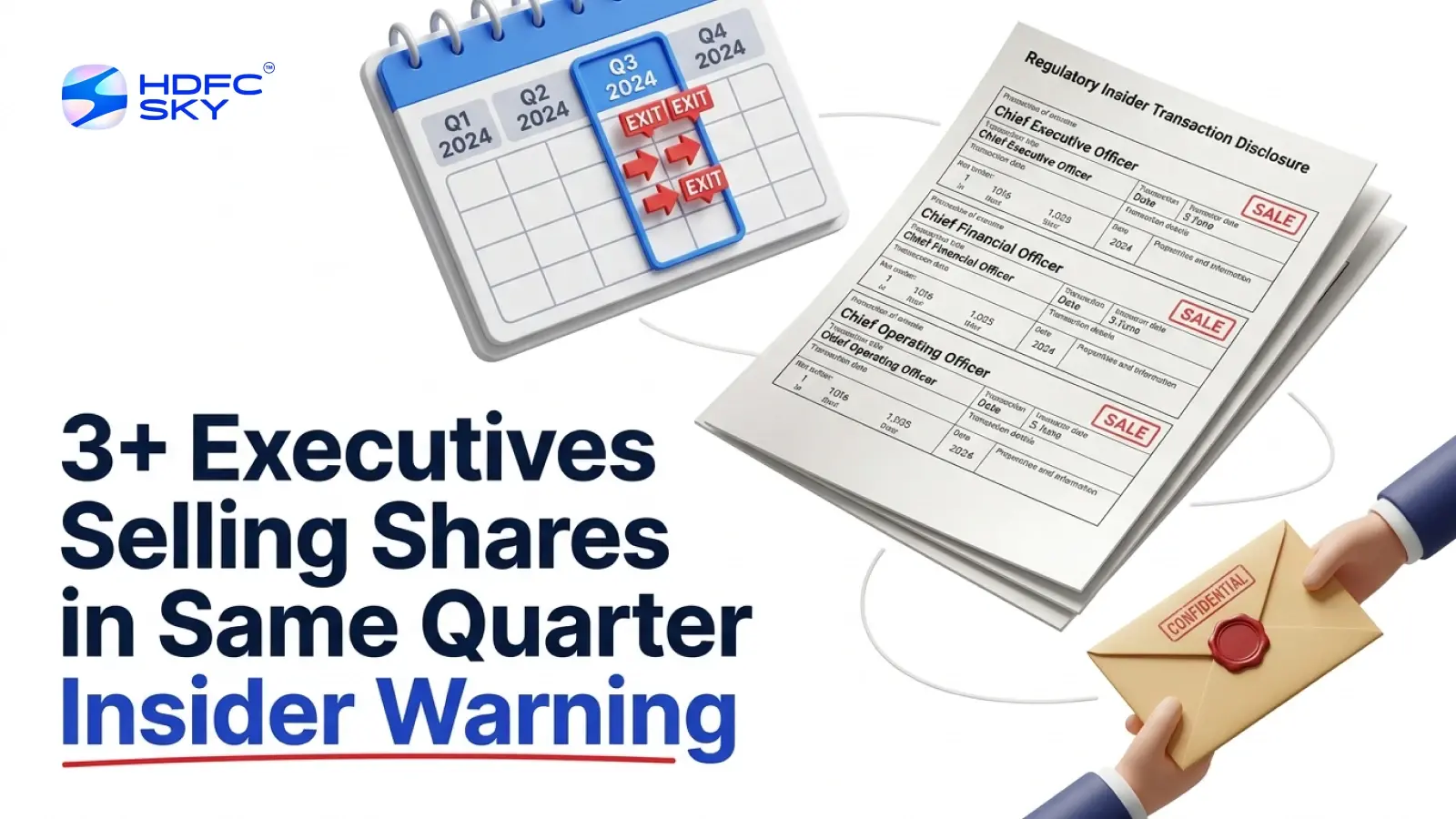
Corporate insiders often understand business conditions before public investors do. A single insider sale may not signal trouble, but patterns can matter. Insider selling clusters, where three or more senior executives sell shares in the same quarter, can act as an early warning sign. Concentrated selling may reflect weaker confidence, valuation concerns, or future business challenges. Investors should track insider activity alongside financial and governance indicators to identify possible risks early.
Understanding Insider Selling
Insider selling refers to the sale of company shares by individuals with direct access to important business information. This includes senior executives, directors, and key promoters. Common insiders include the Chief Executive Officer (CEO), Chief Financial Officer (CFO), Chief Operating Officer (COO), board directors, and founders or promoter groups.
Not every insider sale signals a problem. Executives may sell shares to diversify personal wealth, meet tax obligations, manage liquidity needs, or follow pre-arranged selling plans. Some sales also happen when executives exercise stock options as part of compensation.
Investors should focus on patterns rather than isolated trades. One sale may be routine. Multiple insiders selling within the same period may reveal shared internal sentiment. This cluster behaviour often attracts institutional attention because it may suggest caution inside the leadership team.
Also Read: Promoter pledge creeping above 60%: the early warning sign most retail investors miss
What Is an Insider Selling Cluster?
The timing and concentration of insider sales can send stronger signals than isolated transactions. Investors should pay close attention when several key executives sell shares within the same quarter.
- Three or More Executives Selling in the Same Quarter Can Signal Shared Concern
When three or more senior executives sell shares during one quarter, the pattern may suggest shared caution. Similar timing across leadership teams can indicate concerns about valuation, business conditions, or future company performance. - Sales Across Multiple Departments Strengthen the Signal
Insider selling becomes more meaningful when executives from finance, operations, and the board all participate. Broad selling across departments can suggest that concerns extend beyond one area of the business. - Large Percentage Sales Matter More Than Small Trims
Small share sales may reflect routine planning. Larger sales that reduce a meaningful portion of personal holdings often carry greater importance and may suggest lower insider confidence. - Repeated Cluster Selling Can Increase Risk Perception
Cluster selling across multiple quarters can raise stronger concerns. Repeated insider exits may signal declining management commitment or growing uncertainty about future business performance.
Why Insider Selling Clusters Can Matter to Investors
Insider behaviour can reveal management confidence before company results show visible weakness. Investors can use these signals to assess possible risks early.
- Executives Often See Problems Earlier
Senior leaders often detect slowing demand, margin pressure, competitive threats, or internal operational issues before public investors. Their actions may reflect concerns not yet visible in earnings reports. - Insider Confidence May Be Changing
When insiders reduce personal ownership, it can suggest lower conviction in future growth. Some executives may also believe the company’s valuation has become too high. - Market Sentiment Can Shift Quickly
Institutional investors often monitor insider activity closely. Large insider selling clusters can increase stock volatility and create negative market perception even before business conditions worsen. - Governance Concerns May Surface
Heavy insider selling can raise questions about transparency and shareholder alignment. Investors may wonder whether management interests remain fully connected to long-term shareholder outcomes.
When Insider Selling Is Not a Red Flag
Context matters when interpreting insider sales. Some transactions reflect normal financial planning rather than business concern.
- Scheduled Trading Plans
Many executives use pre-arranged selling plans to avoid timing concerns. These scheduled sales often carry less emotional or strategic meaning. - Compensation-Driven Stock Sales
Executives may sell shares to pay taxes or manage option exercises. These transactions often relate to compensation rather than business outlook. - Diversification After Long Holding Periods
Long-term insiders may reduce concentrated exposure to one stock. Diversification helps manage personal financial risk and does not always reflect weaker confidence. - Founder Liquidity Events
Founders may sell shares for personal planning, estate management, or family needs. These events can happen even when business fundamentals remain strong.
Key Warning Signs Within Insider Selling Data
Certain details within insider selling data can strengthen the warning signal. Investors should review both timing and transaction size carefully.
- Sales Immediately Before Weak Results
Insider sales before disappointing earnings or weaker guidance deserve attention. Timing can reveal whether executives anticipated upcoming business weakness. - CFO and Finance Team Selling
Sales by the CFO or finance team can matter more because these leaders often have deep visibility into company performance and financial risks. - Selling Without Insider Buying
A lack of insider buying can strengthen concern. Selling without any offsetting purchases may suggest limited confidence across leadership. - High Percentage of Personal Holdings Sold
Selling a large share of personal ownership may signal stronger commitment reduction. Percentage sold often matters more than transaction value. - Insider Sales After Positive Public Statements
Sales following optimistic company statements can create mixed messaging. Investors may question whether management actions match public communication.
Where Investors Can Track Insider Selling
Investors can monitor insider transactions through several reliable public sources. Reviewing multiple sources helps build a clearer picture of insider activity.
- Stock Exchange Filings
Regulatory filings provide official insider disclosures. These reports usually show transaction dates, share quantities, and the roles of executives involved. - Company Annual Reports
Annual reports can reveal executive ownership changes. They also show broader shareholding patterns and trends over a longer period. - Financial Data Platforms
Many financial platforms offer insider transaction dashboards. These tools make it easier for investors to track and compare insider activity. - Proxy Advisory and Governance Reports
Governance reports provide added context. They can help investors understand unusual insider behaviour and assess possible governance concerns.
How to Analyse an Insider Selling Cluster
Investors should review insider selling carefully before drawing conclusions. Context often determines whether the signal is meaningful.
- Focus on Who Is Selling
Sales by senior finance leaders may carry more weight than sales by independent directors. Multiple senior roles selling together strengthens the signal. - Measure Sale Size Relative to Holdings
The percentage of ownership sold matters more than the sale amount. Large ownership reductions deserve closer attention. - Compare Timing With Business Events
Review whether sales happened before earnings announcements, guidance changes, or major strategic updates. - Look for Supporting Warning Signals
Check for other risks such as credit outlook changes, inventory build-up, margin weakness, or auditor concerns.
Conclusion
Insider selling clusters do not automatically prove trouble. However, concentrated insider sales can provide valuable early signals. Investors should combine insider activity with financial and governance analysis. Reading insider behaviour carefully can help investors identify risk before the wider market reacts and make better-informed investment decisions.



Open Free Demat Account
Open Free Demat Account
Popular Posts
- 10 Interesting Facts About NSE You Probably Didn’t KnowLast Updated: Sep 30, 2026
- 8-4-3 Rule of SIP - How Does That Work?Last Updated: Jul 30, 2025
- Let's view more exciting Post!
Popular Post from Sky Risk Radar
- When Inventory Piles Up and Sales Stall: The Supply Chain Signal That Precedes Earnings MissesLast Updated: May 29, 2026
- When EBITDA Grows but Cash Flow Doesn’t: The Red Flag That Precedes Most Accounting FraudsLast Updated: May 29, 2026
- The Sudden Auditor Change Signal: What It Means When a Big-4 Firm Walks Away from a Listed CompanyLast Updated: May 29, 2026
- Rising NPAs in a Bank's Quarterly Disclosure: How to Detect Stress Before the Stock ReactsLast Updated: May 29, 2026
- Related-Party Transactions Above 15% of Revenue: The Governance Red Flag Every Investor Should Screen forLast Updated: May 29, 2026
- Let's view more exciting Post!
Popular Post from Blogs
- “Bounce Back” Theme Gains Traction in 2026Last Updated: Apr 8, 2026
- 5 Takeaways for Tax Payers from the Budget 2025Last Updated: Jan 29, 2026
- Let’s view more exciting Posts


Invest Anytime, Anywhere


By signing up I certify terms, conditions & privacy policy